
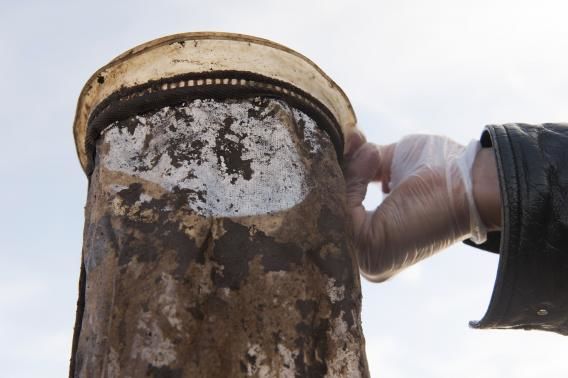
© REUTERS/Andrew CullenAn environmental group employee holds a used filter sock in Bismarck, North Dakota January 27, 2015.
The waste, which becomes slightly radioactive as part of the hydraulic fracturing process that churns up isotopes locked underground, must be trucked out of state. That's because rules prohibit North Dakota landfills from accepting anything but miniscule amounts of radiation.
The most common form of radioactive waste is a filter sock, a mesh tube resembling a sandbag through which fracking water is pumped before it's injected back into the earth. Tank and pipeline sludge are also radioactive.
It's not clear how much of this waste is generated, as North Dakota officials only began requiring tracking last year; final 2014 reports aren't due until next month. Some put the number at 70 tons per day; others say 27 tons.














Comment: The oil industry in North Dakota has been having trouble finding adequate methods of disposing of radioactive waste. The industry has also been plagued by numerous oil spills that industry and state executives attempted to hide from the public. It has been reported that the industry in North Dakota is running wild with little regulatory oversight, and as oil prices plummet and profits dwindle, things don't look promising where safety and health issues are concerned.