Secret HistoryS


Hearts

Evidence found in the Americas of dog as man's best friend for over 10,000 years

dog 10,000 year americas
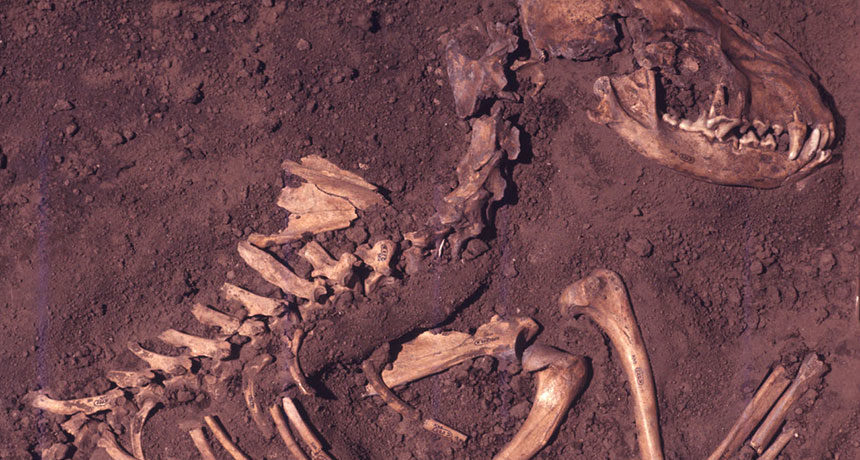
ANCIENT PAWS New radiocarbon evidence has identified three dogs excavated in Illinois, including this pooch, as the oldest canines in the Americas. These human companions lived around 10,000 years ago, about 1,500 years earlier than previously thought.
A trio of dogs buried at two ancient human sites in Illinois lived around 10,000 years ago, making them the oldest known domesticated canines in the Americas.

Radiocarbon dating of the dogs' bones shows they were 1,500 years older than thought, zooarchaeologist Angela Perri said April 13 at the annual meeting of the Society for American Archaeology. The previous age estimate was based on a radiocarbon analysis of burned wood found in one of the animals' graves. Until now, nearly 9,300-year-old remains of dogs eaten by humans at a Texas site were the oldest physical evidence of American canines.

Ancient dogs at the Midwestern locations also represent the oldest known burials of individual dogs in the world, said Perri, of Durham University in England. A dog buried at Germany's Bonn-Oberkassel site around 14,000 years ago was included in a two-person grave. Placement of the Americas dogs in their own graves indicates that these animals were held in high regard by ancient people.

Comment: From: Genetic study confirms 4000 years ago Indians landed in Australia
The dingo has always been an enigma. No one really knows how or why it ended up in Australia. We know it probably exterminated the Tasmanian Tiger on Mainland Australia (apart from the dingo-free island known as Tasmania) and we know it didn't originate here. The dingo has a striking resemblance to wild dogs found in India and so may have travelled with the first Indian settlers to our Island. However, there are similar looking dogs found in New Guinea and South East Asia.


Info

Six of the oldest human remains found in the US

Excavation
© Wikimedia CommonsPhotograph of the second excavation of "Minnesota Woman" in 1931.
We recently shared some of the more amazing examples of ancient archaeology in the United States. This week, we travel even farther back in time to learn about some of the earliest known inhabitants of our country.

1. Minnesota Woman

Pelican Rapids is a quiet town nestled along the Pelican River in west central Minnesota, and it was here, back in 1931, where construction workers renovating U.S. Route 59 unearthed the skeletal remains of a teenage girl. Deteriorated shells coated the otherwise pristine skeleton. Buried close to the body was a conch shell pendant and a dagger made from the horn of an elk. The remains were eventually turned over to Dr. Albert Jenks from the University of Minnesota, who analyzed the skeleton and dubbed it "Minnesota Man," despite recognizing the remains were those of a woman. Subsequent analysis over the ensuing decades concluded that the remains were roughly 8,000 years old, and that the girl was a proto-indian who likely drowned in the glacial lake which once submerged much of the area. She was rightfully renamed "Minnesota Woman" in 1976.

2. Spirit Cave Mummy

The skeleton of 10,600-year-old man shrouded in a rabbit-skin blanket and reed mats is the oldest known mummy ever found in the United States. Strewn about the Nevada cave where the mummy was discovered were numerous artifacts, along with the cremated remains of three other individuals. The mummy may have more to tell us, but alas, his story and fate have been controversial. After decades of legal battles, the mummy was repatriated to the Fallon Paiute-Shoshone Tribe in 2016 for reburial.

Treasure Chest

King Bluetooth treasure trove: Amateur archaeologist and sidekick unearthed 1,000yo coins & jewels

King Bluetooth treasure trove
© Stefan Sauer / DPA / AFPA collection of artifacts found at the site.
An amateur archaeologist and his teenage sidekick have unearthed a trove of silver artefacts thought to have belonged to Danish King Harald Bluetooth - the royal inspiration for the technology of the same name.

René Schön and 13-year-old Luca Malaschnitschenko found the hoard while searching northern Rugen Island with their metal detectors in January. A much more expansive dig undertaken in recent days revealed necklaces, pearls, brooches and up to 600 chipped coins that may have belonged to Harald Gormsson, better known as 'Harry Bluetooth.'

Sherlock

Ancient Indus Valley civilization was wiped out by a 900 year drought

Indus civilisation
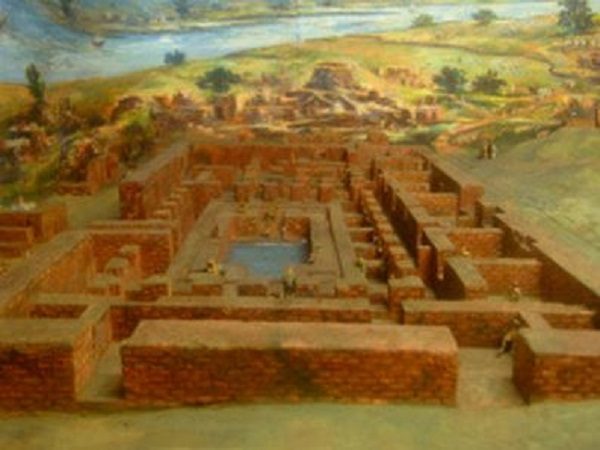
A painting of the Indus civilisation.
The Indus Valley civilisation was wiped out 4,350 years ago by a 900-year-long drought, scientists at the Indian Institute of Technology in Kharagpur (IIT-Kgp) have found. Evidence gathered during their study also put to rest the widely accepted theory that the said drought lasted for only about 200 years.

The study will be published in the prestigious Quaternary International Journal by Elsevier this month.

Researchers from the geology and geophysics department have been studying the monsoon's variability for the past 5,000 years and have found that the rains played truant in the northwest Himalayas for 900 long years, drying up the source of water that fed the rivers along which the civilisation thrived. This eventually drove the otherwise hardy inhabitants towards the east and south, where rain conditions were better.

Comment: See also:


Magnify

Sardinia's mysterious annual "exorcism" ceremony

Sardinian mamoiada
For thousands of years, the men of a tiny Sardinian town have transformed into monsters-and no one knows why
No one dares to speak as smoke from a massive bonfire billows and twirls into a thick haze in the remote mountain town of Mamoiada. Flaming logs crack open, echoing through central Sardinia's rugged massifs and twisting valleys, shooting sparks toward a solemn mass of spectators. We're huddled together on a piercingly cold January night, bracing for something wild in the darkness that's lurching ever closer.

I peer through the smoke, searching for any signs of life beyond the glow of the blaze when I see several mothers suddenly pull their children in close. Just then, Ruggero Mameli, a lifelong Mamoiada resident who had invited me to come witness this event, whispers, "They're coming."

Within seconds, a distant rattling sound shakes the night awake, building slowly with each heavy step until it erupts into a deafening clatter. The sea of spectators parts, I see them, and a chill runs up my spine. Twelve menacing figures in jet-black masks with jutting, ghoulish features and dark sheepskin tunics are inching toward me, weighed down by up to 65 pounds of cowbells strapped to their backs. Their hunched frames slowly drag forward in two rows, eyeing the crowd as they heave themselves into a series of synchronized convulsions that cause the sheep bones inside their copper bells to clang in a thunderous chorus.

Comment: While it may be an amalgamation of traditions, one does wonder what it's original meaning may have been:


Cloud Grey

Volcanic eruptions during Roman times blocked out the sun plunging Eurasia into hunger and disease

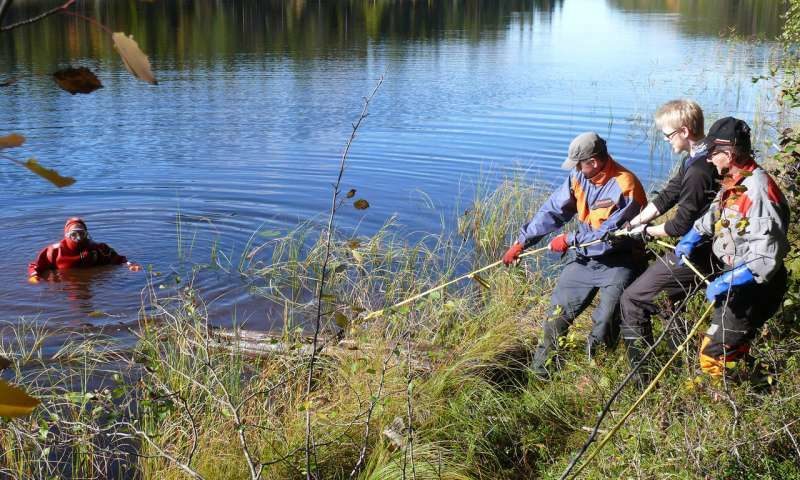
A subfossil tree trunk being lifted out of a lake.
© Samuli Helama / Natural Resources Institute FinlandA subfossil tree trunk being lifted out of a lake.
A recent study published in an esteemed academic journal indicates that volcanic eruptions in the mid-500s resulted in an unusually gloomy and cold period. A joint research project of the Chronology Laboratory of the Finnish Museum of Natural History and Natural Resources Institute Finland (Luke) suggests that the years 536 and 541-544 CE were very difficult for many people.

An extended period of low light makes survival difficult. Food production, including farming and animal husbandry, rely on solar energy. Humans, meanwhile, become more prone to disease if they are not exposed to enough sunlight to produce vitamin D.

"Our research shows that the climate anomaly, which covered all of the northern hemisphere, was the compound result of several volcanic eruptions," says Markku Oinonen, director of the Chronology Laboratory. The aerosols that were released into the atmosphere with the eruptions covered the sun for a long time.

Comment: For more on the incredible happenings during that period, see: Also check out SOTT radio's:


Microscope 1

Oxford University genetic study finds Britons still live in 7th century tribal kingdoms

A new genetic map of Britain shows that there has been little movement between areas of Britain which were former tribal kingdoms in Anglo-Saxon England
© David Cheskin/PAA new genetic map of Britain shows that there has been little movement between areas of Britain which were former tribal kingdoms in Anglo-Saxon England
Britons are still living in the same 'tribes' that they did in the 7th Century, Oxford University has found after an astonishing study into our genetic make-up.

Archaeologists and geneticists were amazed to find that genetically similar individuals inhabit the same areas they did following the Anglo-Saxon invasion, following the fall of the Roman Empire.

In fact, a map showing tribes of Britain in 600AD is almost identical to a new chart showing genetic variability throughout the UK, suggesting that local communities have stayed put for the past 1415 years.

Many people in Britain claim to feel a strong sense of regional identity and scientists say they the new study proves that the link to birthplace is DNA deep.

Comment: Laura Knight-Jadczyk in Meteorites, Asteroids, and Comets: Damages, Disasters, Injuries, Deaths, and Very Close Calls writes:
Until that point in time, the Britons had held control of post-Roman Britain, keeping the Anglo-Saxons isolated and suppressed. After the Romans were gone, the Britons maintained the status quo, living in towns, with elected officials, and carrying on trade with the empire. After AD 536, the year reported as the "death of Arthur", the Britons, the ancient Cymric empire that at one time had stretched from Cornwall in the south to Strathclyde in the north, all but disappeared, and were replaced by Anglo-Saxons. There is much debate among scholars as to whether the Anglo-Saxons killed all of the Britons, or assimilated them. Here we must consider that they were victims of possibly many overhead cometary explosions which wiped out most of the population of Europe, plunging it into the Dark Ages which were, apparently, really DARK, atmospherically speaking.
See Also:


Star of David

Open wounds remain 70 years after the Deir Yassin Massacre

Deir Yassin
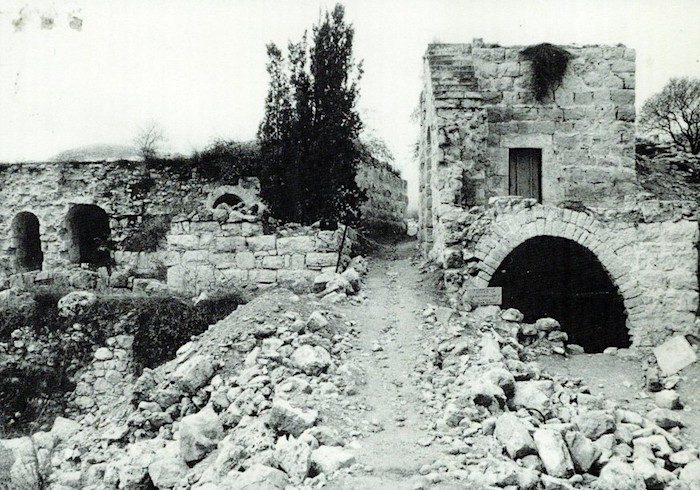
© deiryassinremembered.orgRuins of homes left empty from the Deir Yassin Massacre, 1986.
For the 70th anniversary of the Deir Yassin massacre, I spoke to Matthew Hogan who authored a peer-reviewed study of the incident for The Historian journal (The 1948 Massacre At Deir Yassin Revisited, Winter 2001) and recently served as consultant for the new documentary 1948: Creation and Catastrophe. He has spoken on Deir Yassin to classes at the University of Maryland and his paper has been broadly cited and assigned in university courses. Mr. Hogan has been an independent researcher in history. He received his Juris Doctor (J.D.)from Southern Methodist University School of Law in 1992.
Jamal Najjab: What was the Deir Yassin Massacre?

Matthew Hogan: Well, first let me note that the Deir Yassin Massacre was indeed a massacre, something which a few have a hard time digesting.

Anyway, what basically happened was that several dozen Palestinian Arab villagers were killed without military necessity on April 9, 1948 in their home village of Deir Yassin. They likely also endured other abuses during and after the takeover of that village that day by irregular Jewish forces.

It was a very significant event that accompanied the end of the British Mandate of Palestine in 1948 and the setup of the state of Israel and influenced heavily the fighting around it.

Star of David

1948 and the Anglo-Saxons: Remembering Western involvement in expulsion of the Palestinians

Nakba Deir Yassin massacre Israel
Screen shot from the film Deir Yassin Remembered, a collection of testimonies of survivors from Deir Yassin.
On July 19, 1948, a young Yitzhak Rabin sent orders to Israeli units near the border of what would become the West Bank. Over the preceding week and a half-"The Ten Days," as they are known in Israeli history books - the army of the new state of Israel had destroyed key communities in central Palestine. The Palestinian towns of Lydda and Ramla were no more. Israeli forces killed hundreds in both towns before emptying them of their inhabitants and annexing their land to Israel. Hundreds more died of thirst and exhaustion as the town's inhabitants became refugees, forced to march into the West Bank in columns of tens of thousands. But Israeli orders were straightforward. "The inhabitants of Lydda must be expelled quickly without attention to age," Rabin told troops (on July 12). And the natives, once expelled, were to be kept out.

So it was that almost 70 years ago-70 years before a besieged Gaza organized the "Great March of Return"; 70 years before participants in the march fell to Israeli sniper fire -- a future prime minister of Israel ordered his soldiers to shoot at any Palestinians who tried to return to their homes.

Comment: For a dispassionate, fact-based review of the history Israel's actions in Palestine, culled from its own military records, one could do no better than Ilan Pappe's The Ethnic Cleansing of Palestine


Dig

Human finger fossil found in Saudi Arabia suggests people expanded into Asia via Arabia at least 86K years ago

out of africa, human migration out of africa via saudi arabia
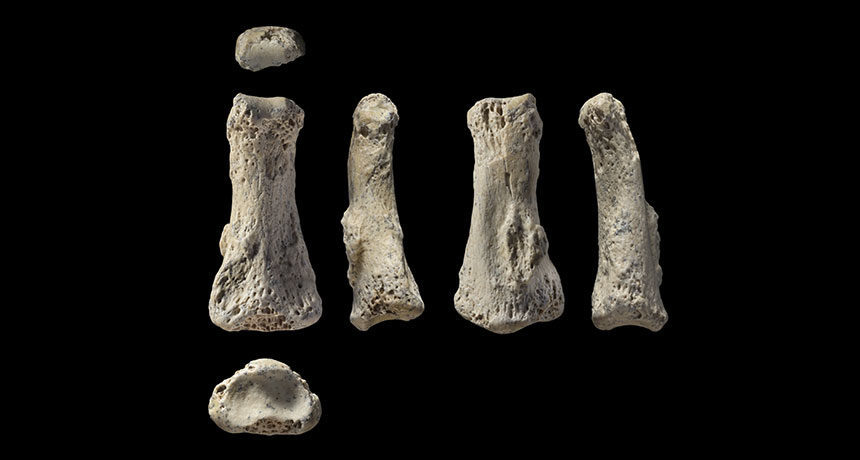
© Ian CartwrightARABIAN POINTER A human finger fossil found in a Saudi Arabian desert dates to between 95,000 and 86,000 years ago, researchers say. This find, shown here from different angles, strengthens the view that ancient humans expanded into Asia via Arabia.
A single human finger bone from at least 86,000 years ago points to Arabia as a key destination for Stone Age excursions out of Africa that allowed people to rapidly spread across Asia.

Excavations at Al Wusta, a site in Saudi Arabia's Nefud desert, produced this diminutive discovery. It's the oldest known Homo sapiens fossil outside of Africa and the narrow strip of the Middle East that joins Africa with Asia, based on dating of the bone itself, says a team led by archaeologists Huw Groucutt and Michael Petraglia. This new find strengthens the idea that early human dispersals out of Africa began well before the traditional estimated departure time of 60,000 years ago and extended deep into Arabia, the scientists report April 9 in Nature Ecology & Evolution.

"Although long considered to be far from the main stage of human evolution, Arabia was a stepping stone from Africa into Asia," says Petraglia, of the Max Planck Institute for the Science of Human History in Jena, Germany.

Comment: Humans may have left Africa earlier than thought according to some paleoanthropologists
Scientists have generally agreed that humans first migrated out of Africa 40,000 to 70,000 years ago, culminating in settlements that span the globe. That estimate has been rocked in recent years however, by discoveries of stone artifacts in the Arabian Desert that date back at least 100,000 years (close to the time that modern humans were thought to have arisen). In this new effort, the researchers have expanded on the idea that humans may have left Africa sooner than most had thought, and that it likely happened via multiple routes, rather than just one.

After completing their models, the team compared them with actual population data regarding people now living in Africa, Australia and Asia. They report that the models they built showing multi-path dispersal most closely aligned with modern genetic histories and skull shapes. Their models also showed people leaving Africa as early as 130,000 years ago for Asia and Australia and then again in another wave approximately 50,000 years ago taking a more northerly route.