Secret HistoryS


Dig

'Unprecedented' 7,000 year old Native American burial site discovered off Florida's Gulf Coast (VIDEO)

Florida ice age coast


Divers in 2016 reported possible human skeletal material off the coast of Manasota Key in Charlotte County, Florida.


Venice, Fla. -- A burial site hidden for some 7,000 years beneath the surface of the Gulf of Mexico likely has archeologists picking their jaws up from the floor.

As Dr. Ryan Duggins, an underwater archeology supervisor for the Florida Bureau of Archeological Research put it, in part: "Seeing a 7,000-year-old site that is so well preserved in the Gulf of Mexico is awe inspiring. We are truly humbled by this experience."


Comment: See also National Geographic's report with more videos:

7,000-Year-Old Native American Burial Site Found Underwater


Comet

Did cometary catastrophes cause the Justinian Plague and end the Roman Empire?

justinian plague painting
For nearly half-a-century, the chief principals of The Thunderbolts Project have been presenting a scientific case for relatively recent celestial catastrophes in the inner solar system, within human memory. These events were recorded in the myths and storytelling of ancient man in pre-history, the dramas reverberating through generations and shaping the earliest civilizations.

The catastrophes were electromagnetic in nature -- planets seen in the Earthly sky discharging electrically, the thunderbolts of the gods. But what about more recent disasters, in the A.D. time periods, disasters that also may have been triggered by fundamentally electromagnetic phenomena in the solar system?

In this episode, Thunderbolts colleague Peter Mungo Jupp offers the provocative conjecture that an encounter between our own planet and a cometary intruder may have caused an AD catastrophe, leading to the deaths of tens millions of human beings - the so-called Plague of Justinian.


Blackbox

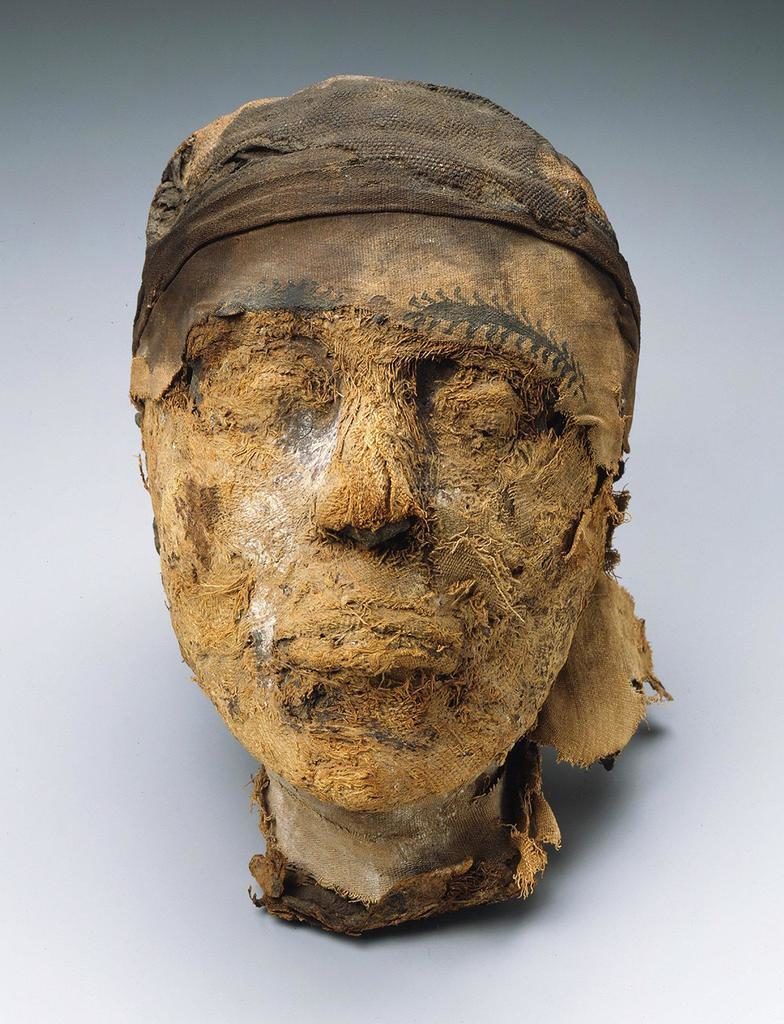
4,000-year-old mutilated mummy solves century-old mystery

4,000-Year-Old Mummy egypt decapitated
A team of forensic scientists has managed to extract DNA from a 4,000-year-old mummy, and their finding has solved a century-old mystery of its ransacked tomb.

The Egyptian mummy wasn't a fully preserved corpse, but rather a decapitated, mutilated, bandage-wrapped head that archaeologists found on top of a coffin when they excavated a tomb back in 1915. And that was the source of the mystery.

As the researchers explained in a paper published March 1 in the journal Genes, the tomb belonged to an Egyptian Middle Kingdom governor named Djehutynakht. But by the time modern scientists found the tomb, it had been ransacked; it was robbed in ancient times. In an article describing the discovery, The New York Times reported that the robbers had set the place on fire "to cover their tracks." [Gallery: Amazing Egyptian Discoveries]

Comment: See also:


Roses

4,000 photos, 4 social networks, 1 family: #Romanovs100 kicks off with release of its first stories

#Romanovs100
Thousands of rare photos from the Romanovs' private archives are hitting the web, starting April 8, in a hundred-day-long project dedicated to the lives of Russia's last reigning royal family.

Nicholas II was a real photo buff and his wife and five children followed suit: they used different cameras, including the legendary Kodak Brownie, to take photos of their daily lives. #Romanovs100 will publish these images via four major social media accounts: Facebook, YouTube, Twitter and Instagram

Archaeology

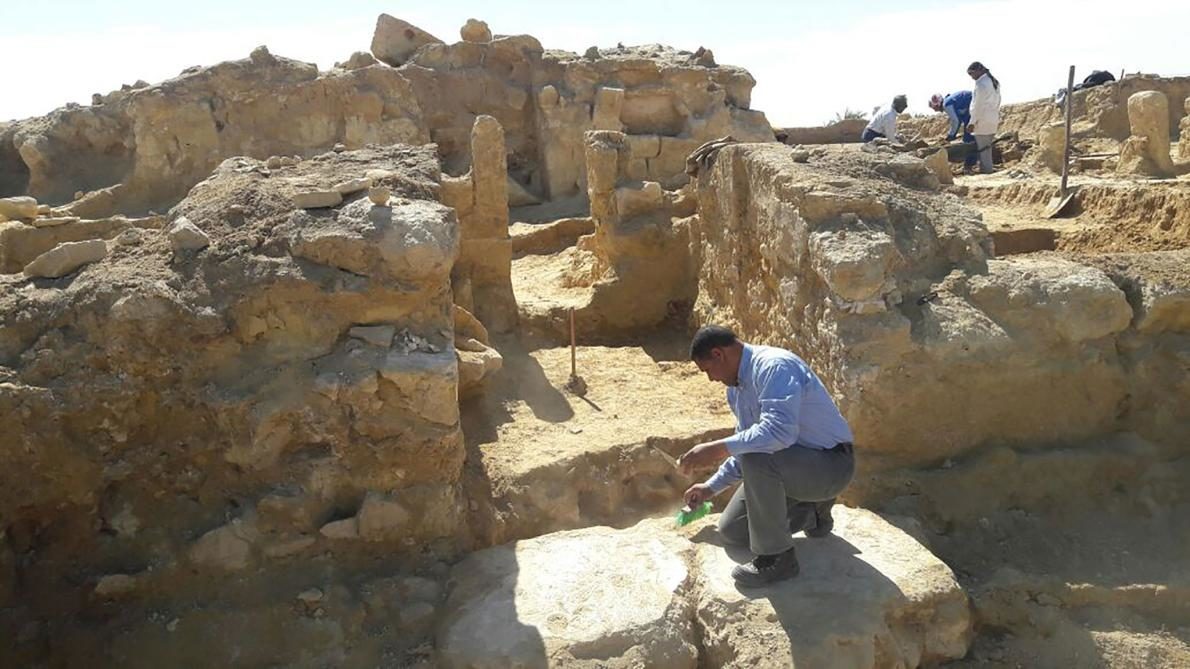
Greco-Roman temple unearthed in remote Egyptian oasis

greco roman temple egypt
© Egyptian Antiquities MinistryA newly discovered Greco-Roman temple was unearthed in Egypt's Western Desert.
A sculpture of a man's head and two limestone lion statues were among the artifacts uncovered at the archaeological site.

The Egyptian Ministry of Antiquities announced Wednesday that archaeologists have uncovered the remains of a Greco-Roman temple in Egypt's Western Desert. Found at the Al-Salam site, which is roughly 200 miles south of the Mediterranean Sea, the ruins include the front section of the temple and parts of its foundation and main entrance. The archaeologists also found a three-feet-thick outer wall leading to a front courtyard, which is surrounded on both sides by entrances to other chambers.

Ayman Ashmawi, the head of the Ministry's Ancient Egyptian Antiquities department, says the archaeologists expect to find more temple remains after other excavations are carried out later this year.

Airplane

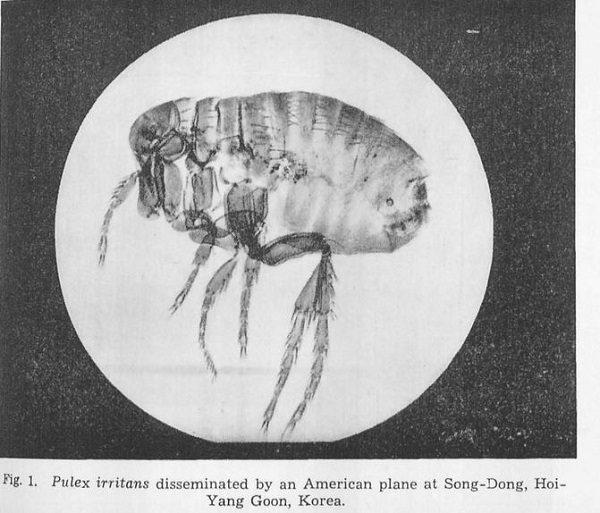
March 1952: U.S. dropped plague-infected fleas on North Korea

plague flea
© International Scientific Commission (“Needham”) Report
There is a great deal of misunderstanding between the people of the United States and North Korea. This is largely due to the lack of information the average U.S. citizen has about the suffering endured by Koreans during the Korean War, including war crimes committed by U.S. forces.

While U.S. forces carpet bombed North Korea, bombed irrigation dams, and threatened nuclear attack, their most controversial action was the use of bacteriological or biological weapons during the war.

For decades, the U.S. has strenuously denied the use of such weapons. At the same time, evidence of such use was kept from the American people. Even today, very few are aware of what really happened. Only in February 2018 was a full documentary report on the U.S. use of germ warfare during the Korean War, prepared and written by mostly West European scientists 66 years ago, released online in easy-to-read format.Some former Cold War researchers have maintained that China, the Soviet Union, and North Korea perpetuated a fraud in their claims of germ warfare. They rely on a dozen or so documents supposedly found by a rightwing Japanese journalist in Soviet archives. But these researchers never counted on the fact that someday the public could read documentary accounts of the biowar campaign for themselves.

Dig

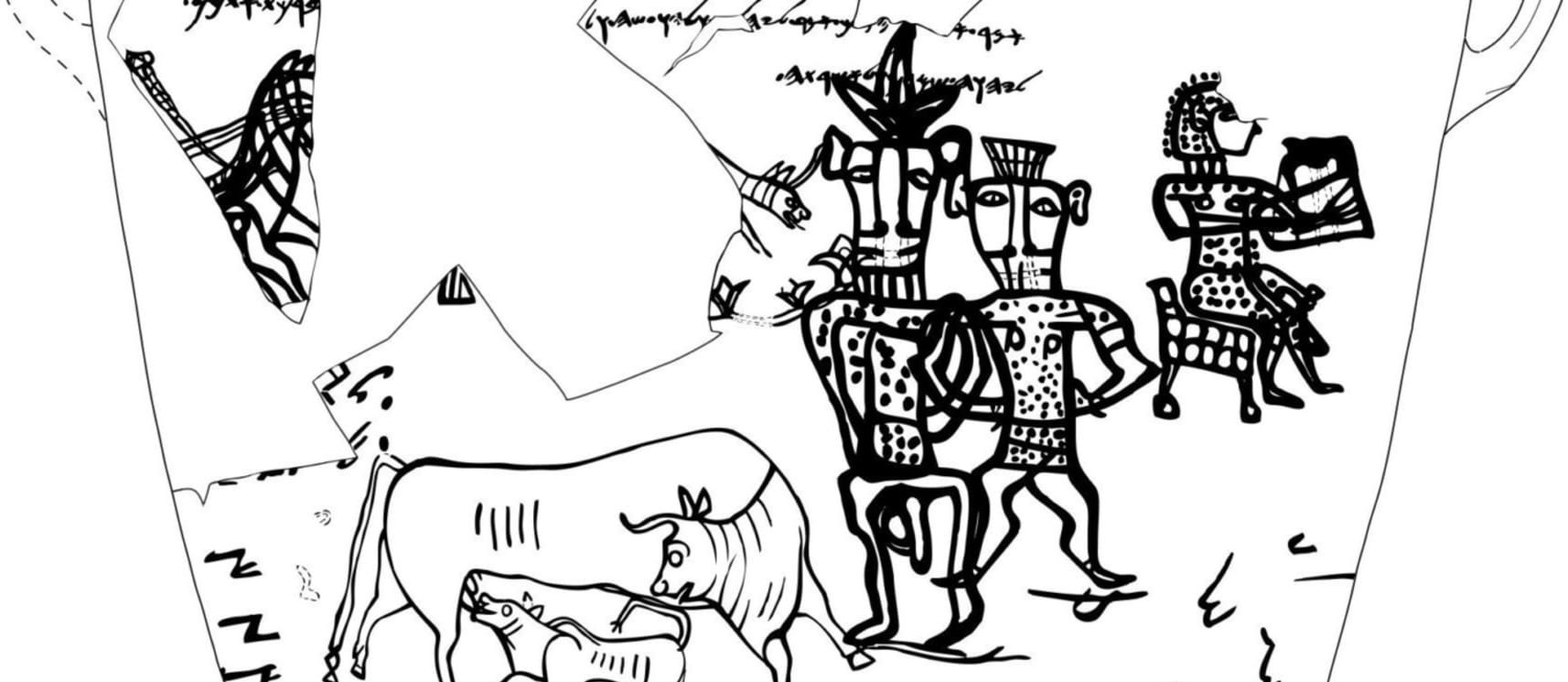
3,000 year old drawing of god found in Sinai could undermine our entire idea of Judaism

Is that a 3,000-year-old picture of god, his penis and his wife depicted by early Jews at Kuntillet Ajrud?
FILE PHOTO: Is that a 3,000-year-old picture of god, his penis and his wife depicted by early Jews at Kuntillet Ajrud?
More than four decades after its excavation wound down, a small hill in the Sinai Desert continues to bedevil archaeologists. The extraordinary discoveries made at Kuntillet Ajrud, an otherwise nondescript slope in the northern Sinai, seem to undermine one of the foundations of Judaism as we know it.

Then, it seems, "the Lord our God" wasn't "one God." He may have even had a wife, going by the completely unique "portrait" of the Jewish deity that archaeologists found at the site, which may well be the only existing depiction of YHWH.

Kuntillet Ajrud got its name, meaning "the isolated hill of the water sources," from wells at the foot of the hill. It is a remote spot in the heart of the desert, far from any town or or trade route. But for a short time around 3,000 years ago, it served as a small way station.

Comment: What is clear is the tales mainstream history tells us is far from the truth, as Laura Knight-Jadczyk writes in Judaism and Christianity - Two Thousand Years of Lies - 60 Years of State Terrorism:
Judaism supposedly created Israel, and Judaism also is the parent of Christianity and Islam, so the issue of Judaism and Ancient Israel, from which it supposedly emerged, are not trifling topics. The fact is, as a growing body of scholarship demonstrates, there was no "ancient Israel" as depicted in the Bible. The Hebrew Bible is not, by any stretch of the imagination, a historical document, and trying to understand the history of Palestine by reading the Bible is like trying to understand Medieval history by reading Ivanhoe.
Also check out SOTT radio's:


Fish

Scientists are starting to care about cultures that talk to whales. Why?

Arctic people have been communicating with cetaceans for centuries. The rest of the world is finally listening in
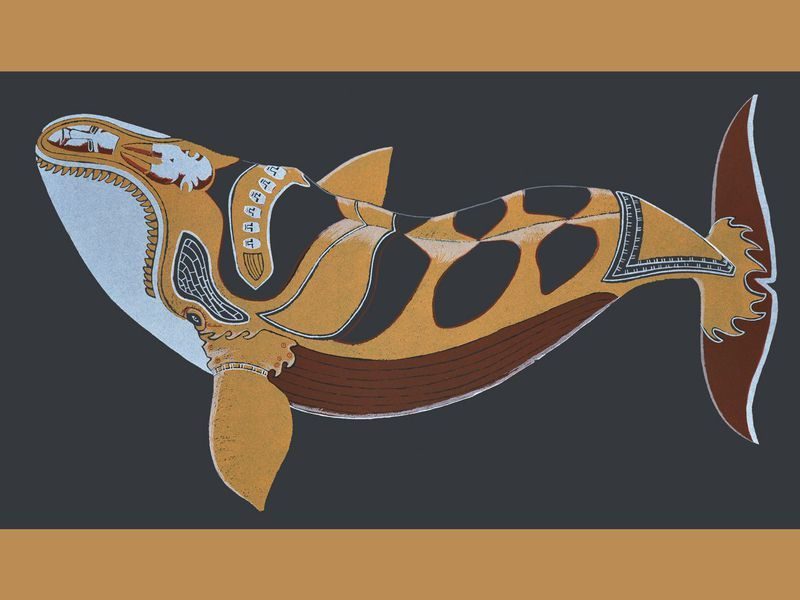
“Tattooed Whale, 2016” by Tim Pitsiulak. Screen-print on Arches Cover Black.
© Reproduced with the permission of Dorset Fine Arts“Tattooed Whale, 2016” by Tim Pitsiulak. Screen-print on Arches Cover Black.
Harry Brower Sr. was lying in a hospital bed in Anchorage, Alaska, close to death, when he was visited by a baby whale.

Although Brower's body remained in Anchorage, the young bowhead took him more than 1,000 kilometers north to Barrow (now Utqiaġvik), where Brower's family lived. They traveled together through the town and past the indistinct edge where the tundra gives way to the Arctic Ocean. There, in the ice-blue underwater world, Brower saw Iñupiat hunters in a sealskin boat closing in on the calf's mother.

Comment: Scandinavian Stone Age society more reliant on fishing than previously thought - particularly aquatic mammals


Microscope 1

DNA from unknown ancestor lingers in Africa's Yoruba tribe

The majority of Yoruba people live in Nigeria
© Pius Utomi Ekpei/AFP/Getty ImagesThe majority of Yoruba people live in Nigeria
Some of us carry mysterious genes that may belong to another species of early human. The finding in people from West Africa hints that primitive hominins lingered in Africa until fairly recently.

Our species has repeatedly interbred with other hominins, in particular with the Neanderthals and a less well-known species called the Denisovans. This happened after some members of our species first left our African homeland, probably within the last 100,000 years. As a result, all people whose recent descent is non-African carry some Neanderthal DNA, and some Asian people also have Denisovan DNA.

But it is hard to spot if people whose ancestors never left Africa also carry DNA from other species. We don't have DNA from any extinct African hominins to compare because the hot and wet climate there tends to destroy preserved DNA.

Comment: See also: There's a lot of misleading nonsense in this article. The reader is advised to check out Wolpoff's and Caspari's book: Race and Human Evolution: A Fatal Attraction.


Russian Flag

The American Mission and the 'Evil Empire': The Crusade for a 'Free Russia' since 1881

american mission foglesong
"The contemporary vilification of Russia may be less about the rationalization of U.S. interests and policies and more about the affirmation of an American identity," stated David S. Foglesong, Associate Professor of History, Rutgers University, and former Short-Term Scholar, Kennan Institute. Speaking at a 9 June 2008 Kennan Institute lecture, Foglesong said that his book, The American Mission and the 'Evil Empire': The Crusade for a 'Free Russia' since 1881, explores the American concern with liberating and remaking Russia over a span of 130 years. Using a wide array of both visual and rhetorical images of Russia in the United States, from advertisements and magazine covers to political cartoons and policy idioms, Foglesong demonstrated how the political crusade for a free Russia can be seen as part of the broader missionary enterprise that reflects America's national purpose, meaning, and identity.

Foglesong identified some of the predominant images of Russia that occur currently in the U.S., and then linked them to their historical origins. In contemporary representations of Russia, Foglesong recognized strong traditions of mission and crusade, powered by dichotomous paradigms such as good and evil, light and dark, freedom and oppression, and democracy and autocracy. According to Foglesong, U.S. politicians today denounce and disparage Russian leaders in an effort to gain favor with certain domestic groups. The U.S. media, he noted, regularly invoke the image of Russia as a prison, with former Russian president Vladimir Putin as its warden.

Comment: Interesting as far as American perception of Russia goes, but structural (recurring, cyclical, underlying) russophobia predates the US.