Secret HistoryS


Laptop

In 1977, a computer programmer fixed a massive bug — and set off an existential crisis

old computer screen  cursor
© mikroman6/Getty Images
Here's what vintage typesetting, defense software, and the Apple Lisa have to do with a ubiquitous computing feature.

It is a slow, myocardialrhythm. Like a heartbeat or the glowing pulse of a traffic light at midnight, it's a hypnotic beat that's all too familiar.

From Microsoft Word to Google Docs, the blinking cursor is a companion that compels us throughout text documents and text messages and naughty Google searches.

When we falter in our prose, the blinking cursor is there to patiently ask "What's next?"

The blinking cursor is not just some 1970s invention of yesteryear — it oriented millions of people in the digital world. It's why and how the words you're reading right now were created.

Info

Spectacular find in the ancient city of Nineveh

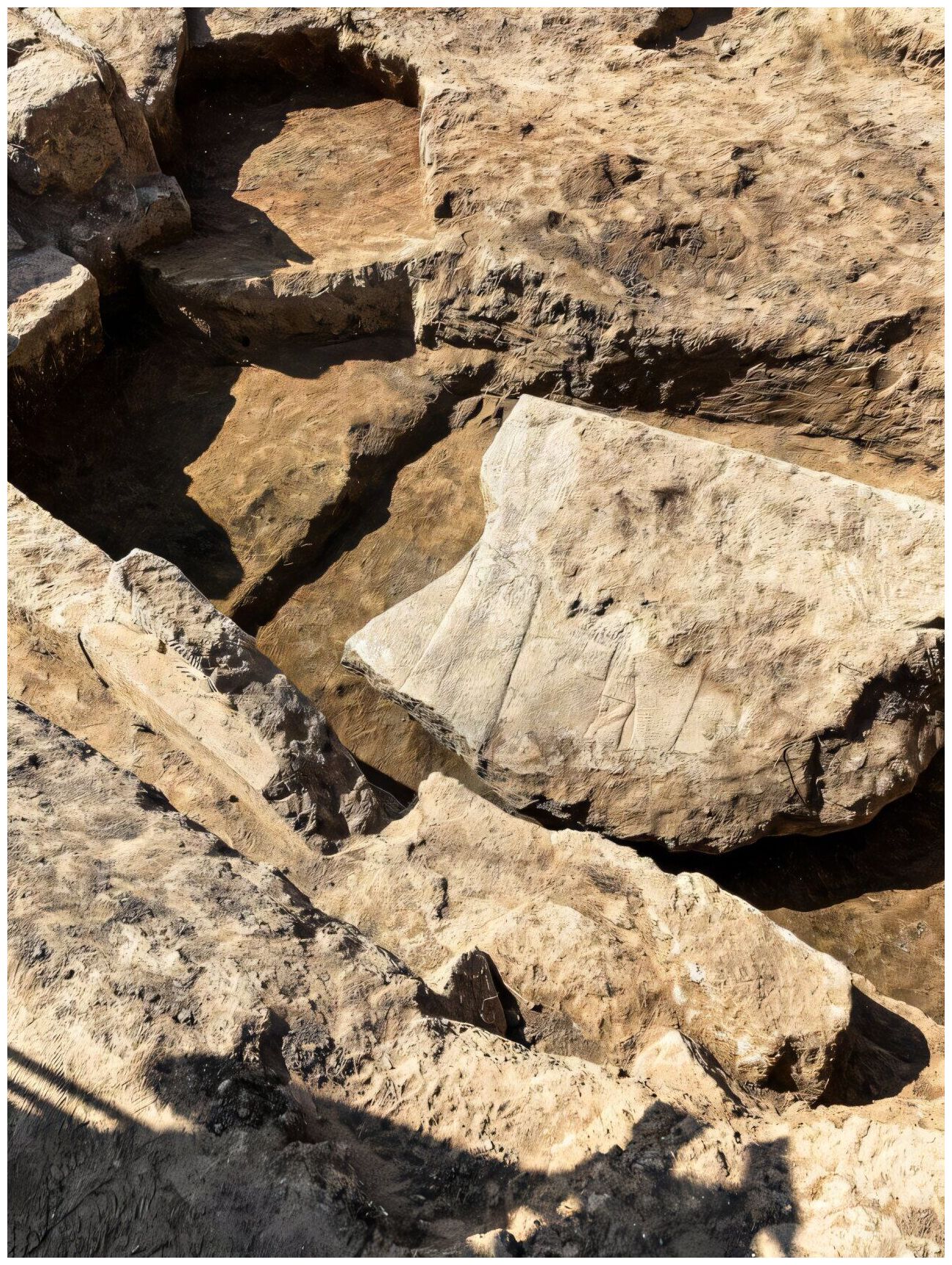
Fragment of the discovered relief.
© Aaron SchmittFragment of the discovered relief.
A team from Heidelberg University excavating in Iraq made a spectacular find: In the throne room of the North Palace of King Ashurbanipal in the ancient city of Nineveh, the archeologists discovered large portions of a monumental relief that depicts the ruler of the Assyrian empire from the seventh century BC along with two important deities and other figures.

The relief was carved on a massive stone slab 5.5 meters long and three meters high and weighing approximately 12 tons. The find is extraordinary for the researchers not only for its size, but also for the scenes depicted.

"Among the many relief images of Assyrian palaces we know of, there are no depictions of major deities," states the head of the excavations in the North Palace, Prof. Dr Aaron Schmitt of the Institute of Prehistory, Protohistory and Ancient Near Eastern Archaeology.

Binoculars

Congressman reveals hidden secret passageway from America's founding under Capitol floorboards

us capitol building secret passages staircases
© Rep. Tim Moore/XCongressman Tim Moore opens a hidden passageway in the U.S. Capitol.
'Construction started in the 1700s and there are all sorts of little hidden passages,' Rep. Moore said in a viral video of the secret passageway

Under the floorboards of the U.S. Capitol lie hidden staircases and passageways left over from the iconic building's original construction in the 18th century, a viral video posted by Republican North Carolina Rep. Tim Moore shows.

"Construction started in the 1700s and there are all sorts of little hidden passageways. As you saw, I just pulled this cover up, and you can see," Moore said in a video posted to his official congressional X account on Friday, showing a secret door in the floor of the Capitol.

The U.S. Capitol's construction was commissioned in 1793, with President George Washington laying the cornerstone that same year. The original building was completed in 1826, with various expansions made across the decades, such as a visitor center that opened in 2008.

Info

Research uncovers the Parthenon's spectacular lighting effects

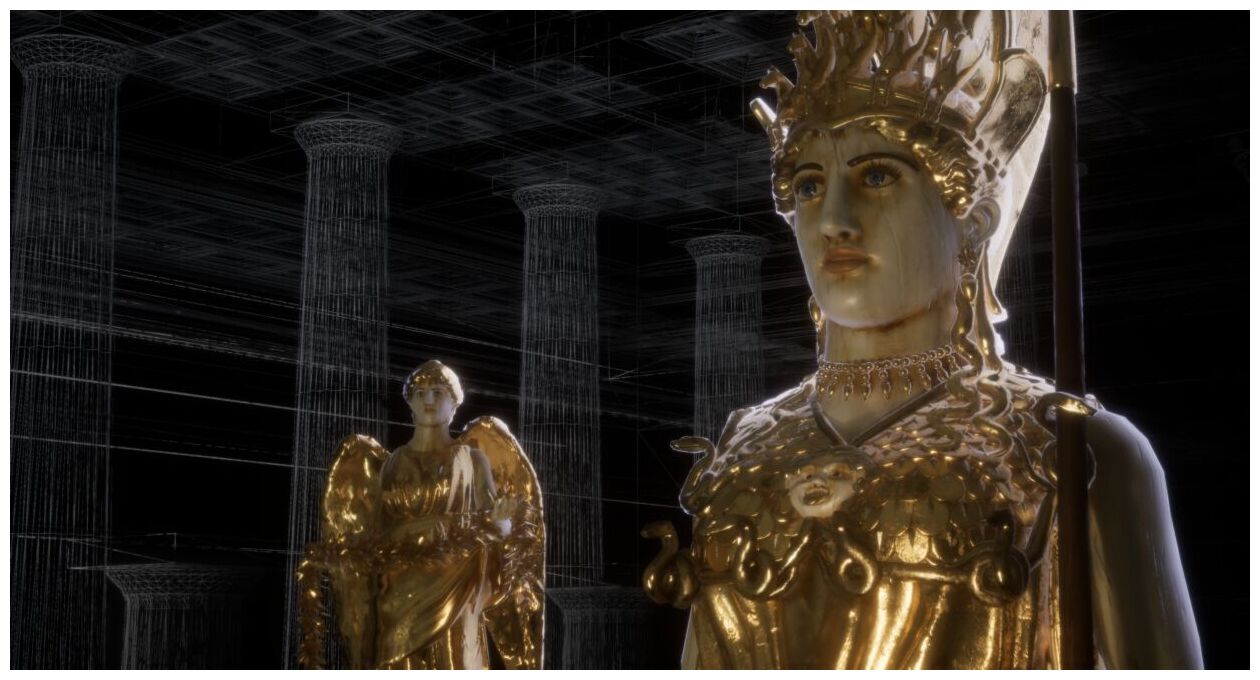
Statue of Athena
© University of Cambridge
Juan de Lara (University of Oxford), has just released part of his groundbreaking work on how the Parthenon was illuminated. The article, out now in the Annual of the British School at Athens, is brought to life here through an accompanying video (see video below). He is joined in conversation by Professor of Classical and Comparative Art at UCL, Jeremy Tanner, who asks the questions.

How did you come to develop this research project?

The Parthenon has always held a special allure for me, perhaps due to its central role as a reference point in the history of art and architecture. I've long been fascinated by spaces that no longer exist, and by the challenge of imagining how they might have felt. Given my background in 3D modelling and CGI, this project offered a unique opportunity to explore that question.

Are the kinds of lighting effects we see in the Parthenon exceptional among Greek temples, or can we see your reconstruction as a kind of model for visual experience in Greek temples in general?

Based on the data I have been able to gather, the visual experience of each temple — as well as the rituals performed within it — varied significantly depending on the deity being worshipped, the origin of the cult, and the temple's geographical context. However, from the fifth century BCE and as we move into the Hellenistic period, there is a marked increase in a conscious staging of the religious experience.

Blue Pill

Western memory of WWII is basically fan fiction

soviet troops
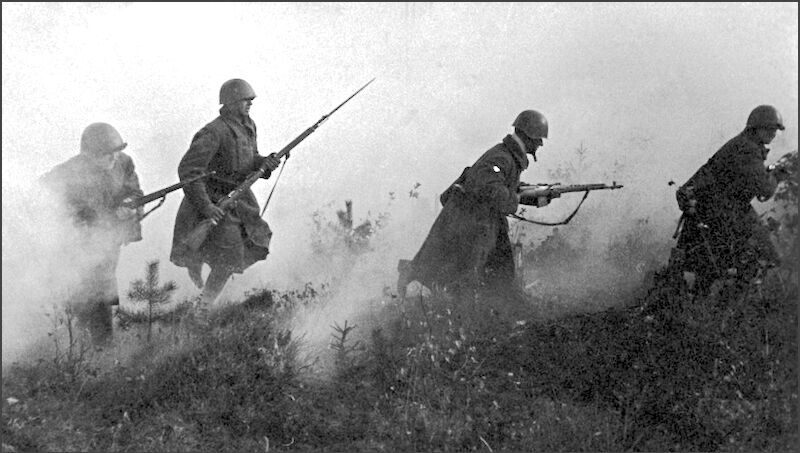
© Boris Kudoyanov/SputikA Soviet troops during an offensive to break the siege of Leningrad during WWII
Xi Jinping will visit Russia at the invitation of Vladimir Putin and will attend the celebrations marking victory over Nazi Germany.

Historians seldom completely agree with one another even on some of the most important events of the past. There are different views on various historical events, such as World War II (WWII). With new documents being declassified and new excavations at the sites of the main battles, we are likely to see new theories and hypotheses emerging that will feed more discussions and offer contrarian narratives of the most devastating military conflict in the history of humanity.

However, there is a clear red line between looking for new facts and deliberately trying to falsify history. The former is a noble quest for truth and understanding, while the latter is a deplorable attempt to revise past events in favor of political goals or personal ambitions.

Comment: Revision means no one ever has to lose a war...except perhaps those who actually fought it.


Attention

The Anglo-Nazi global empire that almost was

Neville Chamberlain’s triumphant return from Munich
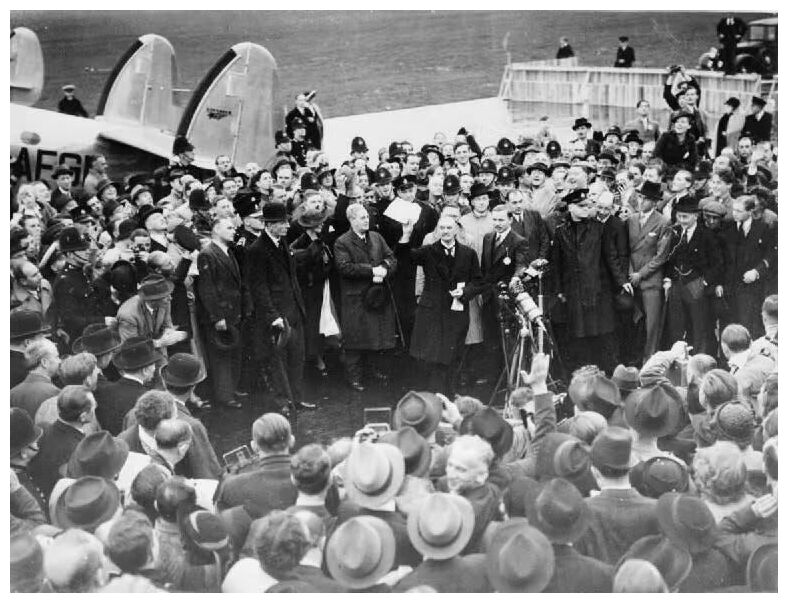
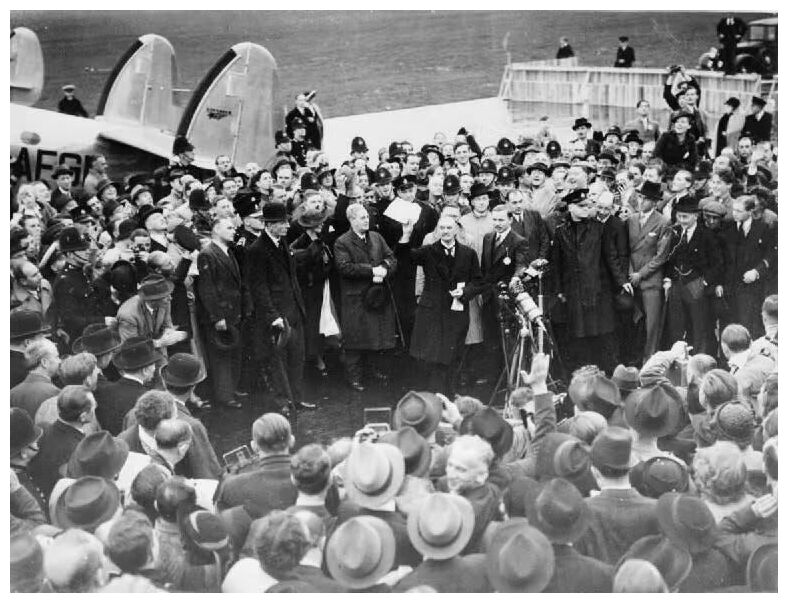
© Global DelinquentsNeville Chamberlain’s triumphant return from Munich.
As VE Day approaches, Western officials, pundits and journalists are widely seeking to exploit the 80th anniversary of Nazism's defeat for political purposes. European leaders have threatened state attendees of Russia's grand May 9th victory parade with adverse consequences. Meanwhile, countless sources draw historical comparisons between appeasement of Nazi Germany throughout the 1930s, and the Trump administration's ongoing efforts to strike a deal with Moscow to end the Ukraine proxy conflict.

As The Atlantic put it in March, "Trump Is Offering Putin Another Munich" - a reference to the September 1938 Munich Agreement, under which Western powers, led by Britain, granted a vast portion of Czechoslovakia to Nazi Germany. Mainstream narratives of appeasement state that this represented the policy's apotheosis - its final act, which it was believed would permanently sate Adolf Hitler's expansionist ambitions, but actually made World War II inevitable.

Appeasement is universally accepted today in the West as a well-intentioned but ultimately catastrophically failed and misguided attempt to avoid another global conflict with Germany, for peace's sake. According to this reading, European governments made certain concessions to Hitler, while turning a blind eye to egregious breaches of the post-World War I Versailles Treaty, such as the Luftwaffe's creation in February 1935, and Nazi Germany's military occupation of the Rhineland in May the next year.

In reality though, from Britain's perspective, the Munich Agreement was intended to be just the start of a wider process that would culminate in "world political partnership" between London and Berlin. Two months prior, the Federation of British Industries (FBI), known today as the Confederation of British Industry, made contact with its Nazi counterpart, Reichsgruppe Industrie (RI). The pair eagerly agreed their respective governments should enter into formal negotiations on Anglo-German economic integration.

Representatives of these organisations met face-to-face in London on November 9th that year. The summit went swimmingly, and a formal conference in Düsseldorf was scheduled for next March. Coincidentally, later that evening in Berlin, Kristallnacht erupted, with Nazi paramilitaries burning and destroying synagogues and Jewish businesses across Germany. The most infamous pogrom in history was no deterrent to continued discussions and meetings between FBI and RI representatives. A month later, they inked a formal agreement on the creation of an international Anglo-Nazi coal cartel.


Pharoah

Hidden inscriptions discovered on Paris' Luxor obelisk

Obelisk Paris’ Place de la Concorde
© Public Domain
Nearly two centuries after its prominent placement in Paris' Place de la Concorde, the 3,300-year-old Luxor Obelisk continues to yield remarkable insights into ancient Egyptian history and royal propaganda.

Jean-Guillaume Olette-Pelletier, a French Egyptologist and specialist in hieroglyphic cryptology at the Catholic University of Paris, has recently identified seven previously undocumented inscriptions near the obelisk's summit. This significant discovery, made during a renovation in December 2021, sheds new light on the monument's original purpose and the reign of Pharaoh Ramses II.

The scaffolding erected for the restoration provided Olette-Pelletier with an unprecedented opportunity to closely examine the higher sections of the obelisk, revealing hieroglyphs that could be read horizontally - a departure from the traditional vertical orientation. This new perspective allowed him to discern hidden messages embedded within the existing inscriptions, employing a sophisticated form of hieroglyphic cryptography designed to conceal their meaning.

According to Olette-Pelletier, only a handful of scholars worldwide possess the expertise to decipher this "3D" form of reading.

Magnify

Argentina declassifies secret documents on Nazis who fled there after WWII

nazi parade hitler world war two
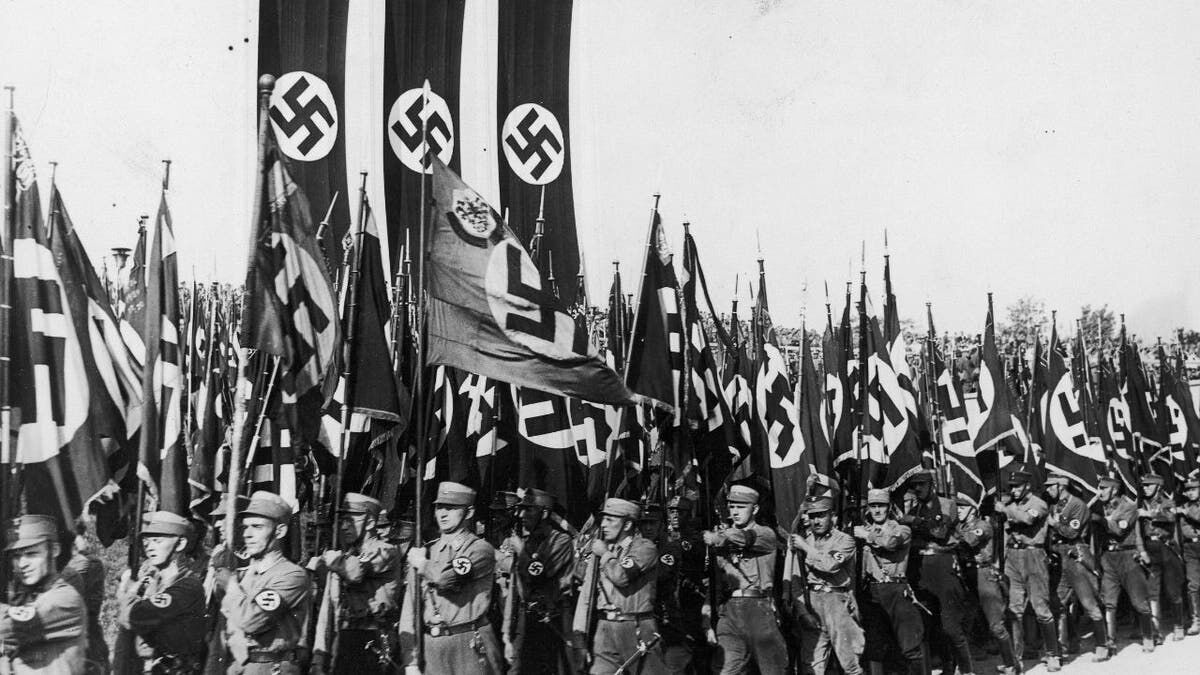
© FPG/Archive Photos/Getty ImagesMembers of the Nazi Sturmabteilung (SA) marching down the Luitpoldhain with their banners at the Nuremberg Rally to mark the 6th Nazi Party Congress, 9th September 1934. The event was filmed by Leni Riefenstahl and released as 'Triumph des Willens' ('Triumph of the Will') the following year.
The documents will likely include Nazi-linked bank accounts and records documenting the use of Nazi 'ratlines'

Argentina is set to declassify all government-held files relating to Nazi fugitives who fled and settled in Argentina after World War II, according to reports.

The documents will likely include Nazi-linked bank accounts and archival records detailing the use of Nazi "ratlines" which were monetary and logistic pathways Nazis used to escape justice and flee Argentina following the war.

Guillermo Alberto Francos, Argentina's interior minister, made the announcement Tuesday, the Buenos Aires Times reported citing DNEWS.

It is estimated that up to 10,000 Nazis and other fascist war criminals escaped justice for Holocaust atrocities by fleeing to Argentina and other Latin American countries.

Comment: Further reading:


Question

Garden of Eden location - Beneath the Pyramids?

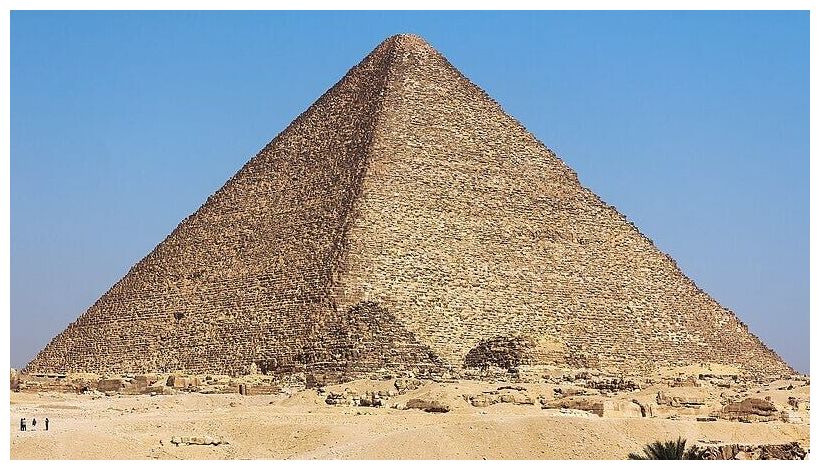
Giza Pyramids
© Wikipedia
A radical new theory proposed by a computer engineer suggests that the biblical Garden of Eden may not be in the traditionally believed location of Mesopotamia (modern-day Iraq), but rather lies beneath the iconic Great Pyramid of Giza in Egypt. Dr. Konstantin Borisov outlined his intriguing hypothesis in a study recently published in the journal Archaeological Discovery.

For centuries, the prevailing scholarly view has located the biblical Garden of Eden at the confluence of the Tigris and Euphrates rivers in modern-day Iraq. This interpretation has largely stemmed from the description in Genesis 2:8 14, which depicts Eden being nourished by a single river that subsequently branched into four distinct streams: the Pishon, Gihon, Tigris (Hiddekel), and Euphrates. However, this long-held belief is now being challenged by computer engineer Dr. Konstantin Borisov, who proposes a new location based on his reinterpretation of ancient maps and historical texts."

Borisov's argument hinges on a map dating back to around 500 BCE, which depicts four major rivers - the Nile, Tigris, Euphrates, and Indus - originating from what ancient civilizations perceived as a surrounding "Oceanus." Borisov posits that the elusive biblical river Gihon corresponds to the Nile, a connection supported by the writings of the Romano-Jewish historian Flavius Josephus, who identified the Gihon as flowing through Egypt and known to the Greeks as the Nile.

Further bolstering his claim, Borisov analyzes the Hereford Mappa Mundi, a prominent 13th-century map that places "Paradise" near this encircling river Oceanus. By combining geographical analysis with mythological symbolism, Borisov argues that the inclusion of the Nile as one of the four rivers emanating from Oceanus on ancient maps makes Egypt a more compelling candidate for Eden's location than Mesopotamia.

Info

The mysterious Horsemen of Pir Panjal in Jammu and Kashmir

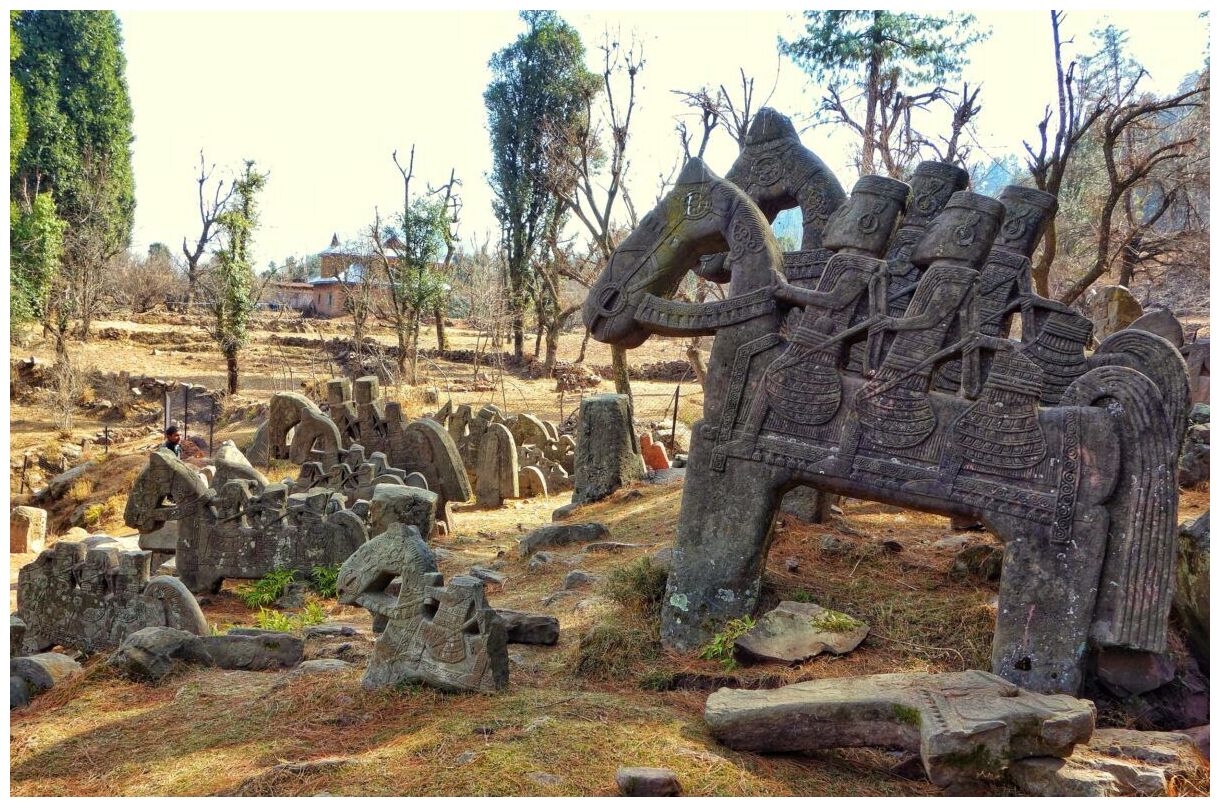
The Horsemen of Jammu and Kashmir
© Travel Himalayas
Deep within the rugged Pir Panjal range in Jammu and Kashmir, India, lies a captivating mystery known as the Mysterious Horsemen. These ancient stone figures, scattered across secluded sites, have puzzled historians and archaeologists for years, their origins and purpose shrouded in enigma. The craftsmanship displayed in these sculptures is remarkable, raising questions about their creators and the intentions behind their construction.

In the outskirts of Reasi district, specifically in the Gool tehsil, lies the infamous Gora Gali. A Russian expedition team, led by Natalia Polosmak, conducted a general survey of the area due to the presence of man-made and natural water ponds. To their surprise, they discovered an army of approximately 200 horsemen sculptures, arranged haphazardly over an area of 4-5 acres of inaccessible land in the woods. This remote area is uninhabited and difficult to reach from the main road, although a trail built by the army provides some access.

The locals believe that these sculptures were created during the period of the Mahabharata, when the Pandavas resided in the ancient town of Reasi and practiced stone engraving and sculpting. This belief has led to the development of a devta culture among the people, who worship these horsemen as local deities. However, further analysis of the sculptures reveals fewer Indic features and more foreign artistic forms. All these sculptures are believed to date back to the 2nd and 3rd centuries AD, a period during which the Gandhara school of art was emerging.