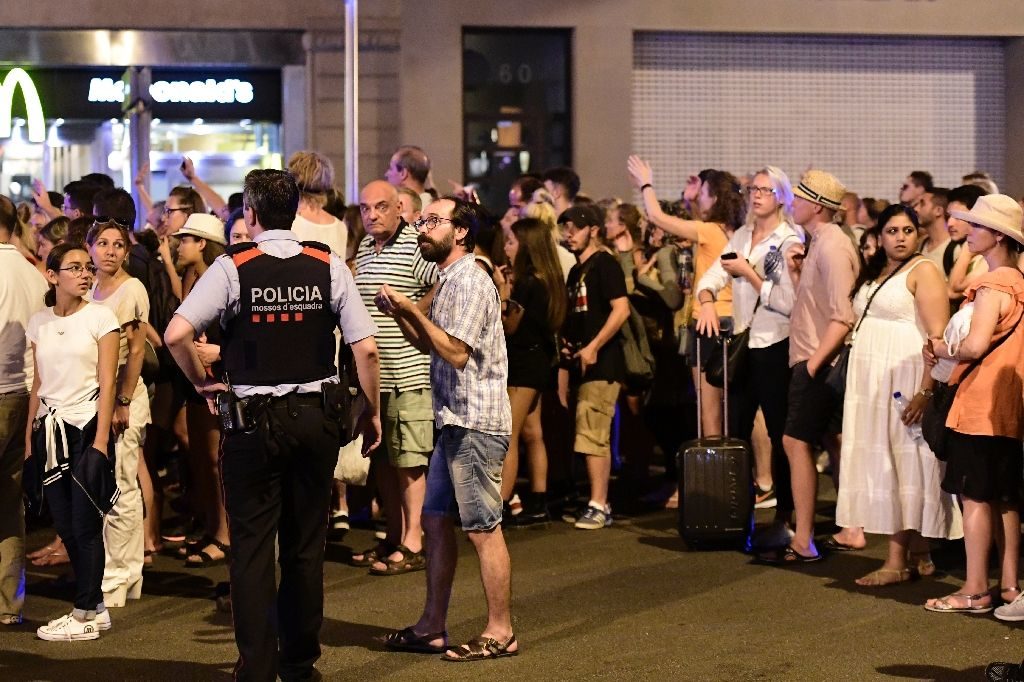
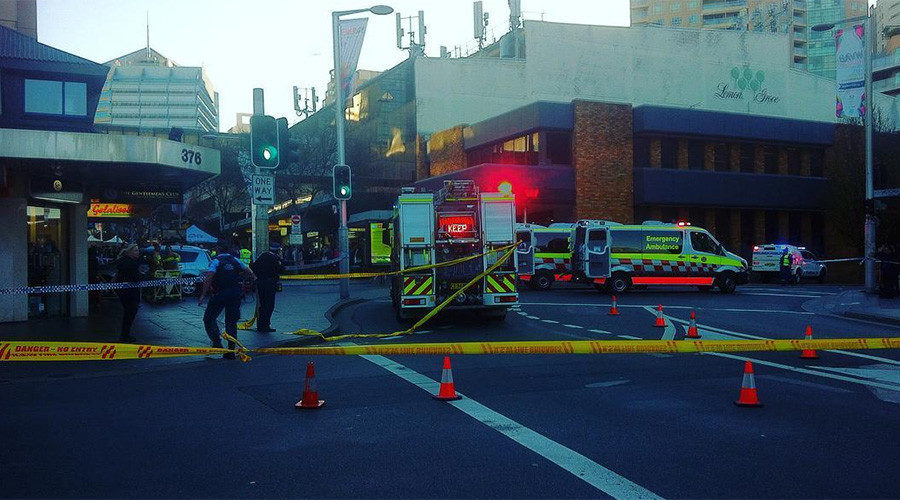
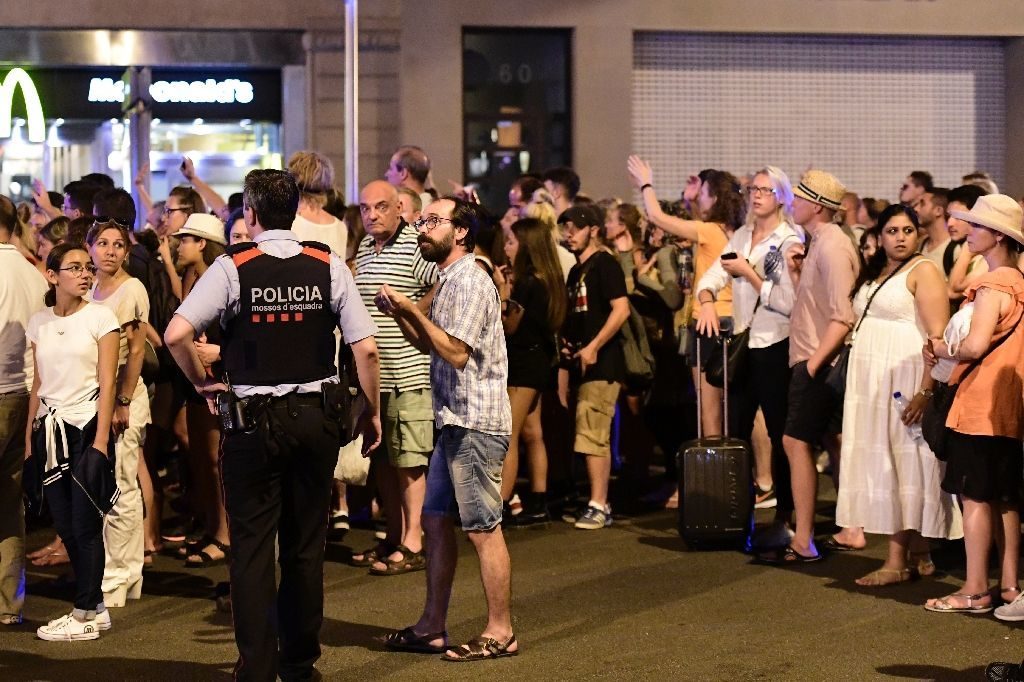
© AFP phot/Javier SorianosTourists wait for the police to allow them to come back to their hotel on Las Ramblas boulevard after a van ploughed into the crowd, killing at least 13 people and injuring around 100 others on the Rambla in Barcelona, on August 18, 2017.
In Barcelona's old town, dozens of stunned tourists dressed in shorts and t-shirts stood behind security tape in the early hours, witnesses to the shocking attack on the famous boulevard of Las Ramblas.
Thirteen people were killed and more than 100 injured when a white van sped into the historic promenade, which was packed with tourists, knocking people down in a scene of chaos and horror.
Close to the statue of Christopher Columbus, which depicts the explorer pointing out to sea, a distressed Scottish couple in their sixties who watched the attack unfold studied the security cordon blocking off the street.
"We were sitting on the balcony of the hotel. We saw everything... the car... the panic everywhere," said the man, who did not want to be named, adding that they now could not get back to their hotel.
"The police, they arrived in two minutes, they were very good," the woman said, staring blankly ahead. "We had to talk with them."
As the city was bathed in sunshine hours earlier, Barcelona was shaken by the first attack on Spanish soil claimed by the Islamic State (IS) group.
Its target was the crowd enjoying the summer afternoon, browsing stalls selling flowers and souvenirs along the central pathway of Las Ramblas, an avenue that stretches more than a kilometre towards the sea.
On a narrow street closeby, 45-year-old Benjamin, a Barcelona resident, stood staring at the spot where the van hit a stall.














Comment: No country for old monuments