Fire in the SkyS


Meteor

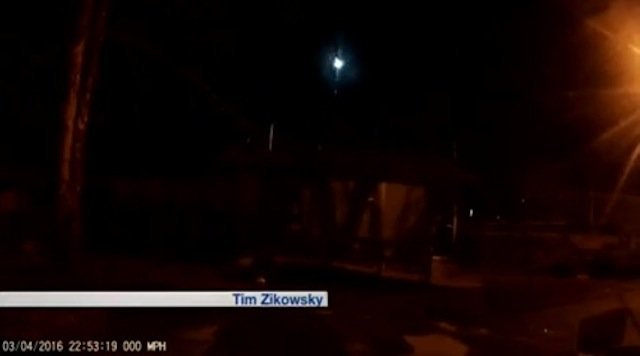
Large meteor fireball caught on dash cam in Missouri

Mountain Home meteor
© Screenshot via KY3.com
KY3 viewer Tim Zikowsky was setting up a dash cam on his way to work, and caught the meteor falling from the sky.


Meteor

Large, bright meteor fireball seen from Maine to Philadelphia

Fireball
© NASA/Joel KowskyMeteor streaks across the sky during the annual Perseid meteor shower, August 13, 2015.
Keep your eyes on the skies.

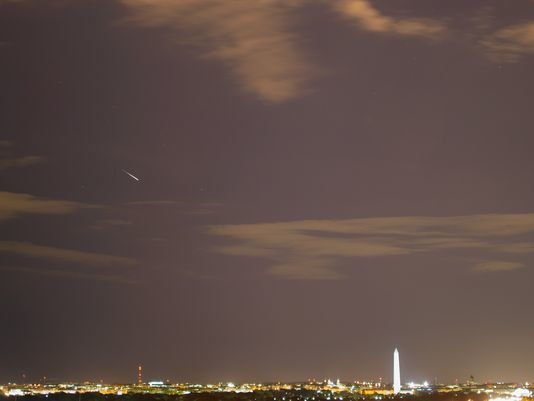
Wednesday night, just before 10 p.m., sky-watchers from Maine to Philadelphia — and more than a few in the Lower Hudson Valley — caught a glimpse of a fireball, a meteor, burning up to dust as it entered the Earth's atmosphere.

The American Meteor Society keeps a map of public meteor sightings and, according to Operations Manager Mike Hankey, about 34 reports were received from across the Northeast, including one from Dobbs Ferry and another from Ardsley.

"It seemed to burn out at a low angle above the horizon," said Andrew Ploski, of Nyack. "My 9-year-old son and I were traveling back home last night after a visit with his grandmother in Yonkers. We were traveling north on the Sprain Brook Parkway near the Ardsley Road overpass. There appeared a large, very bright fireball with trail about the brightness and size of a car headlight. It streaked across my field of vision very quickly from my upper right to lower left — east to west."

Ploski was lucky, according to seasoned sky-watchers. "To see a meteor in Westchester is a little bit unusual," said Larry Faltz, president of Westchester Amateur Astronomers. "You have to be looking up at just the right moment."

Faltz explained that, when you see a fireball in the sky, you are not actually seeing a meteor but the ionization of the Earth's atmosphere as the object heads toward the ground. For that fireball effect to be visible, an object only needs to be as big as a grain of sand.

Fireball 2

Meteor fireball explodes over Scotland, emitting a powerful rumble and lighting up the night sky

meteor scotland
A large white light and rumbling "bang" have been reported in the skies over the north east of Scotland, prompting speculation on social media about the cause.

Reports came in of a large white flash in the sky around 7pm on Monday, with Twitter users across the Highlands, Aberdeenshire and Perth saying they had witnessed the phenomenon.

Some speculated the flashes and noises had been caused by a meteor. Others reported feeling buildings shake as a result of the bang.

Police Scotland said they had been unable to ascertain the cause of the noise.

The Met Office said there were no lightning or thunderstorms in the area.


Fireball 2

Meteor fireball spotted over Luxembourg and France

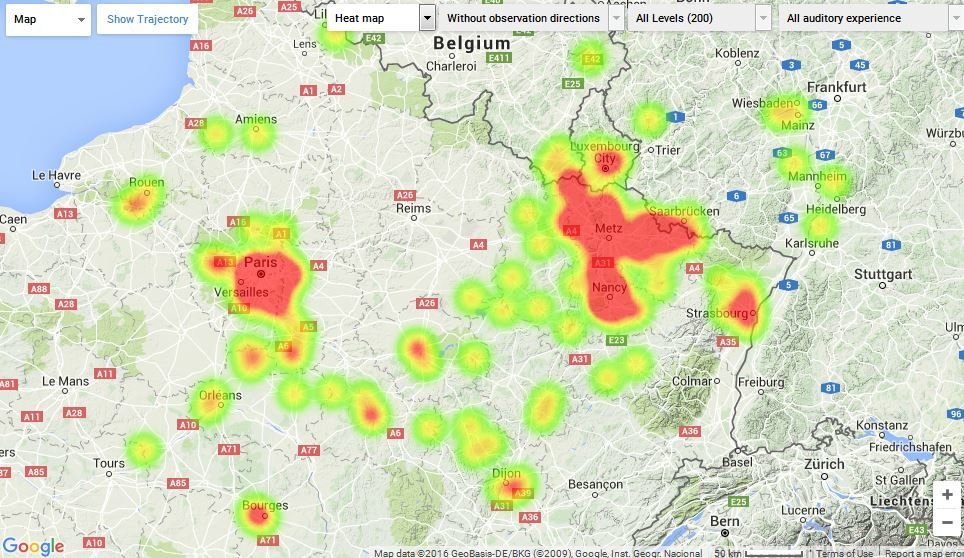
AMS heat map - Event#732-2016
© Google/AMSAmerican Meteor Society (AMS) Event#732-2016 - 'heat map' showing location of observers
If you thought you spotted an meteor above Luxembourg on Thursday morning, you probably did.

The French Meteor Observation Network confirmed the phenomenon, which was spotted around 10:30am.

It said that the meteor travelled over the east of France between Reims and Nancy.

Social media was buzzing with comments from people who witnessed the fiery spectacle.

Frederick R said: "I looked out of my office window while I was on a call and clearly saw a fireball with a tail light. What struck me was that it seemed very close to the ground."

The meteor appears to have started its path above Chalons-en-Champagne, heading north-east and disappearing between Marn, Meuse and Brussels.

The phenomenon occurs when astral or comet debris travels at great speed into the earth's atmosphere.

Comment: The American Meteor Society (AMS) has received 250 reports about a meteor fireball seen over Luxembourg, France, Belgium and Germany on 25th February 2016.

Over the past several days other meteor fireballs sightings in the region include: Spain, Portugal, Morocco and southern France.

NASA space data supports citizens' observations that - meteor fireball activity is increasing dramatically!


Fireball 4

Fireball reported over Alaska

Fireball
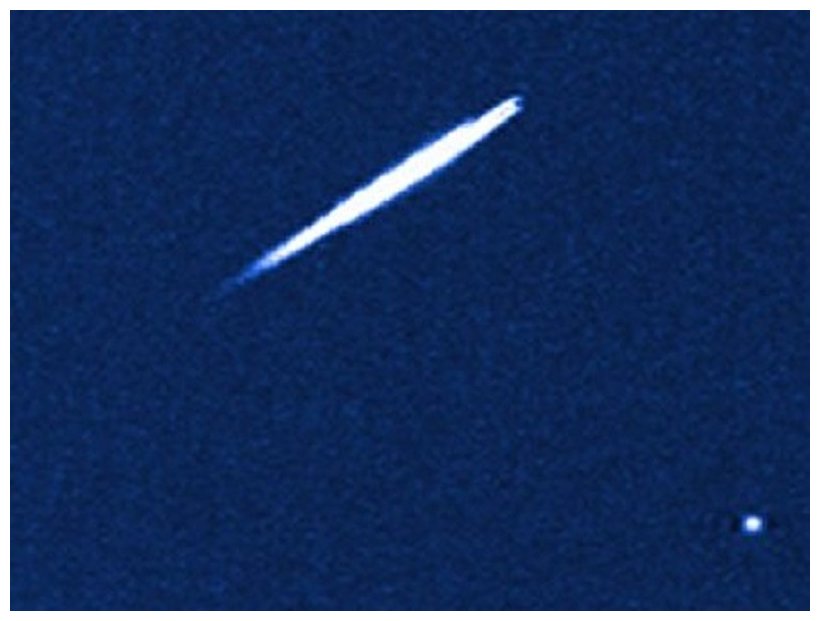
© NASANASA image of a fireball from a past meteor shower.
Fairbanks - Interior Alaska residents from Fort Yukon to Eielson Air Force Base reported seeing a fireball overhead Wednesday about 7 p.m.

The fireball, which was captured on the Geophysical Institute's All-Sky camera, flashed briefly into view and disappeared. One resident described it as a green flash with a long tail. Others said the tail also contained orange and red fragments.

It was visible for only seconds, they told the American Meteor Society, which tracks sightings.

Don Hampton of the Geophysical Institute's Poker Flat Research Range said, "It looks like a good sized meteor, but probably not a meteorite (which means it hit the ground.)"

Link to video on Facebook.

Fireball 2

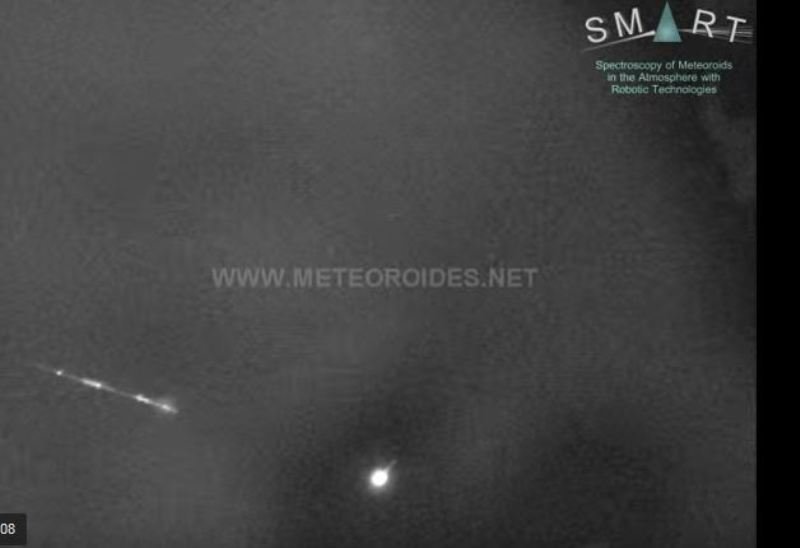
Very bright meteor fireball seen over Spain, exhibiting several explosions

meteor over Spain 23.02.2016
© SMART Project (screen capture)
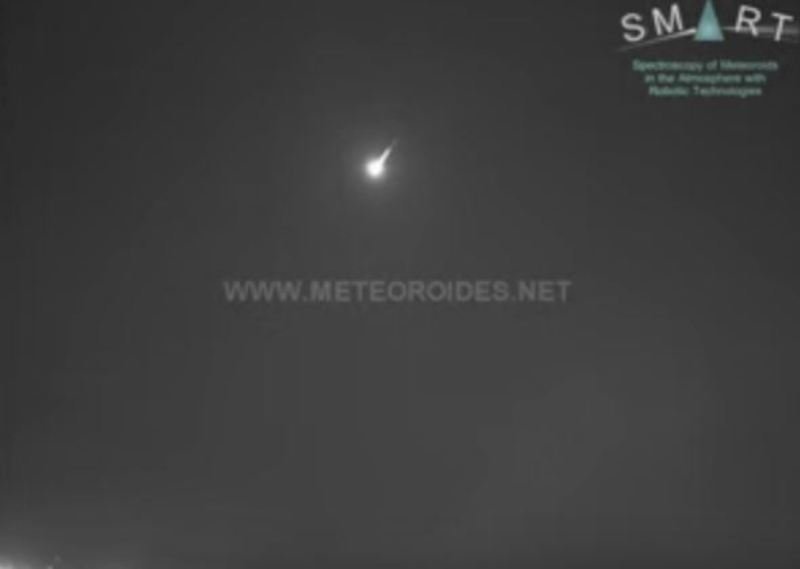
Very bright fireball over Spain on 23 Feb. 2016 at 5h54m UT (6h54m local time). The event was brighter than the full Moon and exhibited several explosions. This footage was recorded by the meteor observing station operated by the University of Huelva at La Hita astronomical observatory (Toledo).


Comment: Within the past week other meteor fireballs have been observed in the region, over southern Spain and Portugal, Morocco and southern France.


Fireball 2

Bright meteor fireball observed over southern Spain and Portugal

meteor over Spain and Portugal
© SMART Project (screen capture)
Amazing fireball observed over the South of Spain and Portugal on 21 Feb. 2016, at 2h42m UT. The event was produced by a meteoroid that impacted the atmosphere at about 120.000 km/h. It started at an altitude of about 100 km and ended at a height of about 42 km. The event was recorded by the meteor recording stations that the University of Huelva operates at the astronomical observatories located at La Hita (Toledo), Sevilla and Huelva.


Fireball

Largest fireball meteor since Chelyabinsk falls over the Atlantic

Fireball
© NASANASA image of a fireball from a past meteor shower.
On Feb. 6, 2016, around 14:00 UTC, a tiny chunk of interplanetary material plunged into Earth's atmosphere and burned up — likely exploding — about 30 kilometers above the Atlantic Ocean. The energy released was equivalent to the detonation of 13,000 tons of TNT, making this the largest such event since the (much larger) Chelyabinsk blast in February 2013.

OK, so first, off: Don't panic! As impacts go, this was pretty small*. After all, you didn't even hear about until weeks after it occurred. Events this size aren't too big a concern. Had it happened over a populated area it would've rattled some windows and probably terrified a lot of people, but I don't think it would've done any real damage.

For comparison, the Chelyabinsk explosion, which was strong enough to shatter windows and injure over 1000 people (due to flying glass), had an equivalent yield of 500,000 tons of TNT, 40 times the energy of this more recent impact.

The event was reported on the NASA/JPL Near-Earth Object Fireball page, which lists some of the brightest such things.

Comment: Certainly, this is not the first time this has happened in this area. We can say with some certainty that a similar space rock in the very same area, was the cause of the destruction of Air France Flight 447 on June 1st 2009, as reported by Sott.net

Notice also that this chunk of space rock fell on the same day that Copenhagen had a massive overhead meteor explosion and a bit earlier in the day a meteorite killed one and injured three, in India!


Fireball 5

Meteor fireball observed over Morocco

meteor fireball over Morocco
© SMART Project (screen capture)
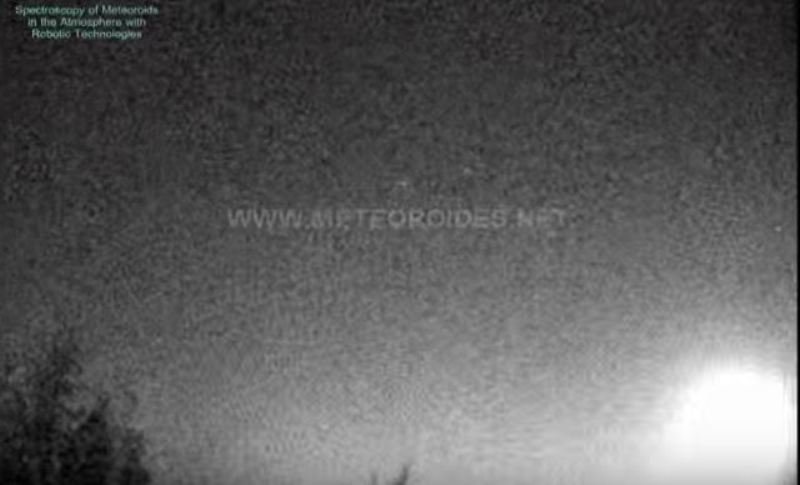
Fireball observed over Morocco on 19 Feb. 2016, at 19h 06 m UT. The event was recorded by several meteor observing stations operated by the University of Huelva in Spain.


Fireball 3

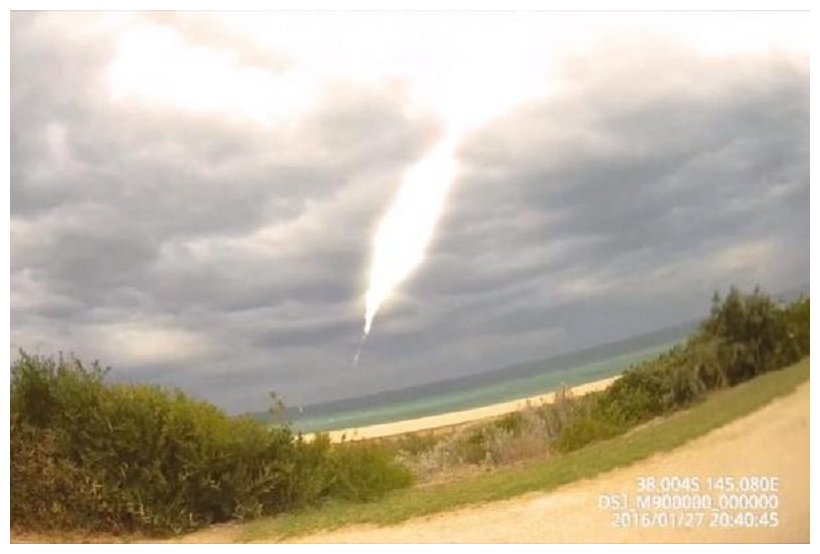
Australian catches close-up footage of meteor fireball

Victoria Meteor
© YouTube Screen Capture
Melbourne -- A man testing out his body camera at a Victoria, Australia, beach captured video of a suspected meteor falling to earth nearby.

The video, posted to YouTube (see below) by Overwatch Security, features body camera footage filmed by a worker for the firm as he walked on a Victoria beach on a stormy day.

The man faces out toward the water as the suspected meteor lights up the sky and streaks down toward the water.

The lights are quickly followed by the sound of the object passing through the air toward the water.

The video's time-stamp indicates it was filmed just after 8 p.m. Jan. 27.