Storms
S


Tornado1

Adapt 2030 Ice Age Report: Antarctic rescues, five cyclones and coded messages

Indian Ocean cyclones
© YouTube/Adapt 2030 (screen capture)
French Antarctic researchers were stranded and awaited extraction because the two year old French icebreaker's propeller broke. Australia sent a different icebreaker to finish the rescue. This is summer in the S. Hemisphere. U.N running out of money and using Extinction Rebellion to push global carbon taxes. Five cyclones form at the same time in the Indian Ocean.


Comment: Three tropical cyclones lurk near Africa and one has set a new rapid intensification record


Tornado1

Three tropical cyclones lurk near Africa and one has set a new rapid intensification record

Current Tropical Systems in the Indian Ocean
© The Weather ChannelCurrent Tropical Systems in the Indian Ocean
The tropics are getting crowded once again during this record season in the Indian Ocean as a phenomenon similar to a strong El Niño keeps waters warm near Africa.

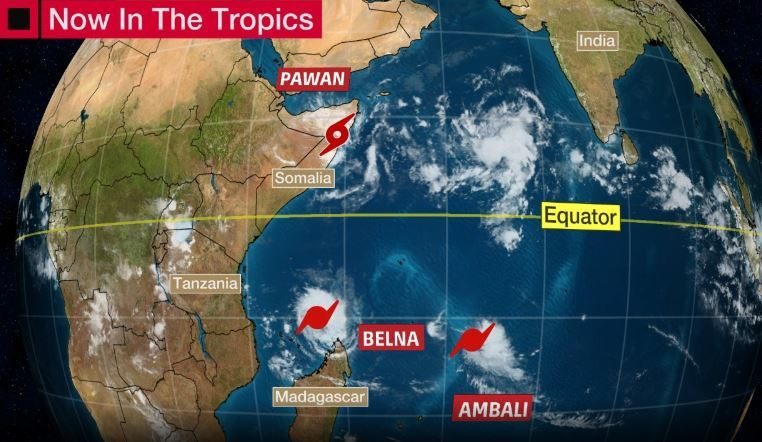
Three hurricanes - or tropical cyclones, as they are called in that part of the world - continue to spin in the western Indian Ocean as of late Thursday.
  • Tropical Cyclone Pawan (locally, Cyclonic Storm Pawan) is a weak system that will bring increased moisture and may bring heavy rain and flooding to Somalia and other parts of eastern Africa into this weekend.
  • Tropical Cyclone Belna is intensifying well off the northern coast of Madagascar, and could become a heavy rain and wind threat to the Comoros and Madagascar early next week.
  • Tropical Cyclone Ambali is also spinning well to the northeast of Madagascar as the equivalent of a Category 2 hurricane, but is not expected to threaten land before dissipating. Ambali rapidly intensifying by 115 mph in 24 hours, making it the most rapid intensification in a 24-hour period in the Southern Hemisphere by a name storm on record and the second most rapid intensification globally. It also reach the equivalent of a strong Category 4 hurricane.

Windsock

Thanksgiving 'bomb cyclone' set record for biggest wave (75 feet) and lowest pressure in California

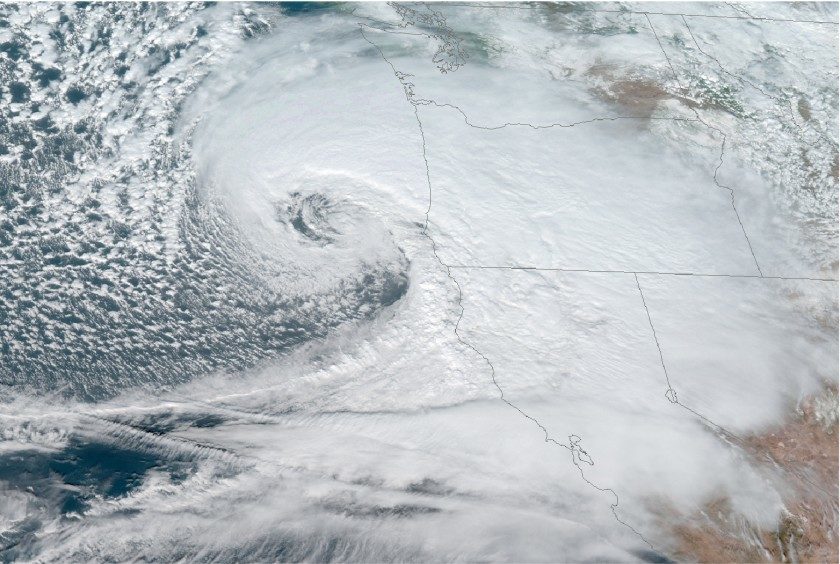
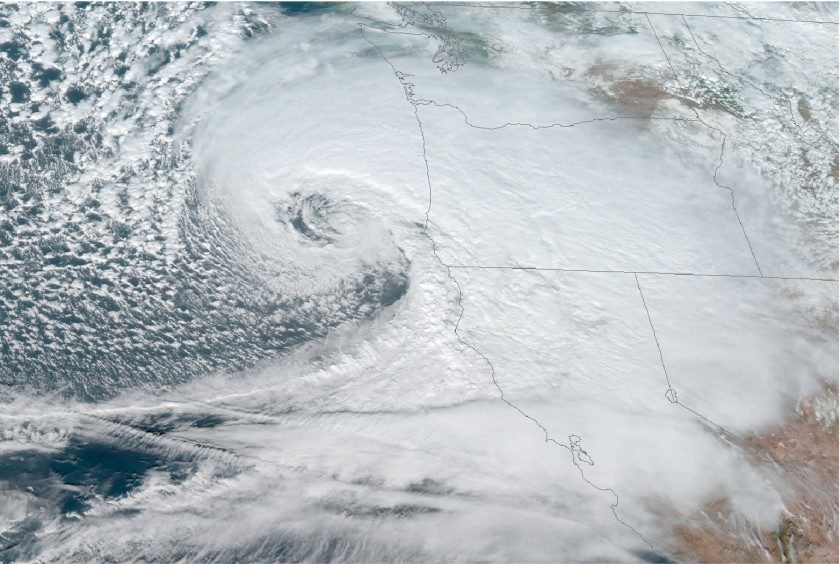
A satellite image shows the storm off the Oregon coast on Nov. 26.
© National Oceanic and Atmospheric AdministrationA satellite image shows the storm off the Oregon coast on Nov. 26.
The Thanksgiving-week "bomb cyclone" storm that drenched California not only set a record for the lowest pressure recorded in the state, but also generated a 75-foot wave off Cape Mendocino.

At 7:33 p.m. on Nov. 26, the No. 94 Cape Mendocino buoy operated by Scripps Institution of Oceanography Coastal Data Information Program recorded a maximum significant wave height of 43.1 feet, and that night also measured a wave of 75 feet. These waves were in water 1,132 feet deep and were at 13.3-second intervals.

Also at 7:33 p.m., the program's No. 168 Humboldt Bay North Spit buoy recorded significant wave heights of 37.6 feet, but in shallower water.

Significant wave height is the average of the biggest one-third of waves over a 30-minute period, according to James Behrens, a program manager at the Coastal Data Information Program. Typically, some waves at a given station are expected to be about twice as large as that average, hence the 75-footer.

The only significant wave height that the program has measured — higher than the one recorded at Cape Mendocino — was on a buoy at Ocean Station Papa, far out in the North Pacific, in December 2012. That was 49.8 feet.

Snowflake

Early winter storm pummels Northeast

midwest snowstorm
© Rick Friedman for The New York TimesThe bad weather that swept across the Midwest during the holiday weekend is now pelting the Northeast with rain and snow.
Parts of New England are in for more heavy snow on Tuesday.

The winter storm that blanketed much of the Northeast with snow on Monday, disrupting travel and closing schools, is expected to keep hammering parts of New England on Tuesday.

As the storm system moves slowly northeastward, some areas could get an additional foot of snow overnight and into the morning, forecasters said. Winter storm warnings and advisories were posted for most of Massachusetts, New Hampshire, Vermont and Maine.

"It's going to get cranking tonight and tomorrow morning," said Frank Nocera, a meteorologist with the National Weather Service in Norton, Mass. Metropolitan Boston, which already had four to eight inches of snow in some suburbs, could see those amounts double by Tuesday, he said, and further school closings and commuting problems were possible.

The storm delivered the first major snowfall of the season in the Northeast, but other than coming at a relatively early date, it did not pack many surprises for weather experts.

Attention

4 Renowned scientists expose major IPCC shortcomings: "Models Clearly Erroneous"

The Munich Climate Conference 2019

Last weekend the climate conference by the Germany-based European Institute for Climate and Energy EIKE took place in Munich, despite threats by leftist radicals.

More than a dozen leading international climate experts presented views that severely challenge mainstream alarmist climate science.

1. Alps glaciers smaller than today during much of the Holocene

Among the speakers was Prof. em. Christian Schlüchter is a leading Swiss geologist who studied the glaciers of the Alps in great detail for decades. In his talk he reported his findings from very old timber found in and below glaciers, and what those ancient tree remnants tell us about the glacial epochs of the Alps.
Prof em Christian
© EIKEIPCC Address (in German)

Snowflake

World Snow Wrap, December 6 - Huge snow totals again in California, more snow in Europe and Japan

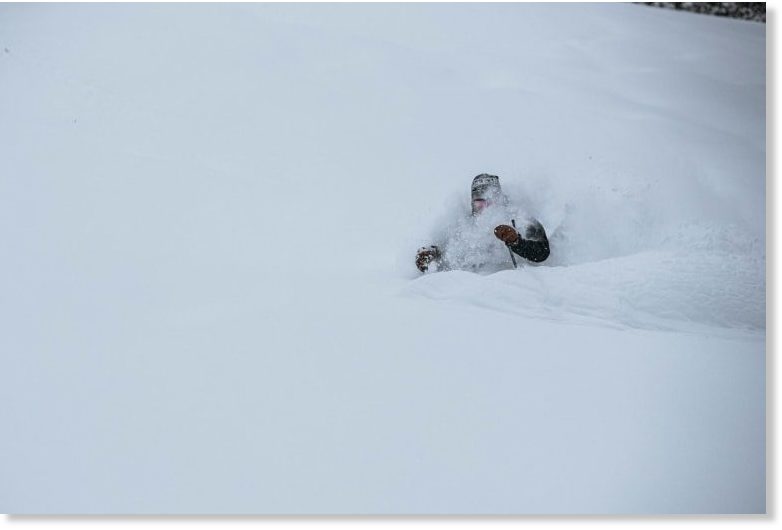
Chris Benchetler, getting deep in Mammoth last week, November 30, when the first storm to hit the Sierras dropped 90cms of snow. Mammoth has had another metre since and yet another 70-90-cms is forecast early next week.
© MammothChris Benchetler, getting deep in Mammoth last week, November 30, when the first storm to hit the Sierras dropped 90cms of snow. Mammoth has had another metre since and yet another 70-90-cms is forecast early next week.
While summer snowfalls in Australia generated a bit of novelty value early this week, the real action is in the Northern Hemisphere, as it should be at this time of year with significant snowfalls in the US, Europe and Japan. The totals coming out of California are huge with seven-day totals of 2.4 metres and there is more on the way with another three-day storm set to drop 70-80cms by early next week. If you're on the fence about escaping the heat, smoke, bushfires and blue bottles of an Australian summer read on, you may just be convinced to book that airfare for somewhere cold and snowy.

USA

The Sierras are renowned for big storm totals and the past week is a very good example, from zero snow a week ago to seven-day totals of one to 2.4metres on the upper mountains, Kirkwood in California with the top reading. Not surprisingly, avalanche danger is high and mountain ops teams have been working hard to manage the snow and get more lifts and terrain open at all the Tahoe resorts for the weekend. There is a break in the storm action now, but not for long with another strong storm set to deliver 30-95cms for California from Friday night through to Sunday. Mammoth is looking good for 45cms at the base and double that up high, which will lead to more terrain opening over the next week.


Arrow Down

At least 26 people killed by landslides caused by heavy rain in Burundi

landslide
© APB
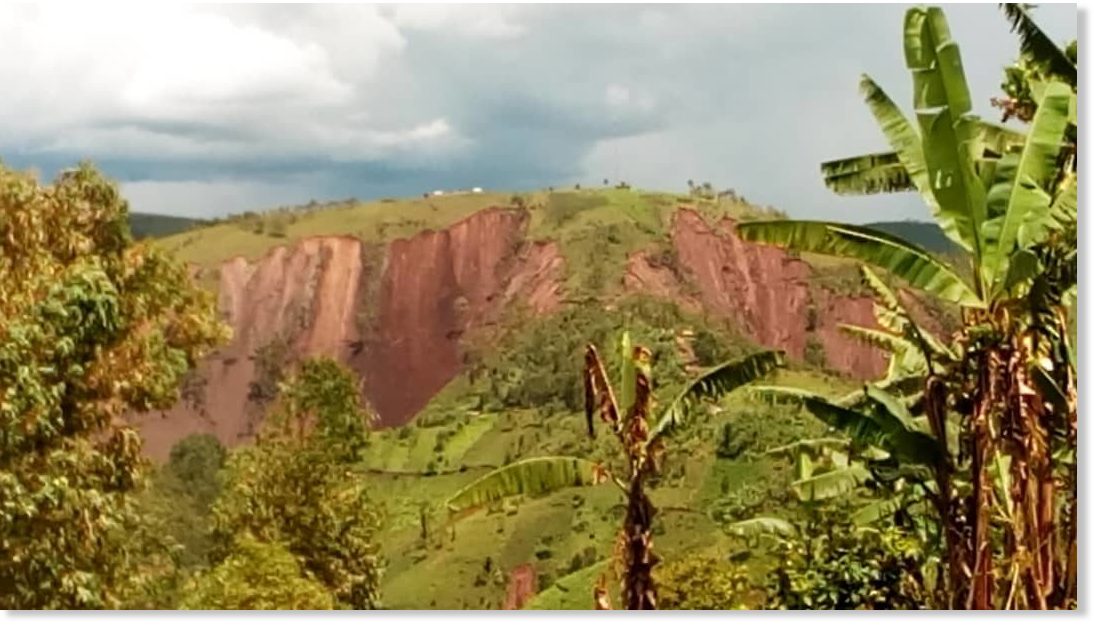
At least 26 people have died and more are missing after heavy rain triggered landslides Cibitoke province, northwestern Burundi.

Burundi's Ministry of Public Safety and Disaster Management said in a statement on 05 December that the landslide occurred in Nyempundu, Gikomero and Rukombe in Nyamakarabo zone, Mugina commune in Cibitoke province. Provisional assessments say that 26 people have died, 07 were injured and 10 people are still missing. Some media reports say the death toll has since climbed to 38. Search operations are still in progress. The Ministry said that houses, crops and livestock have also been damaged.

Heavy rain fell between 04 and 05 December, 2019. Images show that complete hillsides have fallen away in several locations. The area is still extremely unstable and the governor of Cibitoke, Joseph Iteriteka, urged people living in affected locations to evacuate their homes until further notice.


Cloud Lightning

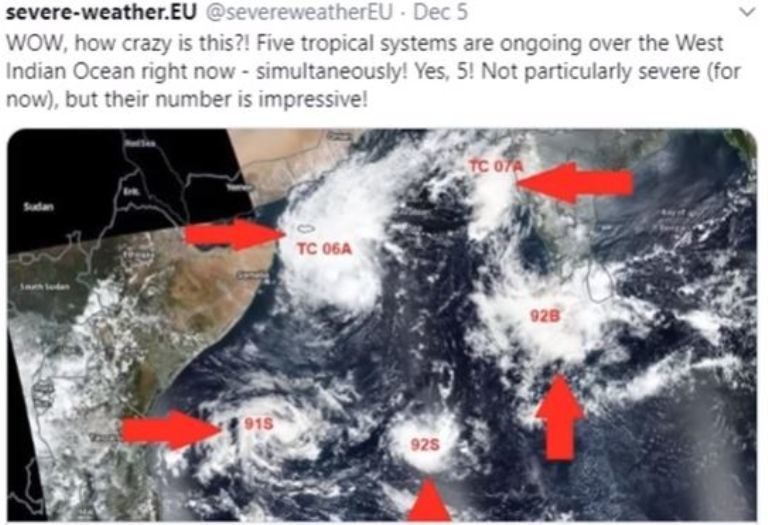
A rare occurrence in the tropics - 5 tropical systems are simultaneously ongoing in the West Indian Ocean

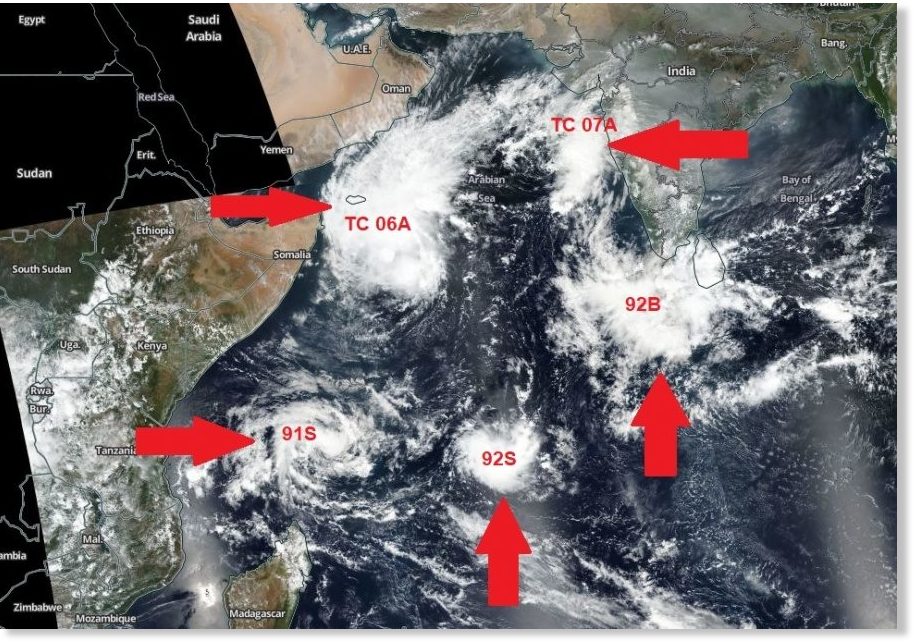
A pretty impressive and rare tropical activity is currently ongoing int the West Indian Ocean. Five (5) tropical systems have developed or still developing and can be seen live on the satellites! The two northernmost systems (Tropical cyclones #06A and #07A) are already supporting tropical storm strength, while the southernmost systems (Invest #91S and #92S) are both tropical depressions. The easternmost system (Invest #92B) is still developing.

Here is today's NASA MODIS AQUA satellite image of the West Indian Ocean - a pretty wild image of 5 tropical system simultaneously ongoing, making the Indian Ocean pretty busy from now on.

Tropical cyclone 07A
© NASA MODISTropical cyclone 07A. Satellite image of Indian Ocean.

Snowflake

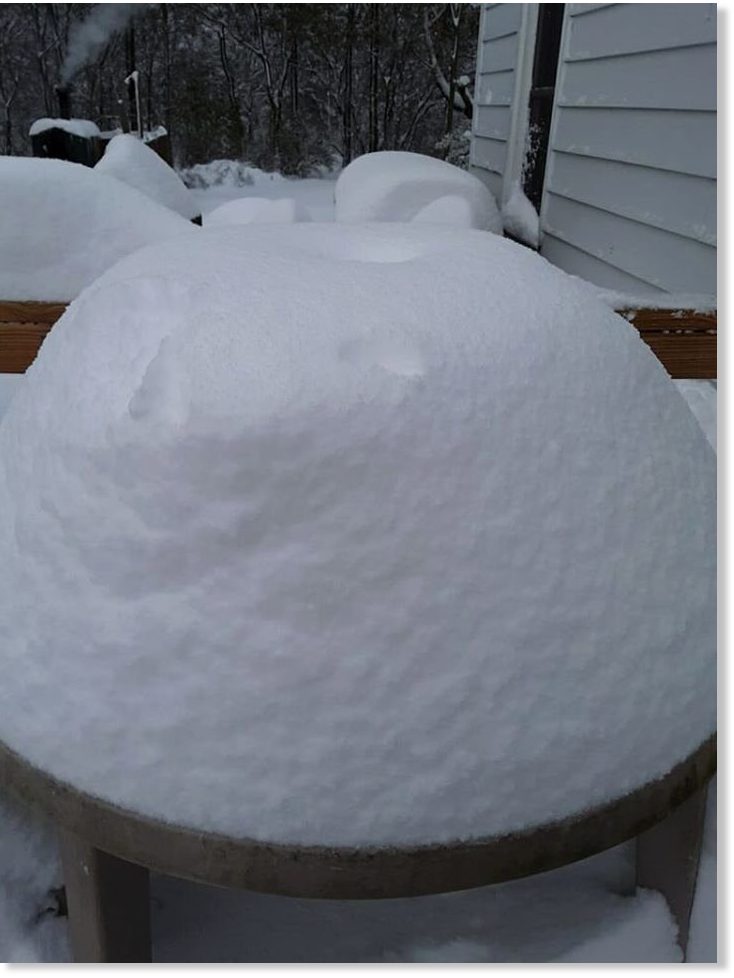
Michigan's snow season already adding up, one location almost at 5 FEET of snow

Lake effect snow piles on West Michigan
Almost every location in Michigan has received above average snowfall to date in this early part of the snow season.

Some of the snow totals are mind boggling for early December.

Obviously the highest snow totals have been posted across the Upper Peninsula. Much of the northern half of the U.P. has received at least 2 feet of snow already. The highest seasonal snow total I've found is Chatham, MI, which is between Marquette and Munising and 10 miles from the Lake Superior shoreline. Chatham has already tallied 58.6 inches of snow.

Here's a map showing the snow totals so far this season. I hesitate to use the word "winter" because meteorological winter just started Dec. 1 and astronomical winter doesn't start until around Dec. 21.

Snowflake Cold

Adapt 2030 Ice Age Report: Unthinkably rare climate events are the new normal globally

Typhoon Kammuri
Typhoon Kammuri
Coldest cloud tops ever measured during Typhoon Kammuri over the Philippines and the cloud heights pegged censors at 16KM in height breaking through the Stratosphere. Two cyclones in different hemispheres bumping each other off Africa spinning in different directions. Mt Shasta about to set the world snow record for most snow in a four day period of over 18 feet. Southern Australia blanketed in Summer snow, NSW, Victoria and Tasmania with a foot plus.


Sources