Animals
S


Roses

Baby boy killed by family terrier in Sunderland, UK

Image
© North News & PicturesPolice officers at the scene on Falkland Road, Sunderland, where a three-week-old baby was bitten by a small terrier dog
A three-week-old baby boy has died after being bitten by a terrier inside a house.

Police were called at around 4.15am today after a report a baby had been bitten by a dog.

The boy was taken from Falkland Road, Sunderland, to hospital where he later died.

The semi-detached house where the incident happened is home to a young couple and their five children, according to locals.

Neighbours say the couple, named locally as Maria and Ryan, had the small brown terrier dog for around a year.

A police car is today parked outside the property.

Bizarro Earth

Best of the Web: All life on Earth is going through sixth mass extinction

Image

Diverse animals across the globe are slipping away and dying as Earth enters its sixth mass extinction, a new study finds.

Over the last century, species of vertebrates are dying out up to 114 times faster than they would have without human activity, said the researchers, who used the most conservative estimates to assess extinction rates. That means the number of species that went extinct in the past 100 years would have taken 11,400 years to go extinct under natural extinction rates, the researchers said.

Much of the extinction is due to human activities that lead to pollution, habitat loss, the introduction of invasive species and increased carbon emissions that drive climate change and ocean acidification, the researchers said.

"Our activities are causing a massive loss of species that has no precedent in the history of humanity and few precedents in the history of life on Earth," said lead researcher Gerardo Ceballos, a professor of conservation ecology at the National Autonomous University of Mexico and a visiting professor at Stanford University.

Ceballos said that, ever since he was a child, he struggled to understand why certain animals went extinct. In the new study, he and his colleagues focused on the extinction rates of vertebrates, which include mammals, birds, reptiles, amphibians and fishes.

First, they needed to establish how many species go extinct naturally over time. They used data from a 2011 study in the journal Nature showing that typically, the world has two extinctions per 10,000 vertebrate species every 100 years. That study based its estimate on fossil and historical records.

Moreover, that background extinction rate, the researchers found, was higher than that found in other studies, which tend to report half that rate, the researchers said.

Then, Ceballos and his colleagues calculated the modern extinction rate. They used data from the International Union for Conservation of Nature (IUCN), an international organization that tracks threatened and endangered species. The 2014 IUCN Red List gave them the number of extinct and possibly extinct vertebrate species since 1500.


Comment: Read The Vegetarian Myth by Lierre Keith to get an idea of the wholesale destruction of our planet and what we are up against when it comes to sustainability and our future.


Attention

Large number of dead seabirds found on beaches of Chorrillos, Chile

Image
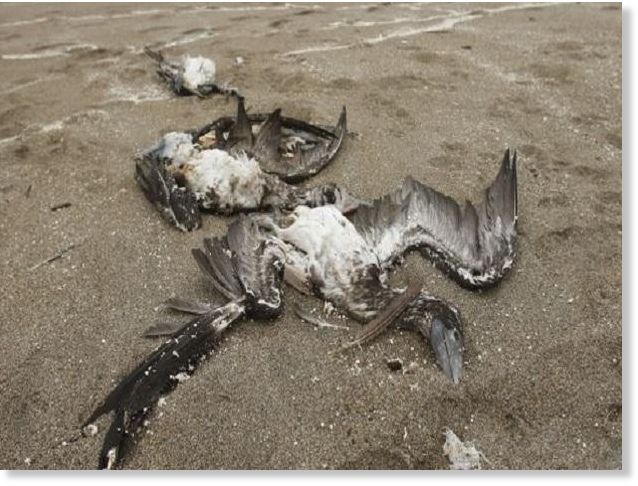
© Perú21/Roberto CáceresLarge number of dead birds found at Chorrillos, Peru
People walking the beaches of Chorrillos yesterday were disturbed at the sight of dead seagulls and pelicans scattered along the sand, report local media.

According to Perú21,this could possibly be due to the strong effects of El Niño this year.

The latest study from the National Study of El Niño (ENFEN) released June 9, details that this year will register a strong level of the phenomenon with warmer temperatures enduring longer.

The ENFEN of the National Service of Meteorology and Hydrography (Senamhi) says that the effect is expected to peak in mid-July with the arrival of a new Kelvin wave. In other words, the temperatures are expected to stay warmer than usual for Lima winters and into the month of July

Question

Migra­tory birds that should be breeding in the Arctic remain on Fraser Island, Australia

Image
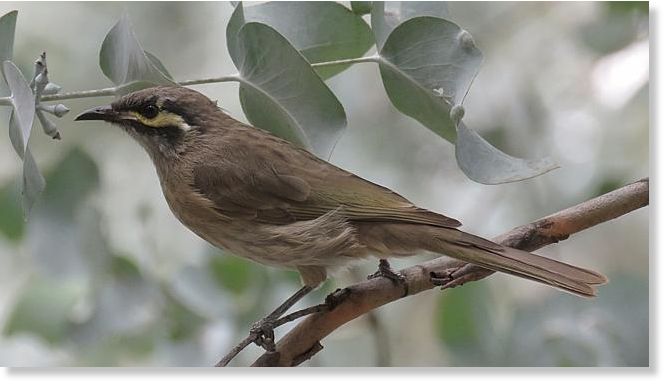
Migratory yellow-faced honeyeaters, which usually fly north from southern states at this time of year, have not yet arrived.
Something weird is happening to the birds on Fraser Island.

Migratory species have not left to breed in the Arctic summer in Siberia, baffling bird watchers and scientists.

The fear is that hundreds of common terns have not been able to fatten enough to start their 13,000km migration, during which they burn most of their body fat.

Godwits, another migra­tory species, have also stayed and are now in breeding ­plumage despite not being at their Arctic breeding grounds.

Birds Queensland spokesman Mike West said four-wheel-drive vehicles might have disturbed the beach-roosting birds.

Another theory was pilchard numbers might be down, cutting food sources.

Perplexingly, other species such as migratory yellow-faced honeyeaters and little wattle birds, which usually fly north from southern states, have not arrived.

Comment: See also: Winter bird migrants from Himalayas stay south in Tamil Nadu, India

Migrating birds still delayed by cooler than normal weather in Canada


Attention

9 fin whales found dead in Alaska waters in recent weeks

Image
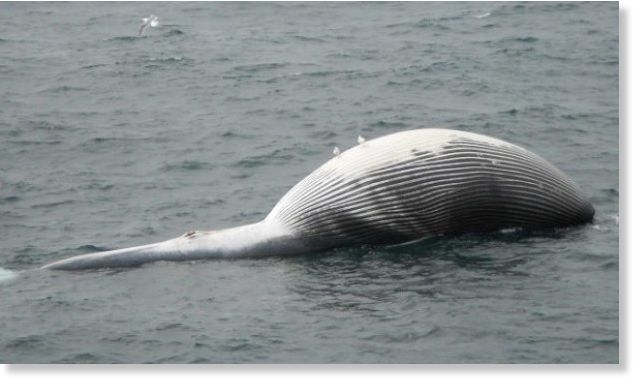
© M/V Kennicott crew / NOAAThe first of several dead fin whales, later named FW01, floats outside Marmot Bay near Kodiak Island on May 23.
At least nine fin whales have been found dead in recent weeks in southern Alaska waters, and researchers with the National Oceanic and Atmospheric Administration and University of Alaska Fairbanks are attempting to find out what killed them.

"We rarely see more than one fin whale carcass every couple of years," said Kate Wynne, a UAF professor and Alaska Sea Grant marine mammal specialist, and the recent rash of dead whale discoveries is "mysterious."

According to a release from UAF, the first of the whales was reportedly spotted on May 23 by crew members aboard the state ferry Kennicott, which travels between Bellingham, Washington, and ports in Southeast and Southcentral Alaska.

Over the next two weeks, boaters, fishermen and pilots reported other dead whales in the floating in the area, the UAF release said. Those reports, and the photos submitted with them, led Wynne and her NOAA colleagues to conclude that "at least nine fin whales died in a relatively small area," the release said.

Attention

Grizzly bear attacks couple hiking near Horsefly, British Columbia

Image
© Conrad OlsonProvincial biologists estimate there are up to 15,000 grizzly bears in B.C. — about a quarter of the North American population.
Woman escaped with broken arm, boyfriend was not hurt, when they surprised bear while hiking in remote area

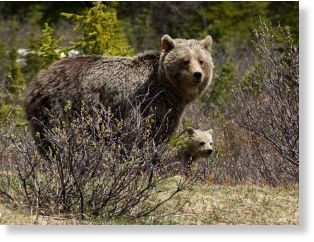
A woman who surprised a grizzly while hiking up remote mountains in British Columbia's Interior had no time to protect herself or prevent the bear attack, a conservation officer said.

The bear lunged at the woman and bit her, breaking her arm in a "chance encounter" on Friday, said Len Butler of B.C.'s Conservation Officer Service.

The bear was just trying to protect itself as it happened upon the woman and her boyfriend, he added.

"They hiked along a trail, they were in some of the open meadows and there was a small little pass to go up through," said Butler. "It was so quick. They did nothing wrong."

Info

African vultures are declining at a critical rate

Image
Vultures
An international team of researchers, including leading scientists from the University of St Andrews, the Hawk Conservancy Trust and the University of York, say African vultures are likely to qualify as 'Critically Endangered' under the International Union for Conservation of Nature's global threat criteria.

In a report published today (18 June 2015) in the scientific journal Conservation Letters, scientists from across Europe, Africa and North America have published the first continent-wide estimates of decline rates in African vultures: and find that many national parks and game reserves appear to offer vulture species in Africa little effective protection.

Scavengers such as vultures are essential to a healthy ecosystem; without them carcasses are largely consumed by mammalian scavengers such as dogs and jackals and this can increase levels of disease transmission, with possibly dire consequences for human health.

Being long-lived, slow breeders, vultures take several years to reach maturity, and typically fledge only a single offspring every 1-2 years. Yet the study indicates that Africa's vultures are declining at rates of between 70% and 97% over three generations; a time interval used by the International Union for Conservation of Nature (IUCN) when assessing a species' threat status. Since six of the eight species are largely or wholly confined to Africa, and are projected to decline by at least 80% over three generations, the study suggests that they are likely to qualify as 'Critically Endangered' under the IUCN's global threat criteria.

Attention

Boy bitten by shark off Daytona Beach Shores, Florida

Image
Shark
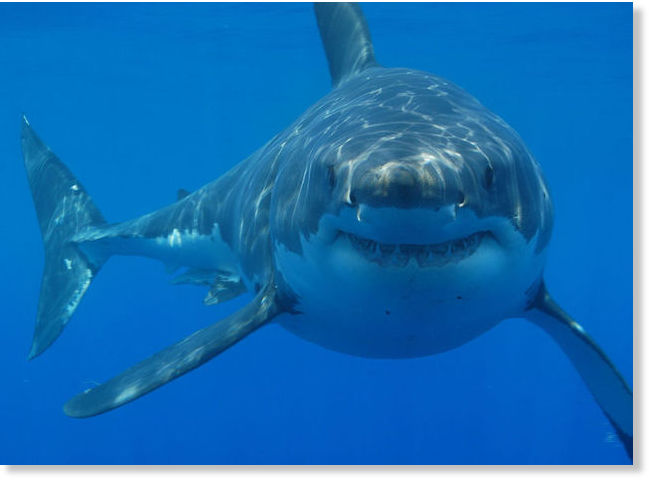
A 10-year-old boy suffered minor injuries when he was bitten by a shark Wednesday in Daytona Beach Shores, Florida. He is the second 10-year-old to be attacked in Florida in a week and at least the fourth person to have been attacked in Volusia County this year, authorities said.

The boy, who wasn't identified, was bitten on the calf as he swam in chest-deep waters just after 1 p.m. ET, said Tamra Marris, a spokeswoman for Volusia County Beach Safety/Ocean Rescue. A lifeguard responded, and the boy was treated at the scene for lacerations on his leg without having to go to a hospital.

The beach safety agency told NBC station WESH of Orlando that beaches would remain open.

Another 10-year-old boy is recovering from what authorities called "significant injuries" after he was attacked last week off Cocoa Beach, about 60 miles south.

Comment: See also: 2 children attacked by shark near Oak Island, North Carolina


Eagle

The oldest Bald Eagle in the US found dead aged 38

Image
Oldest bald eagle in the US was 38 years old
Bald eagles, the symbol of the United States, have a lifespan between 15 and 25 years out in their natural wild habitat.

However, the bald eagle that was recently found dead on a roadside in Henrietta is believed to have been 38 years old, based on the metal band that was wrapped around the majestic bird.

This means that the unfortunate bird was the oldest bald eagle in the United States, some bird experts believe.

According to an official statement released by the state Department of Environmental Conservation, the bird found dead in Henrietta was apparently hit and killed by a moving car.

Bizarro Earth

Rare Guadalupe fur seals stranding in record numbers

guadalupe fur seal
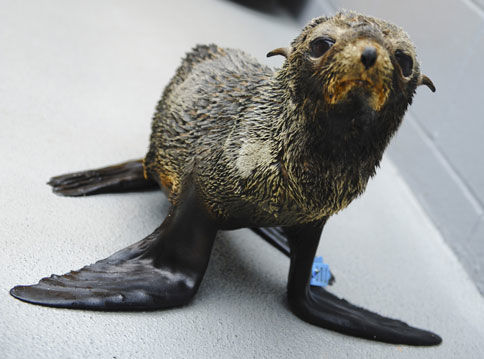
© Dana Angus, The Marine Mammal Center, NOAA Permit #932-1905-01This Guadalupe fur seal pup was one of many rescued by the Center this year.
"These stranded animals are just the tip of the iceberg in terms off animals affected by the unusually warm water temperatures we've been seeing off the coast"


California sea lions aren't the only pinnipeds in crisis this year. Guadalupe fur seals, a threatened species, seem to be struggling with the same food availability issues and have stranded along our coast at five times the record yearly rate.

With their diminutive snouts, extra-long front flippers and outstretched ear flaps, Guadalupe fur seal pups can appear almost alien-like, especially when wet. But this year, the appearance of these furry "Yodas" is more than just a little unusual—it's downright alarming.

So far in 2015, The Marine Mammal Center has rescued 27 Guadalupe fur seals—more than five times the record high we've seen in our 40 years.

These numbers pale in comparison to the more than 1,100 California sea lions we've rescued during this same time period, but relatively speaking, the influx of Guadalupe fur seals is just as distressing, if not more so.