Earth ChangesS


Attention

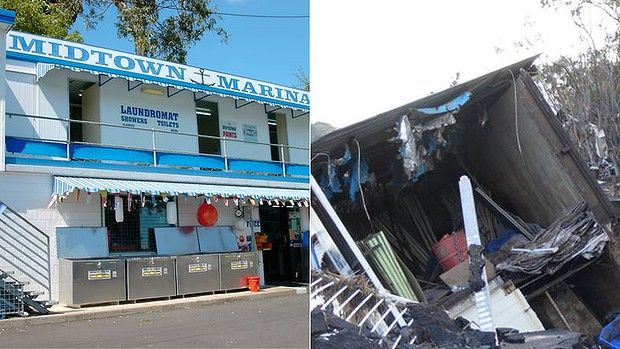
Giant sinkhole swallows building in Bundaberg, Queensland, 10 more at risk

Bundaberg sinkhole
© UnknownNow you see it, now you don't. A sinkhole appeared at Midtown Marina in Bundaberg.
Authorities fear more buildings could topple into a sinkhole that has swallowed a two-storey building in the flood-ravaged Queensland city of Bundaberg.

Mayor Mal Forman says about 10 businesses, including a multi-level hotel, are at risk along the Burnett River.

Another deluge has further destabilised the banks of the river after the recent floods caused by ex-cyclone Oswald.

A sinkhole that opened up on Tuesday morning has already swallowed a two-storey building that was part of Jan Douglas's Midtown Marina business.

Authorities are yet to decide if they will evacuate other properties in the area, but say there's a potential for further collapses.

Cloud Precipitation

At least 15 dead in Indonesia floods and landslides

Indonesia flood
© APSearch-and-rescue teams are in the areas affected by the landslide.
Flooding and landslides in the Indonesian province of North Sulawesi have left at least 15 people dead, officials say.

On Sunday thousands of people fled their homes in the provincial capital Manado and surrounding areas to escape the floods.

The water was up to 2m (6ft 6in) deep in some places, a government official told Reuters news agency.

Bizarro Earth

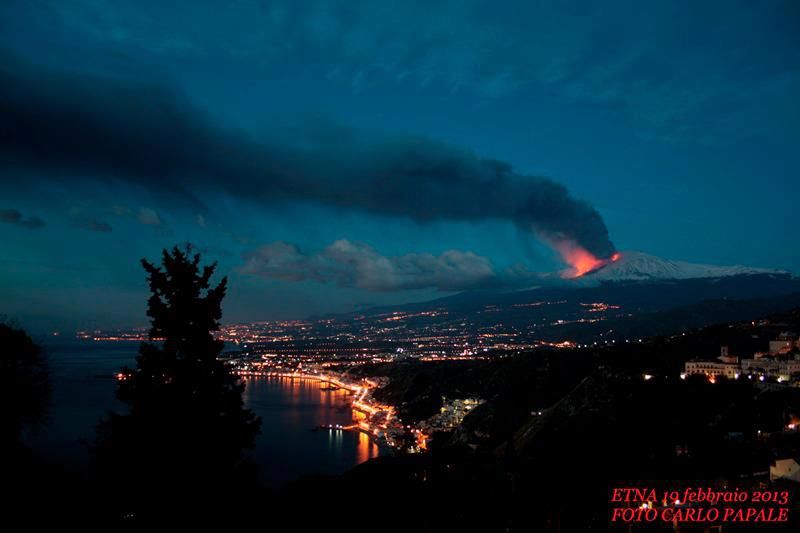
Mount Etna's dramatic new eruption

Image
© Meteo real time/Facebook
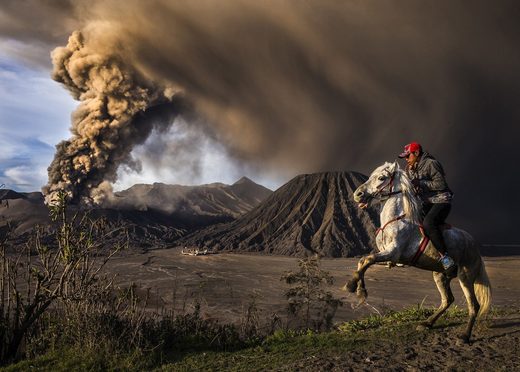
Italy's Mount Etna sent lava and gas shooting toward the stars early this morning (Feb. 19), the first big eruption for the volcano in 2013.

The famous Sicilian volcano burst to life overnight, sending a fountain of fire into the air. The dramatic scene was captured in a video by Klaus Dorschfeldt, a videographer and webmaster at Italy's National Institute of Geophysics and Volcanology.


Attention

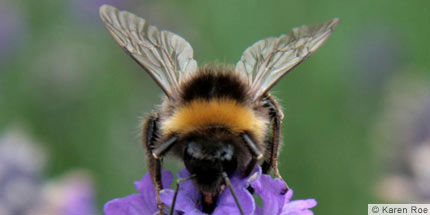
Crop pesticides are 'killing our bees' - says MEP

Image
The finger of suspicion is pointed at certain best-selling pesticides and the evidence is starting to look damning, claims MEP

Why are bees dying? Since 1994, when French beekeepers began to report that honeybees were not returning to their hives or were behaving in an abnormal and disorientated way, stories of declining number of bees and even of complete colony collapse have become commonplace across Europe. It is upsetting and worrying. Hardworking bees are much loved, competing only with butterflies in the insect popularity stakes and their role as pollinators has enormous commercial value.

The finger of suspicion had been pointed at certain best-selling neonicotinoid pesticides widely used in seed-dressing and soil treatment but also for spraying. The evidence is not conclusive but it is starting to look damning. It is not that they are necessarily lethal to bees but that they are sub-lethal, weakening the bees' resistance to disease and reducing their rate of reproductivity. Perhaps, they also destroy the bees' sense of direction - making it impossible for them to locate their hive after foraging.

Comment: The following articles give a much more in depth look at the issue of colony collapse disorder in bee populations around the world:

Honeybee Colony Collapse Disorder Finally Explained: Too Many Chemicals
Colony Collapse: Do Massive Bee Die-Offs Mean an End to Our Food System as We Know it?
More Evidence Rises Of Role Pesticides Play In Bee Colony Collapse
Harvard Study Links Pesticides to Colony Collapse Disorder in Bees
So called "Green Pesticides" pose reproductive threat to Honey Bees
Beekeeper outlines colony collapse disorder
Silent Hives: Colony Collapse Disorder and Pesticides
A Last (Chemical) Gasp for Bees?


Cloud Precipitation

Winter storm to hit U.S. from California to Midwest

Image
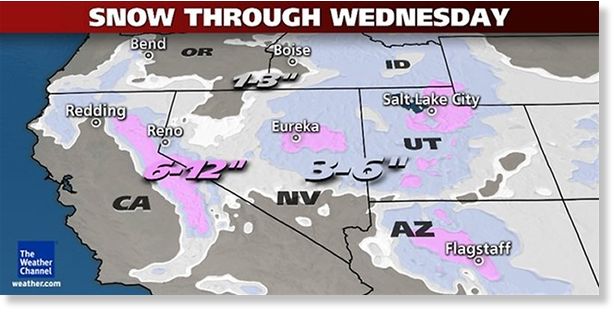
© The Weather ChannelSnow forecast through Wednesday.
A winter storm moving in from the Pacific Ocean was expected to bring a foot or more of snow and 75 mph wind gusts to mountainous areas of California on Tuesday, before aiming for the Midwest and laying down a wintry blanket as it goes, the National Weather Service said.

Even coastal Californians would feel the storm's wrath in the form of high winds and heavy rains, forecasters said.

Weather.com meteorologists said the storm originated in the Gulf of Alaska and was taking a southerly course that would hammer California before the system turns inland and strikes as far northeast as Chicago and the Midwest.

Mountainous parts of Los Angeles, San Diego and Ventura counties in California were under winter storm warnings, and snow could present a danger on mountain highways, including Interstate 15, the weather service said.

Snowflake

More snow possible this week in Pittsburgh area

Pittsburgh snow
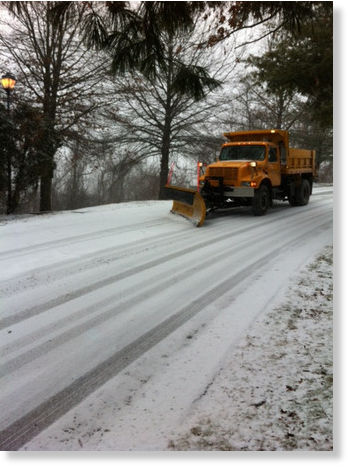
© Mike JonesThe plow trucks are out in the Bridgeville area as snow is blanketing the South Hills of Pittsburgh.
Rain and snow showers are expected after 2 p.m. Tuesday with about a half-inch of accumulation possible.

On Monday, it was in the 40s, with plenty of sunshine.

But for Tuesday? Things are gonna look a little different.

Rain and snow showers are expected after 2 p.m., with about a half-inch of accumulation possible. After 3 a.m. Wednesday we could see another half-inch of precipitation.

And things aren't looking much better the rest of the week, either.

"A frontal boundary will push into the area Thursday night into Friday, bringing a wintry mix to the area. Light accumulations of snow and ice area possible with this system," according to a hazardous weather outlook issued by the National Weather Service.

For a full weather report, visit the National Weather Service website here.

Bizarro Earth

Bird invasion brings real-life horror to Kentucky city

Blackbirds
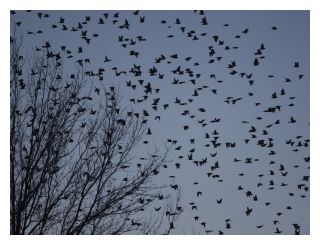
© ReutersBlackbirds descend on the town of Hopkinsville, Kentucky.
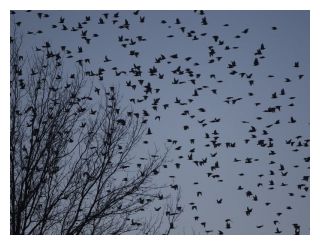
Millions of birds have descended on a small Kentucky city this winter, fouling the landscape, scaring pets and raising the risk for disease in a real-life version of Alfred Hitchcock's horror film, The Birds.

The blackbirds and European starlings blacken the sky of Hopkinsville, Kentucky, before roosting at dusk, turn the landscape white with bird poop, and the disease they carry can kill a dog and sicken humans.

"I have seen them come in, and there are enough that if the sun is just right, they'll cloud your vision of the sun," said Hopkinsville-Christian County historian William Turner. "I estimate there are millions of them."

David Chiles, president of the Little River Audubon Society, said the fact that migratory flocks are roosting in the city rather than flying further south is tied to climate warming.

"The weather, the climate plays a big role," said Chiles, the bird enthusiast who also teaches biology at Hopkinsville High School.

"They somehow establish a roost south of where the ground is frozen solid," he explained. "They are ground feeders, feeding on leftover crops and insects. If the fields are frozen solid, they can't feed."

Question

Is mysterious green 'slime' found in Somerset wildlife park linked with recent meteor strike?

Slime
© RSPB
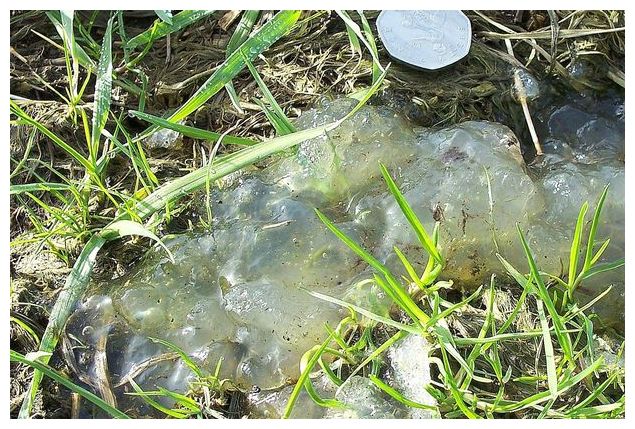
A mysterious green 'slime' said to come from outer space has left boffins baffled at a wildlife park.

The unidentified jelly-like substance has been found at the RSPB Ham Wall Nature reserve in Somerset.

And according to folklore, a similar slime known as 'astral jelly' is deposited after meteor showers.

The jelly has turned up at the park just three days after a giant meteor streaked over the city of Chelyabinsk in central Russia.

Tony Whitehead, an RSPB spokesman for the South West, said: "Although we don't know what it actually is, similar substances have been described previously.

"In records dating back to the 14th Century it's known variously as star jelly, astral jelly or astromyxin.

"In folklore it is said to be deposited in the wake of meteor showers."

Comment: Fireball photographed over Somerset, England, 6 February 2013


Bizarro Earth

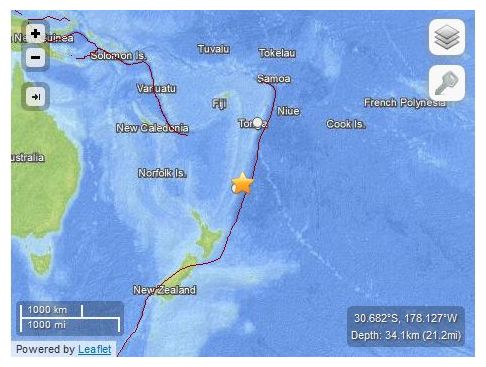
USGS: Earthquake Magnitude 6.1 - NE of L'Esperance Rock, New Zealand

NZ Quake_180213
© USGS
Event Time
2013-02-18 12:19:19 UTC
2013-02-18 00:19:19 UTC-12:00 at epicenter

Location
30.682°S 178.127°W depth=34.1km (21.2mi)

Nearby Cities
111km (69mi) NE of L'Esperance Rock, New Zealand
898km (558mi) NE of Whangarei, New Zealand
923km (574mi) NNE of Whakatane, New Zealand
937km (582mi) NE of Tauranga, New Zealand
1097km (682mi) SSW of Nuku'alofa, TongaTechnical Details

Snowflake Cold

Strong winds, snow pounds Atlantic Canada as thousands lose power


Halifax - Thousands of people on the East Coast lost power and school was cancelled in Nova Scotia and parts of New Brunswick after blasts of winter wind and wet snow swept through the region.

Nova Scotia Power reported about 12,000 outages by 8 a.m. local time.

In New Brunswick, NB Power issued a news release saying that at least 6,000 customers had lost power in the Fredericton, Rothesay and St. Stephen areas, with more people expected to report the loss of electricity as the morning went on.

"The storm has certainly created significant damage including broken poles and large trees on lines," wrote Meghan Gerrish, a spokeswoman for NB Power.