Earth ChangesS


Binoculars

Video: Extreme weather, fireballs and UFOs of November, 2013

As the title indicates, so far this month, we've seen more extreme weather, more sinkholes, a volcano erupting that had been dormant for 400 years, more fireballs, UFOs and strange 'sky' sounds. They're all definitely signs of the times!


Bizarro Earth

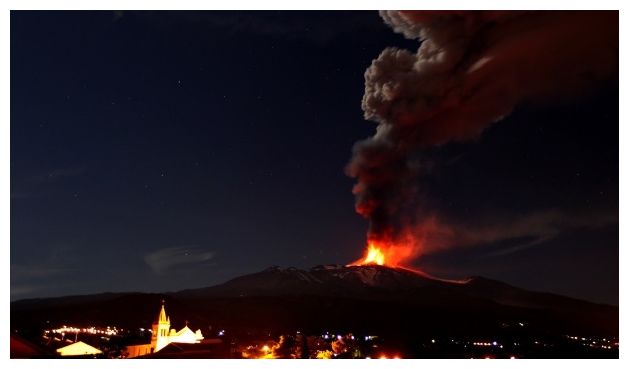
Mount Etna paroxysm illuminates skies of Sicily

Mount Etna
© Las Vegas Guardian ExpressEtna volcano erupts producing beautiful nighttime display.
Europe's largest and most active volcano, Mount Etna, has erupted once more, producing a beautiful nighttime display, as it ejected a looming column of ash and gargled up intensely hot lava. An expansive plume of smoke and ash could be seen filling the skies of the Italian island of Sicily.

Mount Etna is a composite volcano, comprised of numerous layers of solidified lava, pumice, tephra and ash and is the tallest active volcano in Europe, measuring close to 11,000 feet tall. Etna is in a state of almost perpetual activity, with one of the most recent eruptions - occurring Oct. 26, of this year - culminating in the closure of airspace around Sicily.

Bizarro Earth

For fourth year running, downpours and floods hit Saudi capital

Saudi Floods
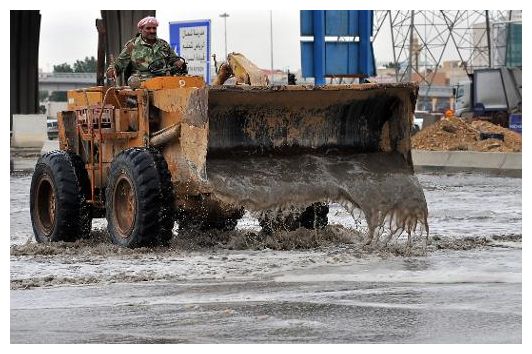
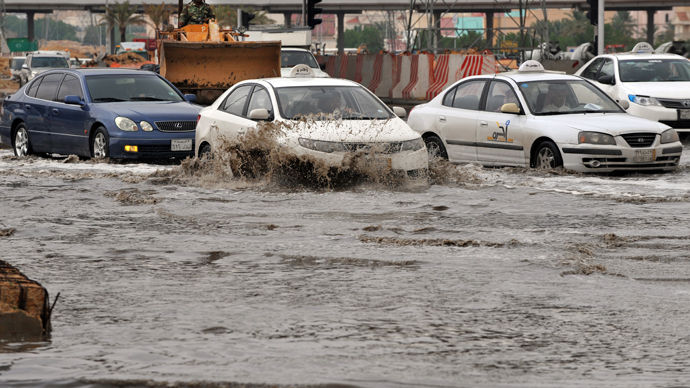
© AFP/Fayez NureldineA Saudi labourer tries to clear a flooded street in northern Riyadh, on November 17, 2013, after heavy rains fell overnight in the Saudi capital, causing floods and traffic jams.
Riyadh - Rare heavy downpours triggered flash floods in the Saudi capital on Sunday forcing schools and universities to close and prompting calls by the authorities for citizens to remain indoors.

At least three people were reported missing, the state news agency SPA said quoting civil defence spokesman Colonel Abdullah al-Harithi.

He added that authorities assisted dozens of people trapped by the floods, a rare phenomenon to hit the capital of the desert kingdom.

Heavy rains, accompanied by thunderstorms, have lashed Riyadh since late Saturday triggering flash floods in several districts and cutting off power in the city's north, according to residents.

Stop

Nearly 1.6 mln displaced in Typhoon-hit Philippines

Image
© REUTERS/ Bobby YipA man looks for useful items among debris in Tacloban, Philippines, Nov. 15, 2013
Some 1.6 million people have been forced to live under the open sky as refugee camps became quickly overcrowded after Typhoon Haiyan struck the Philippines, NHK news channel said Saturday.

The camps set up by local authorities and humanitarian organizations can house only 20 percent of the refugees, while a total 80 percent have been unable to find shelter and have been forced to build houses from trash found at the collapsed buildings, the report says.

Bizarro Earth

Active volcano discovered under Antarctic ice sheet - can volcanoes be causing Antarctic ice loss?

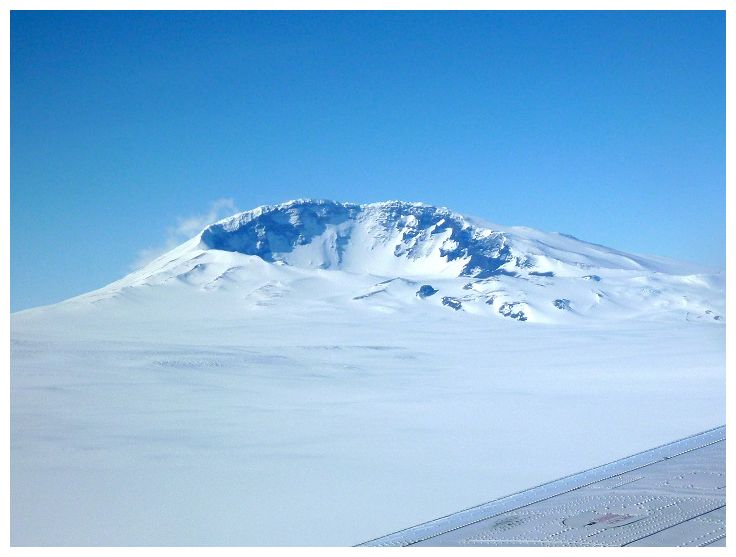
Mount Sidley
© Doug WiensMount Sidley is the youngest volcano rising above the ice in West Antarctica's Executive Committee Range. A group of seismologists has detected new volcanic activity under the ice about 30 miles ahead of Mount Sidley.
Earthquakes deep below West Antarctica reveal an active volcano hidden beneath the massive ice sheet, researchers said today (Nov. 17) in a study published in the journal Nature Geoscience.

The discovery finally confirms long-held suspicions of volcanic activity concealed by the vast West Antarctic Ice Sheet. Several volcanoes poke up along the Antarctic coast and its offshore islands, such as Mount Erebus, but this is the first time anyone has caught magma in action far from the coast.

"This is really the golden age of discovery of the Antarctic continent," said Richard Aster, a co-author of the study and a seismologist at Colorado State University. "I think there's no question that there are more volcanic surprises beneath the ice."

The volcano was a lucky find. The research project, called POLENET, was intended to reveal the structure of Earth's mantle, the layer beneath the crust.

In 2010, a team led by scientists from Washington University in St. Louis spent weeks slogging across the snow, pulling sleds laden with earthquake-monitoring equipment.

Ice Cube

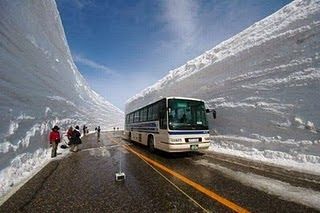
It's not just Winter, it's a new Ice Age

snow walls on highway
When you consider that a bunch of global warming propagandists, the 19th Conference of the UN Framework Convention on Climate Change, to reduce "greenhouse gas" emissions has been meeting in Warsaw this month are still claiming that we are in the midst of global warming, you have a demonstration of how great a hoax has been perpetrated on the peoples of the world. These people and the scientists who supplied the falsified and inaccurate climate models to support the global warming claims have committed a criminal fraud.

Bit by bit, the truth in the form of increasingly cold weather is causing people to wonder whether they are being duped. The media has either buried the stories of extraordinary cold events or continues to tip-toe around the truth.

An example is a recent Wall Street Journal article by Robert Lee Hotz, "Strange Doings on the Sun", Hotz reported that "Researchers are puzzled. They can't tell if the lull is temporary or the onset of a decades-long decline, which might ease global warming a bit by altering the sun's brightness or the wavelengths of its light."

After describing the fact that the Sun has entered a period of reduced sunspot activity, always a precursor to a cooling cycle and even an ice age, Dr. David Hathaway, head of the solar physics group at NASA's Marshall Space Flight Center, is quoted as saying "It may give us a brief respite from global warming, but it is not going to stop it."

Plainly said, you cannot trust what government scientists have to say about global warming. The government's policy since the late 1980s has been that global warming is real and poses a great threat to the Earth. What Dr. Hathaway and other "warmists" are desperately trying to ignore is the fact that the Earth entered a natural and predictable cooling cycle around 1997 or 1998. It has been cooling ever since!

Cloud Precipitation

Saudi capital hit with rare floods, residents urged to stay indoors

Saudi Arabia Flood
© AFP Photo / Fayez NureldineCars drive through a flooded street in northern Riyadh, on November 17, 2013, after heavy rains fell overnight in the Saudi capital, caused floods and traffic jams which forced the Saudi Eduction Ministry to suspend studies in schools and universities for one day
Severe flooding is being reported in Saudi Arabia, especially in the kingdom's capital of Riyadh, with the government closing schools and urging people to stay indoors amid heavy rain. Flooding is rare in the country dominated by the Arabian Desert.

Witnesses in Riaydh, which is also the country's largest city, are reporting flooded streets and shops. Pictures posted on Twitter show cars drowning in rainwater.

Comment: So though it is described as a rare event, flooding according to the article also happened in May this year and in 2009 and 2011. Perhaps the rarity of flooding is a thing of the past for Saudi Arabia and many other places. In quick google search reveals just how common this is:

2009: Saudi Arabia floods leave 77 dead

2011: Saudi Arabia to Punish Officials for Damage After Jeddah Floods

April 2012: 18 Killed in Saudi Arabia Floods over Past Week

May 2013: Flash floods in Saudi Arabia leave 13 dead

August 2013: Eight people killed in Saudi Arabia flash floods

Increased precipitation is happening the world over and when the temperatures start going south then the precipitation will fall as snow and the onset of a mini/normal ice age is on the cards.


Info

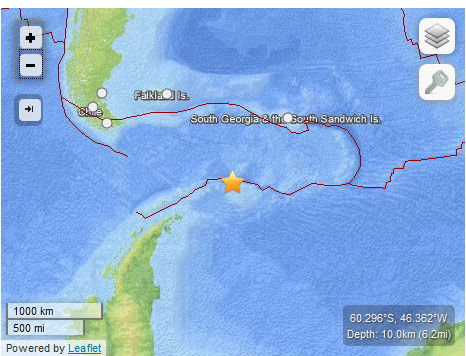
USGS: Magnitude 7.8 - Scotia Sea

Earthquake Scotia Sea
© USGS
Event Time
2013-11-17 09:04:55 UTC
2013-11-17 06:04:55 UTC-03:00 at epicenter
2013-11-17 10:04:55 UTC+01:00 system time

Location
60.296°S 46.362°W depth=10.0km (6.2mi)

Nearby Cities
893km (555mi) SW of Grytviken, Sth. Georgia and the Sth. Sandwich Islands
1440km (895mi) SE of Ushuaia, Argentina
1686km (1048mi) SE of Punta Arenas, Chile
1709km (1062mi) SE of Rio Gallegos, Argentina
1192km (741mi) SSE of Stanley, Falkland Islands
Technical details

Snowflake Cold

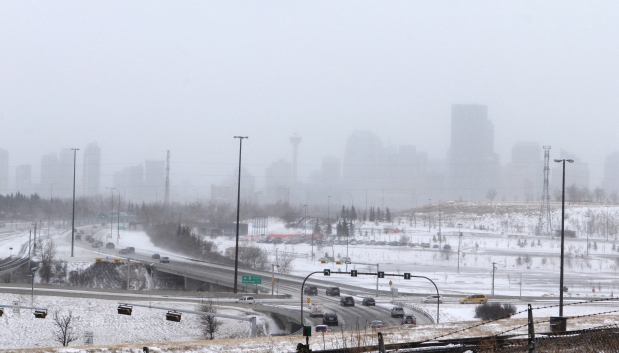
Updated: Heavy snow, high winds wreak havoc on Calgary roads, highways

Image
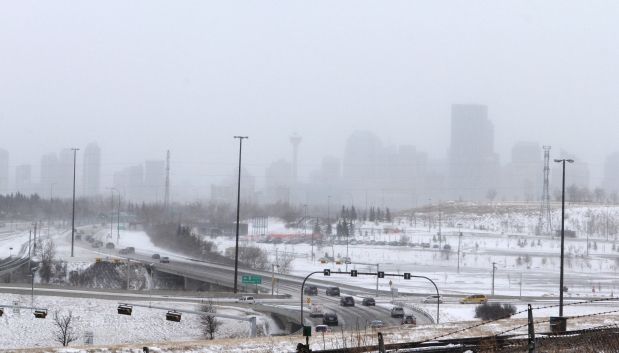
© Lorraine Hjalte,/Calgary Herald November 16, 2013 - Police were advising people to stay at home if they can as a winter storm blew into Calgary early Saturday morning making for low visibility.
Winter weather brought frigid temperatures to Calgary on Saturday, with a little more snow expected to fall before the end of the night.

As blustery conditions dropped another layer of the white stuff on the city, police reported about 133 vehicle accidents by 7 p.m., six of which involving minor injuries, said Const. Stephen Vaney.

Outside of the city, meanwhile, the winter blast wreaked havoc on roads and highways, causing crashes and pileups.

A winter storm warning remained in effect for the Red Deer area, though Environment Canada ended its snow fall warning for Calgary, forecasting that about two centimetres would hit the city before the late evening. Temperatures dropped to nearly -13C, or -22 with the wind chill.

Earlier Saturday, havoc on roads and highways outside of Calgary kept emergency crews busy.

A 30-vehicle pileup near Crossfield on QE2 was caused after a semi-truck jackknifed and another crash closed lanes to travel for hours.

Stranded motorists were removed from the scene and some were taken to a Crossfield church to stay warm, police say.

Bizarro Earth

Earthquake magnitude 5.5 shakes Tokyo, halts trains: nerves frayed as Fukushima decomissioning reaches critical stage

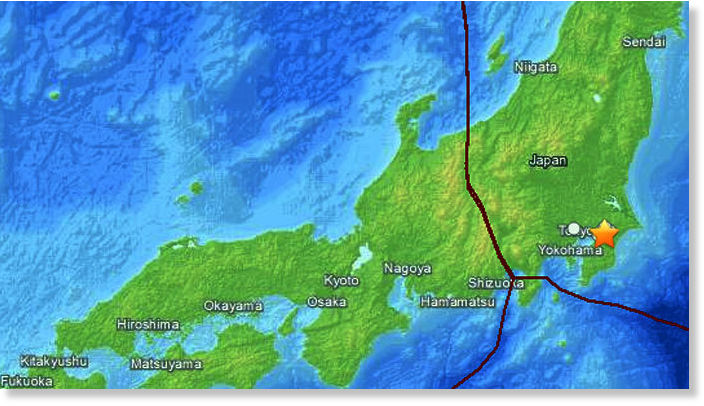
A 5.5 magnitude earthquake hit eastern Japan on Saturday. Tremors were felt from inside Tokyo skyscrapers, and the city's high-speed train service was halted as a precaution. The earthquake struck at 8:44 p.m. local time (11:44 a.m. GMT) at a depth of 63 kilometers (39 miles) in the Chiba prefecture which neighbors Tokyo, the US Geological Survey reported. The quake shook skyscrapers in the Japanese capital and temporarily halted the city's high-speed train service, according to AFP. The trains soon resumed after a track inspection. Local broadcaster NHK assured that neither Tokyo's Narita International Airport nor regional nuclear installations were affected by the earthquake. There were no reports of damage or casualties. It comes just one week after another 5.5 earthquake struck close to the capital, and three weeks after a major 7.3 magnitude quake sent small tsunamis to Japan's northeast coast and prompted an evacuation at the crippled Fukushima Daiichi nuclear plant.
Image
While earthquakes of different magnitudes are not uncommon in Japan, the March 2011 earthquake and tsunami disaster that triggered the core meltdowns of three reactors at the Fukushima plant has made every quake report in the region particularly alarming. As the world watches with apprehension at how Fukushima's decommissioning work unfolds, prominent Japanese-Canadian scientist David Suzuki warned last week that another nearby earthquake of magnitude 7 or higher could trigger a serious nuclear catastrophe, decimating Japan and reaching the U.S. west coast. "If the fourth [reactor] goes under an earthquake and those rods are exposed, then it's bye, bye, Japan and everybody on the west coast of North America should be evacuated. And if that isn't terrifying, I don't know what is," Suzuki said.