A 19-year-old man has died after being struck by lightning in Kazakhstan's Aktobe region, highlighting the dangers posed by severe summer storms sweeping across parts of the country.
The victim's body was discovered in a steppe area of the Martuk district on June 22. The police have launched a criminal investigation to determine the exact circumstances surrounding the incident, The Caspian Post reports via Kazinform.
According to preliminary findings, the young man was killed by a lightning strike during unstable weather conditions that have affected the region in recent days.
Police say forensic examinations and other investigative procedures are underway as officials work to confirm the cause of death.
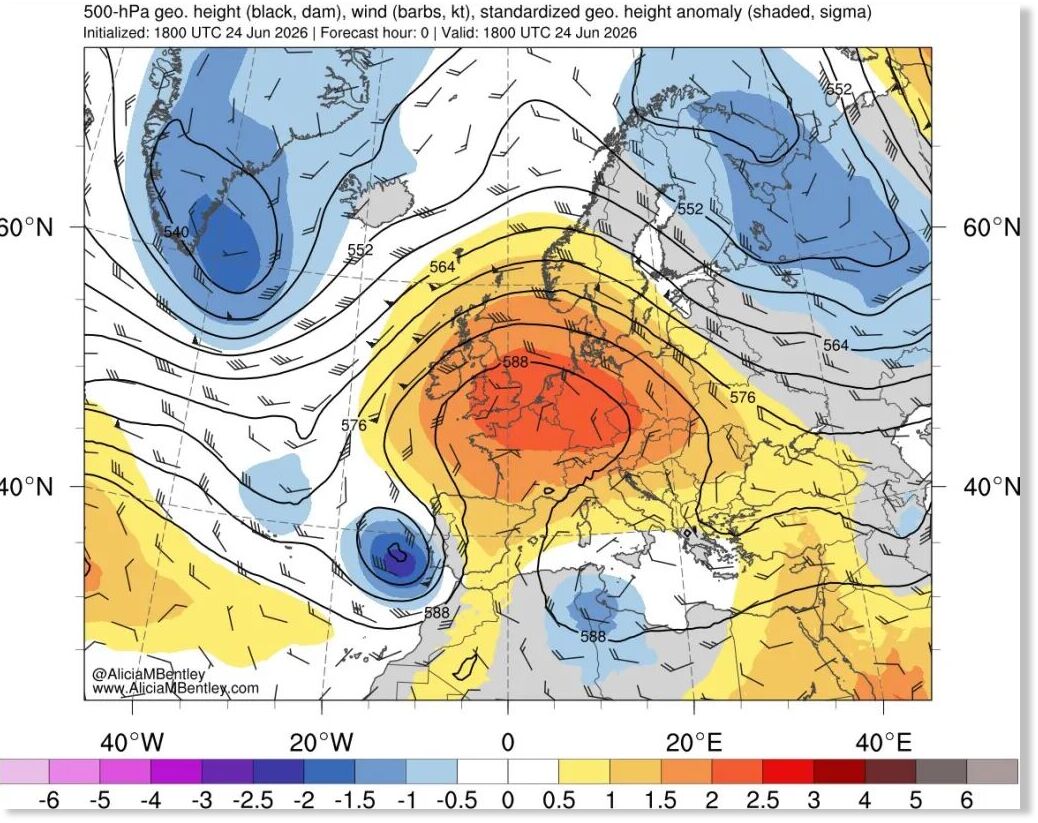
Western Europe is hot this week because the jet stream has locked into an omega block.
Eastern Europe and Scandinavia, by contrast, have held cool. The 500 hPa setup shows a large high-pressure ridge over western and central Europe, boxed in by lower pressure to the east and west. The flow bends into the shape of the Greek omega.
Beneath that ridge, air sinks. Cloud thins. The late-June sun hits harder. On the southern flank, clockwise flow pulls Saharan air north into Spain, France and Britain. As that air sinks under the high, it compresses and warms.
This is a circulation event. Not a "climate emergency". And western Europe is not the globe. While France and the UK bake, cool anomalies sit across the High Arctic, North America, parts of Asia and Australia, South America, the Southern Ocean and Antarctica.
As for the records, the UK Met Office shouldn't be trusted.
Early week, the media cycle, fueled by the office, leaned heavily into 39C to 40C. Fingers hovered over red "Danger To Life" alerts. But Wednesday's high, by the Met Office's reckoning, came in at 36.1C (97F) at Gosport Fleetlands.
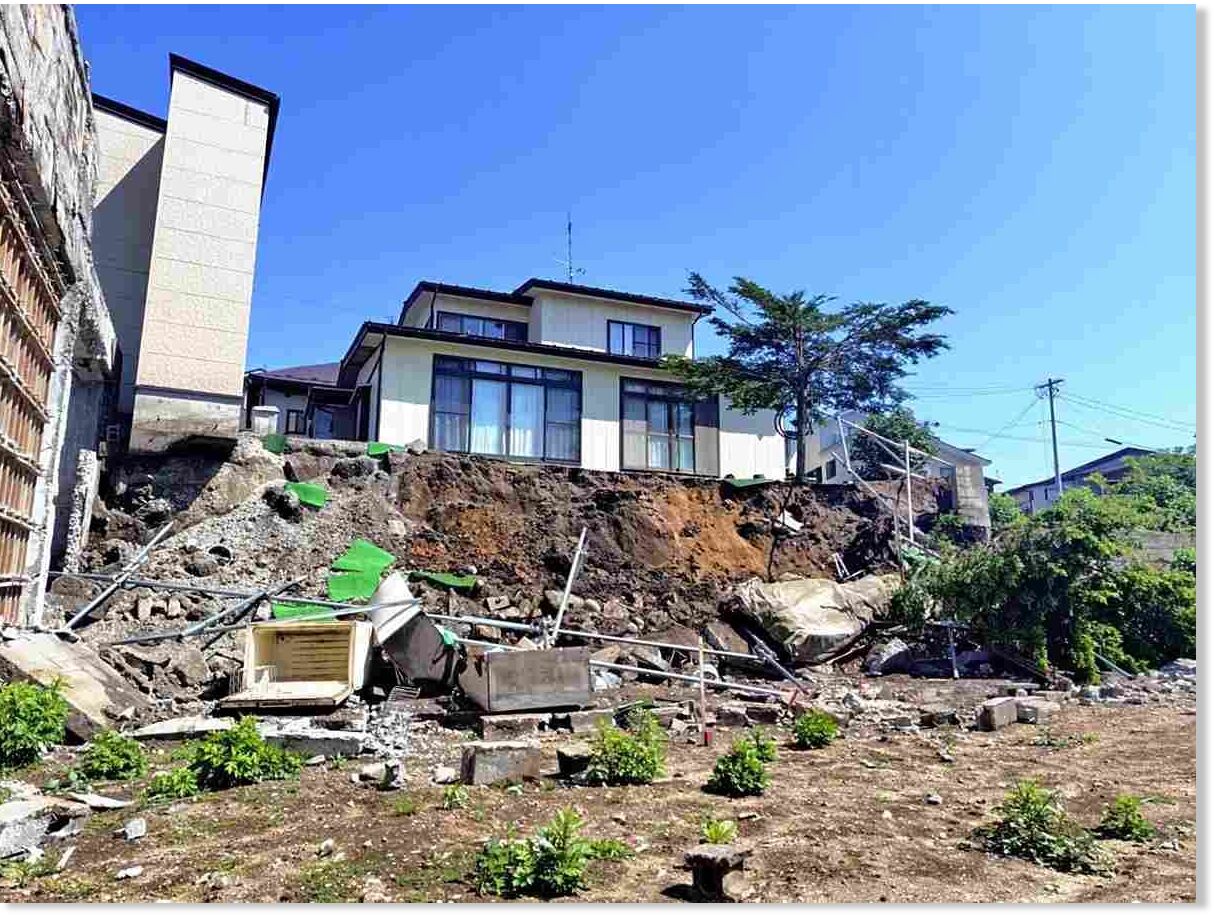
An earthquake of preliminary magnitude 6.9 struck off the coast of Iwate, northeastern Japan on Thursday, the Japan Meteorological Agency said.
The quake took place at 7.30 am local time (2230GMT) in the Pacific Ocean, roughly 42 kilometers (26 miles) from the coastal city of Kuji, with its epicenter located at a depth of 50 km (31 mi), according to the agency.
The agency said the quake initially registered as an upper 6 magnitude event on Japan's seismic intensity scale, which has a maximum level of 7.
The quake alert did not immediately supply any further details.
Sibu Kumar Tripathi India Today Wed, 24 Jun 2026 13:06 UTC
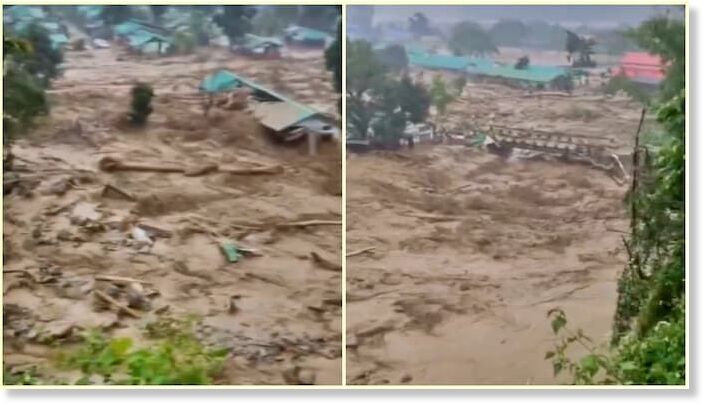
Flash flood washes away quarters, bridge.
A burst of intense rainfall over Arunachal Pradesh's Lower Subansiri and Keyi Panyor districts triggered flash floods, inundating villages, damaging homes and agricultural land, and washing away critical infrastructure.
According to information released by the Meteorological Centre in Itanagar, Yazali in Lower Subansiri district recorded 72.8 mm of rainfall in the 24 hours ending Tuesday morning. However, officials noted that the majority of this rainfall fell within a short three-hour window between 6 am and 9 am, leading to a rapid rise in river levels and overwhelming local drainage systems.
The sudden deluge caused flash floods in Luksin village and Yiyee-I and Yiyee-II villages under Toru Circle. Residents reported that floodwaters entered homes and swept through agricultural fields shortly after 6:30 am.
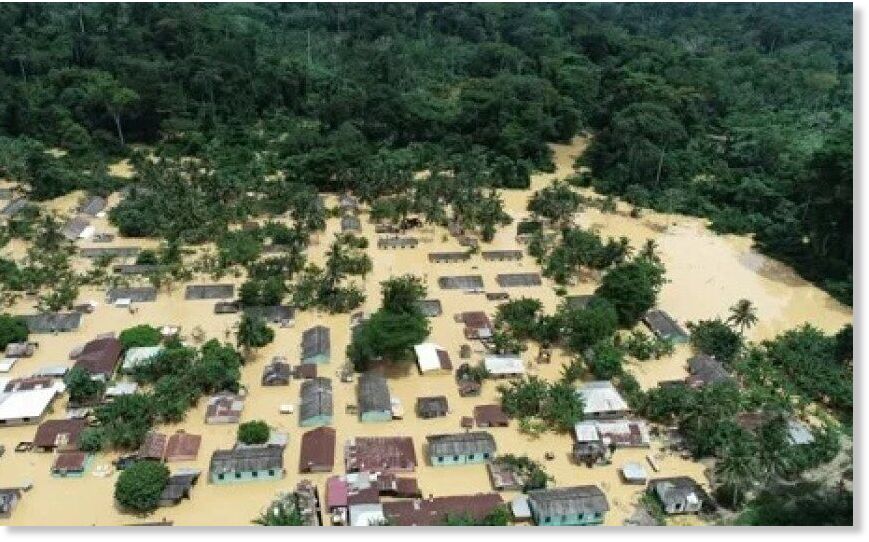
More than 1,710 people have been displaced in the Wassa Amenfi West Municipality of the Western Region following nearly a week of torrential rains that triggered severe flooding in several communities.
Officials of the National Disaster Management Organisation (NADMO) explained that the floods, which began last Monday after days of intermittent but heavy rainfall, submerged homes, farmlands, roads and public facilities, leaving hundreds of families homeless and in urgent need of assistance.
The worst-affected communities include Samreboi, Wassa Dunkwa and Asankragwa, which recorded the highest number of displaced persons. Samreboi alone accounted for 1,252 affected residents, while Wassa Dunkwa and Asankragwa recorded 293 and 165 displaced persons respectively.
The Municipal Director of NADMO, Mr Elvis Coffie, who disclosed this in an interview with The Ghanaian Times here yesterday, attributed the disaster to the overflow of the Tano and Semre rivers following days of continuous rainfall.
A group of hikers got dangerously close to Guatemala's Volcán de Fuego as it violently erupted, spewing smoke and ash and sending molten rocks raining down around them.
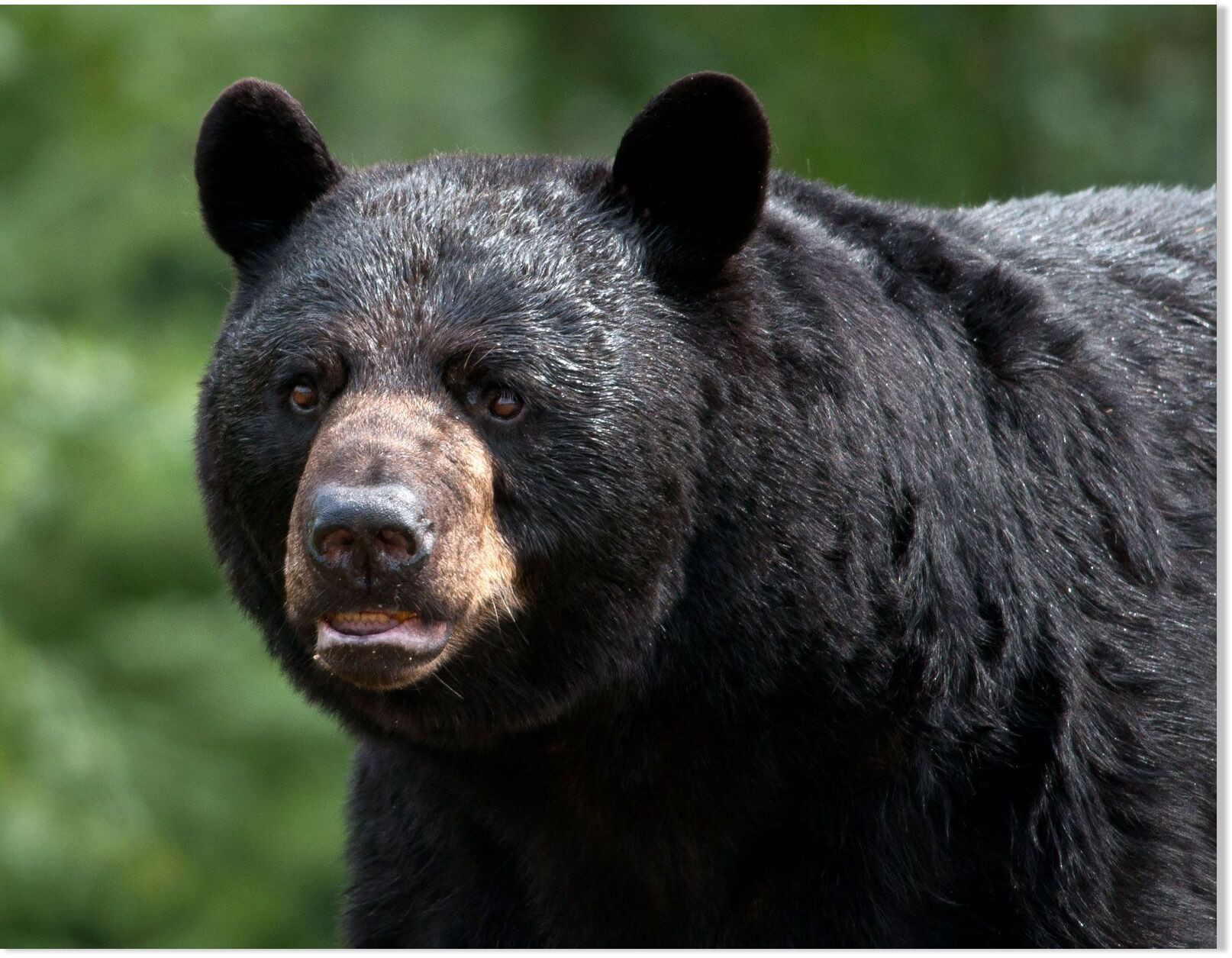
A black bear attacked and subsequently stalked a Colorado hiker in Apex Park, a wilderness area in the foothills of the Rocky Mountains, on Sunday, June 21. The incident marks the state's first reported bear attack of the season, and wildlife experts warn that it reflects unusual behavior in a year with high bear activity.
"This encounter lasted a really long time," Kara Van Hoose, public information officer with responding agency Colorado Parks and Wildlife (CPW), told Outside. "It was about 30 minutes. Normally, bear conflicts don't last that long."
"It's a red flag," she added.
According to Van Hoose, the hiker, whose name and age have not been released, suffered minor injuries. The woman was hiking alone on the Enchanted Forest Trail when she encountered a black bear that ripped off her backpack and scratched her leg. The woman tried to scare the bear off by shouting and throwing sticks and rocks. Still, the animal followed her down the trail for more than half an hour.
After two other hikers came to the woman's aid, the bear left and crossed a nearby gully, where it began following another group of people.
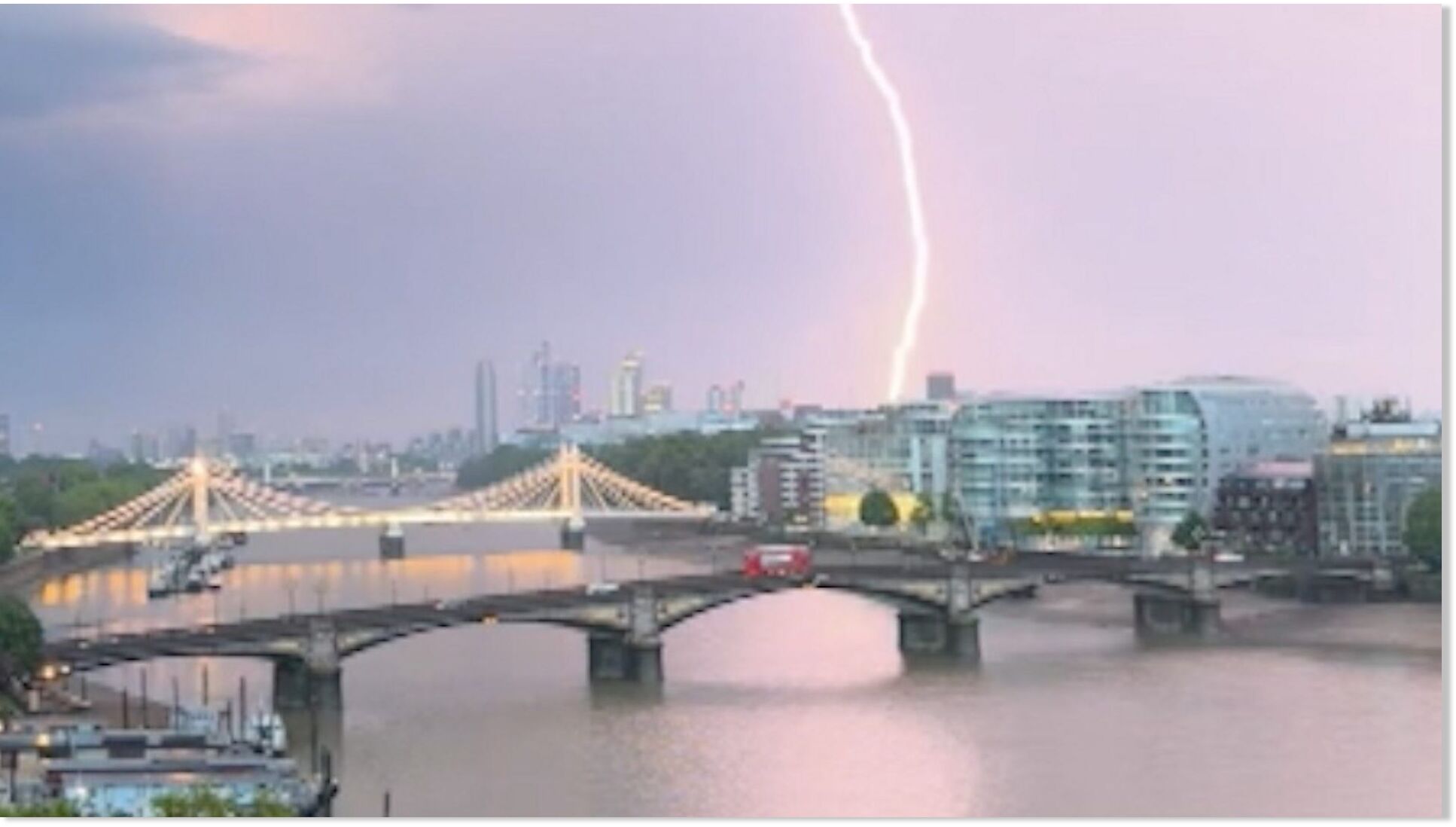
The UK Met Office said 29,074 lightning strikes were recorded in the UK in the 24 hours before 9am on Tuesday as a storm swept across southern England.
The thunderstorm came as Europe sweltered through a record-breaking June heatwave.
The Met Office warned temperatures could reach 39C on Thursday, most likely in London or the south-east of England.
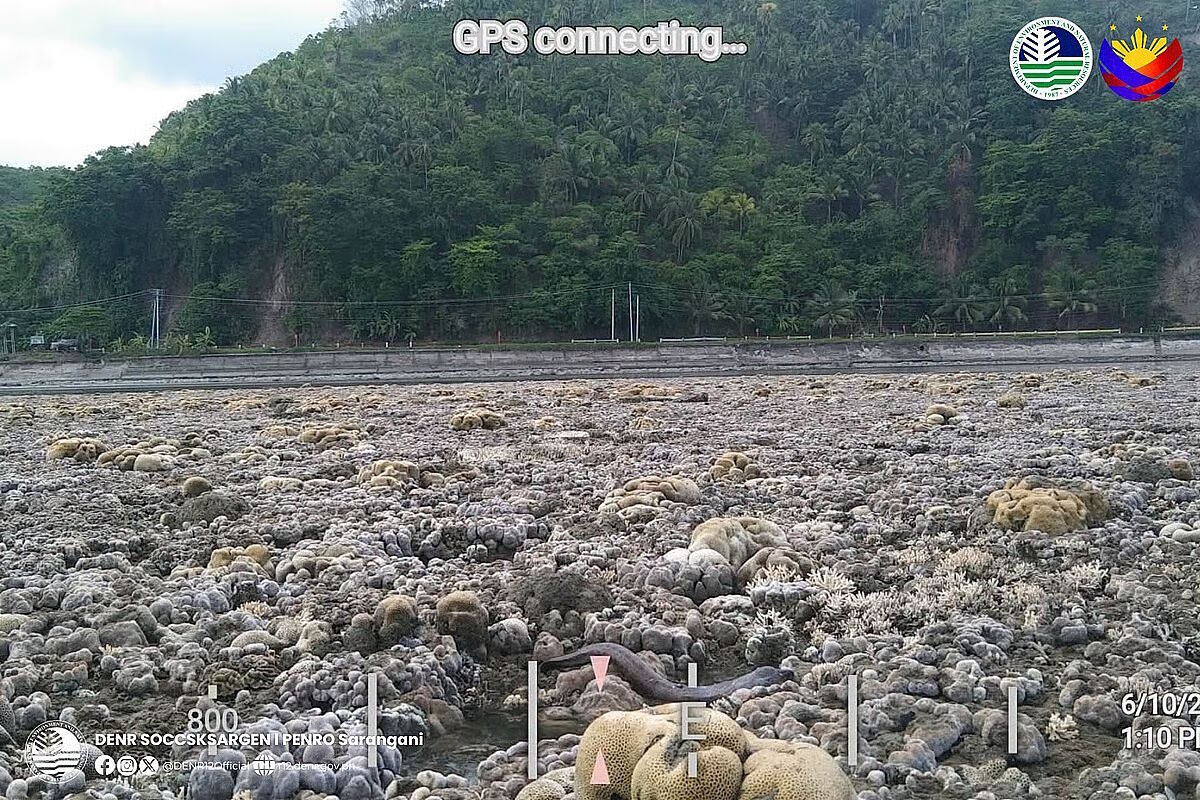
A powerful Philippine earthquake forced seafloor out of the water to make new shoreline.
Arsenio Butil Jr. fell to his knees and began to pray when last week's deadly 7.8-magnitude earthquake began shaking his home on the coast of the southern Philippines.
When he opened his eyes, he saw a once-familiar shoreline changing in real time, with swaths of previously submerged coral suddenly pushing above the waterline.
The June 8, 2026 quake, driven by a shifting of the nearby Cotabato Trench, toppled buildings, triggered landslides and killed at least 76 people on the southern island of Mindanao.
The tectonic forces at work also thrust chunks of the island's coastline upward in a phenomenon known as "coastal uplift," leaving stretches of shore unrecognizable to families who have spent their whole lives there.
Forty people have drowned in heatwave-related deaths in France since last Thursday, Prime Minister Sébastien Lecornu has said, as temperatures hit record levels in several major cities and the heatwave reaches a peak in several European countries.
"It's not something to be taken lightly, going swimming in unsupervised areas during a heatwave," sports and youth minister Marina Ferrari told French radio.
France, along with Spain and Italy, have been hardest hit by the heatwave so far.
France saw its hottest June day on record on Monday and its hottest ever night on Monday night, with a minimum average of 21.6C according to Météo France, and with well over half the country on red alert.
Meanwhile, in Spain temperatures are set to peak above 40C in some areas, with red alerts in Andalusia in the south, and Cantabria and the Basque Country in the north, on the third day of a national heatwave.
Just look at us. Everything is backwards. Everything is upside-down. Doctors destroy health, lawyers destroy justice, universities destroy knowledge, governments destroy freedom, the major media destroy information, and religion destroys spirituality.
- Michael Ellner
”
Recent Comments
Oh well. What's another trillion or two as a gift to the Jizzraelis.. The USA has gone down the gurgler this far, it still sadly has a bit further...