Science of the SpiritS


SOTT Logo Radio

SOTT Focus: The Health & Wellness Show: Where is Your Awareness?

sherlock
Awareness is the ability to directly know and perceive, to feel, or to be cognizant of events. More broadly, it is the state of being conscious of something. It's ephemeral, however; something that we seem to take for granted. Only rarely are we actually aware of our awareness.

Awareness seems to be a spectrum, rather than an on-off switch. Situational awareness is important for knowing what's going on in your immediate environment, where lapses in awareness can be extremely dangerous in some situations. But then there are higher forms of awareness, like self awareness, being aware of oneself, including one's traits, character, feelings, and behaviors. It's the distinction between having an experience (experiential consciousness) and knowing that you are having an experience (meta-awareness). Theoretically, awareness can expand even higher than this.

How much of our time is spent lost in thought, daydreaming or projecting? How aware are we of how we actually come across to others? Is there anything we can do to make ourselves more aware? Join us for this episode of the Health and Wellness Show, where we talk about the many facets of awareness.

Running Time: 01:01:14

Download: MP3


Brain

The new science of inner speech

inner speech
What Is Your Inner Voice Saying?
I think, therefore I am,' the 17th-century philosopher René Descartes proclaimed as a first truth. That truth was rediscovered in 1887 by Helen Keller, a deaf and blind girl, then seven years of age: 'I did not know that I am. I lived in a world that was a no world ... When I learned the meaning of "I" and "me" and found that I was something,' she later explained, 'I began to think. Then consciousness first existed for me.' As both these pioneers knew, a fundamental part of conscious experience is 'inner speech' - the experience of verbal thought, expressed in one's 'inner voice'. Your inner voice is you.

That voice isn't the sound of anything. It's not even physical - we can't observe it or measure it in any direct way. If it's not physical, then we can arguably only attempt to study it by contemplation or introspection; students of the inner voice are 'thinking about thinking', an act that feels vague. William James, the 19th-century philosopher who is often touted as the originator of American psychology, compared the act to 'trying to turn up the gas quickly enough to see how the darkness looks'.

Yet through new methods of experimentation in the last few decades, the nature of inner speech is finally being revealed. In one set of studies, scans are allowing researchers to study the brain regions linked with inner speech. In other studies, researchers are investigating links between internal and external speech - that which we say aloud.

Clipboard

Stick Figures: Drawing is a good way to learn

drawing
"I just can't draw." It's a refrain most adults say when confronted with a blank piece of paper. Something happens in our teenage years that makes most of us shy away from drawing, fretting that our draftsmanship skills aren't up to par, and leaving it to the "artists" among us.

But we've been thinking about drawing all wrong, says the design historian D.B. Dowd. In his illuminating new book, titled Stick Figures: Drawing as a Human Practice, Dowd argues that putting a pencil to paper shouldn't be about making art at all.

"We have misfiled the significance of drawing because we see it as a professional skill instead of a personal capacity," he writes. "This essential confusion has stunted our understanding of drawing and kept it from being seen as a tool for learning above all else."

Comment: Read more about the benefits of drawing:


SOTT Logo Radio

SOTT Focus: The Truth Perspective: From Sinners to Saints: Exploring the Psychology of Good and Evil

russian st george icon
Narcissism. Machiavellianism. Psychopathy. The so-called 'dark triad' of evil personality traits. We have all encountered evil people in our lives, but what does that really mean? Today on the Truth Perspective we look at the psychology of evil, the relation of various measures of such personalities with the Big 5 personality traits, and the correlations with violent, criminal behavior. Is evil just an unfortunate collection of interacting genes? An unfortunate collection of traits on the tail end of the bell curve? Or something else? And finally, what does all this imply for the development of character? Can we transcend our temperament?

Running Time: 01:15:27

Download: MP3


Boat

Taking time to pause

Pause
We are starving for stillness and silence in our culture. Doesn't it seem like there is noise and chaos everywhere? The truth is that the world is not going to slow down and get less noisy simply because you want it to. You have to commit to taking time to pause. I've grown to appreciate that pausing truly is golden. Taking breaks settle me in a matter of minutes.

I didn't always feel this way.

I used to surround myself with noise. I'd fall asleep with the television blaring, have pop music playing in my car and home, and talk, talk, talk until my throat was sore. Now I seek silence every day and I encourage you to do the same.

Comment: Attention restoration theory: What happens to our brain when we experience complete silence and peace of mind?


People 2

Tips for raising mentally strong children

strong
Give up the bad habits that rob kids of mental strength.

Raising a mentally strong kid doesn't mean he won't cry when he's sad or that he won't fail sometimes. Mental strength doesn't make you immune to hardship and it's not about suppressing your emotions.

In fact, it's quite the opposite. Mental strength is what helps kids bounce back from setbacks and it gives them the strength to keep going, even when they're plagued with self-doubt. A strong mental muscle is the key to helping kids reach their greatest potential in life.

Post-It Note

The psychology of denial and how to make it through a disaster

Denial
Preparedness isn't just about the supplies you stockpile and the skills you learn. It's about psychology too. And an important step toward survival is understanding the psychology behind hesitation.

In a worst-case scenario, hesitation kills.
He who hesitates is lost. Swift and resolute action leads to success. Self-doubt is a prelude to disaster.

~Joseph Addison
It's simple psychology that no one wants to accept that something horrible has happened.

The human brain is configured in a way that it is in our very nature to deny that something outside our normal paradigm has occurred. This is called cognitive dissonance.
"Cognitive dissonance is the feeling of discomfort when simultaneously holding two or more conflicting cognitions: ideas, beliefs, values or emotional reactions...Dissonance is aroused when people are confronted with information that is inconsistent with their beliefs. If the dissonance is not reduced by changing one's belief, the dissonance can result in restoring consonance through misperception, rejection or refutation of the information, seeking support from others who share the beliefs, and attempting to persuade others." (source)
In a crisis situation, denial can be deadly.

Comment: See also:


Apple Red

Lao Tzu's four cardinal virtues on how to live a more meaningful life

Lao Tzu
Many centuries ago, Lao Tzu, spoke of the four cardinal virtues, teaching that when we practice them as a way of life, we come to know the truth of the universe. The ancient Chinese master said that living and practicing these teachings can open you to higher wisdom and greater happiness, as they realign you to the source and enable you to access all the powers that source energy has to offer.
"When you succeed in connecting your energy with the divine realm through high awareness and the practice of undiscriminating virtue, the transmission of the ultimate subtle truths will follow." Lao Tzu
Lao Tzu means 'Old Master,' and he was believed by some to be a God-realised being. The Four Cardinal Virtues are found in the Tao Te Ching, a collection of sayings expounding the principal Taoist teachings. It has 81 short poetic verses packed full of universal wisdom for politics, society, and personal life, and aims to support personal harmony through the right view and understanding of existence. The Tao (also known as the Way or the Dao) has baffled its readers for centuries with its cryptic and deliberate contradictions, yet it offers a profound contemplation to seekers, lending itself to varied interpretations and inner questioning.

SOTT Logo Radio

SOTT Focus: The Truth Perspective: Journey Into Darkness: Inside the Criminal Mind

inside the criminal mind
© DesconocidoUna obra que debería ser conocida por todos...
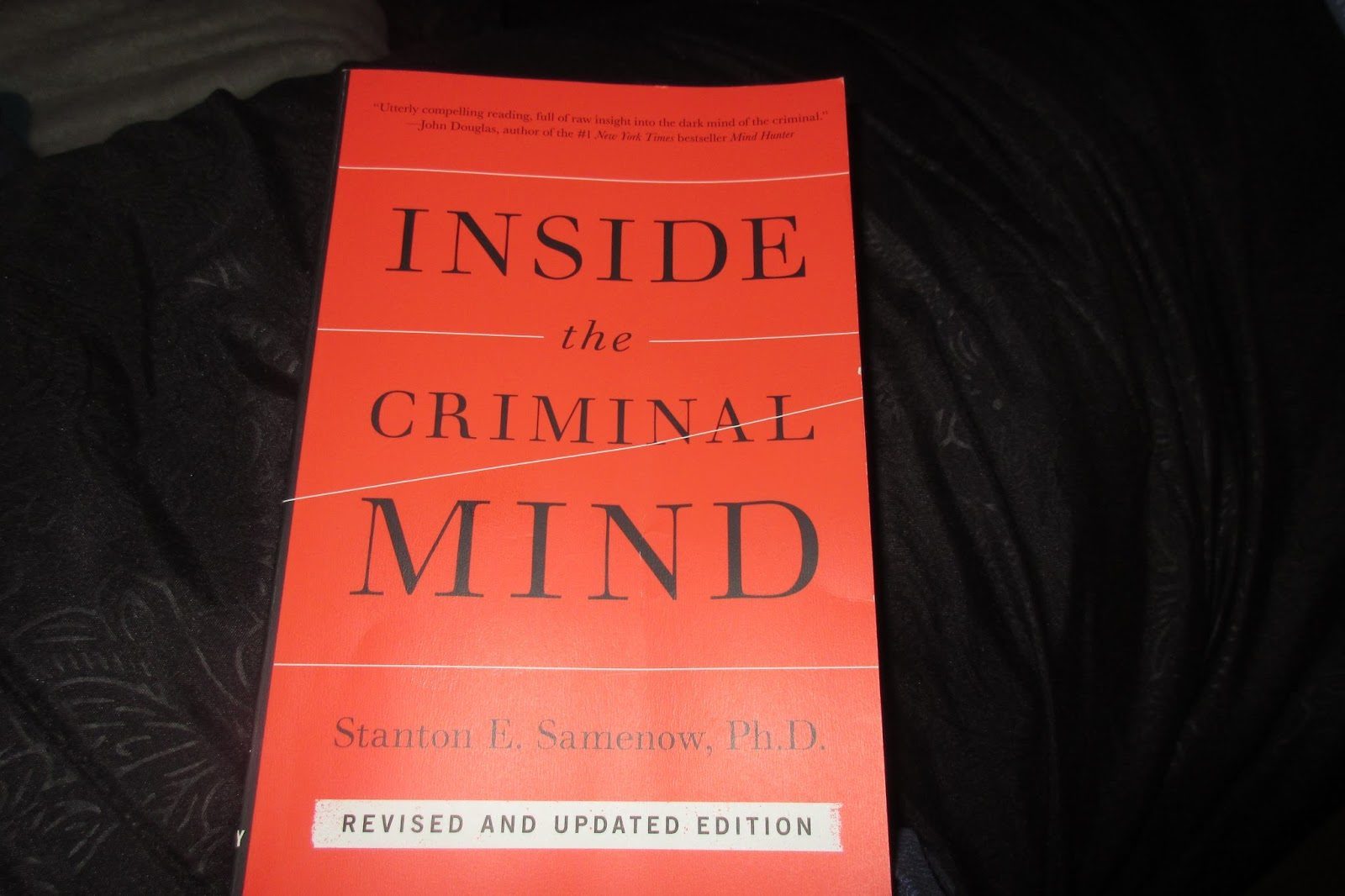
Are criminals born or made? Do they choose to act in antisocial ways, or do they lack free will? How does crime relate to personality? Is there a criminal personality? And can they change? On today's Truth Perspective we share our thoughts on Stanton Samenow's book Inside the Criminal Mind, the science of personality disorders, violence, how thoughts determine behavior, and how it all relates to the Big 5 personality traits.

Running Time: 01:06:00

Download: MP3


Books

It's all about the screens: Why it matters that teens are reading less

reading
© Aha-Soft/Shutterstock.comSAT reading scores in 2016 were the lowest they’ve ever been.
Most of us spend much more time with digital media than we did a decade ago. But today's teens have come of age with smartphones in their pockets. Compared to teens a couple of decades ago, the way they interact with traditional media like books and movies is fundamentally different.

My co-authors and I analyzed nationally representative surveys of over one million U.S. teens collected since 1976 and discovered an almost seismic shift in how teens are spending their free time.

Increasingly, books seem to be gathering dust.

Comment: For more information on the effects of 'too much tech for teens' read Jean Twenge's article iGen life: Have smartphones destroyed a generation?
The advent of the smartphone and its cousin the tablet was followed quickly by hand-wringing about the deleterious effects of "screen time." But the impact of these devices has not been fully appreciated, and goes far beyond the usual concerns about curtailed attention spans. The arrival of the smartphone has radically changed every aspect of teenagers' lives, from the nature of their social interactions to their mental health. These changes have affected young people in every corner of the nation and in every type of household. The trends appear among teens poor and rich; of every ethnic background; in cities, suburbs, and small towns. Where there are cell towers, there are teens living their lives on their smartphone.