
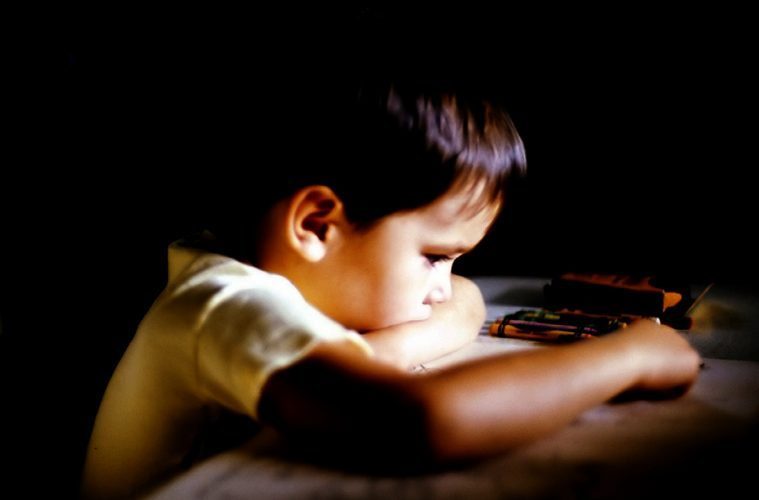
This is a question that New Orleans' privately run charters have had to face.
Hurricane Katrina wiped out the public schools, with many turning into privately run charters. Many of those schools took part in the no excuses discipline model, designed to hone in on and stop even the slightest misbehaviour in order to prevent bigger issues from occurring.
The elementary school Crocker College Prep in New Orleans took part in this model, requiring students to sit up straight at their desks and ensure their eyes remained on the speaker at all times. When walking the halls, they had to do so in silence. Any breaking of the rules, or acting out in any way, resulted in punishment.
But what if kids are acting out because of trauma?
This is an important question because New Orleans faces high rates of exposure to trauma, and so, while some students may benefit from strict rules, such discipline policies don't take into account the social, emotional, and behavioural needs of all students, and how they live outside of school.
According to the Institute of Women and Ethnic Studies, kids in New Orleans screen positive for post-traumatic stress disorder at more than three times the national rate, and up to half of all kids have dealt with a homicide in some way. The institute also found that 20% have actually witnessed a murder.
The city also has a high poverty rate, with about 40% of kids living below the poverty line. Another issue is the state's high incarceration rate, which has left many children with a parent behind bars.
With this information, Crocker College Prep, and four other New Orleans charter schools, are working to become more trauma-informed.
"Generally there just was really not an understanding of how trauma impacts a child," explained Paulette Carter, president and CEO of the Children's Bureau of New Orleans, a mental health agency for kids and families. "Teachers and school staff really look at children through the lens of, 'What's wrong with that child?' Versus, 'What happened to that child?' "
Though there are so many children with different issues, the reasons behind them are being neglected. According to Carter, mental health workers, including herself, have worked to learn more about how trauma changes the brain.
"A kid who's been exposed to trauma ... that fight or flight response is much more developed and stronger," Carter said. "If I'm walking down the hallway and somebody bumps into me, and I don't have a significant trauma history, I'm gonna say 'Oh, sorry, excuse me,' " she continued. "Whereas a kid who's been exposed to trauma on an ongoing basis, if somebody bumps into them that might be a threat." This is when the survival brain sparks, and reasoning and logic shut off.
For Crocker, finding ways to help students dealing with such issues has become essential. Now, the school has two full-time social workers holding one-on-one sessions with students who need to talk to someone.
When students become disruptive, teachers send them to a room called a wellness center for a meditative time-out, as opposed to punishment. And when students fight, rather than being reprimanded right away, they are asked to work it out through a group discussion.
Kids acting up or shutting down don't suddenly get in trouble, because there is likely a reason for why they are doing so. This is why they get extra support as opposed to detention or suspension, which used to be the chosen route for the school to ensure kids learned their lesson and didn't act up again.
"A lot of times teachers want students punished because they say you've wronged me as a teacher," explained Crocker College Prep and Principal Nicole Boykins. "But remove yourself from the situation and think about what that student needs. Even the students who give teachers the most grief want to be here."
If kids can find solace in school, perhaps their life troubles will not go back home with them. It's a win-win for teacher and student.








Comment: Just imagine what a difference it would make to children's long-term health and mental well-being if more school systems replaced their 'resource officers' with social workers?