
© Unknown
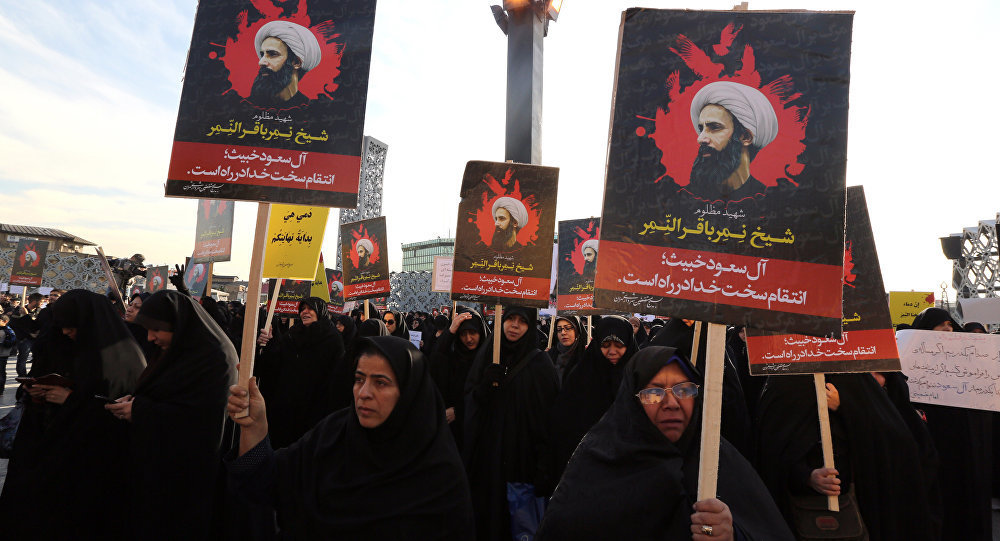
Despite the fact that during his trial in 2012 Sheikh Nimr al-Nimr claimed that he never was in possession of any kind of weapons and did not call for violence, he was sentenced to death all the same. Saudi authorities have been well aware of the fact that the execution of this influential Shia cleric will be regarded as a blatant injustice by all Shiites across the whole region, still he was executed together with jihadists to stress the fact that Saudi authorities see no difference between terrorists and fighters for their civil rights and freedoms. Not surprisingly, the violent death the preacher faced has made him into a martyr, whose only fault was his devotion to Islam and his criticism of the ruling Al-Saud clan that he sometimes voiced. On January 3 the Iranian spiritual leader Ayatollah Ali Khamenei said that the Saudi politicians are going to experience the holy wraith on themselves for this crime. As for the West, its reaction on this medieval act of barbarity has been pretty toothless.












Comment: Also see: Children escaping the wrath of Islamic State: Yazidi survivor camp in Syria