
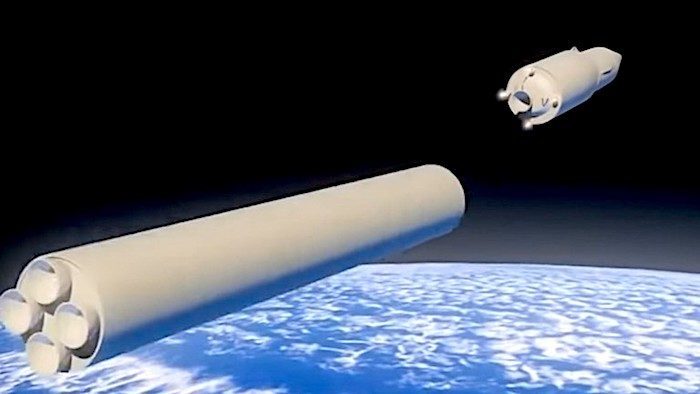
© Russian Defense MinistryCGI showing deployment of an Avangard glider
A hypersonic glider is a special type of a warhead, which can fly through the atmosphere at a high speed. This extends the range of a missile, potentially increases accuracy and makes defending against it harder through unexpected maneuvers. But prolonged controlled flight requires special protection of the glider from heat and shock produced at hypersonic speeds. China, the US and Russia are considered the most advanced nations in the relevant technologies, and Moscow claims it is winning the race with the Avangard project.
"The test was finished just now in a complete success," Putin told the cabinet on Wednesday. "All its specifications were confirmed."
The president said the first regiment armed with missiles carrying Avangard gliders will be deployed in Russia next year. "It's a big event for the armed forces, and probably for the entire country. Russia has a new kind of strategic weapons."


















Comment: See also: