The leaders of veteran allies Russia and India agreed Monday to launch a joint unmanned mission to the moon during Kremlin talks on boosting military and trade ties.
Indian Prime Minister Manmohan Singh announced the plan after talks with Russian President Vladimir Putin during which the two discussed projects for a more than twofold increase in trade by the end of the decade.
"The symbol of our cooperation is the joint agreement to send an unpiloted space ship to the moon for scientific investigation," Singh said in comments broadcast on Russian state television after the meeting.
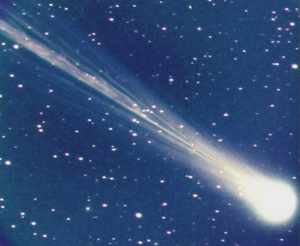
Jupiter is known as many things: king of the planets, an impressive gas giant, defender of the inner solar system. This last notion comes from the idea that Jupiter is so massive that its gravitational influence deflects objects like comets, which, as they spiral toward the Sun, could potentially hit inner planets such as the Earth.
|
| ©Unknown
|
| Comet impacts pose a serious threat to life on Earth.
|
From tropical storm to hurricane to nor'easter, the short but troubled life of Noel made headlines along the Eastern seaboard over the last two weeks.
Here in South Florida, Noel took a huge bite out of the beaches, removing an estimated 12,000 truckloads of sand. Along the coastline of New England, Noel made history, generating waves 45 feet high along the Georgian Bank, 6 feet higher than those measured during the famous "Perfect Storm" of October 1991. Noel's waves were the highest recorded at the buoy since online records began in 1984.
The swamped buoy in the Georgian Bank is one of dozens deployed in the Atlantic Ocean, Gulf of Mexico and Caribbean Sea that track wave heights, record sea-surface temperature and provide a variety of real-time weather data.
A population study of microbes in Yellowstone National Park hot pools suggests viruses might be buoyed by steam to distant pools. The result, to be published online next week in the Proceedings of the National Academy of Sciences, could help to answer some fundamental questions about how microbes, and the viruses that infect them, impact their environment. Researchers at Montana State University and Idaho National Laboratory embarked on one of the first comprehensive, long-term characterizations of hot pool ecosystems in Yellowstone National Park. The results help shed light on how viruses survive in hostile surroundings, migrate from pool to pool, and may help control hot pool environments.
A big question for biologists is how much microbes and their predators contribute to creating the acidic, mineral-heavy environment in geothermal features. In the laboratory, microbes like sulfur-eating Sulfolobus, which is found in hot pools around the world, will lower the acidity of the surrounding water to their comfort level. Viruses that infect hot pool microbes may have a similar effect on their environment by keeping certain populations in check.
Statement of Donald K. Yeomans Manager, NEO Program Office Jet Propulsion Laboratory
Committee on House Science and Technology Subcommittee on Space and Aeronautics
Mr. Chairman and members of the Subcommittee, thank you for the opportunity to appear today to discuss the potential threats of near-Earth objects (NEOs), our progress toward meeting the discovery goal articulated in the NASA Authorization Act of 2005, the role of the Arecibo planetary radar within the NEO program and the response options available if a NEO is found to be on an Earth impacting trajectory.
JAXA and NHK
JAXA.jpMon, 12 Nov 2007 06:02 UTC
The Japan Aerospace Exploration Agency (JAXA) and NHK (Japan Broadcasting Corporation) have successfully performed the world's first high-definition image taking by the lunar explorer "KAGUYA" (SELENE,) which was injected into a lunar orbit at an altitude of about 100 km on October 18, 2007, (Japan Standard Time. Following times and dates are all JST.)
It's a new Da Vinci code, but this time it could be for real.

|
| ©AP Photo
|
| A laptop screen shows musical notes encoded in Leonardo Da Vinci's "Last Supper."
|
Ljilja Cvekic
ReutersMon, 12 Nov 2007 00:18 UTC
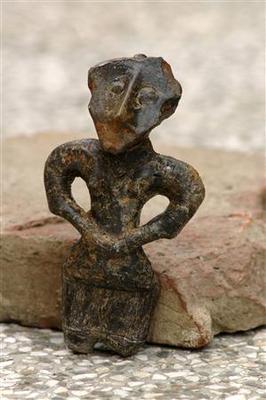
If the figurines found in an ancient European settlement are any guide, women have been dressing to impress for at least 7,500 years.
|
| ©REUTERS/Stevan Lazarevic
|
| A Neolithic figurine shows a girl in a short skirt and ornate top, found in the Plocnik archaeological site near the town of Prokuplje in southern Serbia, Nov. 3, 2007.
|
Intel Corp. plans to roll out its newest generation of processors Monday, flexing its manufacturing muscle with a sophisticated new process that crams up to 40 percent more transistors onto the company's chips.
The world's largest semiconductor company expects to start shipping 16 new microprocessors -- which also boast inventive new materials to stanch electricity loss -- for use in servers and high-end gaming PCs .
The world should quickly ban cloning of humans and only allow exceptions for strictly controlled research to help treat diseases such as diabetes or Alzheimer's, a U.N. study said on Sunday.
Without a ban, experts at the U.N. University's Institute of Advanced Studies said that governments would have to prepare legal measures to protect clones from "potential abuse, prejudice and discrimination".









Comment: 'Last Supper' by Leonardo Da Vinci has mystified researches for a very long time now.
The idea of music being encoded in the works of Da Vinci is not new and has been proposed before - Mysterious Science of Sound : Music in 'Da Vinci Code' Chapel.
We encourage you to read the following article by Laura Knight-Jadczyk for deeper insights into the true meaning of this amazing work of art.
The True Identity of Fulcanelli and The Da Vinci Code