Science & TechnologyS


Question

Dark Magnetic Filament on the Sun

The biggest thing on the sun today is not a sunspot--and it's not even close. A dark magnetic filament 20 times wider than a typical sunspot is meandering across the sun's southern hemisphere. It's so big, astrophotographer Pete Lawrence of Selsey, UK, had to stitch together several pictures to display the entire structure:

Magnetic Filament on Sun
© Pete Lawrence
The filament is filled with relatively dense plasma held above the stellar surface by magnetic forces. Because this plasma is cooler than the sun below, it appears dark. In fact, it is not. If you could hold the filament out against the black of space, it would glow more brightly than a full Moon.

The 400,000-km scale of the filament--long enough to stretch from Earth to the Moon!--makes it an easy target for safely-filtered backyard optics. If you have a solar telescope, take a look.

Heart

Magnetic Signature of Human Heartbeat Traced by Mini-Sensor

Image
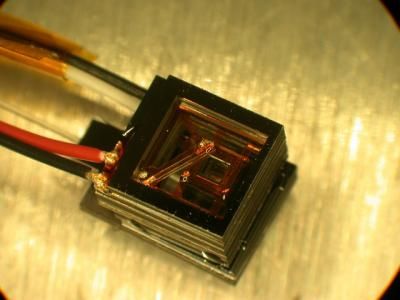
© Svenja Knappe/NISTNIST mini-sensor
National Institute of Standards and Technology (NIST) researchers have developed a small, atom-based magnetic sensor that is capable of tracking a human heartbeat. Together with the German National Meteorology Institute, NIST has proved that the sensor can be used for biomedical purposes in the future.

The NIST mini-sensor is a small container that consists of 100 billion gaseous rubidium atoms, optics and a low-power infrared laser. This design is capable of measuring the heart's "magnetic signature" in picotesla's, which are trillionths of a tesla, and the unit tesla measures magnetic field strength. The mini-sensor was first developed in 2004 as a "spin-off" of the miniature atomic clocks developed by NIST. The sensor has seen some recent updates, such as the addition of fiber optics to sense light signals that register magnetic field strength, and a reduction in size to make the entire system more mobile.

Family

Study Observes if Babies See Robots as Sentient or Inanimate Objects

Image
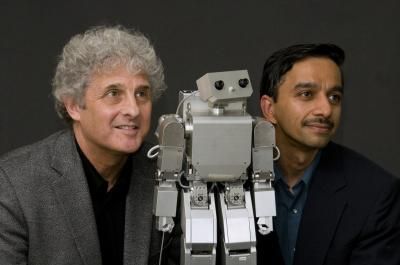
© University of WashingtonMorphy the robot
University of Washington researchers are studying what makes babies decide the difference between sentient and inanimate objects, and also how they interact and learn from these objects, such as robots.

Babies are curious and interested in almost everything their parents do. They learn and socialize by mimicking an adult's actions. For instance, if an adult touches their nose to teach the baby where their nose is, the baby will learn to touch their nose as well when asked where it is.

Andrew Meltzoff, lead author of the study and co-director of of the University of Washington's Institute for Learning and Brain Sciences; Rechele Brooks, co-author of the study and a UW research assistant professor; and Rajesh Rao, co-author and UW associate professor of computer science and engineering, have studied babies' interactions with adults and inanimate objects in an effort to understand how they perceive and learn from different "teachers."

Sun

Solar Wind Stream Heading Our Way And New Sunspot 1113

Image
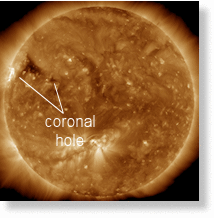
© SDO/AIA
A solar wind stream flowing from the indicated coronal hole could reach Earth on or about Oct. 20th.

New sunspot 1113 emerged over the sun's northeastern limb yesterday and immediately announced itself with a towering eruption. NASA's Solar Dynamics Observatory (SDO) recorded the blast on Oct. 13th around 1600 UT:

Magnetic fields reconnecting above the sunspot produced a B4-class solar flare and hurled a narrow coronal mass ejection into space: SOHO movie. Earth was not in the line of fire--but this could change in the days ahead as the sunspot turns to face our planet. Readers with solar telescopes are encouraged to monitor developments.

Sun

Montana Auroras

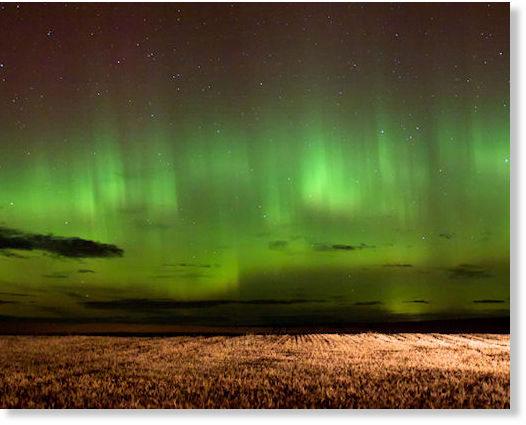
On Oct. 11th, a bright curtain of Northern Lights unfurled along the US-Canadian border. Watching from Glasgow in northern Montana, Ben Fyngyrz took this picture:

Image
© Ben Fyngyrz
"The lights didn't make it all the way down to my latitude," he says , "but the side-view was interesting because it showed the vertical structure of the auroras." More of Ben's photos show dark clouds and a 19th century prairie house backlit by the auroras--very pretty.

The display was triggered by a "south-pointing IMF." In other words, the interplanetary magnetic field near Earth tilted south, opening a crack in Earth's magnetosphere. Solar wind poured in and fueled a G1-class geomagnetic storm. The storm is over now, but the lights are still dancing in the gallery.

Bizarro Earth

Pratt & Whitney Rocketdyne Awarded $60.3 Million NASA Contract for Continued Support of the Space Shuttle Main Engine

Pratt & Whitney Rocketdyne received a $60.3 million contract from NASA to provide continued Space Shuttle Main Engine (SSME) pre-launch, launch and post-launch support through March 31, 2011. The contract is an extension to the current space shuttle program flight manifest launch schedule, which shifted the last two scheduled launch dates for missions STS-133 and STS-134 to fiscal year 2011. Pratt & Whitney Rocketdyne is a United Technologies Corp. (NYSE: UTX) company.

"The extension means NASA will be able to complete the next two space shuttle missions that are critical to completing the International Space Station, allowing it to achieve its full potential and ensuring it remains viable until at least 2020," said Jim Paulsen, SSME program manager, Pratt & Whitney Rocketdyne. "Pratt & Whitney Rocketdyne is a close partner with NASA and a strong contributor to the nation's human spaceflight program. We look forward to continuing to work together to help advance human space exploration now and in the future."

The SSME is the world's most sophisticated, high-performance reusable rocket engine that is capable of lifting heavy launch vehicles. Since its first flight in 1981, the SSME has achieved 100 percent mission success with more than one million seconds of hot-fire experience. As the most highly-tested large rocket engine ever built, the SSME sets the foundation for further U.S. space exploration.

Bulb

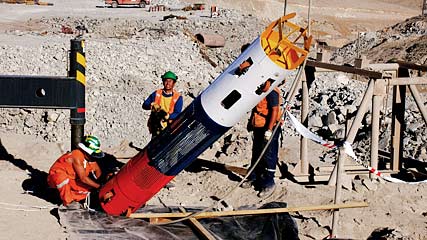
NASA-designed Fenix Capsule Rescues Trapped Miners in Chile

Image
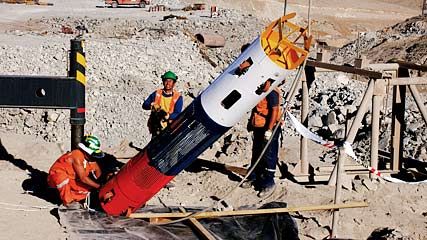
© AP/Chile's PresidencyNASA's Fenix Capsule
For 69 days, 33 miners were trapped in the San Jose copper and gold mine in Chile after a rockslide closed off their exit. But now, with the help of an escape capsule designed by NASA, the miners are being carried back to the Chilean surface to be reunited with family as well as seek medical attention.

The miners have been trapped 2,300 feet below ground level since August 5. They were discovered 17 days after the rockslide, and have survived until now due to rescue workers lowering water, food, medicine and other supplies down to the men.

Around this same time in late August, NASA dispatched a four-man team to the mine. The team consisted of Clinton Cragg, a NASA engineer; Michael Duncan, a doctor; James Polk, a doctor, and Al Holland, a psychologist.

Cragg began designing an escape capsule that could fit in a hole the size of a bicycle tire, and handed the finished plans to the Chilean navy, who built the capsule. The finished product was a 13-foot long, 924 pound steel rescue craft that had an escape hatch at the bottom. It was named "Fenix," after the mythical bird that rose from ashes. The Fenix capsule is very narrow, where miners have barely any room to move their shoulders, but contains a safety harness, a device to communicate with rescue teams and a clock.

Info

Genetically Engineered Silkworms Spin Like Spiders

New Silk
© HemeraThe new silk alone could shake up the textile industry by creating a softer and stronger fabric that still looks like silk.
Silkworms have been modified to produce spider silk, creating a fabric that could be used in everything from bulletproof clothing to artificial tendons.

If Spider-Man ever ran out of webs, he could now enlist an army of silkworms to spin extra high-tensile spider silk.

Scientists have created a genetically modified silkworm that spins a new kind of silk: a hybrid of silkworm silk and spider silk.

The new material alone could shake up the textile industry, while future silk hybrids could be used in everything from bulletproof clothing to artificial tendons.

"Compared to normal spider silk, it's not as strong," said Malcolm Fraser, a scientist from the University of Notre Dame. "But we are confident that, this being our first attempt, that we will be able to tweak the system to bring the system closer to the strength of true spider silk."

Meteor

NASA Cameras Spot Meteors From Mystery Comet

Image
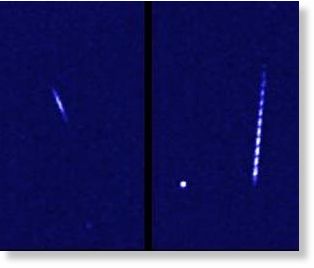
© NASA/MSFC/B. CookeCamelopardalids meteors from Oct. 5, 2010.
It's a strange-sounding name for a constellation, coming from the Greco-Roman word for giraffe, or "camel leopard". The October Camelopardalids are a collection of faint stars that have no mythology associated with them - in fact, they didn't begin to appear on star charts until the 17th century.

Even experienced amateur astronomers are hard-pressed to find the constellation in the night sky. But in early October, it comes to prominence in the minds of meteor scientists as they wrestle with the mystery of this shower of meteors, which appears to radiate from the giraffe's innards.

The October Camelopardalids are not terribly spectacular, with only a handful of bright meteors seen on the night of Oct. 5. It may have been first noticed back in 1902, but definite confirmation had to wait until Oct. 2005, when meteor cameras videotaped 12 meteors belonging to the shower.

Moving at a speed of 105,000 miles per hour, Camelopardalids ablate, or burn up, somewhere around 61 miles altitude, according to observations from the NASA allsky meteor cameras on the night of Oct. 5, 2010.

Better Earth

Ancient Colorado River Flowed Backwards

Image
© Unknown
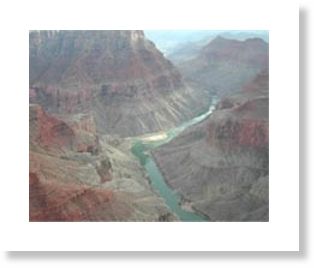
Geologists have found evidence that some 55 million years ago a river as big as the modern Colorado flowed through Arizona into Utah in the opposite direction from the present-day river. Writing in the October issue of the journal Geology, they have named this ancient northeastward-flowing river the California River, after its inferred source in the Mojave region of southern California.

Lead author Steven Davis, a post-doctoral researcher in the Department of Global Ecology at the Carnegie Institution, and his colleagues discovered the ancient river system by comparing sedimentary deposits in Utah and southwest Arizona.

By analyzing the uranium and lead isotopes in sand grains made of the mineral zircon, the researchers were able to determine that the sand at both localities came from the same source - igneous bedrock in the Mojave region of southern California.

The river deposits in Utah, called the Colton Formation by geologists, formed a delta where the river emptied into a large lake. They are more than 400 miles (700 kilometers) to the northeast of their source in California.