Science & TechnologyS


Satellite

Iran to Showcase New Rockets, Satellites

Image
© Agence France-PresseAn Iranian flag fluttering in front of a rocket designed to carry a satellite in 2008. Iran said it will showcase what it called a new range of rockets and satellites during annual celebrations marking the 32nd anniversary of the Islamic revolution.
Iran said on Sunday it will showcase what it called a new range of rockets and satellites during annual celebrations marking the 32nd anniversary of the Islamic revolution.

Defence Minister Ahmad Vahidi said Safir 1-B and Kavoshgar 4 rockets and Rasad and Fajr satellites would be unveiled during the 10-day celebrations that start on Tuesday, according to state television website.

Iran will mark on February 11 the 32nd anniversary of the 1979 Islamic revolution which toppled the US-backed shah. Every year Tehran uses the occasion to tout its scientific and technological achievments.

The Safir (Ambassador) 1-B rocket can carry a satellite weighing 50 kilogrammes (110 pounds) into an elliptical orbit of 300 to 450 kilometres (185 to 280 miles), the website said.

Iran sent into space in February 2009 the Safir 2 rocket carrying its first home-built satellite, called Omid (Hope).

The state television report said the other Kavoshgar (Explorer) 4 rocket has a range of 120 kilometres.

Evil Rays

Did a gamma-ray burst devastate life on Earth?

Image
© Unknown
A devastating burst of gamma-rays may have caused one of Earth's worst mass extinctions, 443 million years ago. A team of astrophysicists and palaeontologists says the pattern of trilobite extinctions at that time resembles the expected effects of a nearby gamma-ray burst (GRB). Although other experts have greeted the idea with some scepticism, most agree that it deserves further investigation.

GRBs are the most powerful explosions known. As giant stars collapse into black holes at the end of their lives, they fire incredibly intense pulses of gamma rays from their poles that can be detected even from across the universe for 10 seconds or so. All the bursts astronomers have recorded so far have come from distant galaxies and been harmless on the ground, but if one occurred within our galaxy and was aimed straight at us, the effects could be devastating, according to astrophysicist Adrian Melott of the University of Kansas in Lawrence.

The Earth's atmosphere would soak up most of the gamma rays, Melott says, but their energy would rip apart nitrogen and oxygen molecules, creating a witch's brew of nitrogen oxides, especially the toxic brown gas nitrogen dioxide that colours photochemical smog.

Family

Hugs Follow a 3-Second Rule

Image
© Wolfgang Rattay/ReutersHug it out. Olympic athletes, like everyone else, tend to hug for about 3 seconds.
Ever wondered how long a hug lasts? The quick answer is about 3 seconds, according to a new study of the post-competition embraces of Olympic athletes. But the long answer is more profound. A hug lasts about as much time as many other human actions and neurological processes, which supports a hypothesis that we go through life perceiving the present in a series of 3-second windows.

Crosscultural studies dating back to 1911 have shown that people tend to operate in 3-second bursts. Goodbye waves, musical phrases, and infants' bouts of babbling and gesturing all last about 3 seconds. Many basic physiological events, such as relaxed breathing and certain nervous system functions do, too. And several other species of mammals and birds follow the general rule in their body-movement patterns. A 1994 study of giraffes, okapis, roe deer, raccoons, pandas, and kangaroos living in zoos, for example, found that although the duration of the animals' every move, from chewing to defecating, varied considerably, the average was, you guessed it, 3 seconds.

Cow Skull

450 Million-year-old mass extinction closely linked to climate change

Image
© unknown
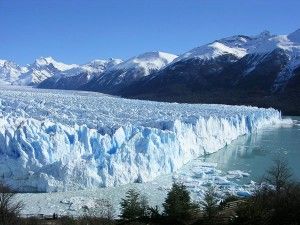
Geobiologists at California Institute of Technology have found how the mass extinction that occurred 450 million years ago is linked to a cooling climate.

The mass extinction coincided with a glacial period, during which global temperatures cooled and the planet saw a marked increase in glaciers.

So the team studied the timing and magnitude of the glaciation and how it affected ocean temperatures near the equator.

"Our observations imply a climate system distinct from anything we know about over the last 100 million years," said Woodward Fischer.

However, "one of the biggest sources of uncertainty in studying the paleoclimate record is that it's very hard to differentiate between changes in temperature and changes in the size of continental ice sheets," said Seth Finnegan.

Binoculars

Dopamine Makes You Addicted To Seeking Information

Image
© nida.nih.gov
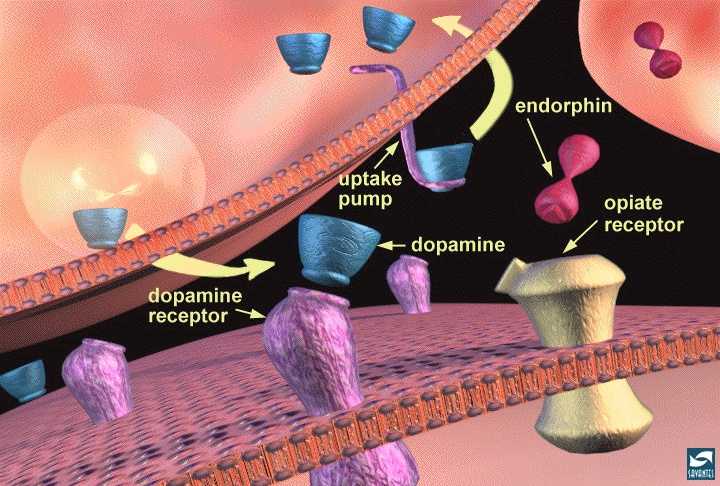
On her Blog, What Makes Them Click, Dr. Weinschenk, published author and researcher, posts a list of 100 interesting articles on human perception and brain function. Number 8 explores the real purpose of dopamine in the human system. "You may have heard that dopamine controls the "pleasure" systems of the brain: that dopamine makes you feel enjoyment, pleasure, and therefore motivates you to seek out certain behaviors, such as food, sex, and drugs.

It's all about seeking - The latest research, though is changing this view. Instead of dopamine causing us to experience pleasure, the latest research shows that dopamine causes seeking behavior. Dopamine causes us to want, desire, seek out, and search. It increases our general level of arousal and our goal-directed behavior."

Info

Artificial Hydrogen Tests Quantum Theory

Hydrogen
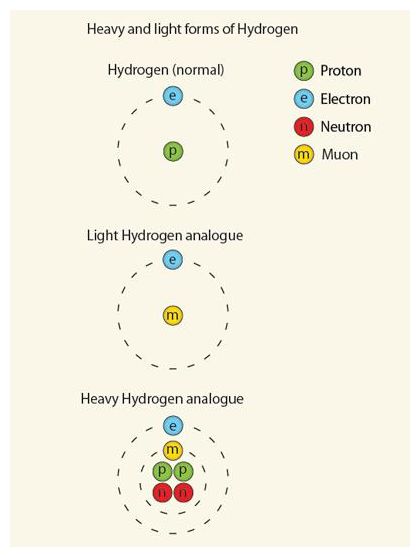
© Nature NewsResearchers created ultra-light and ultra-heavy forms of hydrogen to probe the laws of quantum chemistry.

Scientists have created ultra-light and ultra-heavy forms of the element hydrogen, and have investigated their chemical properties.

Donald Fleming, a chemist at the University of British Columbia in Vancouver, Canada, and his colleagues generated two artificial analogues of hydrogen: one with a mass a little over one-tenth that of ordinary hydrogen, and one four times heavier than hydrogen. These pseudo-hydrogens both contain short-lived subatomic particles called muons - super-heavy versions of the electron.

The researchers tested the behaviour of these new atoms in a chemical reaction called a hydrogen exchange, in which a lone hydrogen atom plucks another from a two-atom hydrogen molecule - just about the simplest chemical reaction conceivable. In a paper in Science,1 they report that both the weedy and the bloated hydrogen atoms behave just as quantum theory predicts they should - which is itself surprising.

The experiment is a "tour de force", says Paul Percival, a muonium chemist at Simon Fraser University in Burnaby, Canada.

"I would never attempt such a difficult task myself," he says, "and when I first saw the proposal I was very doubtful that anything of value could be gained from the Herculean effort. Don Fleming proved me wrong. I doubt if anyone else could have achieved these results."

Sun

2 Major Eruptions On The Sun - M1 Class Flares

Jan. 28th began with not one but two major eruptions on the sun. Separated by more than a million kilometers, the two blasts occurred almost simultaneously on opposite corners of the solar disk.


On the lower left, a magnetic filament became unstable and erupted, hurling a portion of itself into space. On the upper right, departing sunspot 1149 produced an M1-class solar flare and a bright coronal mass ejection (SOHO movie). Is this all a big coincidence? Maybe not. New research shows that eruptions on the sun can "go global" with widely separated blasts unfolding in concert as they trigger and feed off of one another.

These blasts are going to miss in concert, too. Plasma clouds ejected by the two eruptions will sail wide of our planet, one on the left and one on the right. No Earth-effects are expected; maybe next time.

Info

Hidden Fractals Suggest Answer to Ancient Math Problem


Researchers have found a fractal pattern underlying everyday math. In the process, they've discovered a way to calculate partition numbers, a challenge that's stymied mathematicians for centuries.

Partition numbers track the different ways an integer can be divvied up. The number 3, for example, has three unique partitions: 3, 2 + 1, and 1 + 1 + 1. Partition numbers grow so fast that mathematicians have a hard time predicting them.

"The number 10 has 42 partitions, but with 100 you have 190,569,292 partitions. They get impossibly huge to add up," said mathematician Ken Ono of Emory University.

Since the 18th century, generations of mathematicians have tried to find a way of predicting large partition numbers. Srinivasa Ramanujan, a self-taught prodigy from a remote Indian village, found a way to approximate partition numbers in 1919. Yet before he could expand on the work, and convert it to a clean equation, he died in 1920 at the age of 32. Mathematicians ever since have puzzled over Ramanujan's manuscripts, which tie the primes 5, 7 and 11 to partition numbers.

Magnet

Study: Birds literally 'See' Earth's Magnetic Field as They Fly

birds-eye view
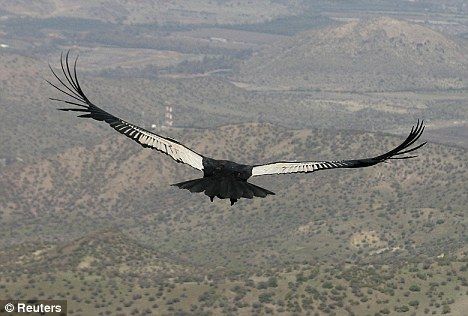
© ReutersDirection home: Birds may be able to 'see' the Earth's electromagnetic field as they fly through the sky, scientists believe
In tests using the most exotic chemicals they could find, scientists could not match the ability of a bird's eye.

Birds may be able to 'see' the Earth's electromagnetic field as they fly through the sky, scientists have suggested.

Many creatures, including all birds, navigate by sensing the direction of the magnetic forces around our planet to guide them.

But now researchers have found that different reactions are produced in the eyes of all avian creatures depending on which way the field spins.

These reactions could create a picture of the field in different shades of light and dark across the bird's eye, they have suggested.

Scientists said that if true it would be another example of Mother Nature's wonder - in tests using the most exotic chemicals they could find, they could not match the bird's eye for its ability to do what it does.

Cell Phone

Next smartphone tech? Predator style thermal cameras

Soon we'll all be picking keypad locks with our mobes

It's seemed like a long road, perhaps, but arguably the destination has been reached. PDAs have incorporated mobile phones and acquired increasingly zippy and flexible mobile/wireless data connections. Cameras have come aboard, and in some cases have become quite good. The resulting smartphones have since added the capabilities of almost any handheld/pocket-size gadget you can think of: torch, satnav, compass, accelerometer/inclinometer, NFC payment/ID swipe-chips... everything possible has now been converged. Or has it?

smartphonegadget
© The RegisterFor some reason my knife has become very hot.