
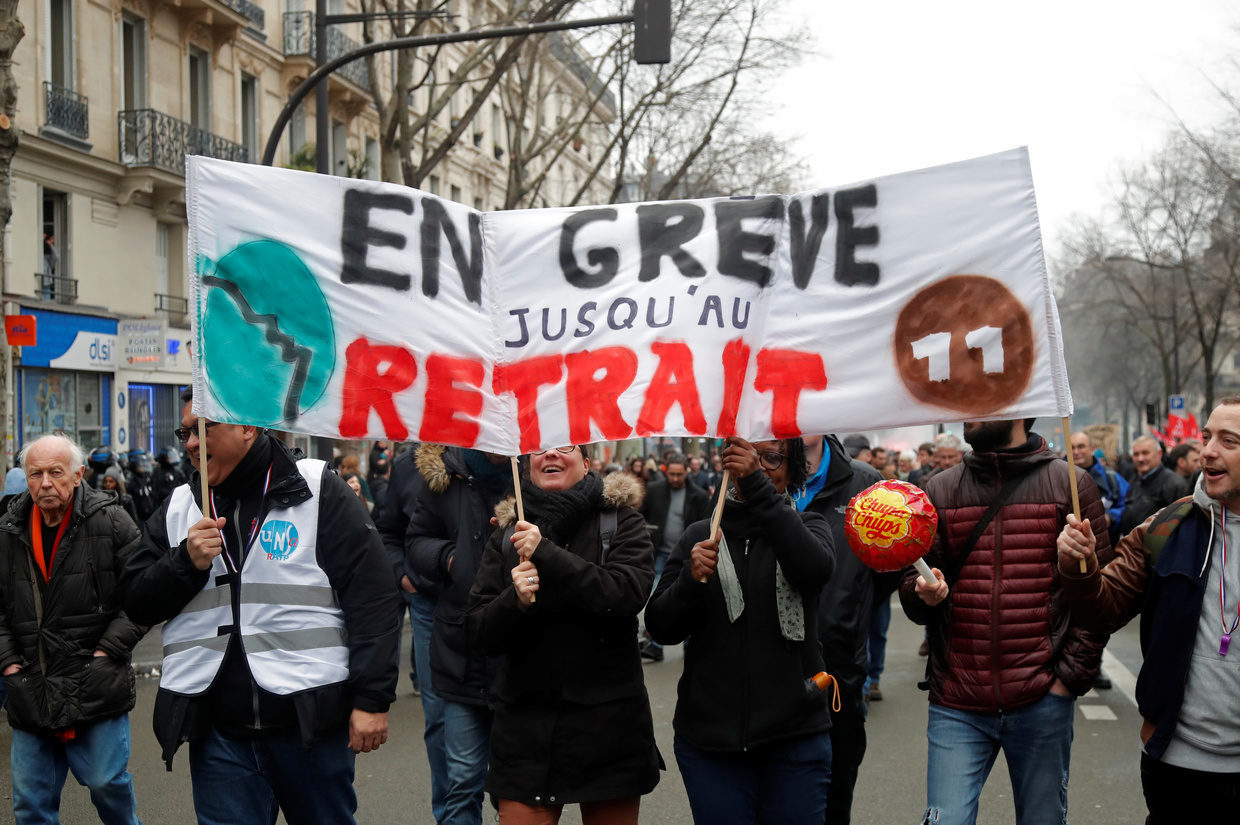
© Reuters / Charles PlatiauProtesters at the Thursday march shouted anti-government slogans, waved red flares and held banners saying "on strike until withdrawal."
By morning rush hour, there were more than 124 miles (200km) of traffic jams in the greater Paris area as public transport was badly disrupted, leaving millions of commuters struggling to get to work.
More than a third of teachers stopped work across the country and dozens of schools closed in the capital. Rail services across France were severely hit and there were warnings of potential delays and disruption to flights. Energy workers were also striking, with refinery stoppages. Thousands of police officers were poised for a protest march in the centre of Paris.
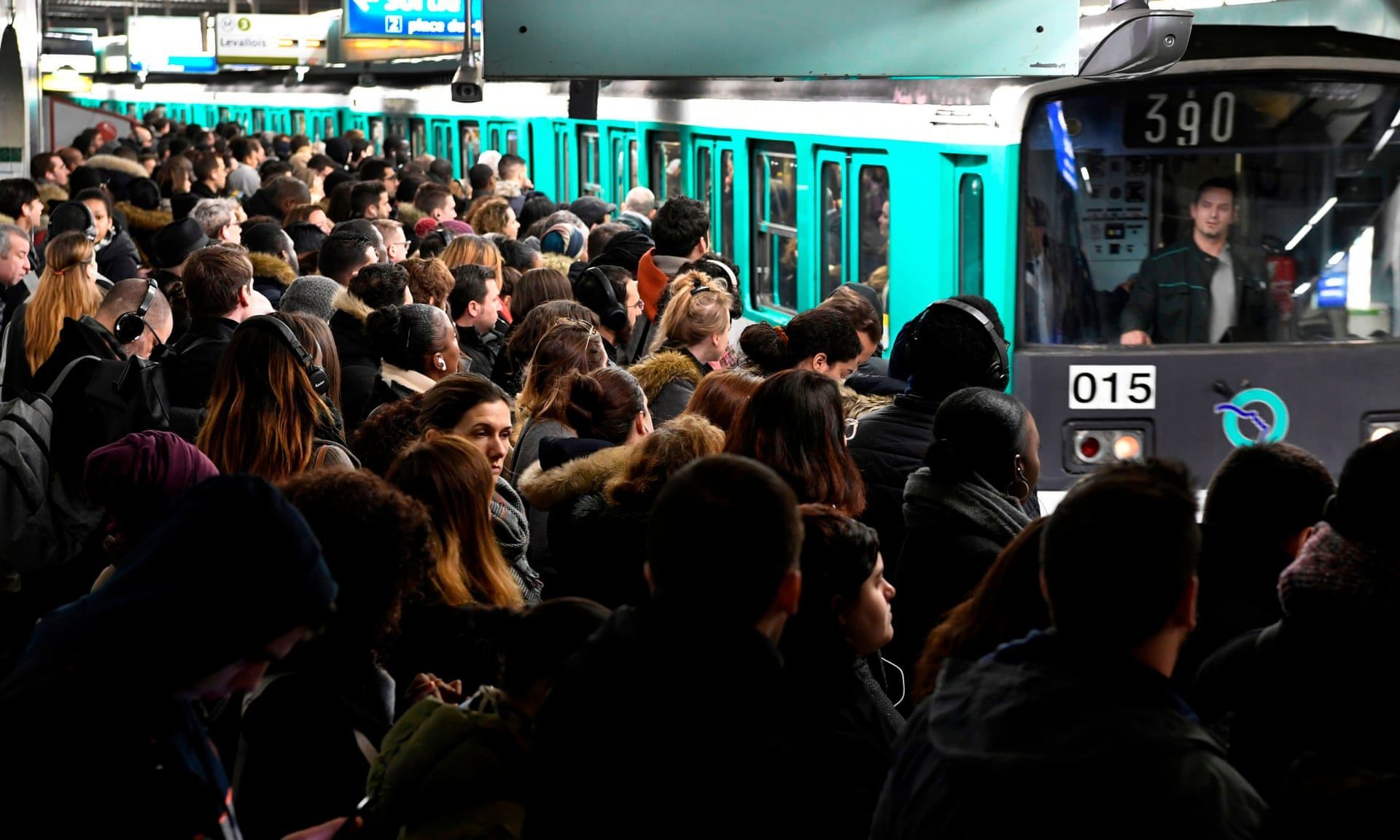
© Bertrand Guay/AFP via GettyCommuters stand on a platform at Saint-Lazare subway station as the strike continues.
An Odoxa poll for Le Figaro found that 61% of the French public still feel the strike is justified but 57% want it to stop. Commuters in Paris and the surrounding banlieues, where millions depend on trains, have been particularly affected.
The protest movement against Macron's flagship pensions overhaul has now lasted longer than any strike since the wildcat workers' stoppages of May 1968. The rail stoppage, which began on 5 December, is now France's longest continuous train strike since the creation of the national rail service in the 1930s.
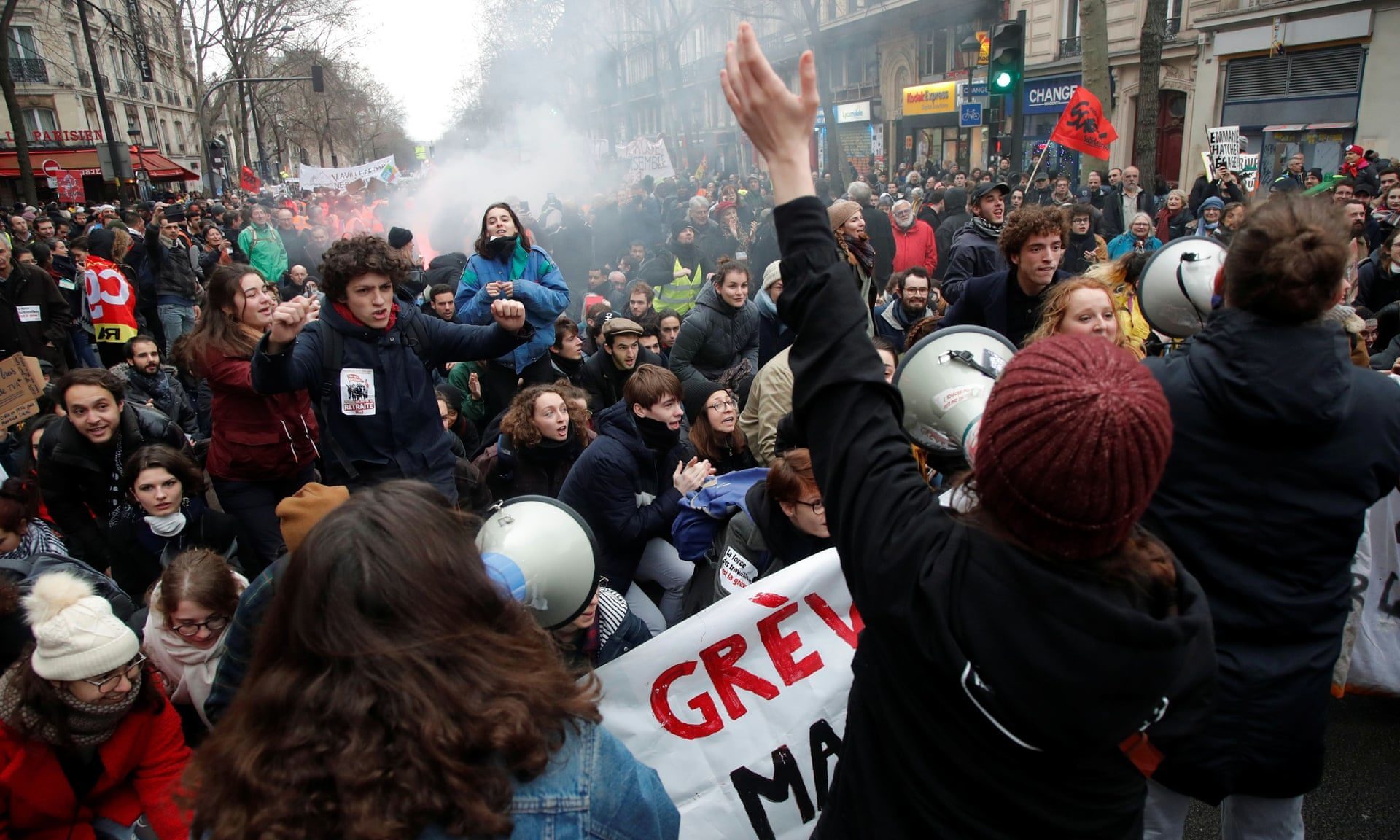
© Charles Platiau/ReutersFrench labour union members and workers on strike attend a demonstration in Paris during the 36th consecutive day of strike action.
Photograph:
Photograph:
The prime minister has argued that to balance the pension budget, workers would be incentivised to stay in the labour force until 64 in order to take home a full pension, instead of leaving at the official retirement age of 62. Unions fear people will be made to work longer for lower pensions. Even moderate unions are angry at any change to the retirement age.
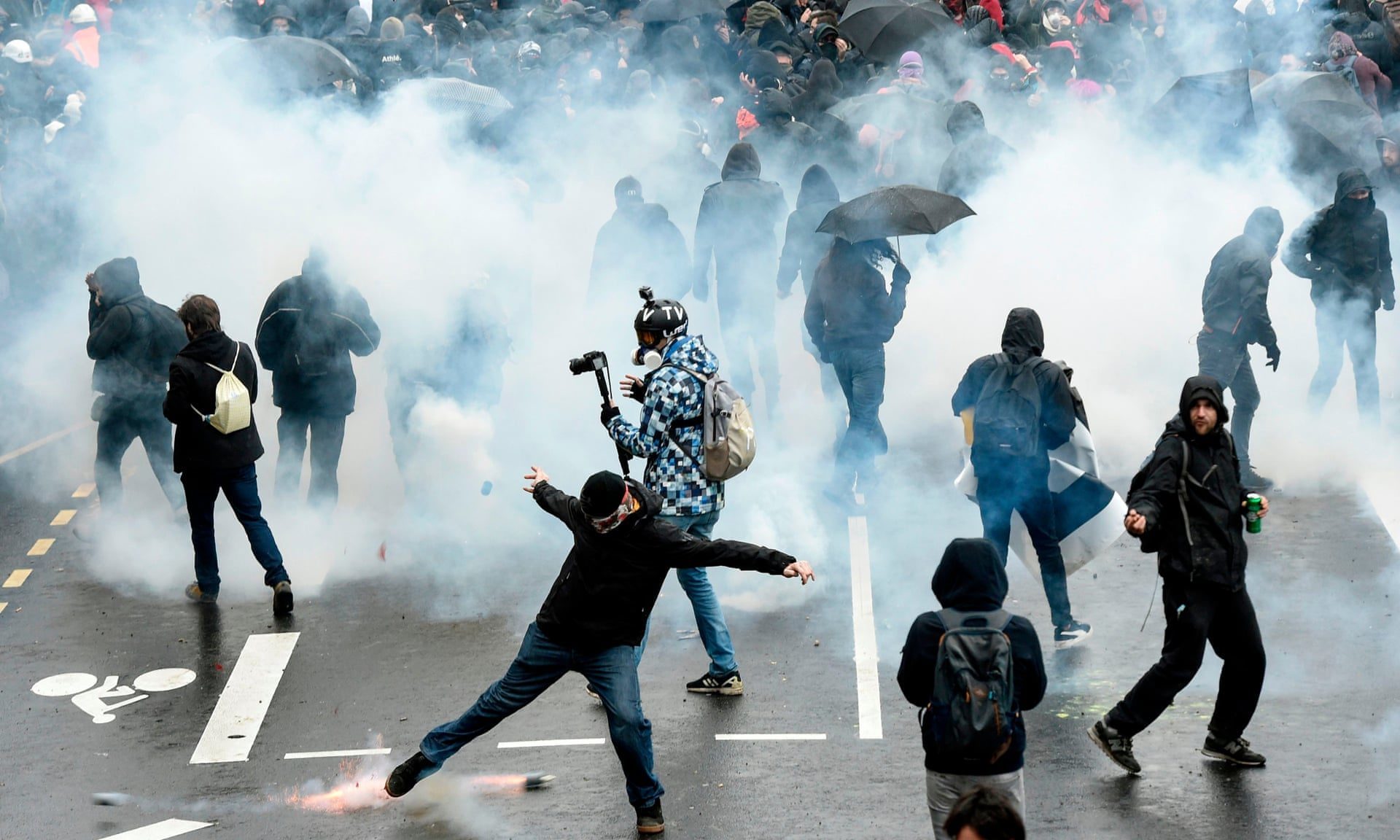
© Sebastien Salom-Gomis/AFP via Getty ImagesProtesters disperse as tear gas is fired by French police during a demonstration on day 36 of the strike.
At the Paris demonstration, André Villanueva, an Air France ground-staff worker at Charles de Gaulle airport and a member of the CGT union, said: "The government isn't seriously negotiating, it's just bluff. This is about people's futures. If you've got a lot of money you'll always be able to get health treatment, go on holiday and retire comfortably. This is about protecting the majority of people who haven't and who work hard for a basic retirement."
Chantal Sevens, 67, a retired administrator from a private health group, said: "People are worried that this reform will in fact simply benefit the big groups running private pension funds. It's about capitalism. It feels like the very principle of our social security system is under threat."
The dispute cuts to the heart of Macron's presidential project and his pledge to deliver the biggest transformation of the French social model and welfare system since the postwar era. Since his election in 2017, he has leaned towards a Nordic style of "flexi-security", in which the labour market is loosened and the focus is on changing from a rigid work code to a society of individuals moving between jobs.
Comment: 'Flexi-security' is how it's being spun and yet judging by the sheer breadth of professions joining the protests these reforms are intended to benefit the few, as has been the case with all of Macron's neoliberal reforms, not the many.
Changing France's pension system is the latest step for Macron after he overhauled labour rules and the unemployment system, but it has always been an extremely sensitive topic in France.





Comment: RT provides coverage of some of the massive protests: Graphic footage from France's Rouen shows scenes of police brutality that became commonplace during the Yellow Vest protest's, and those protess, which seem to be merging with the strikes, have now entered their second year: See also: "I am France": No one is calling this a revolution, but it is
And check out SOTT radio's: