Earthquakes
S


Arrow Up

Second earthquake hits Cornwall, UK within a week

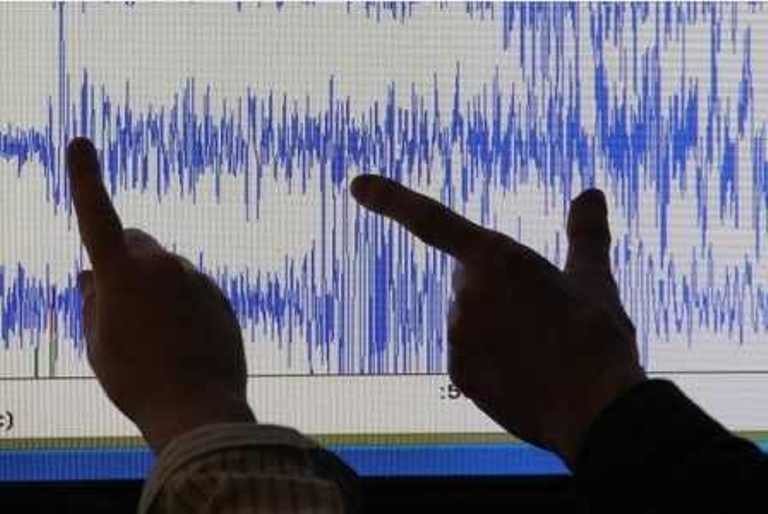
Earthquake graph
A second earthquake has hit Cornwall in a week - leaving residents a little shaken by the minor tremor.

The British Geological Survey confirmed a signal at 12.04pm between Falmouth and Helston.

The data is now due to be analysed to determine its strength.

Kim Kimber, who lives near Falmouth, said: "Initially thought it might be thunder but there was not enough cloud. It felt wrong too.

"The whole house shook and the windows were rattling. I felt the vibration through the floor.

"If we lived near a quarry I might have thought they were blasting but nearest live quarry is a couple of miles away."

Last week, an earlier earthquake struck parts of Cornwall - sending a low rumble through houses around the area.

But far from any fears of a major seismic shift, perhaps splitting Cornwall from the rest of mainland Britain, the quake measured only 0.8 on the Richter Scale.

Attention

Strong magnitude 6.6 shake near the Kermadec Islands triggered 'ghost quakes' in North Island, New Zealand, but why?

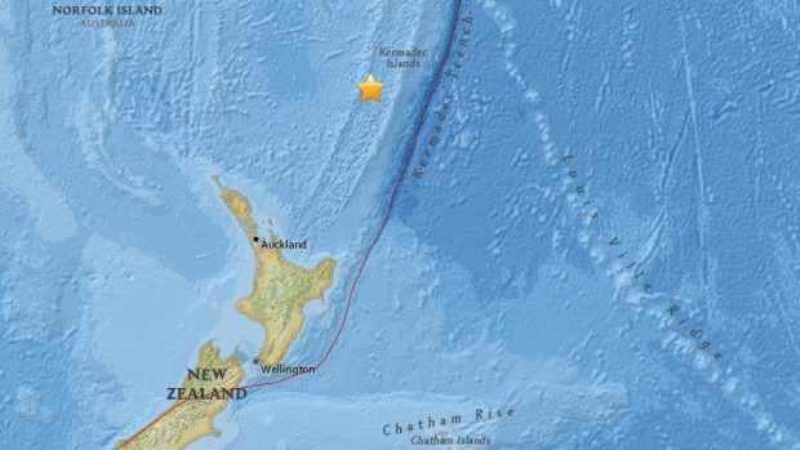
Tuesday's earthquake was centred near the Kermadec's Raoul Island, about 1000km northeast of New Zealand.
© Massey UniversityTuesday's earthquake was centred near the Kermadec's Raoul Island, about 1000km northeast of New Zealand.
The magnitude 6.6 quake that struck off the coast of the North Island on Tuesday was widely felt and triggered false reports of shakes in New Zealand.

It is not uncommon for earthquakes to confuse seismic readings as energy from tremors travels large distances.

These "ghost quakes" register as local earthquakes when the GNS Science system starts to receive data.

Seismic graphs show the earthquake waves at 8am on Tuesday detected by the northernmost seismographs.
© John RistauSeismic graphs show the earthquake waves at 8am on Tuesday detected by the northernmost seismographs.
Let's dive right in to the world of ghost earthquakes.

What happened on Tuesday?

A large magnitude 6.6 quake centres about 850 kilometres north of Whakatane at a depth of 360km.

The epicentre was near the Kermadec Islands and the Kermadec Trench.

Bizarro Earth

6.6 magnitude earthquake strikes north of New Zealand

New Zealand earthquake map
© USGSThe location of the quake - deep quakes off the coast were often recorded by Geonet's automatic system as multiple quakes.
A 6.6 magnitude earthquake 1100km off the North Island was responsible for the tremors that shook New Zealanders this morning.

Geonet seismologist John Ristau said the tremors felt in Bay of Plenty, Tararua and Canterbury were not official earthquakes.

There had been reports that a 5.3 magnitude quake was recorded 35 km south of Murupara and that 5.0 magnitude quake struck 20 km north west of Pongaroa.

A third quake was said to have hit 15km south-west of Amberley.

The shakes weren't official earthquakes but ripple effects of a 6.6. earthquake near Raoul Island.

Geonet received more than 500 reports of people who had felt shakes, Mr Ristau said.

There would be few aftershocks because the earthquake was so deep, he said.

Attention

Rare powerful magnitude 6.0 earthquake recorded in Antarctica

Earthquake map
© USGS
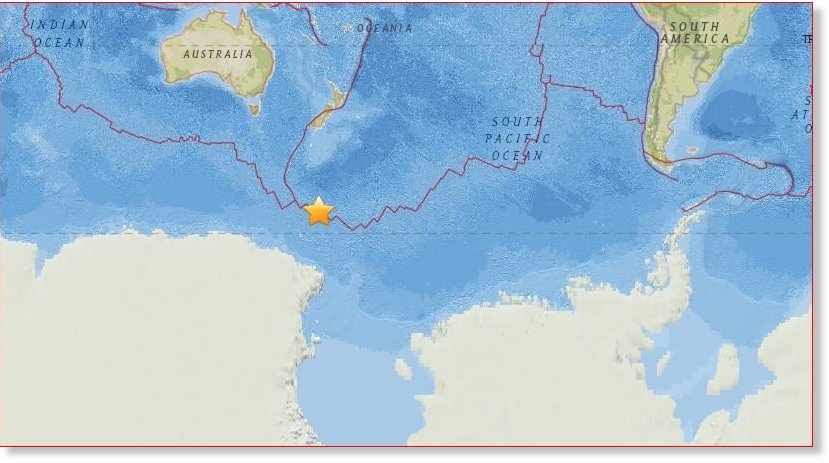
A rare powerful magnitude 6.0 earthquake struck the region around the Balleny Islands, Antarctica on January 31, 2016.

The strong shallow earthquake was recorded at 5:39pm at a depth of 10 km 473km (294mi) NE of Young Island, Antarctica or 2475km (1538mi) S of Wellington, New Zealand.

According to the U.S. Geological Survey:
Earthquakes do occur occasionally in Antarctica, but not very often. There have been some big earthquakes - including one magnitude 8 - in the Balleny Islands.

The boundary between the Scotia Plate and the Antarctic Plate just grazes the north tip of the Antarctic Peninsula (again, look "northwest" from the Pole toward South America). There is also a hint of a line of seismicity off the west coast of the Antarctic Peninsula and some activity in the Kerguelen Plateau (in the Indian Ocean "northeast" from the Pole). The Kerguelen Plateau is within the Antarctic Plate but it is not part of the Antarctic Continent. As with the interior area of all tectonic plates, earthquakes can and do occur in Antarctica, but they are much less frequent than quakes on the plate boundaries.

Another reason why there are fewer quakes located in Antarctica than within other plates such as Australia or North America is because smaller quakes are much more likely to go undetected in Antarctica because there are very few seismograph stations. There are only 19 operating seismograph stations (as of 2005 )in all of the continent of Antarctica, and only one of them, at the Amundsen-Scott South Pole Station, is in the interior of the continent. By comparison, there are 42 stations within the State of New Mexico. The closest seismograph station to the one at South Pole is 1350 km or about 840 miles. That's a big area to hide little earthquakes in!

Finally, the interior of Antarctica has icequakes which, although they are much smaller, are perhaps more frequent than earthquakes. The icequakes are similar to earthquakes, but occur within the ice sheet itself instead of the land underneath the ice. Some of our polar observers have told us they can hear the icequakes and see them on the South Pole seismograph station, but they are much too small to be seen on enough stations to obtain a location.

Bizarro Earth

7.0 quake strikes Russia's far eastern Kamchatka

kamchatka
© earthquake.usgs.gov
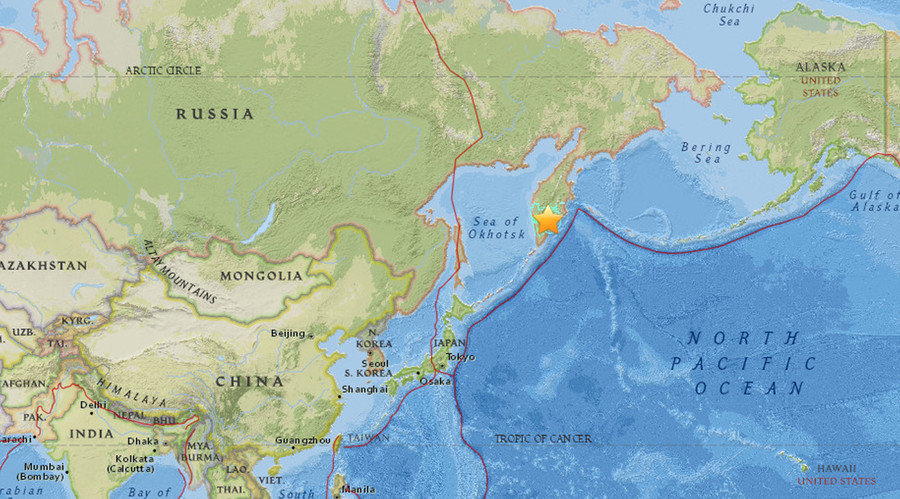
A strong, deep 7.0-magnitude earthquake rocked Russia's far eastern Kamchatka peninsula on Saturday, the US Geological Survey reported.

The quake hit 106 kilometers north of Petropavlovsk-Kamchatskiy, the capital city of Russia's Kamchatka Region.

The depth of the earthquake was reported at 153 kilometers. There have been no immediate reports of serious damage or casualties.

Meanwhile on social media, frightened witnesses posted descriptions of the strong tremors felt in the region.

Bizarro Earth

Quake summit set after Pacific Northwest quake story shakes up White House

Cascadia subduction zone
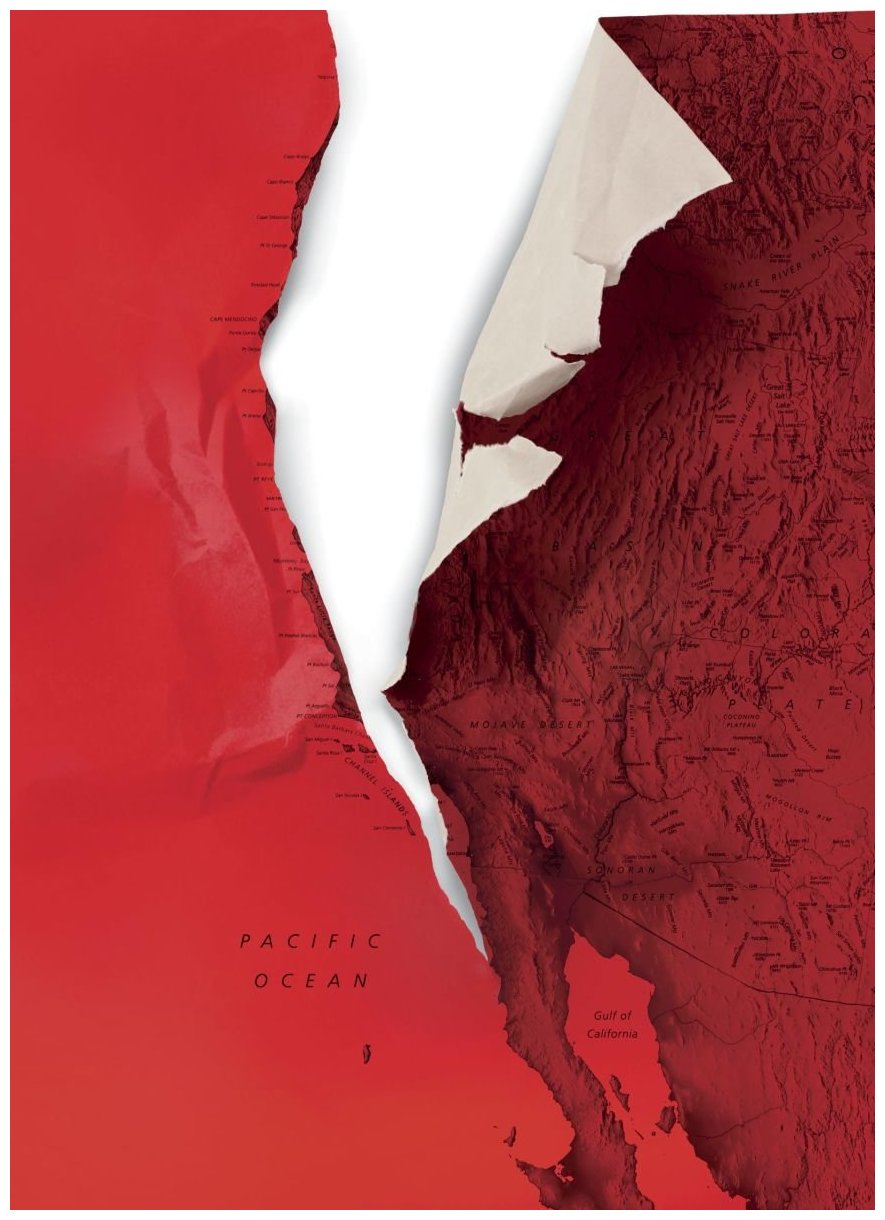
© Christoph Niemann; Map by Ziggymaj Getty The next full-margin rupture of the Cascadia subduction zone will spell the worst natural disaster in the history of the continent.
For decades, geologists, emergency managers and media in the Pacific Northwest have been warning that the region will someday be slammed by a megaquake and tsunami that could be the country's worst natural disaster.

But it took an East Coast magazine to finally elevate the issue onto the White House agenda.

Inspired in large part by an article in The New Yorker in the summer, the Obama administration is hosting an Earthquake Resilience Summit on Tuesday — and is expected to underscore its support for an earthquake early warning system on the West Coast.

It's not clear whether that support will come with additional federal money, but foundations and some Northwest businesses will announce contributions to a warning system.

The event will be streamed live beginning at 9:30 a.m. PST.

The article that kicked things off was published in the July 20 edition of the weekly magazine, which once ran a map on its cover showing the entire Western U.S. dwarfed by a few midtown intersections, reflecting a Manhattan-centric world view.

Radar

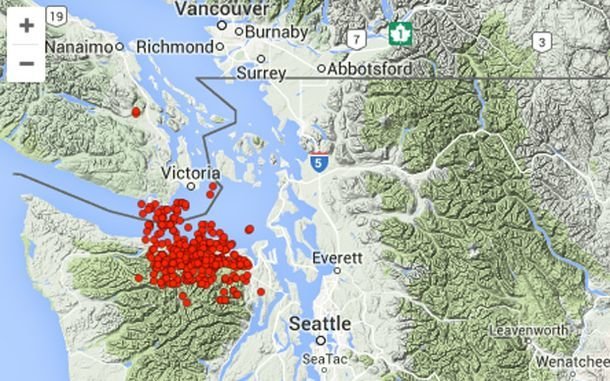
Continuous tremor under Puget Sound as Washington state continues rattling since 4.3 earthquake on December 30th

earthquakes pacific northwest
© Pacific Northwest Seismic NetworkRecent tremors and earthquakes in Puget Sound, Washington
A continuous tremor has been shaking from Vancouver Island south toward Olympia. A lead seismologist at the University of Washington told KIRO 7 they are not alarmed, but that the tremor is likely tied to the biggest quake in the Puget Sound region.

Hundreds of tremors registered across the Pacific Northwest within a 25-hour span starting Monday.

The Pacific Northwest Seismic Network plotted 427 tremors on a map.

"What's happening is there's an episode where the deep plate boundary is kind of rumbling," said Dr. John Vidale, director of the Pacific Northwest Seismic Network.

The tremor can last three weeks and happens about once a year. It's been shaking 30 miles under Puget Sound since Dec. 22. Unlike an earthquake map, the dots on the tremor map show readings of the same tremor. You can see the map here.

Comment: See also:


Bizarro Earth

Data buoy warning of "event" off coast of Oregon could be precursor to devastating earthquake - Mainstream media immediately downplays event

tsunami
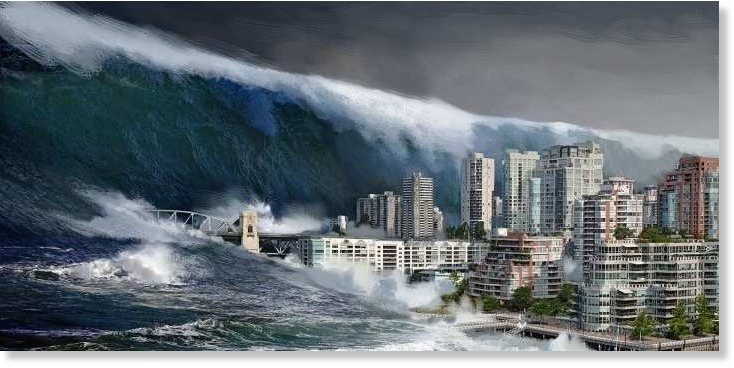
An ocean data buoy is alerting to an "event" in the Cascadia Subduction Zone off the west coast of Oregon. This is where a magnitude 9 earthquake hit in 1700.

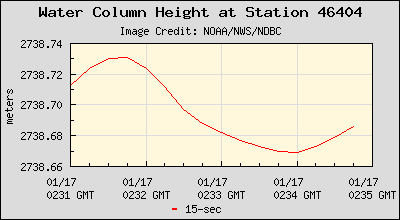
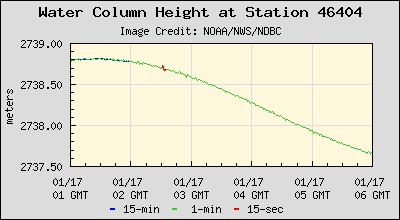
According to the data buoy, the water column height (depth) fell sharply within minutes off the coast of Oregon, signaling the land beneath the ocean has suddenly "sunk."

Here are the graphs showing what the ocean data buoy recorded:
water column height
water column height
As of 0231:30, the initial water column height is 2738.80 Meters deep (8985.56 feet). Two minutes and thirty seconds later, that same water column height had dropped to 2738.66 Meters deep (8985.10 feet). Where did the four inches of water disappear to? Answer: The earth sunk; and continued to sink for the next several HOURS. As you can see from the second chart above, from 0230 GMT to 0600 GMT, the ocean continued to sink to 2737.7 meters deep (8981.95 feet). The buoy is too far away from shore to be affected by high/low tide, so where did the four feet of ocean water disappear to?

This means a Tectonic Plate in the Ocean named the "Juan de Fuca Plate" has made a sudden, eastward movement and slipped beneath another Tectonic Plate named the "North American Plate." This type of event is usually followed by a massive upward movement of the North American Plate causing a very severe earthquake.

Bizarro Earth

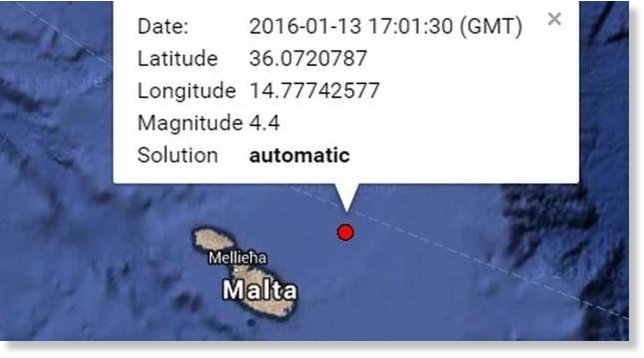
Undersea earthquake measuring 4.4 strikes Malta

malta earthquake
An undersea earthquake measuring 4.4 on the richter scale was felt in all parts of Malta at around 6pm.

According to the website of the University of Malta's Seismic Monitoring & Research Group the tremor took place to the north east of Malta, around 30 kilometres out. It lasted for around ten seconds.

The tremor seemed to be more violent than usual. Buildings shook for a few seconds and this newsroom received several reports from our readers. A person in Gharghur wrote: short but very strong as things fell off the shelves!!

People wrote on Facebook and on news website comment boards that today's tremor reminded them of another strong quake felt in the 1960s. Many said they had never felt a tremor this strong before.

Bizarro Earth

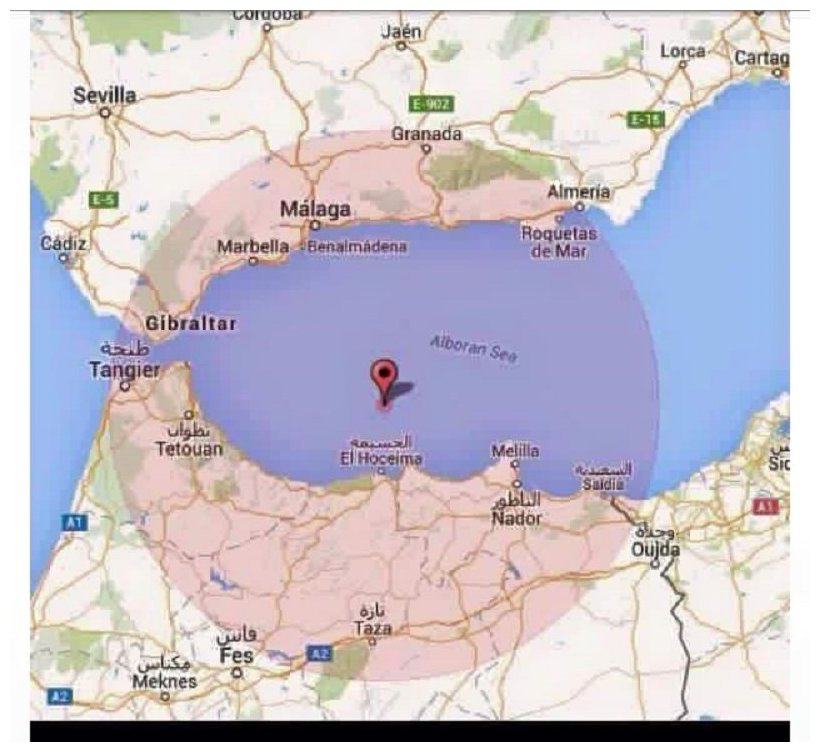
6.1 Magnitude earthquake strikes Mediterranean between Spain and Morocco

Morocco Earthquake
© Morocco World News
A 6.1 magnitude earthquake has been recorded in the Mediterranean Sea, 100 miles south-east of Malaga, Spain.

At 4:22am, the earthquake struck 38.5 miles north east of the Moroccan city of Al Hociema at a depth of 20 miles according to the US Geological Survey (USGS).

This quake was followed by a 5.1 magnitude tremor 12 minutes later.

In an initial assessment, the USGS said there was a low likelihood of casualties and damage'.

In 2004 a 6.3 earthquake hit near Al Hoceima killing 631 people, CNN reports.

This latest earthquake comes a day after a 6.8 magnitude earthquake struck Southern Alaska where four homes were destroyed by a gas explosion.


Comment: More video coverage from RT: