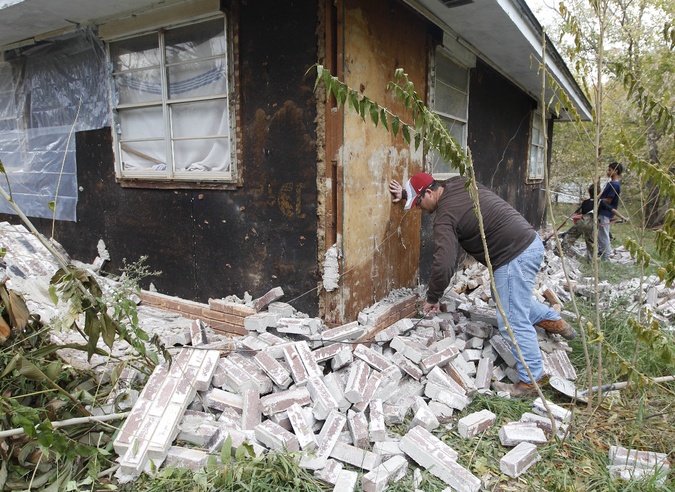
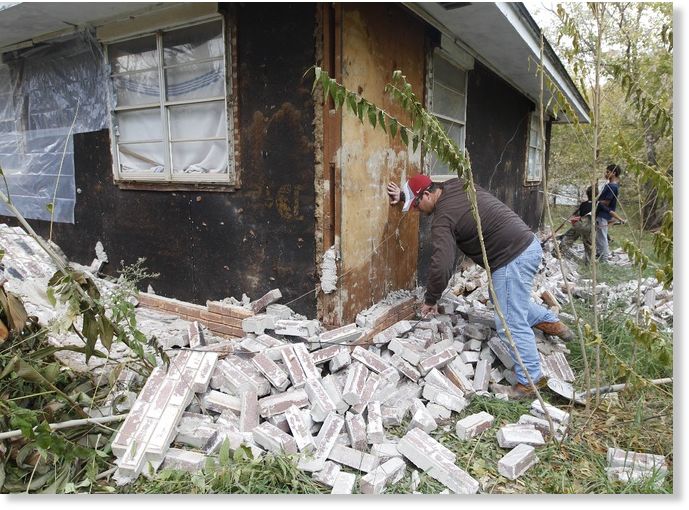
© AP PHOTO/SUE OGROCKIIn this Sunday, Nov. 6, 2011 file photo, Chad Devereaux works at cleaning up the bricks that fell from three sides of his in-laws' home in Sparks, Okla., after two earthquakes hit the area in less than 24 hours.
Between 1978 and 2008, Oklahoma had just two earthquakes with a magnitude over 3.0. In 2014, thus far, there have been around 200 such earthquakes there, more even than the highly unstable state of California. (They've had 140.)
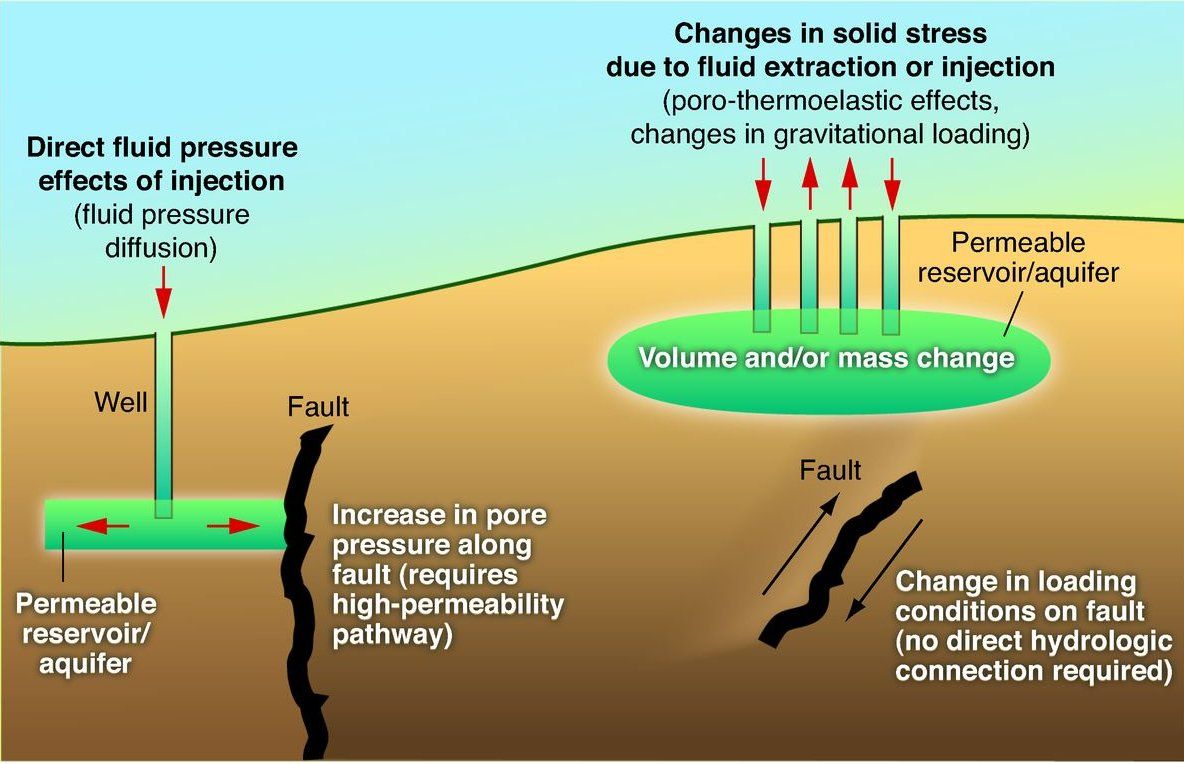
Experts believe the unusual increase in earthquakes is linked to the number of wastewater wells connected to oil and gas drilling.
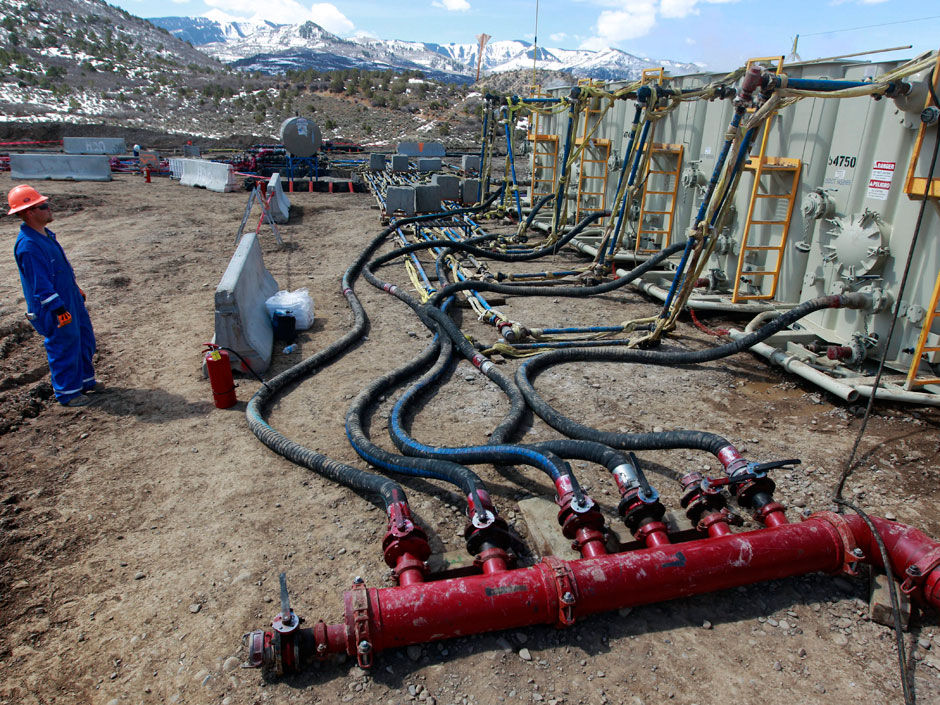
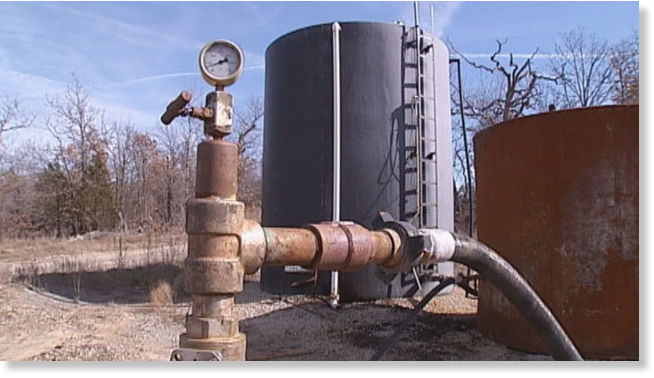
Wastewater wells occur when oil and gas companies inject wastewater deep underground. Scientists believe that the wastewater acts as a lubricant in existing fault lines, causing more movement. Hydraulic fracturing, commonly known as fracking, has also been linked to earthquakes, though the majority of Oklahoma's tremors were caused by wastewater wells.
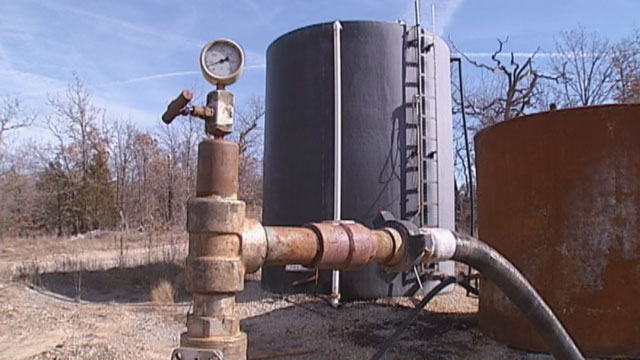
Wastewater well
The USGS and Oklahoma officials are adding monitor stations to best determine which wastewater wells are causing the earthquake issue. There are currently 15 permanent stations and 17 temporary stations.
Thus far, none of the earthquakes in Oklahoma have caused major damage. However, USGS geophysicist Rob Williams believes it is only a matter of time, "Given the rate of earthquakes over the last six months, it's concerning enough to be worried about a larger, damaging earthquake happening, let alone what might happen in the future."

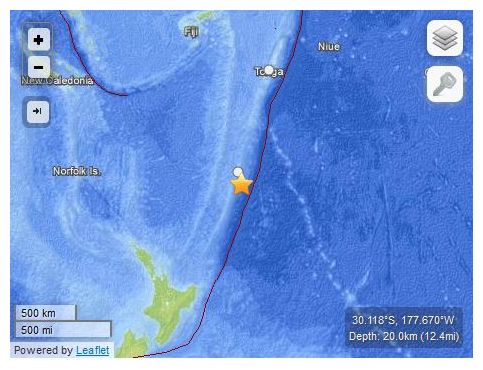
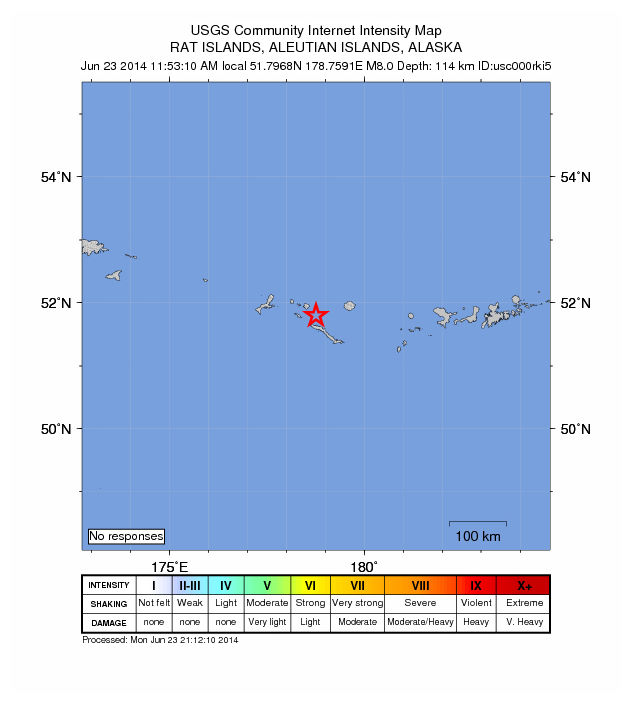

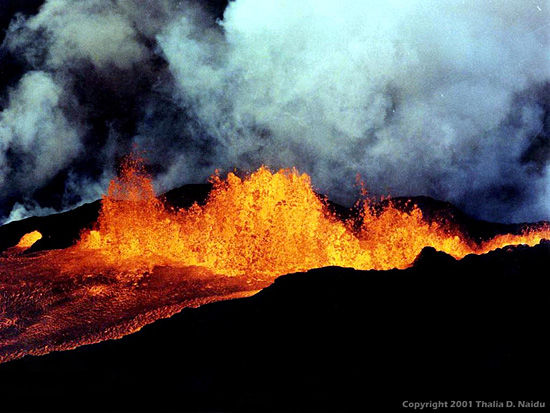








Comment: Previously thought to be extensions of a single volcano, Mauna Loa is actually flanked by a curving line of individual volcanoes that include Kilauea, Mauna Kea and Kohala. Its summit is 56,000 feet above its base on the sea floor. Four distinct earthquake swarms have occurred since March 2013, all less than magnitude 2.2, save one that registered 3.5 on May 9, 2014, and have been occurring in the same areas of the volcano as those in the years prior to 1984. They are, so far, consistent with a model requiring rocks around the core to adjust to stress changes within the core. While Mauna Loa is not located along the Ring of Fire, it is likely that whatever disturbances and earth changes provoking recent Pac Rim activity are also escalating changes in other areas under the ocean.