Earth ChangesS


Cloud Lightning

Torrential rainfall in Oslo, Norway smashes all historical records

Image
© Magnus Aabech/NTB ScanpixA van crashes through deep water on Oslo's ring road.
The torrential rainfall that descended on Oslo on Thursday smashed all historical records, with a colossal 44.5mm of rain falling in just a single hour between four and five on Thursday afternoon.

Water streamed down the city's streets on Thursday afternoon, causing gridlock in much of the city centre, while hailstorms left parts of the city covered in a layer of freak summer ice.

The previous highest rainfall rate the city has seen since records began in 1937 came came in 1980, when 41.5mm of rain fell in an hour over the summer.

"It seems as though we had nearly one month's rainfall in three hours," Marit Helene Jensen told Aftenposten after the rain subsided yesterday evening.


Snowman

Boy builds snowman in late June in Mörrum, southern Sweden

Image
David Odenhammer, 7, (he's the one on the right) poses beside his June snowman
Sweden's meteorological agency SMHI warned of storms hitting the south on Thursday and the town of Mörrum wasn't spared.

"The hailstorm must have lasted about ten minutes and it was absolutely crazy. There was several inches of it on the ground," Göran Odenhammer, father and occasional snowman builder, told The Local.

Odenhammer and his seven-year-old son David ventured outside to inspect the hail and did what comes naturally - have fun in the snow/hail during the Swedish summer.

Cloud Lightning

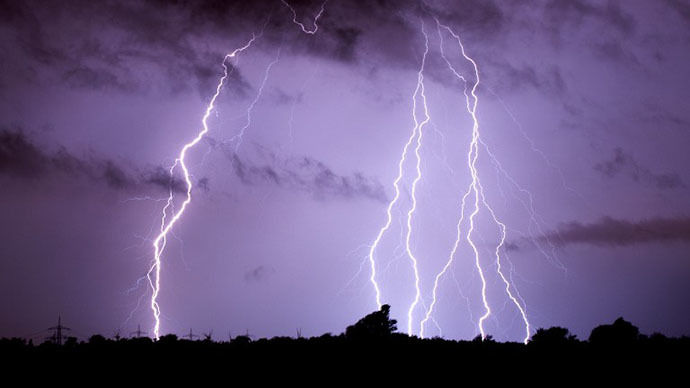
Lightning knocks Atlanta-area man clean out of his 'smoking' boots

The Atlanta-area man who was blown out of his shoes this weekend by lightning says he's grateful to be alive but now worries about what the next overcast day might bring.


"Though there's no scientific evidence, most people get struck again," Sean O'Connor told ABC News today. "I just wonder how I'm going to feel the next time it's cloudy and I run out to get the mail."

But the Coweta County man is also hoping to defy the odds in his favor, saying that he'll be in line for lottery tickets later today.

"A lot of people have told me I've got to be lucky enough to win the lottery," he said. "I'm going to buy a ticket tonight; everyone's convinced me to play."

Comment: Mother Nature isn't happy! Lightning hits truck with passengers in Canada (FREAKY VIDEO LIST)
SOTT EXCLUSIVE: The Wrath of Gods - Lightning strikes are more intense and more deadly, and solar wind is to blame


Attention

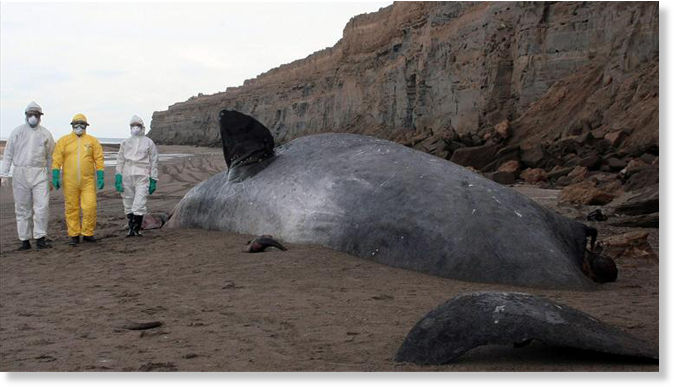
Dead sperm whale found beached at El Condor, Argentina

Image
A 16-meter (52-foot) sperm whale weighing between 30 and 40 tons was found dead on a beach in El Condor, a city in the Patagonian province of Rio Negro, Argentine environmental officials told Efe.

The huge marine mammal was spotted last Friday by a fisherman, who notified marine biologists working in the area, Rio Negro Environment and Sustainable Development Secretariat spokesman Lucas Albornoz said.

The whale beached itself on a stretch of coast surrounded by cliffs some five kilometers (3.1 miles) from a nearby lighthouse, Albornoz said.

Ice Cube

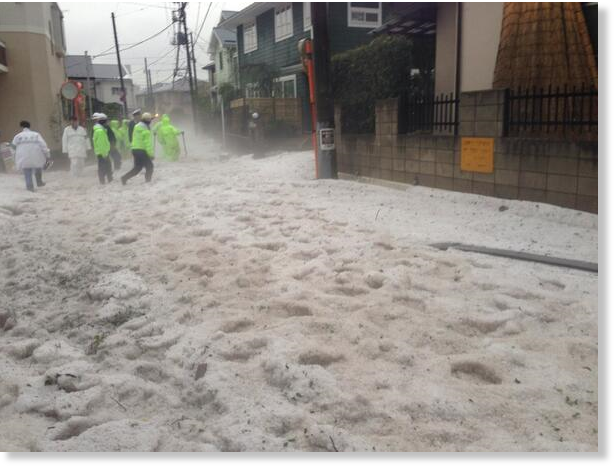
Freak hailstorm strikes Tokyo in June

Image
© Agence France-Presse/Getty ImagesPedestrians walk down a hail-covered street following a hailstorm in a residential area west of Tokyo on June 24.
Heavy rain and hailstones hit Tokyo and surrounding areas on Tuesday. Tokyo's Mitaka City was hit by hail in the afternoon. Some residents say that hailstones of up to 3 centimeters wide fell for about 30 minutes.

It covered residential areas, accumulating up to 10 centimeters. Residents used shovels to remove it from around their homes.

Weather officials say that warm, humid air and a cold air mass made atmospheric conditions unstable, causing cumulonimbus clouds to develop over Tokyo area. Some clouds were more than 10 kilometers high. Powerful updrafts occurred, and that lead to the hailstorm.


Source: NHK

Frog

New water snakes in California may pose risk to native species

water snake
© J.D. Willson/University of ArkansasSouthern watersnakes commonly eat mole salamanders, a group that includes two endangered species in California. A UC Davis study finds that the non-native snakes are invading California waters, posing a threat to native fish, amphibians and reptiles.
Waters nakes, commonly seen in the lakes, rivers and streams of the eastern United States, are invading California waterways and may pose a threat to native and endangered species in the state, according to a University of California, Davis, study.

While scientists do not know exactly how many watersnakes are in California, roughly 300 individuals of two different species - the common watersnake and the southern watersnake - have been found in the Sacramento area (Roseville and Folsom), and at least 150 were seen in Long Beach. Researchers suspect the nonvenomous snakes most likely were introduced by people "setting free" their pet snakes.

"The issue is not yet out of control," said lead author Jonathan Rose, a doctoral candidate in the UC Davis Graduate Group in Ecology. "However, we recommend that action be taken now to control emergent populations of these non-native snakes while they remain somewhat restricted in California. Waiting until they become entrenched could cost more ecologically and economically."

The study, published today in the journal PLOS ONE, identified areas that would be climatically suitable for the watersnakes should their populations continue to increase. It found that potential distributions of watersnakes overlap with the giant gartersnake and the California tiger salamander - both on the federal list of threatened species - as well as the foothill yellow-legged frog, an amphibian of conservation concern. These native species can become prey or a competing species for the invasive watersnakes.

Cloud Lightning

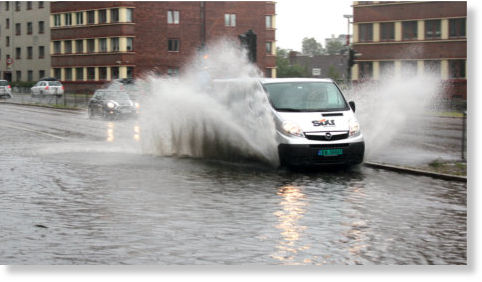
Spanish World Cup team plane struck by lightning on way back

ligntening
© AFP Photo / Julian Stratenschulte
The plane carrying the Spanish national football team home from the World Cup in Brazil was struck by lightning on Tuesday as it approached its landing in Madrid, adding to the streak of bad luck the team seemed to be on after its World Cup defeat.

The team's flight - Iberia 2907 - was hit as it came into land at Adolfo Suárez-Barajas airport shortly before midday (local time).

However, there were no apparent negative consequences for either the team or the aircraft, a spokeswoman for the airline confirmed to Reuters.

The players, still wearing their black tracksuits with green bands, and their coats, left the airport in vans without talking to the media.

Despite winning 3 - 0 against Australia on Monday, the team was squarely beaten by both the Netherlands and Chile, guaranteeing their elimination from the competition.

Info

Great apes threatened by shrinking habitats caused by extractive industries

Image
© Romeo Gacad/AFP/Getty ImagesIn Asia, Sumatran orangutans are believed to have declined by 50% since 1992.
Greater exploitation of natural resources has become a major threat to apes in Africa and Asia, UN conference hears

The accelerated and unsustainable exploitation of the Earth's primary natural resources has become a major threat to apes in Africa and Asia, a major United Nations environment conference heard Wednesday.

Speaking on the sidelines of the UN environment assembly, conservationists said infrastructure development and extraction of natural resources - including timber, minerals, oil and gas - have devastated the prime habitat of apes and pushed chimpanzees, gorillas, bonobos, orangutans and gibbons closer to extinction.

"There's absolutely no doubt that extractive industries are severely impacting on apes and their habitats," said Helga Rainer, conservation director of the Great Apes programme at the Arcus Foundation, the world's largest private funder of ape conservation.

"Only five out of 27 ape (habitats) do not have a mining project within their range ... and there is also an indirect impact associated with infrastructure development such as roads and railways," she added.

Butterfly

Liberia caterpillar plague results in mass evacuation and crop destruction

Image
© Ahmed Jallanzo/EPAOne of millions of caterpillars moves through crops iin farms in Gbarpolu county, Liberia.
Thousand flee homes in at least 25 towns and villages in Lofa and Gbarpolu, the second such invasion in five years

A plague of caterpillars has forced thousands of people to flee their homes in northern Liberia, as well destroying crops, contaminating water and forcing schools to close.

Residents of at least 25 villages and towns in Lofa and Gbarpolu counties have joined a mass exodus so far this month to escape the trail of caterpillar excrement, according to the Voice of America (VOA).

It is the second such invasion in five years. A state of emergency was declared in 2009 after tens of millions of caterpillars swept through at least 80 towns and villages in the centre and north of the country.

Dr Sizi Subah, deputy agriculture minister for technical services, told Liberia's The Inquirer that the caterpillars, which travel in huge numbers, have the capacity to destroy large areas since they feed on the leaves of cash crops such as coffee, cocoa and vegetables during the larva stage before developing into butterflies.

Cloud Precipitation

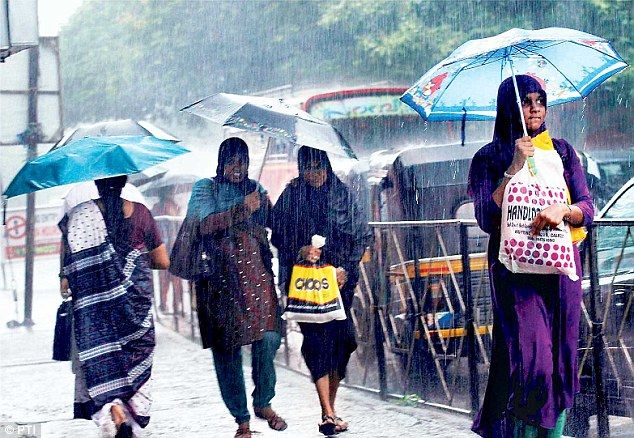
'India's rain pattern has changed': Researchers warn of extreme weather in future

India rain
A study says that worryingly, the annual rainfall pattern has changed in India.
The monsoon, which provides 80 per cent of the total rainfall in the subcontinent and on which India is completely dependent for its agriculture, is witnessing disturbing changes.

There has been a decline in the average total seasonal rain during the period 1980-2011, according to a new study.

The study was carried out by Stanford Woods Institute for the Environment, the Stanford University's hub of environment research, and published in the latest issue of Nature Climate Change. It also found changes in the atmosphere like winds and moisture which are likely to be responsible for changes in wet and dry spells.

After studying trends of monsoon rains over 60 years, the researchers have warned of extreme weather conditions in future.