Earth ChangesS


Bizarro Earth

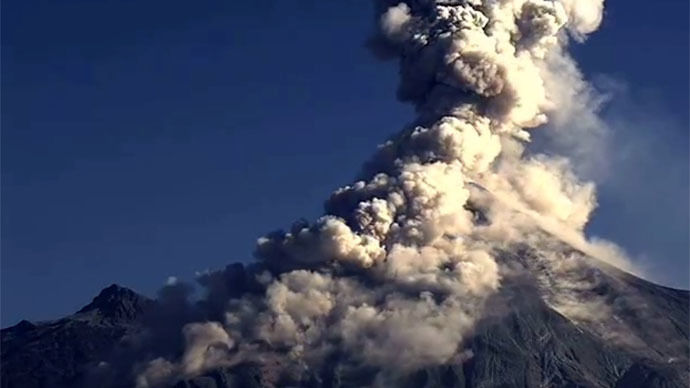
Mexico's Colima volcano spews ash 29,000 ft in the air

Colima volcano eruption
Still from YouTube video/webcamsdemexico
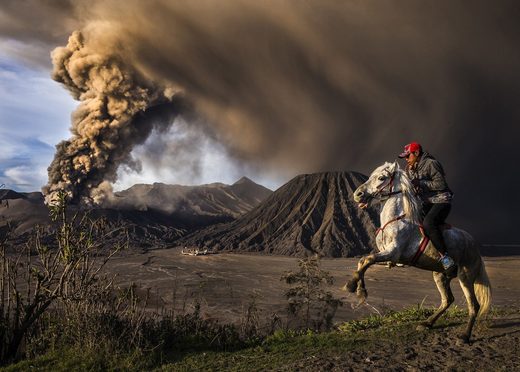
A huge ash column exploded into the sky from one of Central America's most dangerous volcanoes on Wednesday, reaching airplane-level heights of the atmosphere.

Mexico's Colima volcano played host to a "strong vulcanian-type explosion" at 9:15 a.m. local time on Wednesday. The mountain belched an ash column more than 4 km above the summit, with volcanic matter rising to 29,000 ft (9 km). The resulting ash flow eventually drifted to the northeast, Volcano Discovery reported.

A webcam focused on the active stratovolcano captured the powerful blast.


A small pyroclastic flow that descended the steep slope of the volcano was generated during the explosion.

The Protección Civil (Civil Protection) said there is not a forecast of ash falling in the region, which is located in southwestern Mexico, according to Mashable. The volcano, which is also known as the 'Volcano of Fire,' straddles the states of Colima and Jalisco.

Question

Mysterious goo coats hundreds of California seabirds

Duck
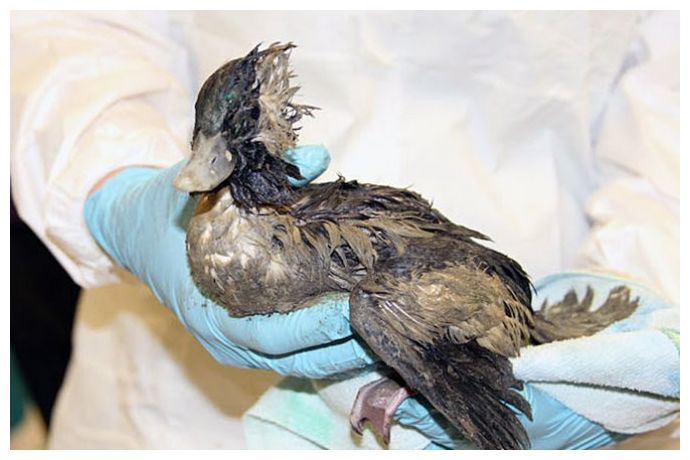
© Cheryl Reynolds/International Bird RescueA bufflehead duck is seen covered in a mysterious substance at the International Bird Rescue’s San Francisco Bay center.
Hundreds of birds in the East Bay area of Northern California have been found covered in a mysterious goo that causes hypothermia.

About 100 seabirds had died at the International Bird Rescue's San Francisco Bay center, where rescue workers were cleaning dozens a day.

"The good news is that we have modified our wash protocol and it appears to be working on healthier birds," said International Bird Rescue's interim director, Barbara Callahan, in a statement. "However, some of the birds that have recently arrived are in much poorer condition, likely because they've had this substance on their feathers for several days now."

Comment: Tough times for birds lately, as they lose all sense of direction, die due to decades-old DDT pollution, are being trapped in abandoned fishing nets, or fall dead from the sky.


Road Cone

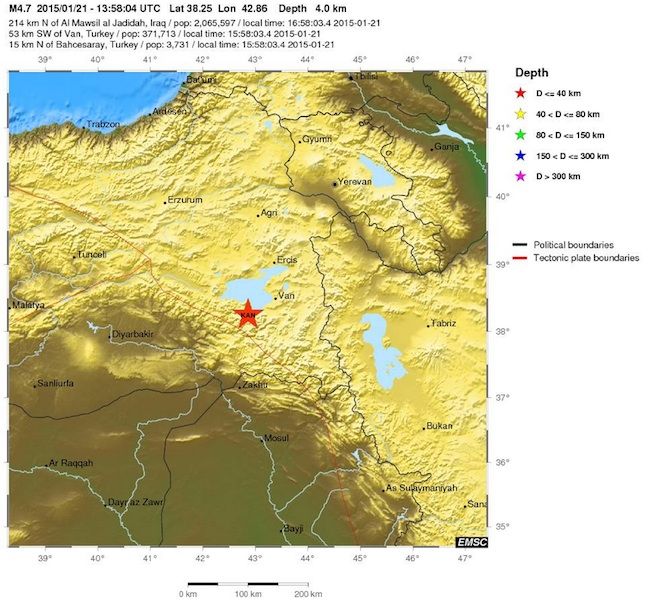
4.7 magnitude earthquake strikes Eastern Turkey

Magnitude
ML 4.7

Region
Eastern Turkey

Date time
2015-01-21 13:58:03.4 UTC

Location
38.25 N ; 42.86 E

Depth
4 km

Distances
214 km N of Al Mawşil al Jadīdah, Iraq / pop: 2,065,597 / local time: 16:58:03.4 2015-01-21
53 km SW of Van, Turkey / pop: 371,713 / local time: 15:58:03.4 2015-01-21
15 km N of Bahçesaray, Turkey / pop: 3,731 / local time: 15:58:03.4 2015-01-21

Source parameters provided by:
Kandilli Observatory and Earthquake Research Institute -- Istanbul, Turkey (KAN)
Image
© emsc-csem.org

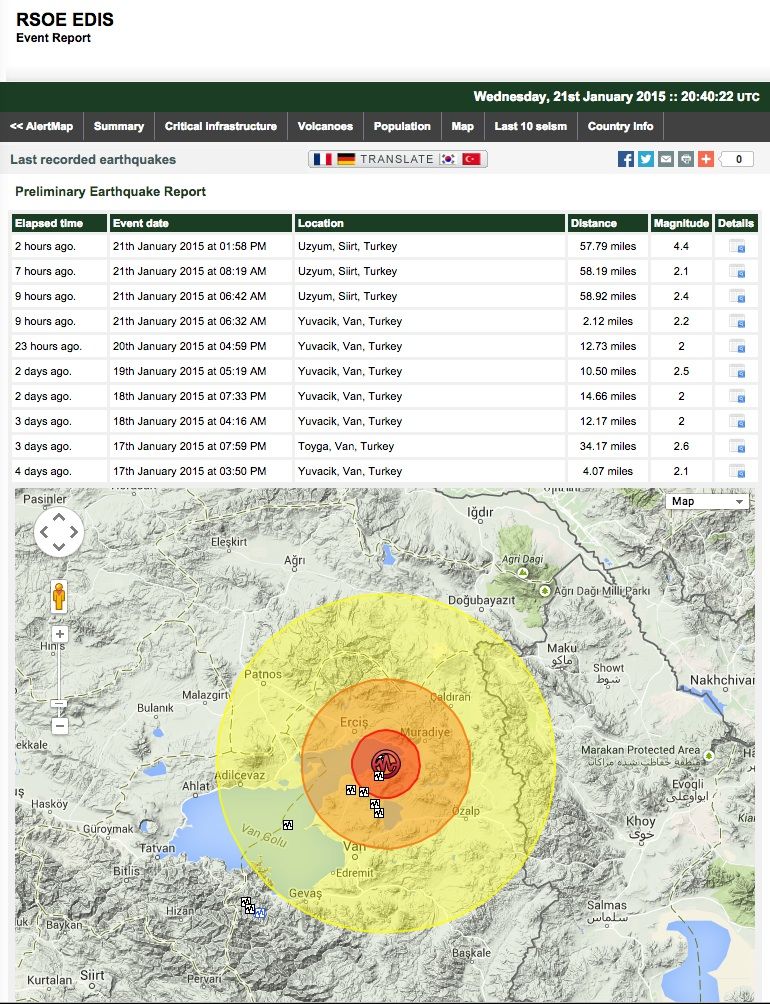
Comment: According to the Hungarian National Association of Radio Distress-Signalling and Infocommunications there have been several earthquakes in Turkey since January 17, 2015:

Image


Igloo

2014 is among the 3 percent of coldest years in 10,000 years

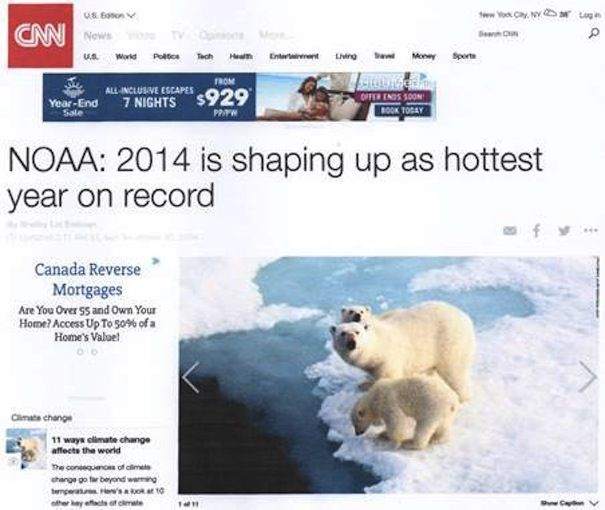
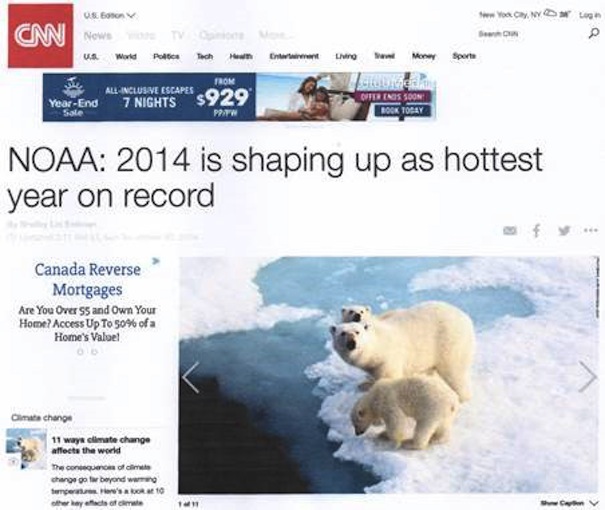
We were told in October, before 2014 was over, that it was heading toward being the warmest year on record (Figure 1). The visual link of polar bears underscored the message. In fact, 2014 was among the coldest 3 percent of years of the last 10,000, but that doesn't suit the political agenda.
Image
© CNNFigure 1
We know the headline referred to NOAA's projection, but the public only remember "warmest year". It is a routine of manipulation of headlines practiced by bureaucrats and supporters of the Intergovernmental Panel on Climate Change (IPPC), from the start. The claim was not surprising, because NOAA was pushing 2014 as warm beginning in January with this headline "NOAA: January 2014 fourth-warmest on record." Various months were identified during the year, for example, "NOAA: August 2014 Was The Warmest On Record," noting August was the warmest by a fraction. But they had already reported,

The summer of 2014 is officially the hottest since the modern instrumental record began more than 130 years ago, according to the latest state of the climate report from NOAA's National Climatic Data Center.

By October they were summarizing the year.

"This makes the first ten months of 2014 the warmest January to October period on record and puts 2014 on track to be the warmest year recorded in the NOAA archive, which dates back to 1880."

Bob Tisdale provided an excellent summary of the "Anticipation" for two surface records from GISS and NCDC. He was not surprised when these records appeared, showing 2014 was the warmest, according to them, by 0.02°C. Remember, this is from a record that is restricted by the historic record to measurements of 0.5°C. We also know the two satellite records, RSS and UAH, both show it was not the warmest year.

To counteract the headline you need something very dramatic, because there is nothing significant about the 2014 temperature as Tisdale plans to identify in an upcoming article titled, "The Uptick in Global Surface Temperatures in 2014 Doesn't Help the Growing Difference between Climate Models and Reality". He is interested in seeing how Gavin Schmidt, who replaced James Hansen at the Goddard Institute for Space Studies (GISS), is carrying the torch. History shows that GISS readings are consistently higher than all other sources. It is just one indicator of the temperature adjustments made so the AGW hypothesis fits the political agenda.

Comment: Read the book Earth Changes and the Human Cosmic Connection to learn more about ice ages and the bizarre weather we are having on this planet. A new ice age may be just around the corner.


Cloud Precipitation

Thousands evacuated following flooding in Malaysia and Indonesia

Image
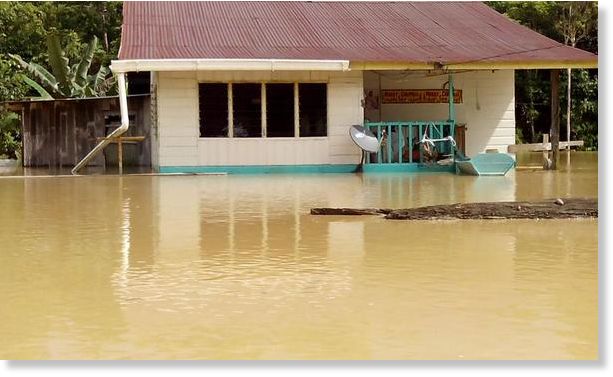
© BombaFloods in Sarawak, Malaysia, January 2015.
Heavy rainfall in Borneo and Sumatra over the last 3 days has left parts of Malaysia and Indonesia struggling with yet more flooding. Malaysia is still recovering from the floods of December 2014 in the north of the country, which were some of the worst flooding seen in years.

Sarawak, Malaysia

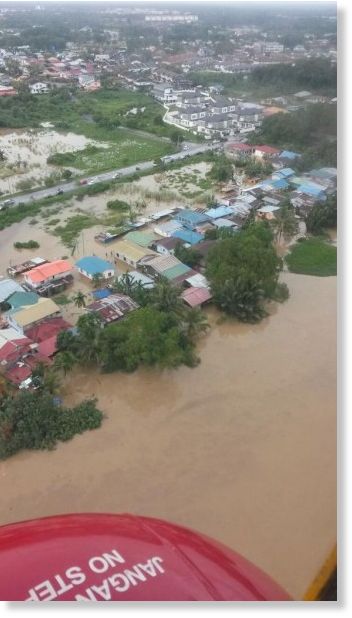
In Borneo, over 5,000 people have been evacuated in the flood-hit state of Sarawak. This figure has dropped slightly from almost 7,000 earlier today. 38 relief centres have been set up to house those displaced by the floods.

The worst affected area is around the state capital of Kuching, where at one point almost 5,000 were staying in temporary accommodation. Just over 1,000 people have been displaced in Padawan.

One flood-related death has been reported in Mukah, when a teenage girl drowned after a boat capsized in rough waters.


Image
© BombaFloods in Sarawak, Malaysia, January 2015.

Cloud Precipitation

71 people die in Mozambique floods

Image
© Qari Ziyaad Patel
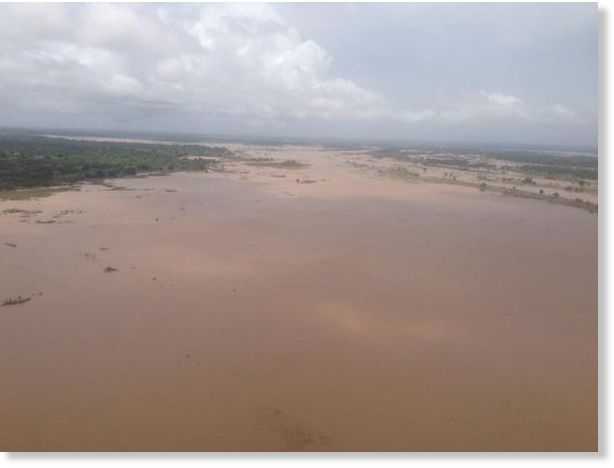
Mozambique's National Disaster Management Institute today confirmed that 71 people have died in the flooding that has ravaged parts of the country over the last 10 days.

The worst affected province is Zambezia, where 49 of the victims died. The area has been badly hit by flooding after the Licugno river overflowed. The province of Nampula has also been badly affected by flooding caused by heavy rainfall over the last two weeks.

The country's authorities have set up 34 relief centres to house those displaced by the floods. It is understood that around 30,000 people are currently staying in the centres.


Attention

3 minke whales found dead in just 9 days, South Korea

Image
© Yonhap / photonews@koreabizwire.com
A 5.9 meter long and 3.2 meter wide minke whale weighing 2 tons was found dead, stranded in a fishnet in the East Sea 19 kilometers from land in Wondeok-eup, Samcheok City, Kangwon-do on January 20.

The whale was sold for 48 million won (US$ 44,138) on consignment. The minke whale is the third whale found stranded in Korean waters so far this year. One minke whale was found in a net near Pohang on January 14, and sold for 16 million won (US$ 14,711) on consignment. Another was found stranded near Daejin Port in Donghae City on January 12, and sold for 19 million won (US$ 17,463).
Image
© Yonhap / photonews@koreabizwire.com

Fish

Weird fish with 'rodent-like teeth' found dead on Woolacombe beach, UK

Image
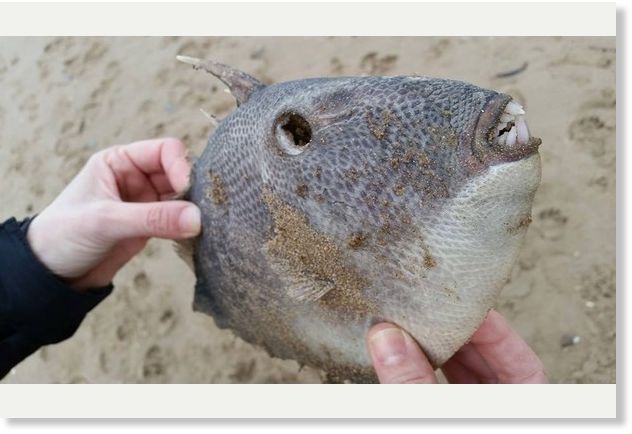
A peculiar creature with 'rodent-like teeth' has washed up on a North Devon beach.

Delphine Sutherland found the dead fish while walking at Woolacombe and posted a photo of it on Facebook to try to find out what it was.

Ilfracombe Aquarium director Lawrence Raybone said it looked like a trigger fish, typically found around the coasts of Spain and France.

He said: "It's more commonly found by sea anglers during the summer months while this shoaling animal is heading north on its migration route.

Fish

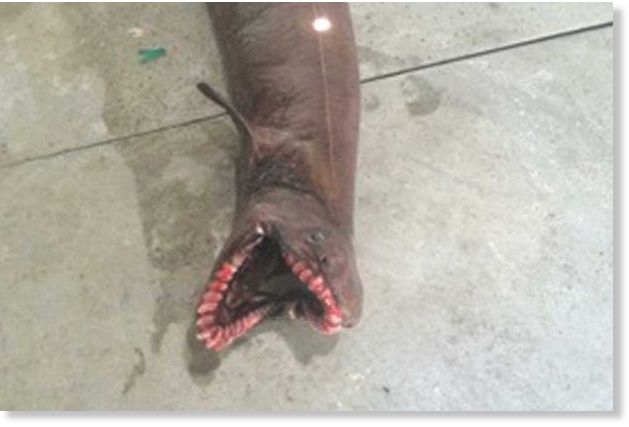
Deep sea prehistoric frilled shark caught by fishermen in Victoria, Australia

Image
© Setfia The shark has 300 razor sharp teeth and can grow up to 2 metres long
The two-metre long fish - known as a frilled shark - was captured near Lakes Entrance in Victoria

A terrifying prehistoric shark which has 300 razor sharp teeth has been caught by a group of fishermen in Australia.

The bizarre-looking creature was captured by the bemused fishermen near Lakes Entrance in Victoria.

The dark brown two-metre long fish is a frilled shark, which is also known as the 'living fossil'.

Fish

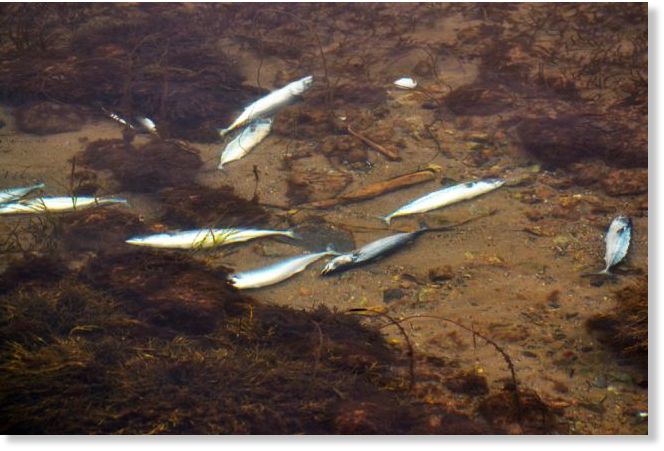
Hundreds of dead mackerel found in Bras d'Or Lake, Canada

Image
© TC Media - Cape Breton PostDozens of dead mackerel were visible from the home of Annette Coffin, Monday morning. A week ago hundreds could be seen.
The discovery of hundreds of dead mackerel in the Bras d'Or Lake has area residents wondering what caused the fish to die.

Annette Coffin, a resident of Ben Eoin, first discovered dead fish in the water in front of her home a week ago.

"Last Monday morning, there were dead fish everywhere, on the shore and in the water," she said. "They were sort of under the ice - there was a light coating of ice, and there were tons of them on the beach, and when I came out and had a look they were everywhere."