
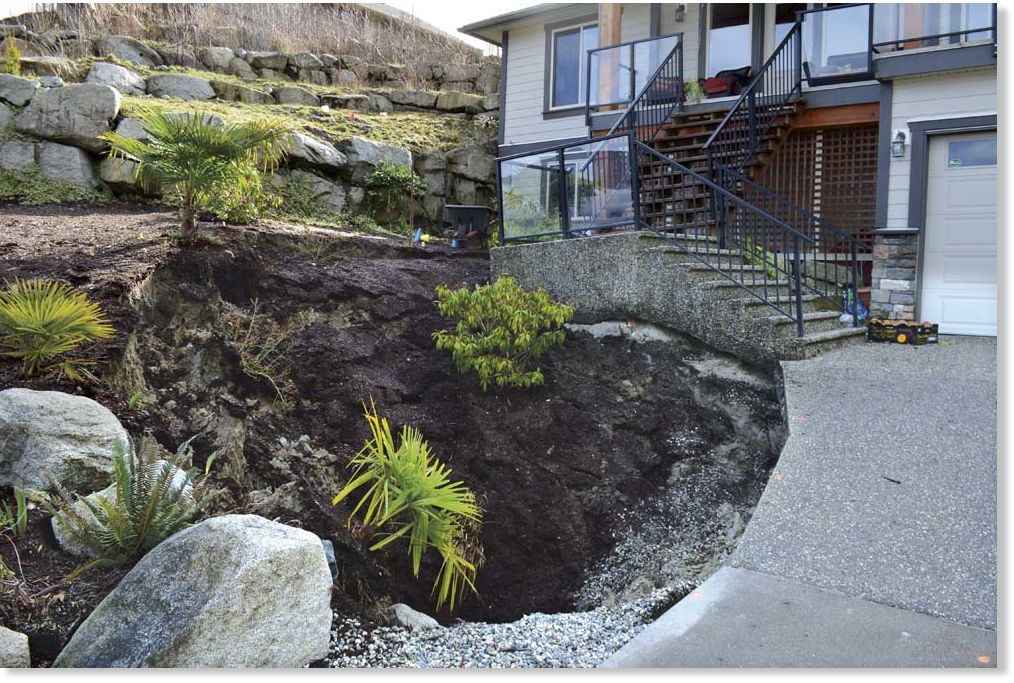
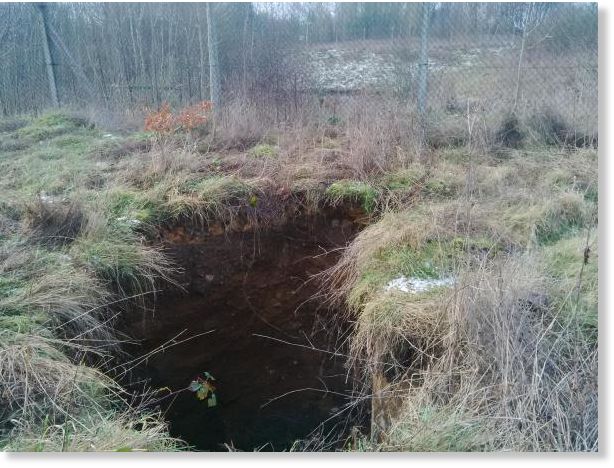
© Rik JespersenA three-metre-deep sinkhole opened up on this property on Gale Ave. North, in West Porpoise Bay on Feb. 26.
The District was scheduling meetings with a geotechnical engineering firm it has retained and the geotechnical firm connected with the developer, Concordia Seawatch Ltd., communications manager Connie Jordison said Wednesday.
Jordison said a second property could also be affected.
"There's a property across the road on lot 9 showing signs of there being an impact on the driveway area, and that house I don't believe is occupied," she said.
A meeting was held Tuesday night with a large group of residents to update them on the problem and the District's response.
The District is continuing to monitor the situation and closed a portion of the road to vehicular traffic as a precautionary measure.










Comment: More proof that industrial agricultural practices are contributing to the degradation of the environment as well as the overall health of populations.