Let's not allow ourself to be hypnotized by shiny objects as they pen our children into 15-minute ghettos.

© Alex Krainer's TrendCompass
On 20th January 1936, king
George V, grandson of
Queen Victoria and son of king
Edward VII, died peacefully at his residence Sandringham House in Norfolk. George V had been ill with a respiratory infection for a few days and his death was widely expected in Britain. The king was watched over by his personal doctor,
Dr. Bertrand Dawson (BD), the First Viscount of Penn, and his Irish nurse,
Catherine Black.
George V's son
Edward, playboy prince of Wales became king, Edward VIII. Apart from the press generated during the short, scandal-ridden reign of Nazi enthusiast Edward VIII, that was that. New era, new king, modernity, communist threat from the USSR, economic depression and the rise of herr
Hitler in Germany were the main news generators of the day. But the story got a massive new twist in 1986, 50 years after the king's death, with the release of Dr. Bertrand Dawson's diaries.
The quiet regicideAs it turned out, George V did not just peacefully die of his illness. He was put to sleep by his doctor who wrote in his diary: "At about 11 o'clock I decided to determine the end and injected 3/4 grain of morphia and shortly afterwards 1 grain of cocaine into the king's distended jugular vein..." DB gave three reasons for his regicide: (1) king deserved to die in a "dignified manner"; (2) His family deserved this over the uncertainty of an anguished and prolonged death, and (3) if the king did not die before midnight, it wouldn't have been in time;
his death would have missed The Times headline and would be reported first in "less appropriate evening journals."The king's "dignified" last wordsDB claimed that he made the decision himself, but noted that "the family" wanted him to act "without unnecessarily prolonging the king's life..." Thus, the good doctor magnanimously granted the monarch a dignified death, cheated the "anguished and prolonged" death, and made it all in time for the morning
Times, lest some inappropriate publication tarnish the king's name by announcing the news first. How utterly dignified and selfless of the hero doctor.
The king himself was aware. His dignified last words, spoken to nurse Black as she administered the sedative were, "God damn you." The public's expectation of the king's death was the product of the narrative generated by Britain's media and Dr. DB was their source. On the morning of the day when the king died, DB issued a statement to the media that, "The king's life is moving peacefully towards its close."
After putting down the king, Dawson then falsified the death certificate, attributing the king's death to his lung disease. Dawson of Penn killed many men...But even as the "reputable sources" dutifully contrived the requisite narrative, a small part of the British public - those with the nose to smell a rat weren't buying it. They were the proverbial nutty conspiracy theorists who adopted a rhyme, "
Dawson of Penn killed many men; That's why we sing, 'God save the king.' " At that time, nobody could smugly demand "link to source?" but per standard practice, the conspiracists were dismissed with scorn, and neither the king's death nor Dr. Dawson's role were ever investigated. In fact,
Dawson's star continued to rise throughout his life. It would take 50 years to prove the nutty conspiracy theorists right.

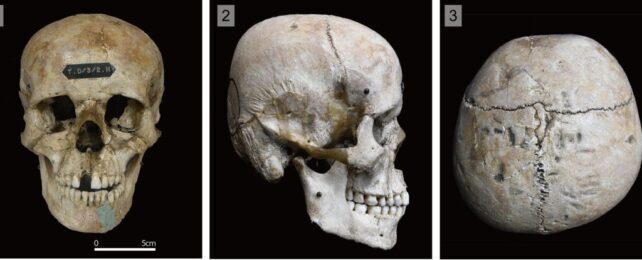





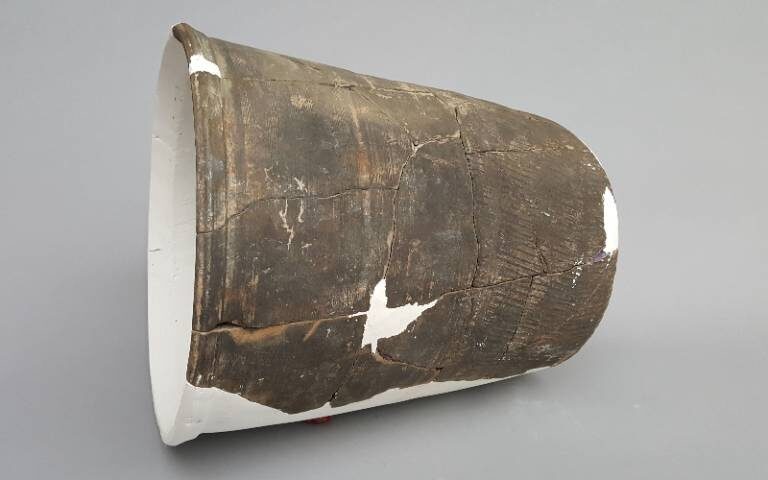









Comment: It's notable that evidence of cranial deformation, as well as unusually shaped, natural skulls - that seem to have been what people were attempting to imitate - have been found in sites that date as far back as 10,000 years ago, and across much of the planet, except in Japan. One wonders whether there's some connection to another finding which shows that peoples in what is now Japan, that lived during the Jomon period (from 13,000 - 800 BC), showed very little evidence of violent behavior or death: