
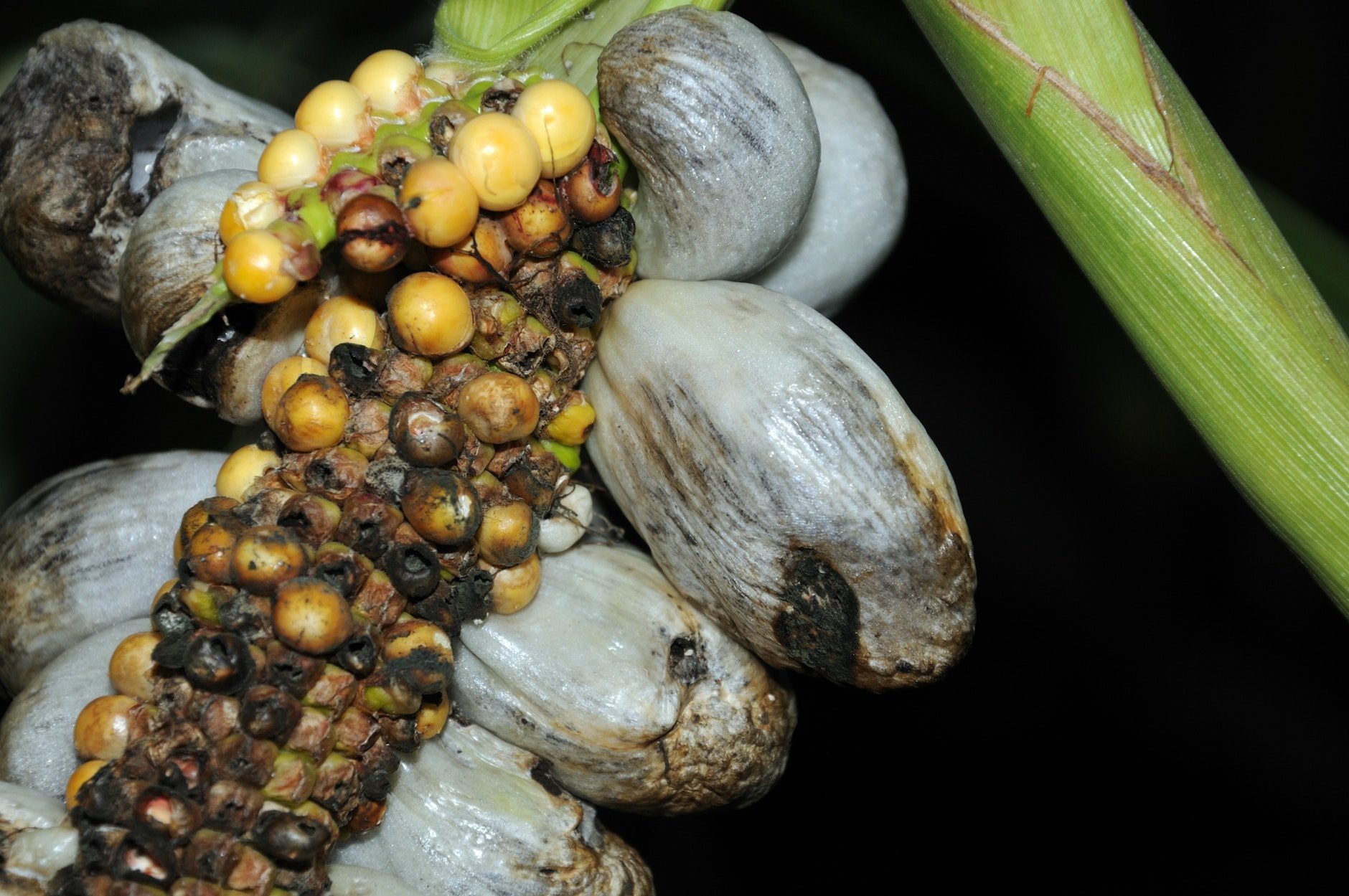
© Carmen Hauser / Getty ImagesCorn smut: disfiguring but delicious.
A mystery concerning how some of North America's first farmers survived on a diet that appears manifestly inadequate may have been solved.
The ancestral Pueblo people who lived in what is now known as the Four Corners region of the southwestern United States shifted from a nomadic to a settled lifestyle centred on crop-growing around 400BCE.
The primary crop cultivated was maize (known in the US as corn), which accounted for an estimated 80% of calorific intake.
During the ensuing 800 years - a stretch known as the Basketmaker II period - the settlers' diet contained very little meat. This was perhaps a cultural choice. Basketmaker II people became efficient turkey farmers, but the birds were raised primarily for their feathers, used in the manufacture of blankets, and for certain ritual purposes. They were not eaten.



















Comment: Since there's evidence that these ancient farmers would eat rabbit, one would assume they weren't 'culturally' against eating meat per se. Rabbit is often consumed when other food sources are scarce, because relying elusively on rabbit leads to protein poisoning, also know as rabbit starvation, due to the absence of fat on the animal. While it could be that they simply discovered an optimal source for their nutrition, could it instead be that, as has been documented to have occurred in the area at later times, there were climatic conditions or catastrophic events that meant they needed to turn to a more reliable source for their nutrition?