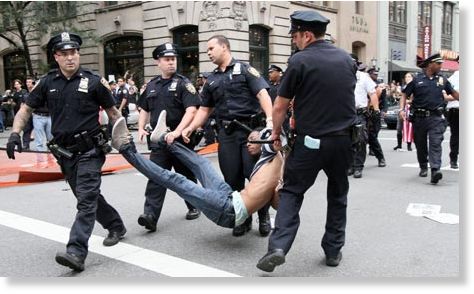
© Tina Fineberg/APIn New York, plea deals account for 99.6% of convicted misdemeanors, which would include protests deemed unlawful.
If you've ever been arrested for a misdemeanor offense, like jumping a turnstile, smoking a joint, or protesting a cause in a way the authorities would rather you didn't, then you'll know that your best chance of avoiding jail has less to do with what you've done than if you can make bail. It's no secret that the best-quality justice is generally reserved for those who can afford to pay for it, but the divergence is never more blatant than when it comes to America's complicated and discriminatory bail system.
In his recent state of the judiciary address, New York state's chief judge drew attention to the disparity between the haves and the have-nots. He pointed out that the system is stacked against people accused of misdemeanor offenses, who, unable to afford the bail terms, have to stay in jail before trial. On average, it takes at least three months (and more likely, six months to a year) for a misdemeanor case to reach trial in New York City, which is a long time to spend in a cell before you've been convicted of anything.
In 2010, Human Rights Watch issued a report titled "The Price of Freedom", which is awash with statistics and data on the bail system. The report makes a convincing case that an unintended consequences of our current system is that poverty, rather than the offense committed, dictates a defendant's fate. Here is one of the nuggets it contains:
"Among defendants arrested in 2008 on non-felony charges and given bail of $1,000 or less, only 13% of defendants were able to post bail at arraignment."In other words, 87% of these defendants go to jail.