Puppet MastersS


Airplane

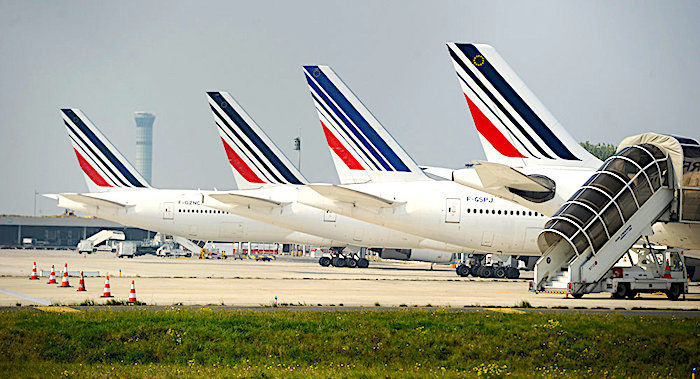
Air France Union: Employees urged to boycott US flights after Trump order

Air France
© Sputnik International
France's hardline trade union has called on its members to rise up against new rules enforced by an immigration-related executive order issued by US President Donald Trump last week.

France's national trade union The General Confederation of Labour (GCL) at Air France is urging its members to boycott US-bound flights in protest of Trump's "Protecting the Nation From Foreign Terrorist Entry Into the United States" executive order.

Last week the US President signed an executive order temporarily suspending immigration from seven predominantly Muslim countries: Iraq, Iran, Somalia, Sudan, Syria, Libya and Yemen. The order also suspends the entry of Syrian refugees into the country and halts all refugee resettlement in the US for 120 days, as the administration reviews the vetting process.

The International Air Transport Association (IATA) said in a statement regarding the order that the way the implementation — without prior coordination or warning — is causing confusion among airlines and travelers. The association's members complained that they have struggled to put into practice unclear requirements, faced implementation costs, and were concerned about potential fines for non-compliance.

Comment: Perhaps the sooner the review and changes are made, the better all around.


Briefcase

Lawsuits are piling up against Trump's travel ban and anti-sanctuary city executive orders

SF attorney and mayor
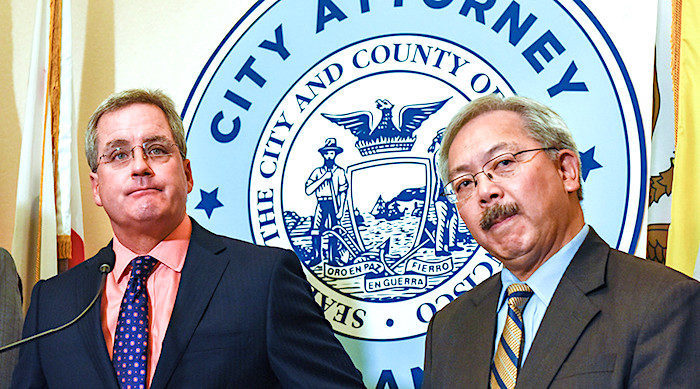
© Kate Munsch / ReutersSan Francisco City Attorney Dennis Herrera and Mayor Ed Lee
Four states are suing over President Donald Trump's executive order restricting US entry, as is the city of Boston, while other lawsuits were filed in Colorado and Texas. At the same time, San Francisco is challenging the constitutionality of his sanctuary cities order.

On Tuesday, Massachusetts, New York, Virginia and Washington all separately challenged the executive order that the Trump administration says will protect the US from "radical Islamic terrorists," but which the states say is actually a violation of religious freedom, Reuters reported.

The order, signed last Friday, puts a 90-day pause on US entry for those with passports from Iran, Iraq, Libya, Somalia, Sudan, Syria and Yemen, while also halting for 120 days, the resettlement of refugees program and barring any Syrian refugees indefinitely.

New York joined the ACLU's lawsuit, which was the first against Trump's order temporarily prohibiting US entry, filed on behalf of Hameed Khalid Darweesh and Haider Sameer Abdulkhaleq Alshawi; both Iraqis detained at JFK International Airport on Saturday. Virginia joined with the suit brought Monday by the Council on American Islamic Relations on behalf of 27 people.


Comment: Instead of being part of the solution, the American knee-jerk reaction is to sue someone.


Info

Lawyer claims charges on ex-FSB and Kaspersky staff with treason 'in interests of US', Moscow denies DNC/Podesta connection

Kaspersky Lab
© Sergei Karpukhin / Reuters
Two senior FSB officers and a high-level manager of Russia's leading cybersecurity firm Kaspersky Lab are facing official charges of treason in the interests of the US, a lawyer representing one of the defendants has confirmed to Interfax.

Ruslan Stoyanov, head of Kaspersky Lab's computer incidents investigations unit, Sergey Mikhailov, a senior Russian FSB officer, and his deputy Dmitry Dokuchayev are accused of "treason in favor of the US," lawyer Ivan Pavlov said on Wednesday, as cited by Interfax.

Pavlov chose not to disclose which of the defendants he represents, adding, however, that his client denies all charges.

Comment: More from The Duran:
Reports circulate in Moscow that detained cyber spies are being charged with passing on information to the CIA, strengthening suspicions that Moscow arrests are connected to the Clinton leaks scandal.

Suspicions that the arrests of alleged cyber spies that have been taking place in Moscow since the middle of December are in some way connected to the US intelligence community's allegations of Russian hacking of the DNC and Podesta have received more support from a report by the Russian news agency Interfax that Sergey Mikhailov - a former FSB officer - and Dmitry Dokuchaev - now also revealed to be an FSB officer and apparently Mikhailov's deputy - are being charged with passing on information to the CIA.

Interfax is a highly reliable news agency, and information it provides can usually be considered trustworthy. Probably the information about the charges against Mikhailov and Dokuchaev were intentionally provided to Interfax for publication by the FSB.

To add spice to the story, Russian media reports are apparently claiming that the FSB has found up to $12 million in cash stashed away in various hiding places in Mikhailov's home and dacha. If so then that would suggest that he was a longstanding CIA agent working for pay.

It should be stressed that as of now there is no official confirmation of these claims, or that Mikhailov and Dokuchaev provided the CIA with information about the Russian hacking claims. Even if they did, and even if the information they provided was the source of some of the claims of a Russian role in the leaking of the DNC and Podesta emails to Wikileaks, it doesn't mean that what they told the CIA about Russian intelligence's supposed role in passing on the DNC and Podesta emails to Wikileaks is true.

To add to the mystery, the Russian media has been full of reports that the arrests are in some way connected to a group of hackers called Shaltai-Boltai, who have supposedly been busy hacking the Russian government.

There is far too little information currently available to comment about this. It could be that the claims about the alleged connection to the Shaltai-Boltai group are a smokescreen put up by the FSB to conceal the direction of its investigation. Alternatively Shaltai-Boltai might have been a CIA front to conceal a US cyber operation in Russia. If I had to guess, I would say the second is more likely to be true.

As I said in previous report, clearly something is going on, but given the lack of detail, and given the strong possibility of disinformation, it is essential not to assume too hastily that anything which appears in the media is true.
Also see: Update: The Duran's Alexander Mercouris adds today:
In light of what Peskov has said, any further speculation that the individuals who have been arrested were involved in hacking Podesta and the DNC is obviously wrong, and should be ignored.

It is now confirmed that - as I have been saying all along - the individuals have been arrested for passing on information to a foreign power, which - as I also speculated - is confirmed to be the US. The official Russian news agency TASS quotes a lawyer familiar with the case as follows
No CIA is mentioned in the case. It is only the country that is mentioned. Yes, the talk is about America, not about the CIA (bold italics added)
This is not a denial that the CIA was the US agency with which the arrested individuals are supposed to have been in contact. All that the lawyer is saying is that the CIA is not referred to in the charges. However he explicitly confirms that the country with which the arrested individuals were in contact was the US.

Lastly the lawyer has poured cold water over the claims that the individuals arrested had some connection to the Shaltai Boltai group
The lawyer rejected media reports that leader of the Shaltay Boltay hacker group Vladimir Anikeyev was among the suspects in the criminal case. "It does not follow from official documents that Anikeyev and the Shaltay Boltay group are mentioned in this criminal case," the lawyer said, declining to disclose other details of the case.
It seems as if the Russian media talk about the Shalta-Boltai group was all wrong. Conceivably it was disinformation deliberately spread by the FSB to conceal the actual direction of the inquiry. More likely it was simply someone's mistaken guess.

Whilst this information has finally resolved some of the mysteries about the case - we now know definitely that at least two FSB officers and a cyber specialist have been arrested in Moscow charged with passing on secrets to the US - the theory that these individuals were a source for the US intelligence community's claims about Russian interference in the US election remains for the moment speculation.

We will no doubt find out more shortly even though what is clearly shaping up to be a major spy trial will be held in private, as such trials usually are in most countries, not just in Russia.


Light Sabers

Adviser to Khamenei responds to White House putting Iran on notice: "Threatening Iran is useless"

missile launch
© Sepah News / AFP
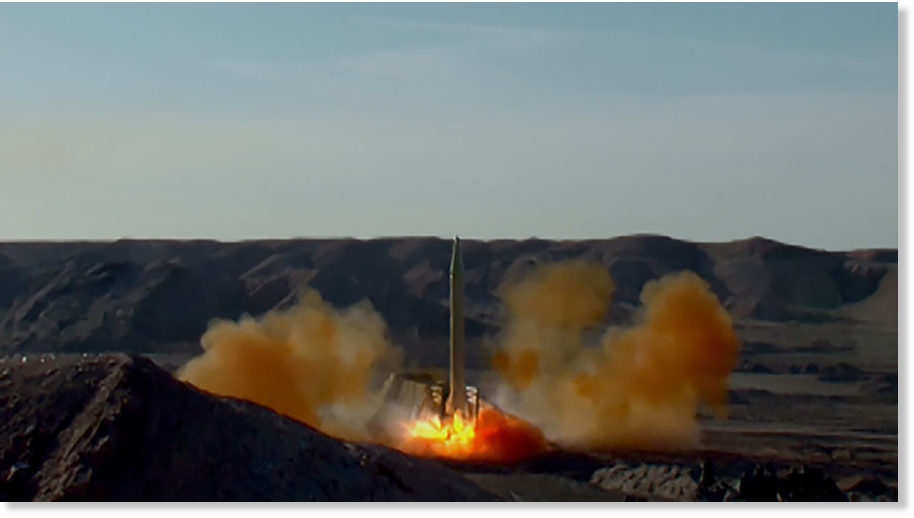
Iran will not bow to US threats, the foreign policy adviser to Iran's Supreme Leader Ayatollah Ali Khamenei's said in response to statements made by the White House, following Iran's recent ballistic missile test.

Speaking to reporters, Ali Akbar Velayati, the Ayatollah's foreign policy adviser, said that Iran would continue building its defensive capabilities regardless of any warnings from Washington.

"This is not the first time that an inexperienced person has threatened Iran," Velayati told Fars News Agency, without naming anyone specific. "The American government will understand that threatening Iran is useless."

"Iran does not need permission from any country to defend itself," he added.

On Monday, US officials told Fox News that Iran had tested a Khorramshahr medium-range ballistic missile, which flew 600 miles before exploding.

Telephone

Scott Adams on the freak-out over Trump's 'heated' calls with Mexican, Australian leaders

trump bannon flynn turnbull
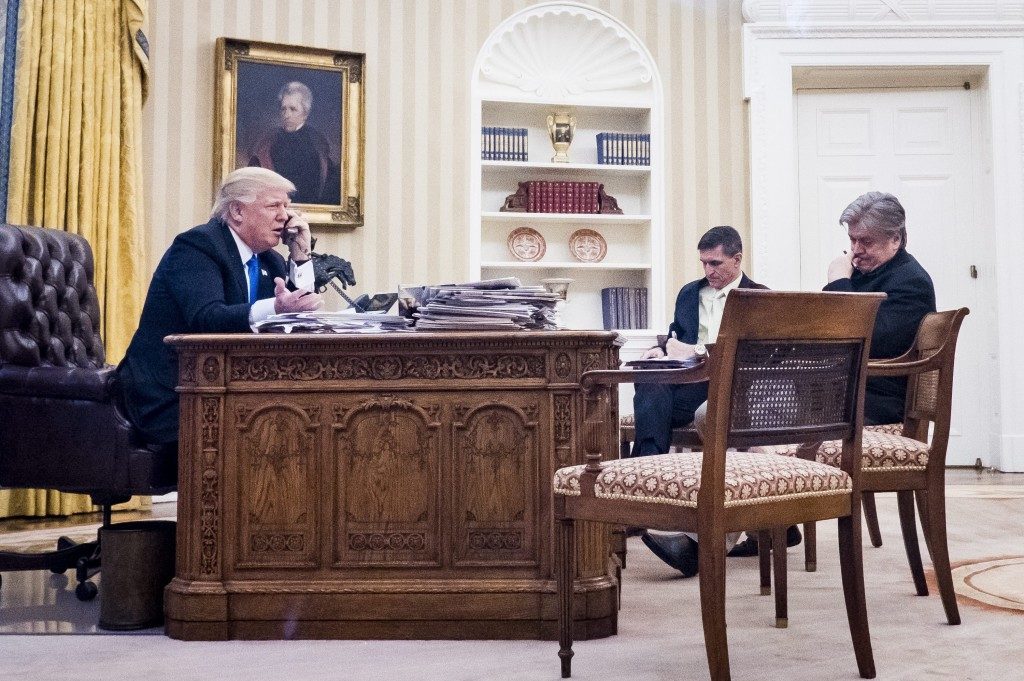
© Pete Marovich/Pool photo via European Pressphoto AgencyPresident Trump speaks on the phone with Australian Prime Minister Malcolm Turnbull in the Oval Office on Jan. 28, 2017.
Today's news will be all about President Trump's tense phone calls with the leaders of Australia and Mexico. The popular spin is that the president was rude and aggressive with both of them. Very unpresidential, say the critics. Maybe he is crazy! And orange! Chaos! Chaos! Chaos!

Another spin on the same observations is that both Australia and Mexico required their leaders to "stand up" to President Trump in a more aggressive way than you would expect with a normal president. I didn't hear the details of the calls, but I have to think they were lecturing him, or talking down to him, or generally being dicks because that's what their countries required of them in this situation. Trump just showed them what that strategy buys them.

If you see one phone call as an event that stands alone, you're missing the story arc. Everything is an ongoing negotiation with Trump. Australia and Mexico just had to sleep on the idea that their relationship with the United States is worse today than yesterday. And it sends a signal to other leaders that lecturing President Trump with an eye toward grandstanding or embarrassing him isn't the strongest strategy. He probably needed to make that point one way or another. That's done. Now let's see if the next foreign leader decides to lecture him or not. I'm thinking no.

There will be plenty of breathless commentary today about the end of civil diplomacy. What we don't know is how it all turns out. Don't judge a book by the first sentence. The fun is just starting.

Just to be clear, I'm sure the new administration is making plenty of rookie errors. It's not all brilliant persuasion. But don't assume you can tell them apart with limited information.

Comment: See:


Telephone

Bad media! Downright lie! Mexico denies Trump threatened to send military to chase 'bad hombres'

Trump phone
© Fortune
After the AP and Mexican media reported that Trump had threatened to send the US military to chase "bad hombres" out of Mexico in a phone call with Mexican President Enrique Peña Nieto, the Mexican government has slammed the claim as "a downright lie."

The statement "did not happen during that call," the Mexican government said on Twitter. "I know it with absolute certainty, there was no threat. The things that have been said are nonsense and a downright lie," Peña Nieto's spokesman, Eduardo Sanchez, said in a radio interview. Mexico's foreign relations department slammed the report, saying its allegations were "based on absolute falsehoods" and "do not correspond to the reality at all."

"The tone was constructive and it was agreed by the presidents to continue working and that the teams will continue to meet frequently to construct an agreement that is positive for Mexico and for the United States," the department added, as cited by AP.

The White House has refused to comment, instead pointing to a joint statement regarding the call that appeared on Friday. The two leaders reportedly spoke about the need to "work together to stop drug cartels, drug trafficking and illegal guns and arms sales." At a press conference with UK Prime Minister Theresa May last week, Trump also described his call with Pena Nieto as "friendly."

Comment: The US-Mexican border has been a topic of contention for centuries. It is not something Trump has just trumped up.

The White House added their own clarification:
President Donald Trump warned in a phone call with his Mexican counterpart that he was ready to send U.S. troops to stop "bad hombres down there" unless the Mexican military does more to control them — comments the White House described as "lighthearted."

The White House said Thursday that the comments, in an excerpt obtained by The Associated Press from a transcript of the hourlong conversation, were "part of a discussion about how the United States and Mexico could work collaboratively to combat drug cartels and other criminal elements, and make the border more secure."


Chess

Pepe Escobar: Game-changers ahead on the Maritime Silk Road - Indian cooperation and competition with China

gwadar port
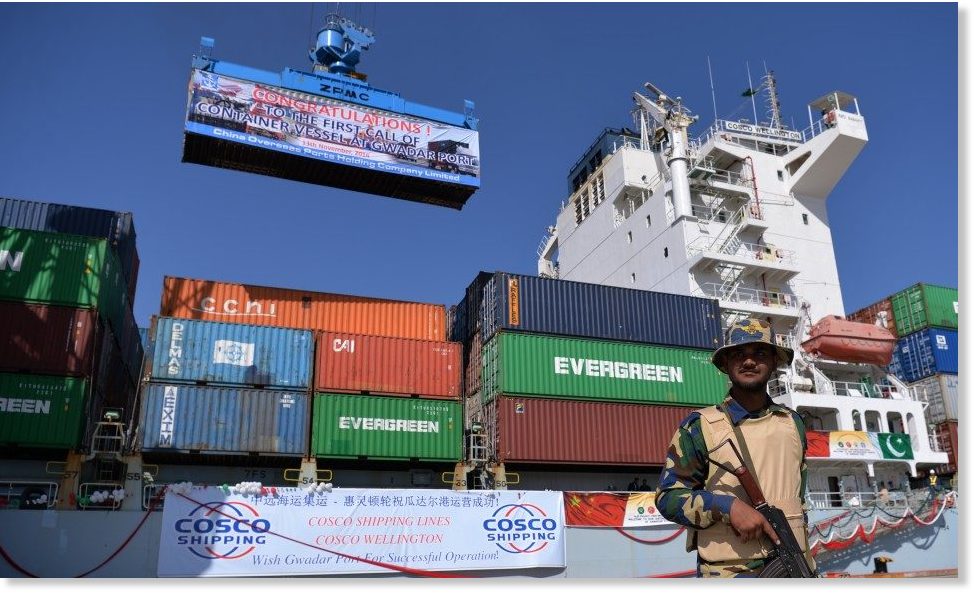
© AFP/Aamir QureshiA Pakistani Naval guard wards off troublemakers at Gwadar port
From the Bab al-Mandab to the strait of Malacca, from the strait of Hormuz to the strait of Lombok, all the way to the key logistical hub of Diego Garcia 2,500 miles southeast of Hormuz, the question pops up: How will the unpredictable new normal in Washington - which is not exactly China-friendly - affect the wider Indian Ocean?

At play are way more than key chokepoints in an area that straddles naval supply chains and through which also flows almost 40% of the oil that powers Asian-Pacific economies. This is about the future of the Maritime Silk Road, a key component of the Chinese One Belt, One Road (OBOR), and thus about how Big Power politics will unfold in a key realm of the Rimland.

India imports almost 80% of its energy from the Middle East via the Indian Ocean. Thus, for Delhi, protection of supply chains must be the norm, as in the current drive to develop three carrier battle groups and at least 160 naval vessels, including submarines, before 2022. That also implies boosting a cooperation agreement with the nations bordering the strait of Malacca - Malaysia, Singapore and Indonesia - and developing military infrastructure in the Andaman and Nicobar islands.

China for its part advances a relentless economic / infrastructural drive from Myanmar to Pakistan, from Bangladesh to the Maldives, from Sri Lanka to Djibouti - a counterbalance to the impossibility of fully implementing "escape from Malacca", the complex, multi-pronged Beijing strategy for diversifying energy supplies.

Dominoes

House Republicans repeal rule requiring US energy companies to disclose payments to foreign governments

oil drill
© Lucy Nicholson / Reuters
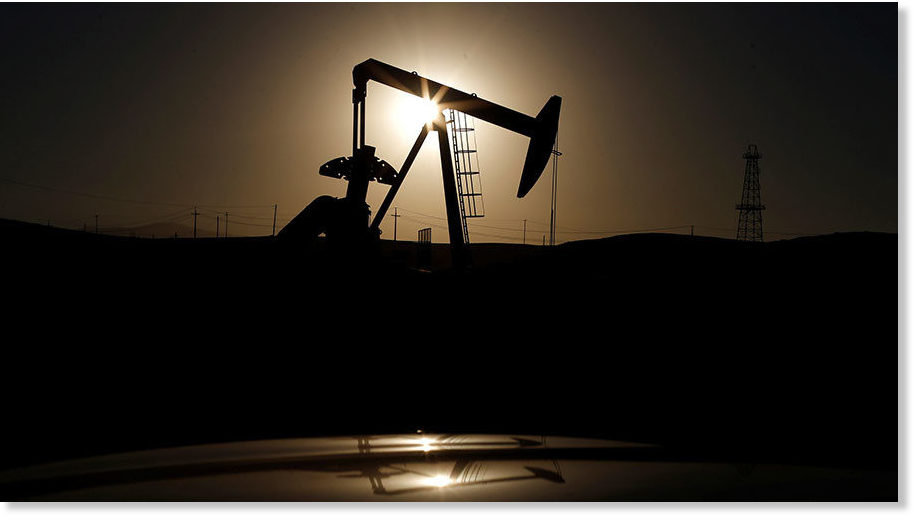
House Republicans have approved a resolution repealing the rules from the Securities and Exchange Commission (SEC) requiring US energy companies to disclose payments made to foreign governments.

The joint resolution passed on Wednesday, overturns rules that would have required oil, gas, and mining companies to disclose payments made to foreign governments including: fees, taxes, royalties, entitlements, bonuses, and other benefits.

Lawmakers voted against the financial disclosure measure 235-187.

The SEC rules were adopted on June 27, 2016, as a part of the Dodd-Frank Wall Street Reform, and were set to go into effect on September 30, 2018.

By increasing transparency, the SEC said they would help "combat global corruption and empower citizens of resource-rich countries to hold their governments accountable for the wealth generated by those resources."

Attention

De-escalation beginning? US Treasury amends sanctions on Russian FSB

FSB building in Moscow
© A.Savin
The United States has issued a license permitting certain transactions with the Russian Federal Security Service (FSB), which has been sanctioned over alleged interference into the 2016 US presidential election, the US Department of the Treasury said on Thursday.

On December 30, then-US President Barack Obama announced new sanctions against several Russian organizations, including the FSB, and individuals in retaliation for Moscow's alleged hacking into US political institutions. Washington is expelling 35 Russian diplomats on spying charges and is closing down two Russian-owned compounds in the US.

"GL 1 [license] authorizes certain transactions with the Federal Security Service (a.k.a. FSB) that are necessary and ordinarily incident to requesting certain licenses and authorizations for the importation, distribution, or use of certain information technology products in the Russian Federation," the guidance stated.

Sherlock

A Need to Reorganize and Downsize US Spy Agencies

CIA  office
© U.S. government photoCIA seal in lobby of the spy agency’s headquarters.
On President Trump's first full day in office, he went to the CIA and promised to back the nation's spy agencies, but his time would be better spent downsizing the sprawling intelligence community, says Ivan Eland.

Originating from the dispute over whether the Russians hacked the U.S. election and tried to influence it, rumblings came from the Trump transition team about reorganizing the intelligence community or parts thereof. That's not a bad idea at all.

Prior to 9/11, the U.S. intelligence community had grown to 16 sprawling, secretive agencies, which stayed in their stovepipes, thus cooperating insufficiently. For example, the CIA and FBI had coordination problems that really impaired the government's warning of the 9/11 attacks.

Logically, coordination problems tend to multiply the more intelligence agencies the government has and the bigger they get. Yet after 9/11, the George W. Bush administration and Congress instead used political logic. They wanted to be perceived as "doing something," often anything, about the problem — no matter whether it would be effective in dealing with it, a mere placebo with no effect but looked good, or an action that was actually counterproductive.

Comment: See also: Five corporations control our privatized intel industry