

Hungary's average wage growth comes in higher than expected as public servants received significant premiums in November
In the private sector, the 12.1% yearly-based wage increase doesn't count as an outlier, albeit it is a touch higher than the eleven-month average in 2019. Wages rose by double digits almost everywhere, but the acceleration in business wage growth is tied to three sectors: energy, water & waste management and transportation & storage.
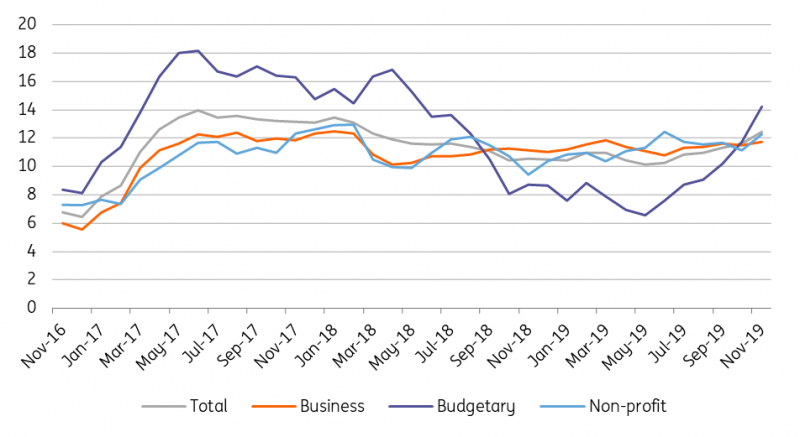
© HCSO, INGWage dynamics (3-month moving average, % YoY)
Taking into consideration the first eleven months of 2019 (11.2% wage growth), we can be almost sure that the full-year average will remain above 11%, basically matching the 2018 figure. On the other hand, inflation accelerated, so real wage growth slowed somewhat, but the 7.5% real net wage increase still provides a significant boost to consumption. As for 2020, we also need to look at the increase in the minimum wage, which rose by 8% from January. Anecdotally, retailers are set to raise wages by about 10 to 15%. Given the accelerating inflation, employers will face a tough negotiating period ahead. We can easily see double-digit net wage increases for the fourth year in a row.



*(Which I hope, but doubt, are not the same for the world.)
RC