
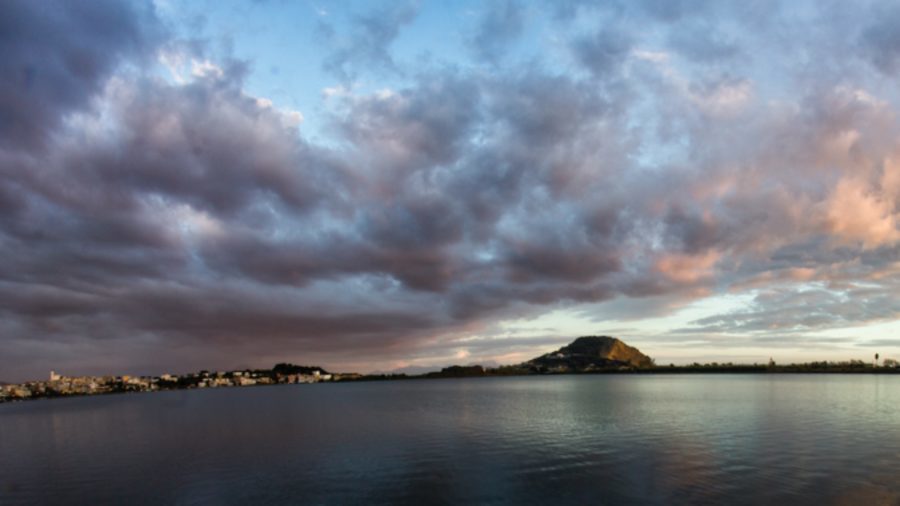
© Flickr / Michele CostigliolaCampi Flegrei
Campi Flegrei may have entered a new magma cycle, according to newly released findings that suggest the feature's "subvolcanic plumbing system" is commencing "a new build-up phase." The researchers warn this could give rise "at some undetermined point in the future," to "a large volume eruption."
A large volcanic area west of Naples which has 24 volcanic craters, Campi Fieri, has "produced two cataclysmic caldera-forming eruptions and numerous smaller eruptive events over the past 60,000 years," according to the new paper. Calderas are vacant spaces left after rock explosions during eruptions.
A team of scientists examined 23 of Campi Flegeri's past eruptions and created a computer model to simulate these eruptions. The last eruption, which took place in 1538, lasted for eight days and was so powerful it created Monte Nuovo. Worryingly, this was a fairly tame eruption by Camp Flegeri's standards.
The two biggest events were the Campanian Ignimbrite eruption, which occured 39,000 years ago and spewed ash for an awesome 3.7 million square kilometers, and the Neapolitan Yellow Tuff (NYT) eruption which happened around 15,000 years ago.
After conducting chemical analysis on the rocks, minerals and glass samples from these eruptions, the scientists determined Campi Flegrei's magma conditions could be entering a phase of pressure build up, which tends to happen before eruptions.
They discovered the same kind of magma that was found leading up to the Monte Nuovo, Campanian Ignimbrite and Neapolitan Yellow Tuff eruptions - a water-saturated magma high in CO2.
With Campi Flegrei surrounded by some 1.5 million people, even a small eruption could have devastating consequences.
However, there's no reason for anyone in the vicinity to panic just yet - the study's findings do not mean a massive eruption is impending. These conditions can actually hold for a long time without escalating, and while it is possible that a massive eruption could occur, it shouldn't happen in the near future.




Comment: Considering seismic and volcanic activity around the world is on the rise, the 'near future' may come sooner than the researchers think:
- USGS seismic data points to 2,000% increase in major earthquakes since 1900
- Volcanoes are erupting all over the place right now. Scientists have figured out why: A minute slowdown in the planet's rotation
- 26,290 earthquakes recorded for Turkey in first 7 months of 2017; most seismic activity for 15 years
- Growing, deforming, shaking: Iceland's largest volcano Öræfajökull showing clear signs of unrest for last 18 months
- Scientists observe ice thickening above 'inactive' volcano in Antarctica
- Worldwide volcanic activity uptick update, and new volcano discovered on Jupiter's moon Io
For more on the dramatic changes happening on our planet, check out SOTT radio's: Behind the Headlines: Earth changes in an electric universe: Is climate change really man-made?And SOTTs monthly documentary: SOTT Earth Changes Summary - October 2018: Extreme Weather, Planetary Upheaval, Meteor Fireballs