Animals
S


Attention

Peeved pachyderm: Elephant kills mahout, holds up rail, road traffic in Thrissur, India

elephant attacks
.The elephant Choppies Kuttisankaran turned violent and attacked its fellow elephants at the Makayiram Purappad ceremony..

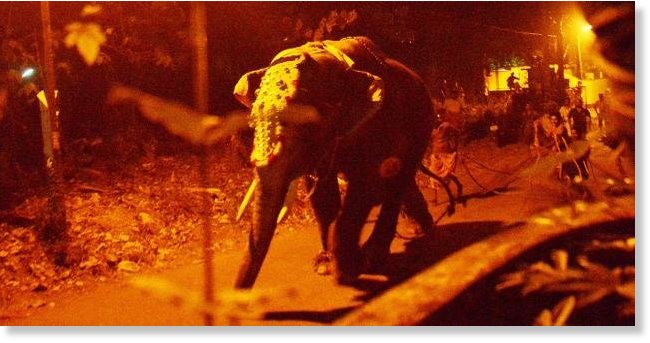
An elephant, which turned unruly during the Makayiram Purappad at the Bhagavathy temple, Thaikkattussery, near here, killed its mahout and created panic in the area for hours on Tuesday late night.

Suresh, 55, of Kallettukara, was killed when he was trying to tether the elephant. The elephant Choppies Kuttisankaran, who turned violent and attacked its fellow elephants at the Makayiram Purappad ceremony, ran around 20 km before it was tethered at Marathakkara by 12.30 a.m.

The elephant attacked the mahout while he was trying to bring it under control at Thaikkattussery. Though the mahout was rushed to hospital his life could not be saved. The attempt to tranquilize the elephant was not successful.

Heart

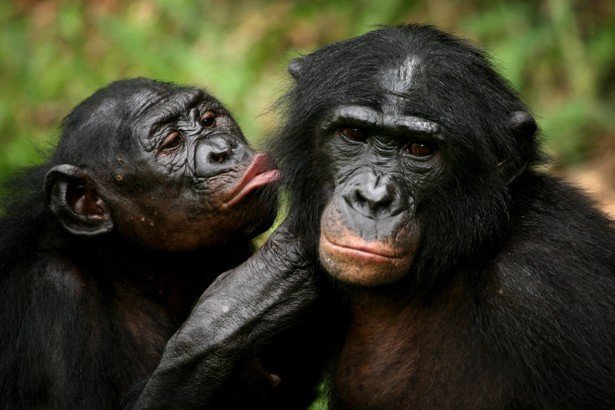
Bonobos, unlike humans and chimpanzees focus on bonding instead of danger

bonobos
© Finbarr O'Reilly / Reuters
A small team of researchers in The Netherlands has found that Bonobos, unlike humans and chimpanzees, tend to focus more on feel-good images than on images featuring danger or aggression. In their paper published in the Proceedings of the National Academy of Sciences, the team describes experiments they conducted with several captive bonobos and what they learned about both the bonobos and us humans.

Bonobos are apes that look very much like chimpanzees, but unlike chimps, they are rarely aggressive, preferring to settle their differences by engaging in non-reproductive sexual encounters and other bonding experiences. Bonobos are also different from chimps and humans in that they live in a matriarchal-type society—the females run things. Because of their gentle good nature, bonobos have been the subject of much study, as we humans try to understand why we are so much more violent.

Comment: Buddy, Can You Spare a Banana? Study Finds That Bonobos Share Like Humans


Bizarro Earth

Several hundred dead crows found along Michigan railroad

Dead Crows
© Trace Christenson/The EnquirerMary Lutzke stopped to see for herself after hearing reports of dead crows in Springfield
Springfield - Officials were trying to determine why several hundred crows are dead along a section of railroad tracks.

The crows were reported Tuesday near Helmer Road in Springfield. Most were on the east side of the roadway, stretching at least 200 yards. Some people estimated as many as 300 of the birds were dead. Mary Lutzke and her daughter, Kristin Jordan, stopped to see the dead birds and had questions about how and why they all died.

"I love crows," Lutzke said. "Their sound brings me back to my childhood. They are smart and intelligent."

Springfield City Manager Nathan Henne also stopped along the tracks after receiving calls about the bird kill. Henne said he would contact the Michigan Department of Natural Resources about the birds.

Fish

Is electric 'pulse fishing' the marine equivalent of fracking?

Pulse fishing
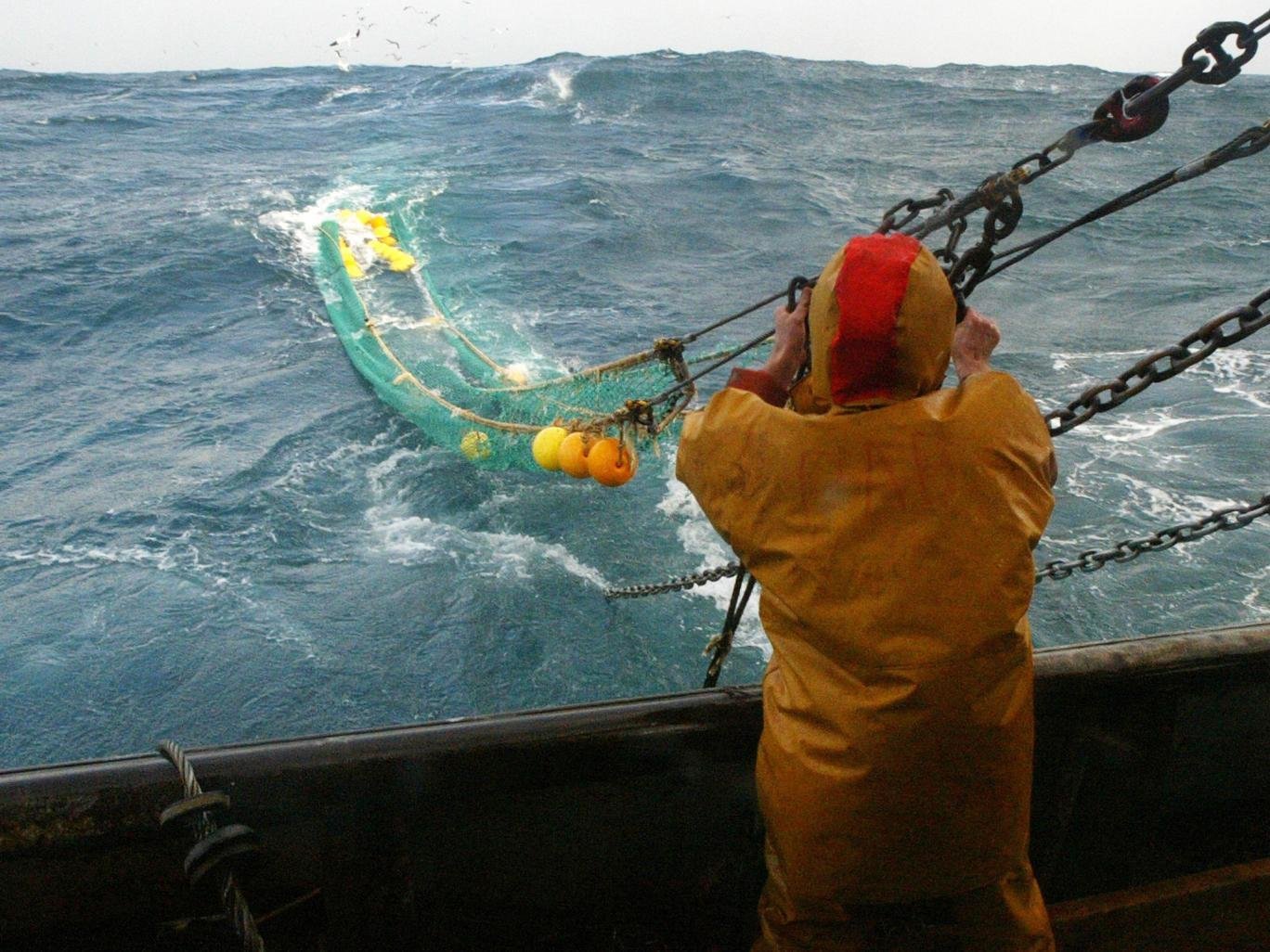
© Getty ImagesPulse fishing’s electric shocks force commercially valuable bottom-dwelling fish and seafood up from the seabed into the water column

The technique may be so efficient that it will cause whole areas to be "fished out"


Conservationists are increasingly concerned about a radical new method of sea fishing being employed off the British coast, using electric shocks, which has been described as "the marine equivalent of fracking".

Pulse fishing is claimed by its supporters to be the answer to many of the problems caused by traditional fishing with beam trawls in the same way as fracking, the hydraulic fracturing of underground shale rock formations to release the gas they contain, is said by its proponents to be the answer to our energy problems. Yet, just as fracking has triggered controversy about its side effects, the new fishing technique - which uses powerful pulses of electricity fired from towed electrodes into the seabed - has raised serious worries about its impact, especially as it has not been scientifically evaluated for damaging environmental effects, even though it is now going ahead on a large scale.

Pulse fishing's electric shocks force commercially valuable bottom-dwelling fish and seafood such as sole and shrimps up from the seabed into the water column, and allows them to be easily caught in a trawl net. It has been taken up with enthusiasm by Dutch fishermen who fish in the southern North Sea and the English Channel, and has enabled them to increase greatly their catches of sole - their main target species.

Attention

Giant sperm whale found dead on East Bali beach

Dead sperm whale in Bali
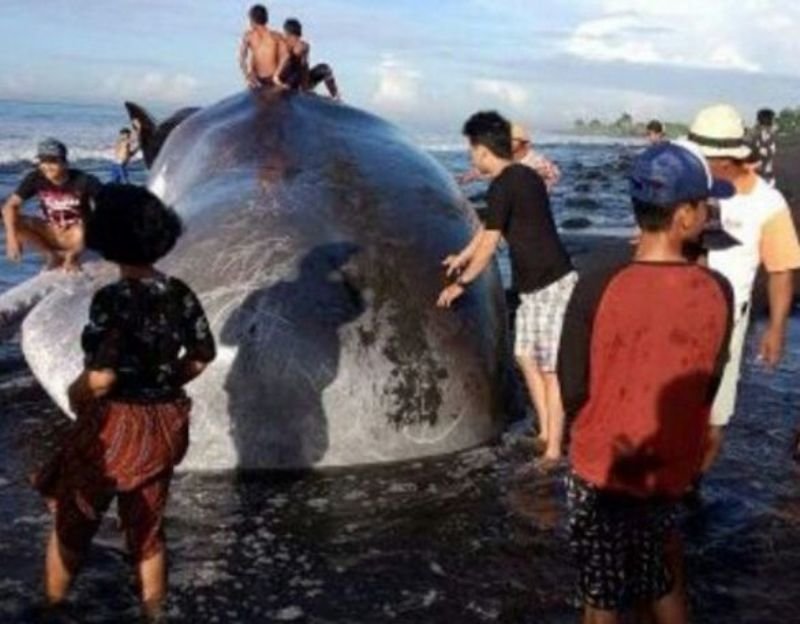
© Instagram @widia_pranataA sperm whale was found washed up in Klungkung, Bali on March 14, 2016.

A beached whale, reportedly measuring 16.2 meters in length, was found in Klungkung, East Bali early on Monday morning.

Local fishermen Negah Sunarta, 37, and Nengah Darpa, 35, found the whale at Batu Tumpeng Beach, Gelgel Village when they were catching lobster.

"We usually look for lobsters on this beach. We were shocked with the whale. After we approached, it turned out to be dead," Sunarta said, as quoted in a report by Praise Sukiswanti, published by Sindo News.

The whale caused quite the commotion as hundreds of curious people apparently gathered around it to gawk and take pictures.

Unfortunately, as you can see from some of these photos posted to social media, the dead whale was not allowed to rest in peace right away as people saw a photo op and jumped right on.

Attention

Dolphins, whales found dead on Queensland beach

dead whale on Queensland beach

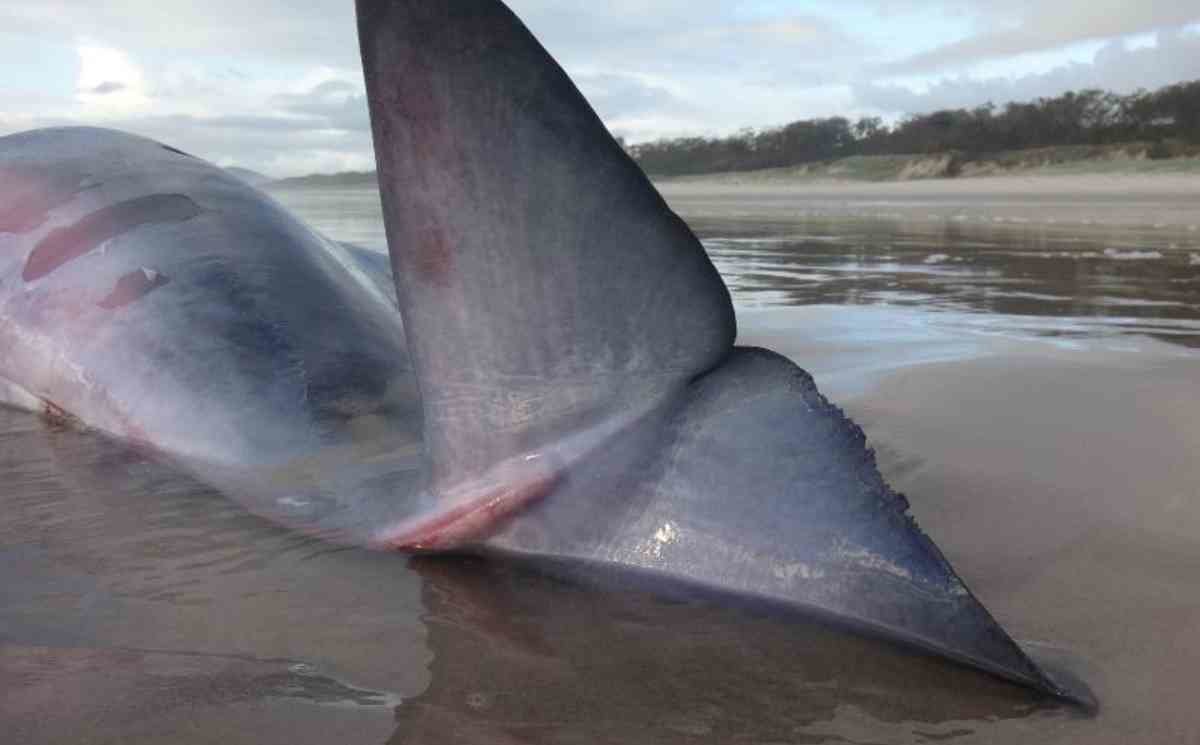
A female whale, her calf and a dolphin have been found dead on Sunshine Coast beaches in Queensland.

The pygmy sperm whale calf and dolphin became stranded at Peregian Beach, while the mother whale was found about 2km north near Noosa on Sunday, the Department of Environment and Heritage Protection says.

Samples have been taken from the animals and a local council is arranging for the carcasses to be removed.

Photos of the animals were posted to the Peregian Beach Village Facebook page on Sunday.

"Sadly 3 sea mammals have washed up dead on the early morning high tide," the post read.

"The Coolum Coast Care team are on the scene with Humpback Whale research scientist Dr. Michael Noad, who just happened to be coming down to check the surf."

The post said it wasn't known how the mammals died, but it appeared the whales had been bitten by sharks.

AAP 2016

Info

Scientists have grown 'dinosaur legs' on a chicken for the first time

A chicken embryo
© Graeme Campbell/WikimediaA chicken embryo.
Until very recently, one of the biggest myths in science was that all dinosaurs have been extinct for the past 65 million years. But thanks to new fossil discoveries that filled in our knowledge about avian dinosaurs, we now know that only some dinosaurs went extinct following an asteroid collision with Earth - others survived and gave rise to the birds we live with today.

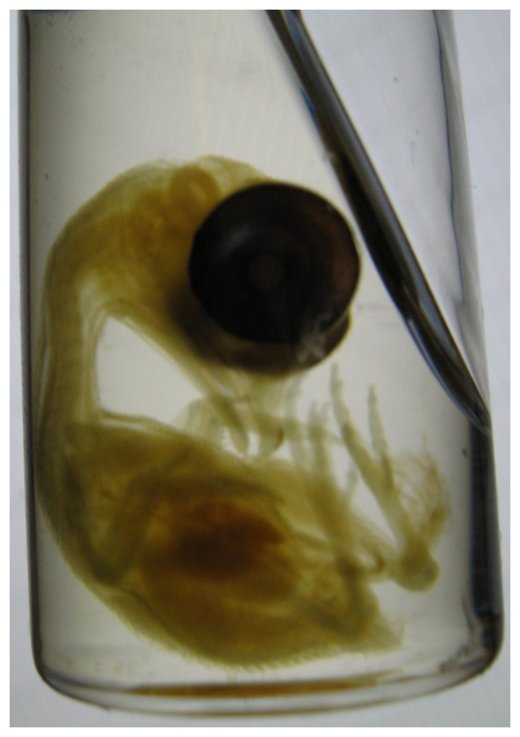
To figure out how this evolution occurred, researchers in Chile have manipulated the genes of regular chickens so they develop tubular, dinosaur-like fibulas on their lower legs - one of the two long, spine-like bones you'll find in a drumstick.

In avian dinosaurs such as the Archaeopteryx, the fibula was a tube-shaped bone that reached all the way down to the ankle. Another bone, the tibia, grew to a similar length alongside it.

As evolution progressed through to a group of avian dinosaurs known as the Pygostylians, the fibula became shorter than the tibia, and sharper and more splinter-like towards the end, and it no longer reached the ankle.

While modern bird embryos still show signs of developing long, dinosaur-like fibulae, as they grow, these bones become shorter, thinner, and also take on the splinter-like ends of the Pygostylian bones, and never make it far enough down to the leg to connect with the ankle.

Researchers led by Joâo Botelho from the University of Chile decided to investigate how this transition from a long, tubular fibula in dinosaurs to a short, splinter-like fibula in birds actually came to be.

They achieved this by inhibiting the expression of a gene called IHH or Indian Hedgehog (seriously), which saw their chickens continue to grow the long, dinosaur-like fibulae that originated in their embryonic form.

In doing so, the team discovered something bizarre. Regular bone development sees cell division and therefore growth halt in the shaft long before the ends stop growing, but in modern chickens, the growth of the fibula halts first at the ends. This means the fibulae of modern chickens are actively blocked from reaching the lengths of their ancient relatives' bones.

Fish

Thousands of dead fish wash ashore at Lake Alalay, Bolivia

dead fish in Bolivian lake

Thousands of small sardine-like fish have been found dead in lake Alalay, but no one is completely sure what caused oxygen levels in the lake to drop so dramatically


Thousands of dead fish have washed up onto the shores of a lake in Bolivia.

Just before they died, some of the fish had just hatched from their eggs in lake Alalay, in the central Bolivian city of Cochabamba.

No one yet knows the number of dead fish, but they have stockpiled five cubic metres (177 cubic feet) so far, so it's possible there is over a tonne of dead fish in the lake.

According to local media reports, the most affected species was the "platincho" fish which is similar in appearance to sardines.

The fish carcasses were taken to a local dump.

Authorities believe low oxygen levels in the waters of Lake Alalay, due to the the highly polluted water, in addition to the last heatwave in 2015, led to the massive fish kill, but the exact cause of the conditions were unclear.


Attention

Man dies after shark attack in Fiji

Shark attacks
The horrendous shark attack in Cakaudrove has shocked villagers of Wailevu district as many try to fathom the incident.

Maika Tabua, 44, of Naiqaqi, was attacked at the river mouth of Yanawai.

When relatives found him afloat near a reef, they saw that the shark had ripped off his left arm and thighs, and it severed his neck leaving all internal organs exposed.

His cousins, Iliesa Tuinawaria and Saimone Ligavaki who retrieved his body from the sea were still in a state of shock when they visited The Fiji Times office in Labasa yesterday.

Mr Tuinawaria said they found his body floating in an upright position, not far from where he was picking sea slugs on a reef.

Divisional police commander North SSP Shiri Singh confirmed an investigation had started.

Question

Mysterious sea creature washes up on Mexican beach

Mystery Creature
© Yahoo NewsMysterious 13ft Sea Creature Washes Up On Beach In Mexico.
It looks like something from a terrifying horror movie, but this is the mystery sea creature that's baffled experts after washing up on a tourist beach in Mexico.

The monstrous 4-metre (13-foot-long) beast was discovered on Bonfil Beach, in the city of Acapulco, in the south-west Mexican state of Guerrero.

Stunned beach-goers stood around the beast and began taking photos - while also speculating on the possible species of the creature.

The creature's body was washed on the shore by strong currents that have been affecting parts of the Mexican coast.