Earth ChangesS


Bizarro Earth

For Farms in the West, Oil Wells Are Thirsty Rivals

fracking colorado water
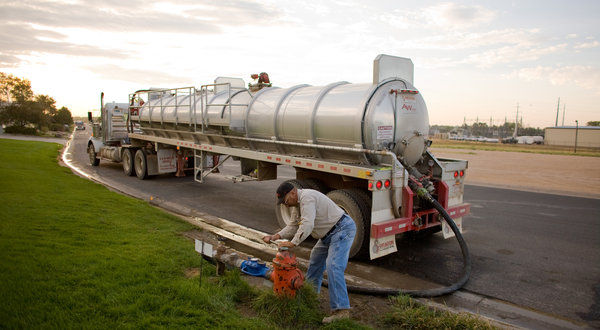
© Matthew Staver/The New York TimesBob Bellis filled his tanker at a hydrant in Greeley, Colo., in August to supply a drilling site. Lease deals with oil companies are important revenue sources for cities.
Greeley, Colorado - A new race for water is rippling through the drought-scorched heartland, pitting farmers against oil and gas interests, driven by new drilling techniques that use powerful streams of water, sand and chemicals to crack the ground and release stores of oil and gas.

A single such well can require five million gallons of water, and energy companies are flocking to water auctions, farm ponds, irrigation ditches and municipal fire hydrants to get what they need.

That thirst is helping to drive an explosion of oil production here, but it is also complicating the long and emotional struggle over who drinks and who does not in the arid and fast-growing West. Farmers and environmental activists say they are worried that deep-pocketed energy companies will have purchase on increasingly scarce water supplies as they drill deep new wells that use the technique of hydraulic fracturing.

And this summer's record-breaking drought, which dried up wells and ruined crops, has only amplified those concerns.

"It's not a level playing field," said Peter V. Anderson, who grows corn and alfalfa on the parched plains of eastern Colorado. "I don't think in reality that the farmer can compete with the oil and gas companies for that water. Their return is a hell of a lot better than ours."

Bizarro Earth

Guatemala's Volcano Of Fire Eruption Forces Mass Evacuation

Image
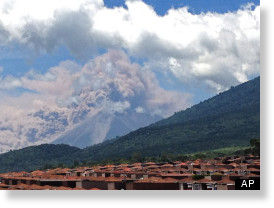
© AP Photo/Moises CastilloIn this image with a cell phone plumes of smoke rise from the Volcan de Fuego or Volcano of Fire spews ash seen from Palin, south of Guatemala City, Thursday, Sept. 13, 2012.
Guatemala's head of emergency evacuations says more than 33,000 people are fleeing the eruption of a long-active volcano just outside one of the country's most famous tourist attractions. Sergio Cabanas says the evacuees are leaving some 17 villages around the Volcano of Fire, which sits about 10 miles (16 kilometers) from the colonial city of Antigua.

The agency says the volcano spewed lava nearly 2,000 feet (600 meters) down slopes billowing with ash on Thursday.

Seismologists also say a series of explosions have been coming from the 12,346-foot-high (3,763-meter-high) volcano.

Cloud Lightning

Tropical Storm Sanba becomes a super typhoon

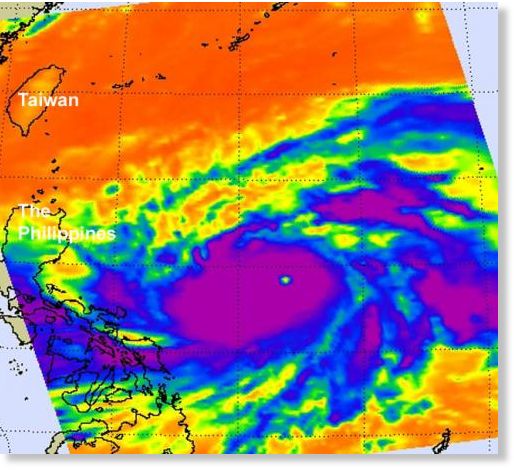
Tropical Storm Sanba exploded in intensity between Sept. 12 and 13, becoming a major Category 4 Typhoon on the Saffir-Simpson Scale. NASA's Aqua satellite captured infrared data that showed a large area of powerful thunderstorms around the center of circulation, dropping heavy rain over the western North Pacific Ocean.

NASA's Aqua satellite passed over Super Typhoon Sanba on Sept. 13 at 0447 UTC (12:47 a.m. EDT). The Atmospheric Infrared Sounder (AIRS) instrument captured an infrared image of Sanba and found an eye about 20 nautical miles (23 miles/37 km) wide, surrounded by a thick area of strong convection (rising air that forms the thunderstorms that make up the storm) and strong thunderstorms. Forecasters at the Joint Typhoon Warning center noted that the AIRS imagery showed that there was "no banding outside of this ring, consistent with an annular typhoon."
Image
© NASA/JPL, Ed OlsenNASA's Aqua satellite passed over Super Typhoon Sanba on Sept. 13 at 12:47 a.m. EDT. AIRS infrared data found an eye (the yellow dot in the middle of the purple area) about 20 nautical miles wide, surrounded by a thick area of strong thunderstorms (purple) with very cold cloud temperatures.

Phoenix

Washington state wildfires prompt evacuations, destroy three homes

fire
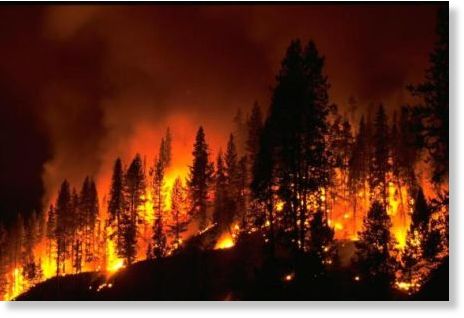
Seattle - Fast-growing wildfires destroyed three homes in Washington state on Wednesday and threatened 350 more buildings as firefighters worked to keep the flames at bay and hundreds of residents prepared to evacuate.

The fires raging in Washington have charred 130,000 acres and the weather could make things worse, officials said. The fires were among a cluster of blazes raging in the U.S. West.

"Conditions look horrible," said Paul Perz, the state's assistant fire marshal. "We're anticipating that unstable conditions and winds in eastern Washington will fuel the fires."

The wildfires were sparked by thousands of weekend lightning strikes that ignited more than 150 fires on Monday. Six new fires started on Wednesday.

The most menacing of the blazes, located about 140 miles east of Seattle, has spread to 9,500 acres and is threatening about 125 homes. More than 700 residents have been urged to evacuate.

Although 620 firefighters were on the scene, little of the fire was contained, Perz said.

"Portions of the town are threatened," said John Kruse, Wenatchee police sergeant. "Right now, we're taking it 12 hours at a time."

The so-called Barker Canyon Complex fire in the Grand Coulee region in eastern Washington destroyed three homes and nine outbuildings on Wednesday, but was 20 percent contained, Perz said.

Bizarro Earth

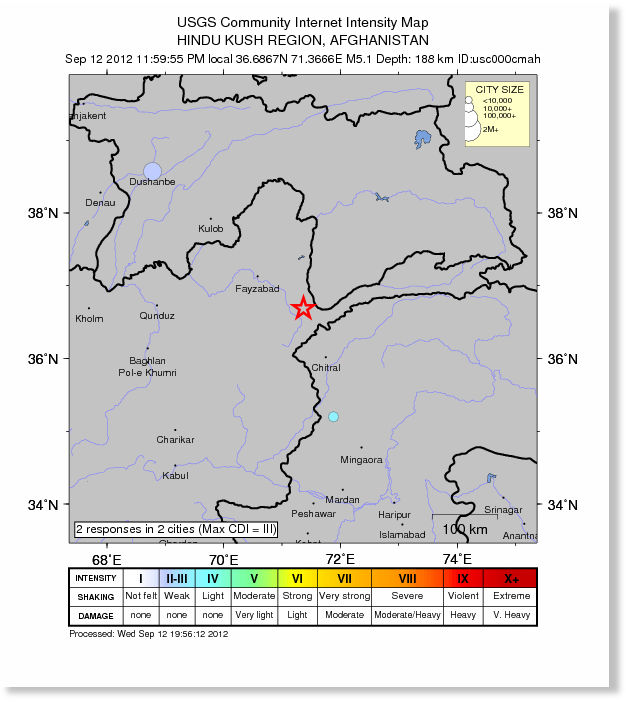
USGS: Earthquake Magnitude 5.1 - 14km W of Ashkasham, Afghanistan

Image
© USGS
Event Time
2012-09-12 19:29:55 UTC
2012-09-12 23:59:55 UTC+04:30 at epicenter
2012-09-12 12:29:55 UTC-07:00 system time

Nearby Cities
1km (9mi) W of Ashkasham, Afghanistan
22km (14mi) W of Ishkashim, Tajikistan
51km (32mi) ESE of Jarm, Afghanistan
84km (52mi) SE of Fayzabad, Afghanistan
307km (191mi) SE of Dushanbe, Tajikistan

Question

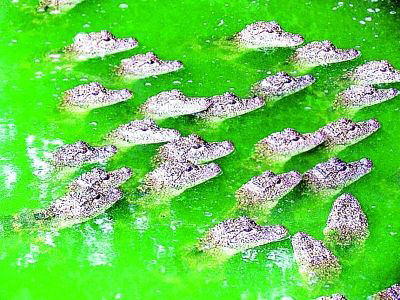
Crocodiles rising simultaneously to the surface in China

A visitor to a crocodile breeding base in Nanjing has uploaded a picture online of a mass of crocodiles rising simultaneously to the surface of a pool at the base, thus sparking much discussion on the Internet, the Yangtse Evening newspaper reports.
crocodiles
© Yangtse Evening
The visitor surnamed Xu shot the startling scene on Sunday at the Zixia Lake Crocodiles Breeding Base in Jiangsu Province.

Some netizens are worried that the crocodiles' mass team action may indicate signs of an imminent earthquake or other natural disasters. Some joked that the crocodiles were preparing to attend a meeting or involved in a gang fight. Some guessed that the pool is too crowded and that there isn't enough oxygen under water, forcing the crocs to come up for air.

Bizarro Earth

Costa Rican Officials: A Strong Earthquake Could Still Occur in Guanacaste

Experts confirmed the Sept. 5 magnitude-7.6 earthquake was the 'Big One' they've been expecting, but the fault rupture was only of 50 percent.

After a series of analyses conducted in the northwestern province of Guanacaste, experts from the Volcanological and Seismological Observatory of Costa Rica (Ovsicori) reported Tuesday that another quake of equal or greater magnitude could occur in Nicoya Peninsula, but predicting when it would happen is "impossible ."

Marino Protti, Ovsicori's lead scientist, explained that the magintude-7.6 earthquake on Sept. 5 caused a 40 percent slip and an inclination of 1.8 meters on the fault located in Nicoya.

He also said that although the quake was the "big one" experts had been expecting for Guanacaste, the fault ruptured by only 50 percent, meaning that the possibility that another earthquake of equal or greater magnitude in the area still remains.

Ovsicori's report, released Tuesday, also stated that the earthquake triggered the activation of three faults in Aguas Zarcas (in the northern region), the Guanacaste Volcanic Area and Irazú Volcano (north of Cartago). Seismologists will continue monitoring the areas.

By Tuesday morning, the total count of aftershocks from the recent earthquake was 1,650. On Sept. 5 at 8:42 a.m., the 7.6-magnitude earthquake shook the country and was felt as far away as Nicaraguan and Panama. Its epicenter was located 20 kilometers northwest of Sámara in the Nicoya Península.

Igloo

A Cool-Headed Climate Conversation With Aerospace Legend Burt Rutan

My wife Nancy and I recently enjoyed a couple of great days with Burt Rutan and his wife Tonya at their beautiful new home in Coeur d'Alene, Idaho. The visit afforded an opportunity to discuss many topics of keenly shared interest, including the global warming "debate". Although Burt is world renowned for his remarkable record-setting achievements in aircraft and spacecraft design, he has devoted a great deal of attention to this subject as well.
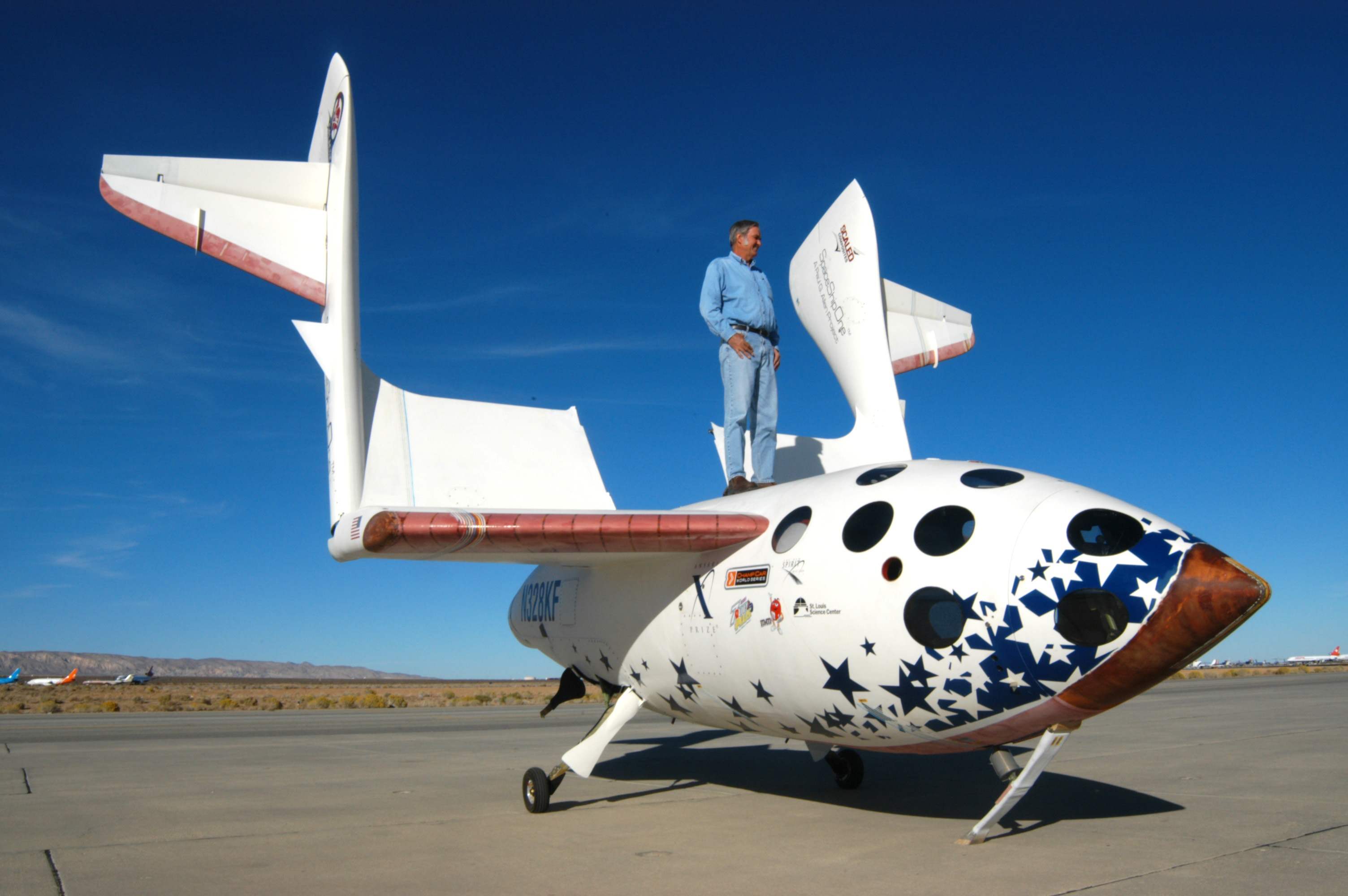
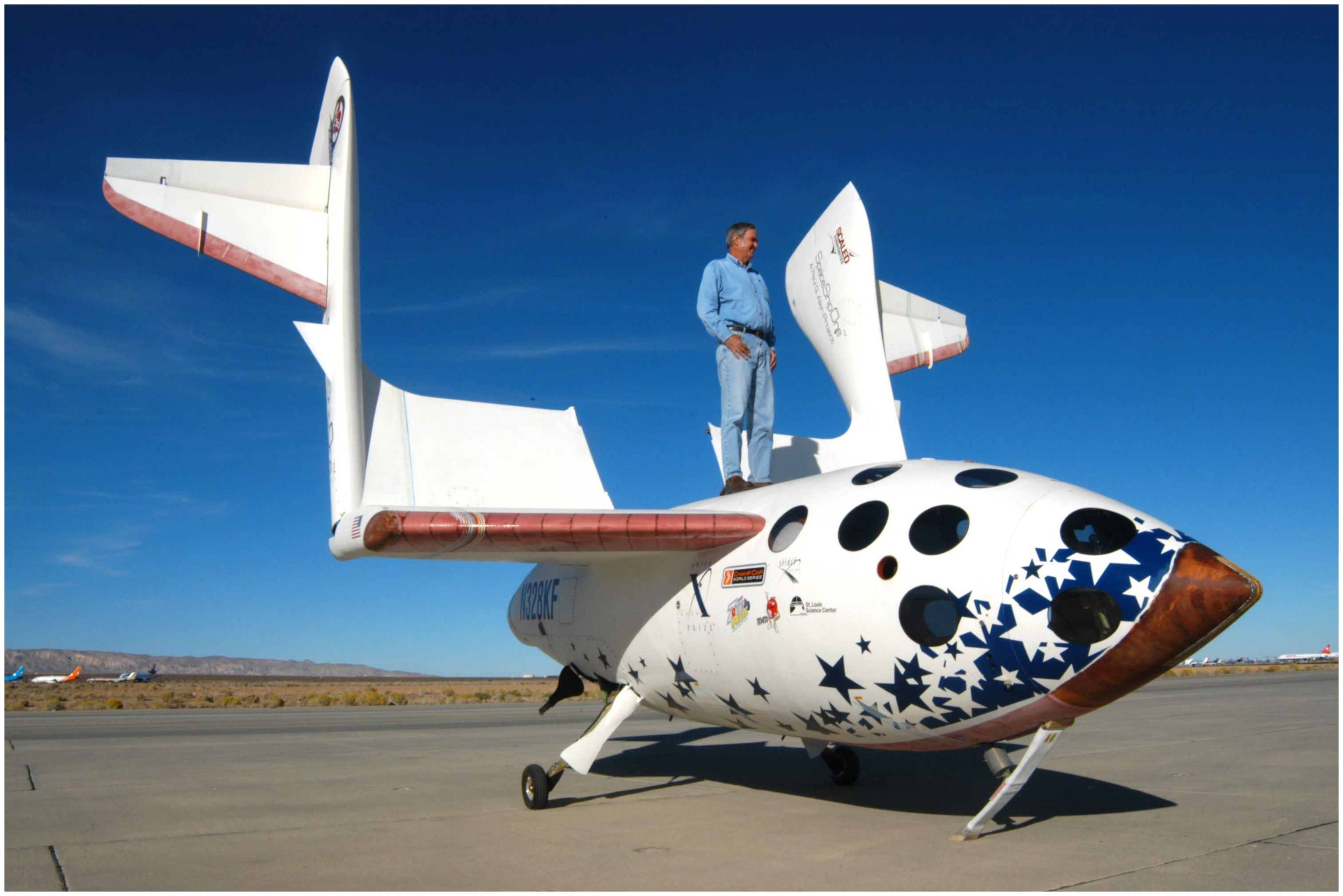
SpaceShipOne
© Burt RutanBurt Rutan with his SpaceShipOne, the first privately developed and financed craft to enter the realm of space twice within a two-week period and receive the Ansari X-Prize.
By way of brief introduction, Burt Rutan designed Voyager, the first aircraft to fly around the globe without stopping or refueling. He also designed SpaceShipOne financed by Microsoft co-founder Paul Allen which won the $10 million Ansari X-Prize in 2004 for becoming the first privately-funded manned craft to enter the realm of space twice within a two-week period. Both, along with three other of his aircraft, are on display at the National Air and Space Museum in Washington, D.C. Burt's recent projects include a flying car, and the Virgin GlobalFlyer which broke Voyager's time for a non-stop solo flight around the world.

Burt, as someone with such intense involvement in aerospace design and development, what got you interested in climate issues?

Even though I've been very busy throughout my entire career developing and flight-testing airplanes for the Air Force, I've always pursued other research hobbies in my time away from work. Since I'm very accustomed to analyzing a lot of data, about three or four years ago many alarmist claims by some climate scientists caught my attention. Since this is such an important topic, I began to look into it firsthand.

Although I have no climate science credentials, I do have considerable expertise in processing and presenting data. I have also had extensive opportunities to observe how other people present data and use it to make their points. There is a rampant tendency in any industry where someone is trying to sell something with a bunch of data, where they cherry pick a little bit...bias a little bit. This becomes quite easy when there is an enormous amount of data to cherry pick from.

The first thing that got my attention, a lot of people's attention, was statements that the entire planet is heading towards a future climate catastrophe that is attributable to human carbon dioxide emissions. So I decided to take a look at that and just see if this conclusion was arrived at ethically. It's obviously an extremely important issue which has gotten a huge amount of media attention. I was particularly concerned because the proposed solutions will have enormous impacts upon costs of energy, which of course, will increase costs of everything.

Many people seem to get much of their information from what they see in newspapers, with variously biased viewpoints presented in the New York Times, Wall Street Journal, Investor's Business Daily, Canadian Free Press, etc. I may be considerably different, in that I always like to look at both sides of things that I take special interest in. So when I decided to look closely at the anthropogenic [man-made] global warming crisis claims, I avoided focusing on media reports, and instead, went directly to available raw climate data. The intent was to see if that data might just as reasonably be interpreted differently.

Then, what really drew me into the subject, was when I found that I couldn't obtain the raw data that I was looking for. I was shocked to find that there were actually climate scientists who wouldn't share the raw data, but would only share their conclusions in summary graphs that were used to prove their various theories about planet warming. In fact I began to smell something really bad, and the worse that smell got, the deeper I looked.

Cloud Lightning

Newfoundland braces for Leslie landfall, rain already soaking Atlantic Canada

Leslie
© HANDOUT/ReutersHurricane Leslie (C) and Hurricane Michael (R) are seen in this NOAA handout satellite image taken September 6, 2012.
Forecasters say the centre of tropical storm Leslie will almost certainly make landfall Tuesday in Newfoundland, though precisely where is still up for debate.

The Canadian Hurricane Centre in Halifax says Leslie could touch down on the island as a marginal hurricane or a strong tropical storm.

Forecaster Chris Fogarty says the storm's circulation is about 800-kilometres in diameter and its effects will be far-reaching.

He predicts wind gusts could top 100 kilometres an hour in parts of Newfoundland, with strong gusts also expected in Cape Breton.

Question

Mystery Stench: Investigators Probe Foul Odor Source

Sonny Bono Salton Sea
© The Press EnterpriseBirds gather on the shore at the Sonny Bono Salton Sea National Wildlife Refuge in Calipatria.
Investigators are probing the source of a rotten egg odor from the desert to the San Fernando Valley.

The cause of the smell remains unknown, but some officials believe the bad smell may be coming from a summer storm and a fish die off at the Salton Sea, although authorities at the Salton Sea initially denied they were the source.

Kevin Martin, a meteorologist with the independent Southern California Weather Authority, said a strong thunderstorm system moved north from Mexico late Sunday, Sept. 9, bringing in winds as strong as 70 miles per hour to the Saltan Sea areas.

The unusual storm pushed the air from above the sea to the west. It then went through the San Gorgonio Pass, and into the Inland valleys, Martin said. Winds normally flow from west to east.

The South Coast Air Quality Management District, however, has not identified a source of the odors, but the agency has dispatched inspectors to investigate.

The air district received more than100 calls reporting a strong, foul rotten egg or sulfur odor, district officials said in statement.

Possible sources include fish kills, algae blooms and other biologic conditions in lakes that can cause strong odors, the statement said. Industrial facilities such as wastewater plants also can cause sulfur odors.