Earth ChangesS


Cloud Precipitation

3 killed and 60 injured following flooding in Jordan and Israel

Image
© Majd Shweikeh
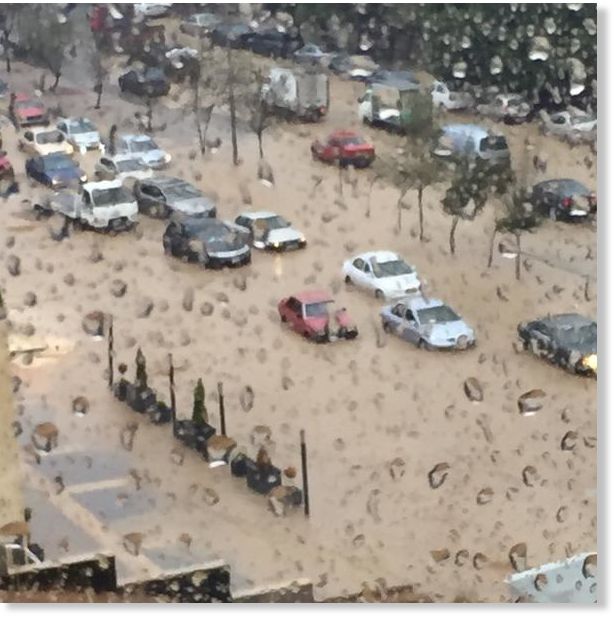
Local media in Jordan have said that at least 3 people have died in flooding affecting the north west of the country. Two people died in Amman after being trapped in a flooded basement. A further victim died in Irbid after she was swept away by flood water outside her home.

Jordan's Civil Defence Department (CDD) say that at least 54 people were injured in separate incidents after they were trapped by flood water in areas around Wadi Karja, Zarka Maein and Wadi Al Hamra.

Magnify

Geologists reveal earthquakes, not climate change, affect the rate of landslides in Peru

Image
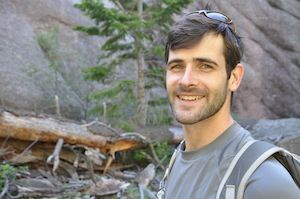
© Syracuse UniversityDevin McPhillips is a research associate in the Department of Earth Sciences.
A geologist in Syracuse University's College of Arts and Sciences has demonstrated that earthquakes - not climate change, as previously thought - affect the rate of landslides in Peru.

The finding is the subject of an article in Nature Geoscience by Devin McPhillips, a research associate in the Department of Earth Sciences. He co-wrote the article with Paul Bierman, professor of geology at The University of Vermont; and Dylan Rood, a lecturer at Imperial College London (U.K.).

"Geologic records of landslide activity offer rare glimpses into landscapes evolving under the influence of tectonics and climate," says McPhillips, whose expertise includes geomorphology and tectonics. "Because deposits from individual landslides are unlikely to be preserved, it's difficult to reconstruct landslide activity in the geologic past. Therefore, we've developed a method that measures landslide activity before and after the last glacial-interglacial climate transition in Peru."

McPhillips and his team have spent the past several years in the Western Andes Mountains, studying cobbles in the Quebrada Veladera river channel and in an adjacent fill terrace. By measuring the amount of a nuclide known as Beryllium-10 (Be-10) in each area's cobble population, they've been able to calculate erosion rates over tens of thousands of years.

Cloud Precipitation

Buenos Aires flooding update: 3 dead and over 5,000 evacuated, 5 inches of rain in 24 hours

Image
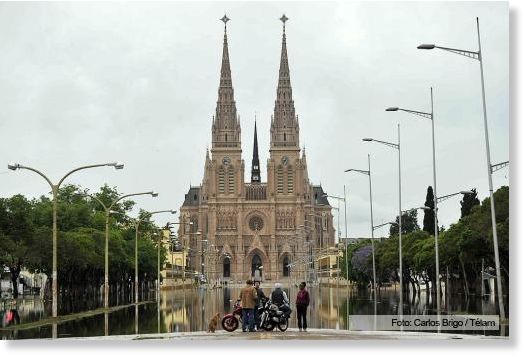
In a Government House press conference earlier today, Argentina Cabinet Chief, Jorge Capitanich, said that the heavy rainfall and flooding that struck in the Province of Buenos Aires last Saturday has now affected 19 municipalities and forced 5,203 people to evacuate from their homes.

He said that the districts affected were Luján, Marcos Paz, La Matanza, Bragado, Arrecifes, Pilar, Mercedes, San Miguel, Esteban Echeverría, Ensenada, Carmen de Areco, San Martín, Lomas de Zamora, Moreno, San Fernando, Tigre, Quilmes, Salto and Baradero. Currently there is no available information for flood damage in Berisso, Malvinas Argentinas, Campana and Exaltación de la Cruz. The floods first began on 30 October 2014, forcing over 1,000 from their homes.


Whistle

Weather Channel co-founder: 'Hello, everybody! Global warming is a whole lot of baloney'

Image
John Coleman
The idea that there is significant man-made global warming is "a whole lot of baloney," Weather Channel co-founder John Coleman insisted on CNN's "Reliable Sources" Sunday morning.

"The government only gives money to scientists who will present their hypothesis," said Coleman, a meteorologist who helped found The Weather Channel 32 years ago. "They don't have any choice; if you are going to get the money, you have to present their position. Those are the ones the government pays for. That doesn't make it right, that only means it's bought and paid for."

But Coleman, who debunked climate change in a letter to UCLA last month, told show host Brian Stelter Sunday that he resented him introducing him as a climate change "denier."

"That is a word meant to put me down," he told him. "I'm a skeptic about climate change, and I want to make it darned clear that [Weather Channel CEO David] Kenny is not a scientist, I am."

Comment: Coleman was a member of the American Meteorological Society. He says he left the organization after he disagreed with its stance on global warming and climate change. He went on to call global warming, "the greatest scam in history".


Health

Butan man survives bear attack

Image
A 24-year-old man from Khelakha, below Nobdhing in Wangdue is recovering at the Bajo hospital after he survived a bear attacked on November 1.

The victim, Lobzang, said the bear attacked him when he was on his way to the irrigation water source along with two friends and three small dogs when the bear attacked at around 11am on Saturday.

"I was walking ahead. A big black bear came in front of me and suddenly attacked me," he said. "I managed to take out the knife and hit it once but it couldn't do much harm and the bear wrestled me to the ground."

Attention

Sloth bear attacks and injures two in Korba, India

Image
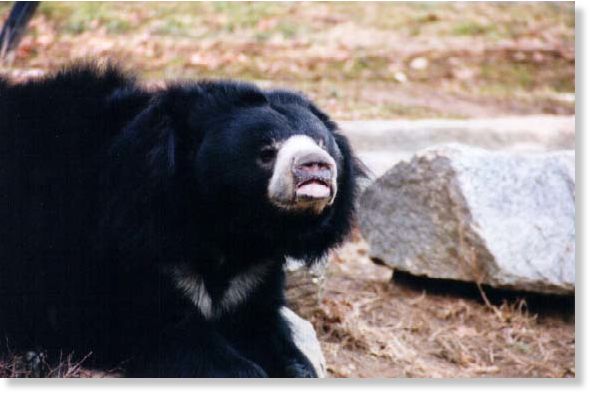
The Sloth Bear (Melursus ursinus)
Two persons were injured after a sloth bear attacked them at Korkoma region in Korba district on Saturday evening.

Kurkuma village is located about 25km from Korba city which witnesses frequent instances of human-animal conflict involving both elephants and bears.

The incident took place when Rajkumar Manjwar and Man Singh went into nearby forest for grazing their cow and a sloth bear along with its cub attacked the herd and the duo. Man Singh and Manjhwar were injured but they managed to flee.

Bizarro Earth

Turrialba Volcano in Costa Rica shaken by violent eruption, ash reaches province of Limón

Image
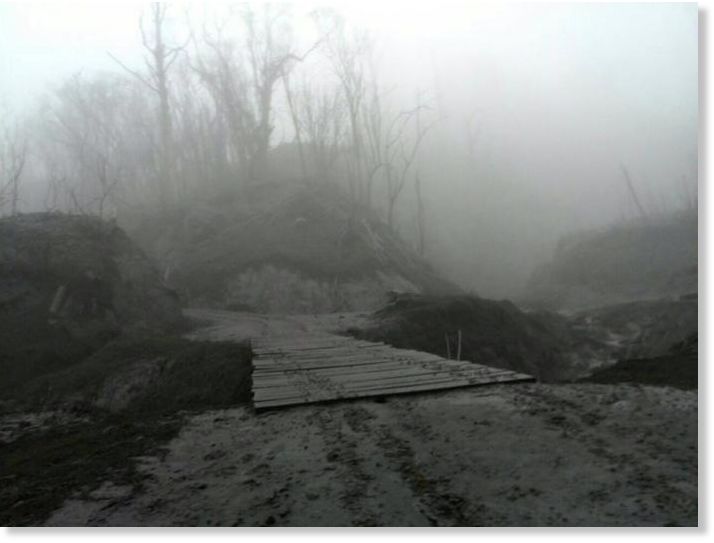
© The Tico TimesA site near the Turrialba Volcano’s crater.

Among the observations by volcanologists conducting weekend inspections in the area around Costa Rica's Turrialba Volcano were craters in the earth measuring up to one meter in diameter - the result of rocks shooting out from the volcano.

Experts from the National Seismological Network (RSN) and the Volcanological and Seismological Observatory of Costa Rica (OVSICORI) conducted the inspections in light of significant activity at the volcano that started last week.

RSN volcanologist Gino González Ilama said the areas of impact are located on the south side of the volcano and cover 80 percent of the slope up to 400 meters from the volcano's crater.

"We observed the impact of volcanic rock that had caused several craters on the ground. We believe the rocks were shot out of the volcano at speeds greater than 100 kilometers per hour, and this proves there is strong activity inside," González said.

Map

Scientists studying 8.8M 2010 Chile earthquake theorize 'unusual regional geologic features' that absorbed most of quake's power

EQ Chile Concepcion
© purdue.eduSite of Maule earthquake, M8.8
Two blobs of dense rock jammed deep beneath Chile's coastline acted like seismic speed bumps during the magnitude-8.8 Maule earthquake in 2010, according to a new study.

Some of the world's largest earthquakes occur in Chile. The country sits above a subduction zone, where the Nazca tectonic plate dives down under the South America tectonic plate. Where the two plates lock together, a huge amount of strain builds up and is periodically released through earthquakes.

Subduction fault
© Stephen Hicks, University of LiverpoolChilean subduction zone's fault structure.
Ridges and undersea mountains on the Pacific Ocean seafloor (the Nazca plate) divide the coastline into segments that unleash earthquakes at different intervals, scientists think. After the subduction zone gobbles these seafloor barriers, they can stop earthquakes from moving through an area or serve as earthquake starting points.

Now, researchers have discovered similar quake-controlling behavior from unusual geologic features bolted to the underside of the South American continent like a wad of chewed gum. The dense rocks seem to have played a key role during the devastating Maule earthquake, according to results published Nov. 1 in the journal Earth and Planetary Science Letters.

Comment: Planetary Impact - The M8.8 earthquake that struck Chile on February 27, 2010 resulted in movement of crustal material and redistribution of mass. According to NASA, the earthquake resulted in a tiny shift in the Earth's axis estimated at three inches (8 centimeters), which affected the rate of its rotation, thus shortening the length of a day by 1.26 microseconds.

It is believed that great earthquakes have a large enough moment to affect the earth's polar motion and that the impact is cumulative, not only on the Earth's axis of rotation and free nutation (due to non rigidity and spinning dynamics of the aspheric earth), but on the Chandler wobble (the Chandler Oscillation) of the earth's axis.The wobble is about 20 feet (9 meters) and has a period of 433 days. It combines with another wobble which has a period of one year, so that the total polar axis motion varies with a period of about 7 years. It is affected by gravitational attractions of the moon and the sun as well as planetary alignment and variations in the Earth's geomagnetic field. It would be expected that the shift due to great earthquakes would also have a cumulative impact to the Earth's axis of rotation and free nutation (due to non rigidity and spinning dynamics of the aspheric earth).

Crustal Movements - Based on GPS Geodetic measurements, the continental block moved westward. Specifically, it was determined that the city of Concepción moved 3.04 meters (10 ft) west, Santiago 28 centimeters (10 in) to the west-southwest and even Buenos Aires - about 1,350 kilometers (840 mi) from Concepción - moved westward by 3.9 centimeters (1.5 in). Maximum uplift of more than 2 m was observed along the coast Arauco.

Rupture - The earthquake had a complicated rupture process. The total rupture was about 550 km long, more than 100 km wide and extended to about 50 km in depth. It paralleled the coast of Chile and affected an area of about 82,500 square kms.


Snowflake Cold

Another shot of cold air, snow to hit Midwest and Eastern U.S.

Image
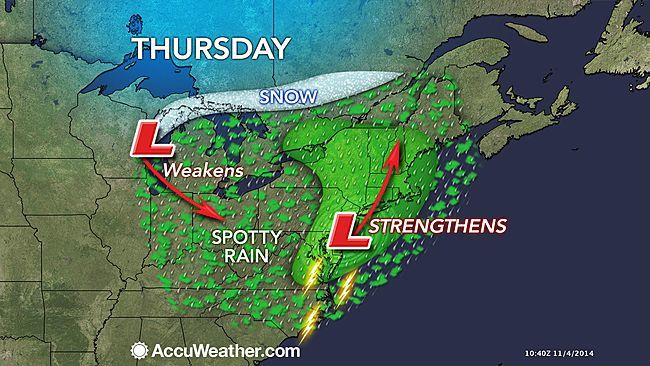
Another shot of cold air will follow a fast-moving storm forecast to sweep from the Midwest to the East during the second half of the week.

People from the Midwest to the East will need an array of outdoor gear into next week.

Before the chill hits, temperatures will moderate during the first part of the week over much of the eastern half of the nation.

Conditions will be favorable for storm cleanup early this week around the Chicago Lakefront and at midweek in northern New England. Waves washed over Lake Shore Drive in Chicago following a blast of snow on Halloween. Record snow amounts buried New England as the same storm pushed off the coast and ramped up. The milder air will also make raking leaves a little less painful from the Midwest to the Appalachians and Northeast.

The storm later this week will not be as strong as the system that hit the Midwest and East this past weekend. However, it will bring spotty rain and snow to parts of the northern Plains Wednesday then the Great Lakes on Thursday.

In the wake of the storm, winds will kick up, bringing in a quick dose of cold air and localized lake-effect snow to parts of the Upper Midwest.

Winds with the cold shot will not be as intense and more from the west in the wake of the storm around the Great Lakes. The southeastern shoreline of Lake Michigan will be hit with wave action, rather than Chicago during this round. The northwest flow will bring more lake-effect flurries and snow areas farther east over the Midwest when compared to this past weekend.

Cloud Lightning

South-eastern France hit by violent storms and floods once more

southeast france storms and floods
© France TV infoSouth eastern France takes a hit from extreme weather
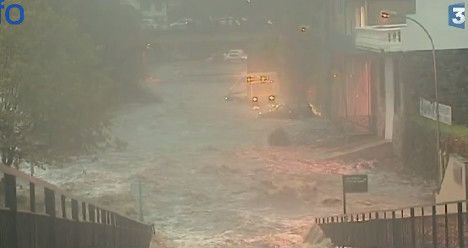
Some fifteen departments in south eastern France were on alert on Tuesday as storms swept through the region. Residents in the Ardeche were some of the hardest hit as rivers burst their banks.

Gale force winds and heavy rain lashed south eastern France on Tuesday leaving weather alerts in place for 15 departments.

On Monday night the severe weather caused havoc in the Ardeche department and left over 6,000 homes without power. Firefighters were called out nearly 100 times to deal with incidents.

"We have an enormous amount of damage, with walls collapsing onto roads," said deputy mayor of an Ardeche village Michel Aymard, who said it was the third time in two months the region had been hit by devastating floods.

Comment:

South of France under flood waters again
Southern France put on maximum storm alert, risk of flash-flooding