Science of the SpiritS


Map

Swansea scientists discover the brain's own 'sat nav' system

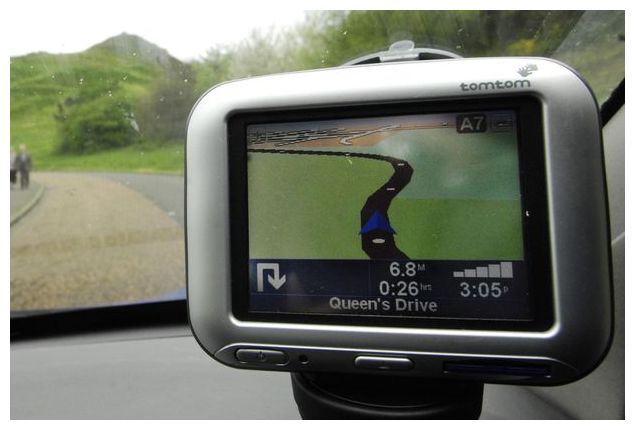
Sat Nav
© Wales Online, UKOur sense of direction has been traced to a nerve cell in the brain that acts like an in-built GPS.
Researchers at Swansea University have found that the human brain is equipped with its own version of a GPS, helping people understand their location in an unfamiliar environment.

Our brains are equipped with their own version of a global positioning system (GPS), according to exciting new research by an academic at Swansea University.

Dr Christoph Weidermann of the University's College of Human and Health Sciences has helped identify a new type of cell in the brain.

It helps people keep in mind their relative location while navigating an unfamiliar environment.

The cells are thought to give people "spatial memory" and they were discovered by examining the brains of neurosurgery patient volunteers.

The discovery may be able to help scientists working to beat Alzheimer's Disease.

Dr Weidemann was part of a team which has identified "grid cells," which derive their name from the triangular grid pattern in which the cells activate during navigation.

The work is being published in the latest edition of Nature Neuroscience.

Dr Weidemann said: "The newly discovered cell is distinct among brain cells because its activation represents multiple spatial locations.

Info

Brain's long-term reward system relies on dopamine

Dopamine
© Thinkstock
From driving across country to graduating from college, long-term goals are often difficult to stay focused on when an immediate reward isn't within sight.

A team of researchers from the University of Washington in Seattle and MIT has recently discovered new details on how the brain is able to stay focused until these long-term goals are achieved, according to a report in the journal Nature.

The joint team's research builds on previous studies that have linked the neurotransmitter dopamine to the brain's reward system. While most previous studies have involved looking at dopamine with respect to an immediate reward, the new study found increasing levels of dopamine as laboratory rats approached an expected reward after delayed gratification.

To measure levels of dopamine in the rats' brains, the team used a system developed by UW behavioral scientist Paul Phillips called fast-scan cyclic voltammetry (FSCV) that involves small, implanted electrodes that continuously record dopamine concentration by looking for its electrochemical signature.

"We adapted the FSCV method so that we could measure dopamine at up to four different sites in the brain simultaneously, as animals moved freely through the maze," said co-author Mark Howe, currently a post-doctoral neurobiologist at Northwestern University. "Each probe measures the concentration of extracellular dopamine within a tiny volume of brain tissue, and probably reflects the activity of thousands of nerve terminals."

People

Social status and power of action of speakers determine the way their statements are perceived

Neurolinguists measure brain reaction to statements made by prominent speakers.

The actual standing of speakers within a society's power structure determines how their statements are perceived. This is the conclusion reached in a joint study undertaken by neurolinguist Professor Ina Bornkessel-Schlesewsky of the University of Marburg and linguist Professor Matthias Schlesewsky of Johannes Gutenberg University Mainz (JGU) with the support of Sylvia Krauspsenhaar, who participated in the study as a member of the Neurotypology research group at the Max Planck Institute for Human Cognitive and Brain Sciences in Leipzig. The results were recently published in an article entitled "Yes, you can? A speaker's potency to act upon his words orchestrates early neural responses to message-level meaning" in the open-access journal PLOS ONE.

For the purposes of the study, the team of researchers exposed their trial group to video recordings of a politically influential decision-maker, an eminent news anchor, and a person completely unknown to the test subjects expressing both plausible and implausible statements. The first speaker was Peer Steinbrück, the then Federal Minister of Finance, and the second was Ulrich Wickert, a former TV newscaster. They spoke from a script produced especially for the study; all the statements made were classifiable either in the categories "general knowledge" or "politics". While obviously false statements relating to the real world (such as "Fidel Castro is a pop singer.") triggered similar reactions in the test subjects' brains in the case of all three speakers, the reactions to implausible political statements (such as "The federal government has announced that it will be leaving NATO.") differed depending on the speaker. The EEG recordings made while subjects were listening to politician Steinbrück diverged from those made when the other, non-political speakers made the same statements.

Handcuffs

Victims of bullying are more likely to end up in jail than those who are not bullied - and it affects women more than men

Image
© Don Mason/CorbisMore than 20 per cent of children who are repeatedly bullied as children and teenagers end up in prison as adults, according to new research
Children who are bullied are more likely to end up in jail, according to a new study.

Researchers from the University of Carolina have found that being bullied throughout childhood and teenage years may lead to more arrests, convictions and prison time.

They also discovered that people who were repeatedly bullied throughout childhood and adolescence were significantly more likely to go to prison than those who did not suffer repeated bullying.

Almost 14 per cent of those who reported being constantly bullied from childhood through their teens ended up in prison as adults.

This is compared to six per cent of people who weren't bullied, nine per cent of people who were only bullied as children, and seven per cent of teen-only victims.

When comparing rates of convictions, more than 20 per cent of those who endured 'chronic bullying' were convicted of crimes. Almost double those who weren't bullied.

The study also found that while childhood victims faced 'significantly greater odds of going to prison' than non-white victims.

Doctor Michael Turner, of the Department of Criminal Justice and Criminology at the University of North Carolina in the United States, said: 'Previous research has examined bullying during specific time periods, whereas this study is the first to look at individuals' reports of bullying that lasted throughout their childhood and teen years, and the legal consequences they faced in late adolescence and as adults.'

People 2

Can't we all just get along? Evolution says 'Yes we can'

Get Along
© dotshock/Shutterstock
The Prisoner's Dilemma questions human morality in a very interesting way. In essence, this hypothetical situation ponders the costs and benefits of individuals acting solely on their own interest versus social cooperation that involves benefits for others. More specifically, this notion suggests people can work together to receive a portion of a reward or betray one another to receive the full reward.

Last year a computer scientist and physics professor wrote a paper which found that, in general, people come out better in the end if they betray their fellow human and make the decision they know will most benefit them. Now, two Michigan State University (MSU) evolutionary biologists are challenging this conclusion.

According to Christoph Adami, professor of microbiology and molecular genetics at MSU, working for your own interests may benefit you in the short term, but in the long run evolution favors those who look out for the good of others.

"We found evolution will punish you if you're selfish and mean," said Adami. "For a short time and against a specific set of opponents, some selfish organisms may come out ahead. But selfishness isn't evolutionarily sustainable."

Adami and co-author Arend Hintze, a molecular and microbiology research associate, have just published their paper in the current issue of Nature Communications.

People

'Evolution will punish you if you're selfish and mean'

Image
© G.L. Kohuth"We found evolution will punish you if you're selfish and mean," said lead author Christoph Adami, MSU professor of microbiology and molecular genetics.
Two Michigan State University evolutionary biologists offer new evidence that evolution doesn't favor the selfish, disproving a theory popularized in 2012.

"We found evolution will punish you if you're selfish and mean," said lead author Christoph Adami, MSU professor of microbiology and molecular genetics. "For a short time and against a specific set of opponents, some selfish organisms may come out ahead. But selfishness isn't evolutionarily sustainable."

The paper appears in the current issue of Nature Communications and focuses on game theory, which is used in biology, economics, political science and other disciplines. Much of the last 30 years of research has focused on how cooperation came to be, since it's found in many forms of life, from single-cell organisms to people.

In 2012, a scientific paper unveiled a newly discovered strategy - called zero-determinant - that gave selfish players a guaranteed way to beat cooperative players.

"The paper caused quite a stir," said Adami, who co-authored the paper with Arend Hintze, molecular and microbiology research associate. "The main result appeared to be completely new, despite 30 years of intense research in this area."

Arrow Up

How to protect yourself from a 'successful' psychopath

Psychopaths_1
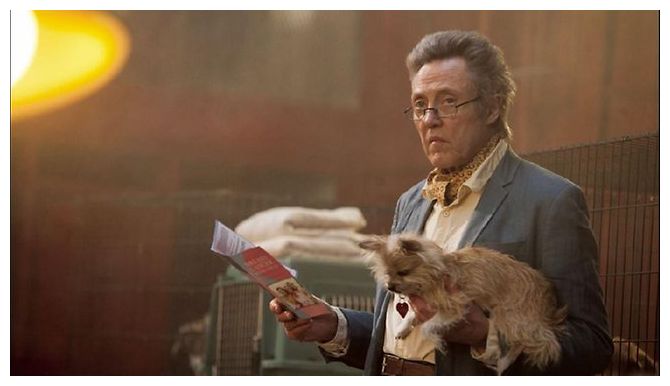
© Supplied Christopher Walken stars in Seven Psychopaths.
Psychopaths are everywhere. It's a recognised medical statistic that one per cent of the general population is psychopathic.

And they're trendy too, taking centre stage in Jon Ronson's investigative bestseller The Psychopath Test, and a murderous turn in horror movies like American Psycho and Arbitrage.

It's no wonder we're morbidly fascinated with them. The mental disorder is unnerving and enigmatic. If the psychopathic nature is to trick us, we want to uncover them. Just talking about the condition is enough to lead you to think: 'Am I a psychopath...?'

However if you're thinking that, chances are you're not a psychopath, who are defined by their lack of empathy, remorse and chronic irritability in the globally recognised PCL-R test.

People

Intent to harm: Willful acts seem more damaging

How harmful we perceive an act to be depends on whether we see the act as intentional, reveals new research published in Psychological Science, a journal of the Association for Psychological Science.

The new research shows that people significantly overestimate the monetary cost of intentional harm, even when they are given a financial incentive to be accurate.

"The law already recognizes intentional harm as more wrong than unintentional harm," explain researchers Daniel Ames and Susan Fiske of Princeton University. "But it assumes that people can assess compensatory damages -- what it would cost to make a person 'whole' again -- independently of punitive damages."

According to Ames and Fiske, the new research suggests that this separation may not be psychologically plausible:

"These studies suggest that people might not only penalize intentional harm more, but actually perceive it as intrinsically more damaging."

In their first experiment, Ames and Fiske asked participants to read a vignette about a profit-sharing company in which the CEO made a poor financial investment and cost his employees part of their paycheck.

People

Researchers found that self-sharing with friends releases chemicals that control the reward and pleasure centers

talking about oneself
Neurologists from Harvard University have discovered people like talking about themselves because it makes them feel good. Changes in the brain when someone discusses personal matters are similar to changes that occur during sex and discussing personal information with friends increases this sensation
According to recent figures people spend up to 40 per cent of their time talking about themselves.

Researchers from Harvard University Social Cognitive and Affective Neuroscience Lab wanted to find out why people like the sound of their own voice so much and if it was linked to the parts of their brain associated with pleasure and reward.

After conducting tests using brain scanning technology they found that when people talk about themselves it triggers the same chemical reaction they experience during sex and this motivates them to share personal information more regularly.

The researchers used functional magnetic resonance imaging (fMRI) to carry out the tests.

This imaging tool can identify changes in the level of blood flow to certain parts of the brain when presented with certain stimuli.

Info

Night owls more likely to have Dark Triad of personality traits

Dark Triad
© AlamyResearch suggests people who like staying up late tend to have more evil personality traits.
Psychologists have found that people who are often described as "night owls" display more signs of narcissism, Machiavellianism and psychopathic tendencies than those who are "morning larks".

The scientists suggest these reason for these traits, known as the Dark Triad, being more prevalent in those who do better in the night may be linked to our evolutionary past.

They claim that the hours of darkness may have helped to conceal those who adopted a "cheaters strategy" while living in groups.

Some social animals will use the cover of darkness to steal females away from more dominant males. This behaviour was also recently spotted in rhinos in Africa.

Dr Peter Jonason, a psychologist at the University of Western Sydney, said: "It could be adaptively effective for anyone pursuing a fast life strategy like that embodied in the Dark Triad to occupy and exploit a lowlight environment where others are sleeping and have diminished cognitive functioning.

"Such features of the night may facilitate the casual sex, mate-poaching, and risk-taking the Dark Triad traits are linked to.

"In short, those high on the Dark Triad traits, like many other predators such as lions, African hunting dogs and scorpions, are creatures of the night."

Dr Jonason and his colleagues, whose research is published in the journal of Personality and Individual Differences, surveyed 263 students, asking them to complete a series of standard personality tests designed to test their score for the Dark Triad traits.