Fire in the SkyS


Bizarro Earth

Fireball confirmed Friday night with more trails of fire in the sky this week! A new month will bring a new weather pattern!

Image

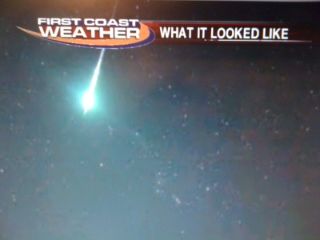
Here is what it looked like Friday night in our sky at about 10:15 p.m. The nice festive weather was not the only talk of the town this weekend, that is for sure! The bluish-white streak of light with a green tail and red fragments was a fireball or bolide which raced east in about 8 seconds. Here is a file picture of what a bolide actually looks like. It lit the sky up and was much brighter than last month's super moon. It was a simply stunning sight. We had several e-mails in from Camden County Georgia last night of folks saying they have never seen a meteor that bright and it was so intense that a sonic boom was heard about 2 minutes after it passed near the horizon. It did look like it may have made it to the ground but there is no confirmation on this as of yet. It was seen as far west as Alabama and as far north as South Carolina!

This is a rare type of meteoroid or shooting star that happens when a much larger space rock that meets our atmosphere. Usually meteoroids are the size of grains of sand this one was likely larger and maybe the size of one or two of my weather clickers which I showed on Good Morning Jacksonville to give you some more perspective. The trailing reddish tail that seemed to be burning up was caused by this space rock igniting due to extreme friction when it met the earth's atmosphere traveling at close to 100,000 mph! The blue and green colors tell us its chemical composition was made of copper. The reddish color was a sign that it was also made of silicate.

This type of event is rare and only occurs about once every year. This week we will keep our eyes to the sky for more shooting stars. We have the Eta Aquarids meteor shower that peaks on Thursday night and Friday morning. Expect about 10 shooting stars per hour and they are known to also leave fiery trails since these meteors making up this shower are known to move at a whopping 150,000 mph. Make sure to look to the east southeast about an hour or two before dawn on Friday morning. This shower is caused by the earth going through the dust trail of Halley's comet which will not be visible to earth until mid-2061 and was last seen our sky in 1986. Enjoy the show.

Sun

Geomagnetic Storm

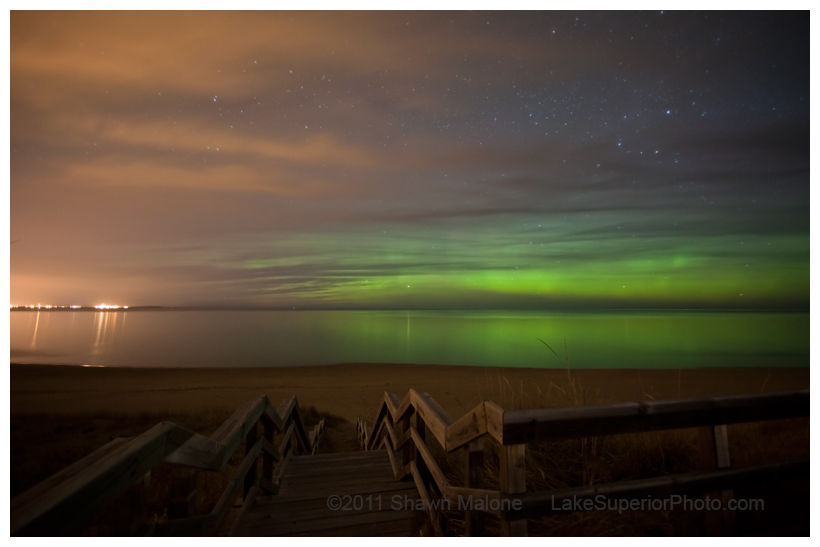
A solar wind stream hit Earth's magnetic field during the early hours of April 30th, sparking a high-latitude geomagnetic storm (slowly subsiding). In the United States, auroras descended as far south as Marquette, Michigan, where Shawn Malone took this picture before sunrise:

US Auroras
© Shawn Malone
"High humidity and clouds dampened the light a bit, but the green liights were still bright enough to reflect off the waters of Lake Superior," says Malone.

High-latitude sky watchers should remain alert for auroras. The solar wind speed is high and gusty, and NOAA forecasters estimate a 40% chance of more geomagnetic activity during the next 24 hours.

Sun

Big Sunspot 1195 - Possible M-Class Flares Directed Toward Earth This Weekend

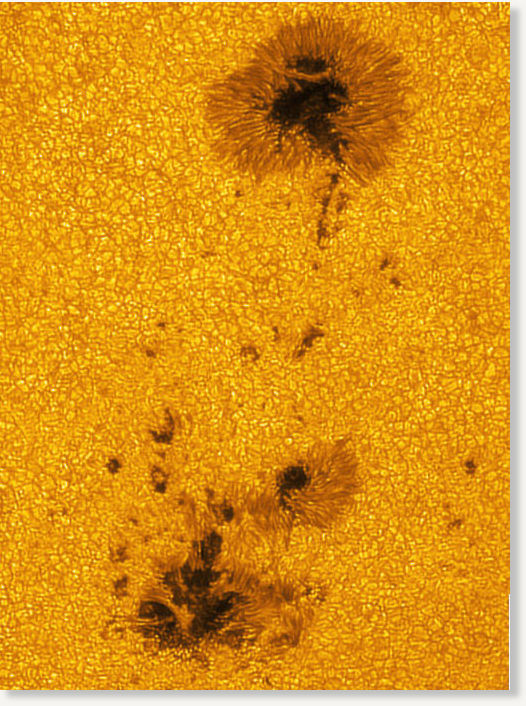
This detailed image of sunspot 1195 looks like it was taken by one of NASA's most advanced space telescopes. In fact, it comes from someone's backyard in the Netherlands. Scroll down for the full story, and carefully examine the starscape as you go:

Image
© Emil Kraaikamp
All around the sunspot, the stellar surface is literally boiling. The blobs shown so clearly in Kraaikamp's picture are solar granules, akin to rising blobs of water in a pot on a hot stove. These blobs, however, are made of plasma and they are about the size of Texas.

Meteor

The 2011 Lyrid Meteor Shower

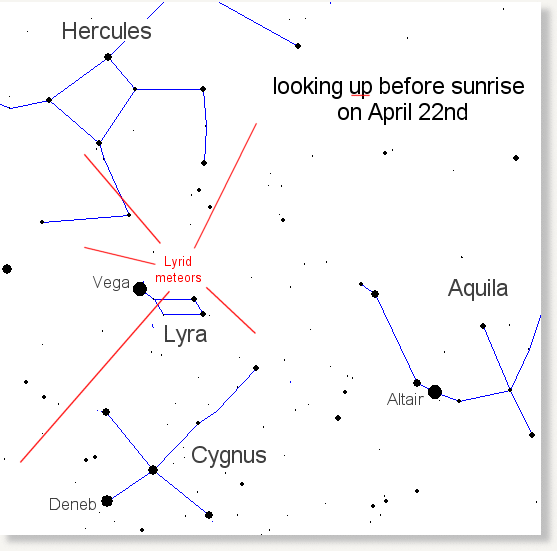
Every year in late April Earth passes through the dusty tail of Comet Thatcher (C/1861 G1), and the encounter causes a meteor shower--the Lyrids. This year the shower peaks on Friday morning, April 22nd. The best time to look, no matter where you live, is during the hours before dawn. Forecasters expect 10 to 20 meteors per hour visible from dark-sky sites.

Lyrid meteors appear to stream from the bright star Vega in the constellation Lyra:

Image
© Space Weather

Meteor

Fireball of 10 April 2011 Over Northern Italy

A fireball of zenithal magnitude -13.4 was captured over N Italy on April 10, 2011 at 02h31m UT (00h31m LT). The bright object, ended with a big explosion, was taken by E.Stomeo from the automatic meteor station (IMO # 14083) of UAI-Meteor Section network, operating near Venice with ccd cameras and all-sky fisheye lens.


Meteor

US: New Mexico Fireball

Fireball
© HeliotownStill from the video.

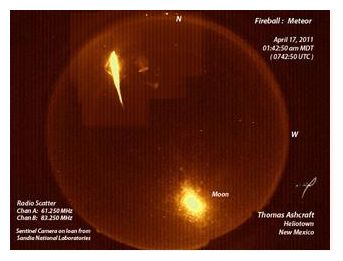
A fireball of this magnitude happens only ten or so times a year in my
local/regional sky.

April 17, 2011at 01:42 am MDT. 1 MB Movie with sound.

Watch Video

Meteor

Singapore - Rare Sight: 'Fireball' Streaks Across Evening Sky

Fireball
© STOMP

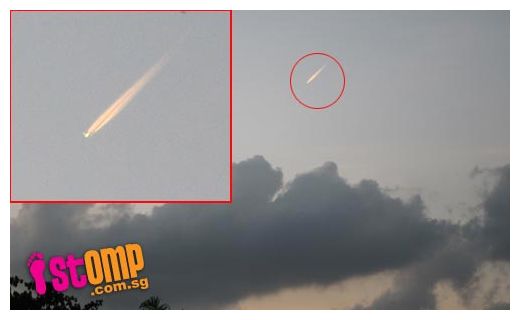
Two STOMPers caught sight of what seemed to be a meteor streaking across the sky last evening (Apr 17).

JJ123, one of the STOMPers who saw the meteor, said:

"My friend and I were on our way to dinner when we chanced upon something unusual in the sky.

"Initially, we tried to convince ourselves that it was an aeroplane flying across the sky. After much observation, we realised that it seemed more likely to be a meteor falling from the sky.

"It was definitely a rare sight in the heartlands. Photographs of the incident were captured in Chong Pang, right in front of the Nee Soon Camp in the evening."

Sun

Match made in heaven: Earth finds new companion as giant asteroid joins its path around the sun

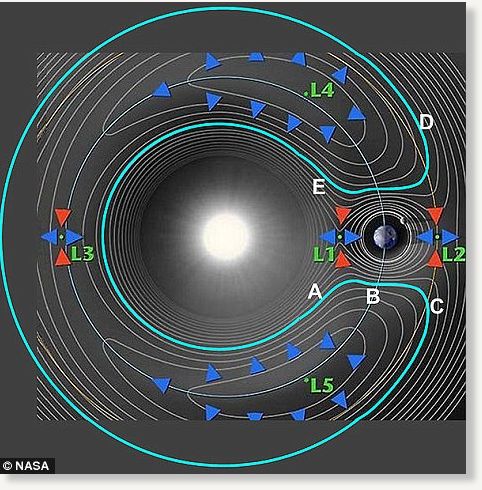
But this asteroid orbits the sun in a highly unusual horseshoe pattern.

Earth has found a new companion that has joined its orbit around the sun, scientists have revealed.

It may not have the most romantic of names, but Asteroid 2010 SO16 could pursue Earth for anywhere between the next 120,000 to a million years.

And at a few hundred metres across, it is the largest space rock ever discovered so close to earth.

Image
© NASAVery unusual: Rather than follow its new friend all the way round, SO16 orbits the sun in a horseshoe shape, playing a constant game of catch up with Earth

Sun

Sun - Earth Connection

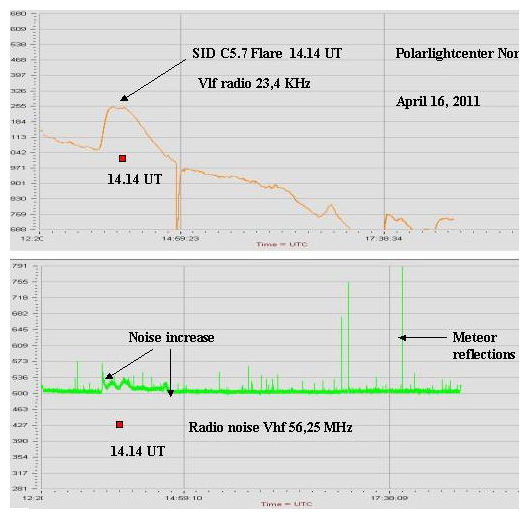
Even a small solar flare can reach out and touch the Earth. On April 16th, sunspot 1190 produced a relatively minor C5-class flare. X-rays from the distant explosion broke apart molecules in Earth's upper atmosphere, creating a wave of ionization over Europe. Researcher Rob Stammes detected the sudden ionospheric disturbance or "SID" using a very low frequency radio receiver at the Polar Light Center in Lofoten, Norway:

Solar Flare
© SpaceWeather
The wave of ionization allowed signals from a terrestrial radio station to bounce over the horizon into Stamme's 23.4 kHz VLF antenna. That's what's shown in the upper panel. Now consider the lower panel: "There was also a small increase in radio noise directly from the flare itself at 56.25 MHz," points out Stammes. "Contact with the sun at VLF and VHF radio frequencies at the same moment gives me important information."

Readers, would you like to be in radio contact with the sun? Visit NASA's RadioJove web site for instructions.

Sun

The Sun: Strange Beauty

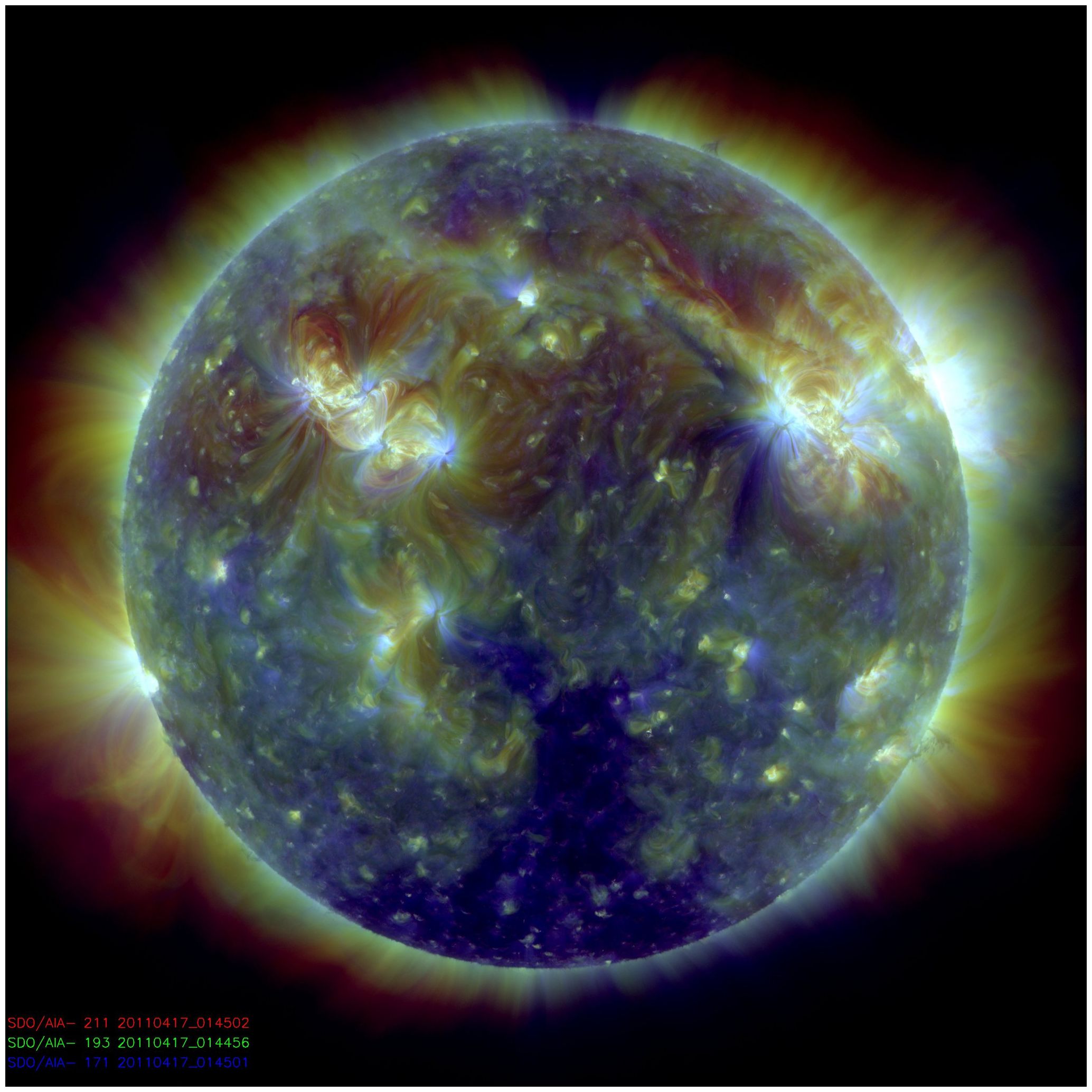
It's been almost a year since NASA's Solar Dynamics Observatory began taking pictures of the sun. As the the first anniversary of First Light approaches on April 21st, researchers are taking stock of the observatory's many accomplishments. One of the most profound results turns out to be aethestic: the sun is more beautiful than anyone imaged. Consider the following extreme ultraviolet image, taken just hours ago, of the magnetic canopy of sunspot complex 1191-1193:

SDO Solar Image
© SpaceWeather
This stunning snapshot is actually routine material for SDO. The observatory produces a daily torrent of beauty that, even now, mission scientists haven't grown used to. Normally unflappable researchers are frequently caught staring slack-jawed at SDO movies. And when they're done, they don't have the vocabulary to describe what they have seen. Many of the phenomena SDO catches have no textbook names. SDO's starscapes may turn out to be as prized to poets, artists, and writers as they are to no-nonsense solar physicists. See for yourself.