Puppet MastersS


Explosion

Trump says he supports Ukraine's long-range attacks inside Russia, will allow Ukraine to produce Patriot missiles

TrumpZelensky
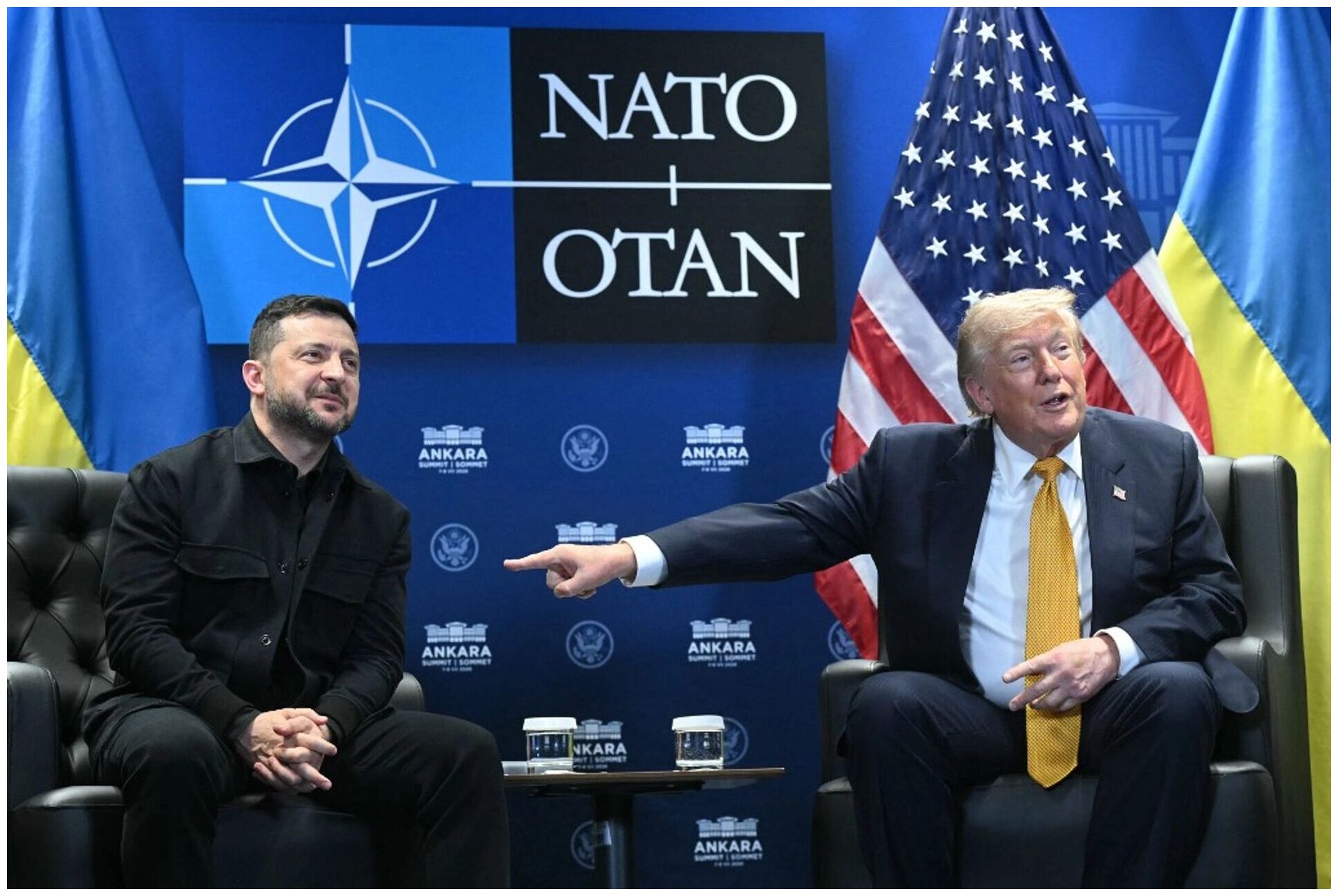
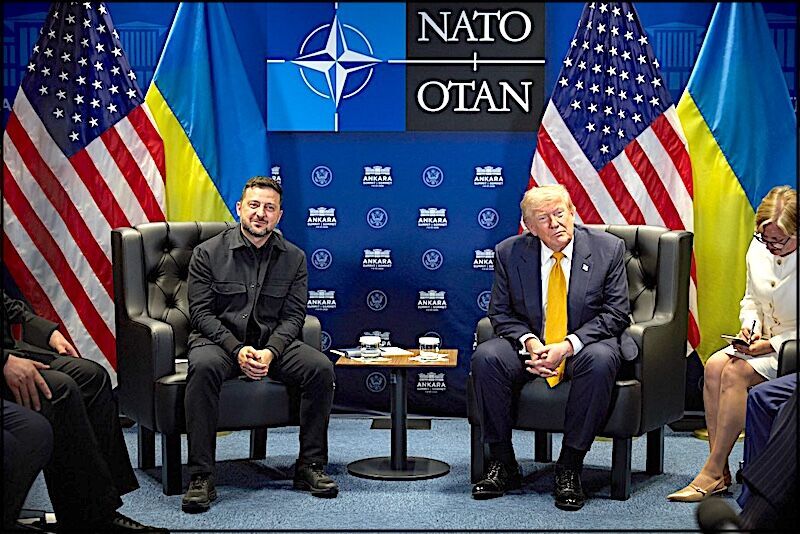
© Office of the Ukrainian PresidentTrump and Zelensky at the NATO summit in Ankara
President Trump heaped praise on Ukrainian President Volodymyr Zelensky at the NATO summit in Ankara on Wednesday, expressed support for Ukraine's long-range attacks inside Russia, and said he would allow Ukraine to produce Patriot missile interceptors.

When asked about Ukraine's strikes on Russian oil refineries, the president said, "It's an escalation, but it's also an escalation that could help lead to an end."

Ukraine's long-range drone attacks rely on intelligence provided by the US, and Ukrainian officials told The Financial Times this week that the Ukrainian military was able to strike multiple Russian oil refineries recently because US intelligence has allowed it to find the optimal flight path for its drones to get through Russia's air defenses.

Comment: Change of strategy? 1) Giving Z what he wants to hear. 2) Trump is onboard disaster Ukraine. One buys time, the other removes it.

For the real lowdown on this 'turn' of events, see SOTT Article: The Patriot Trap


Explosion

Iranian military says US strikes killed eight Iranian soldiers

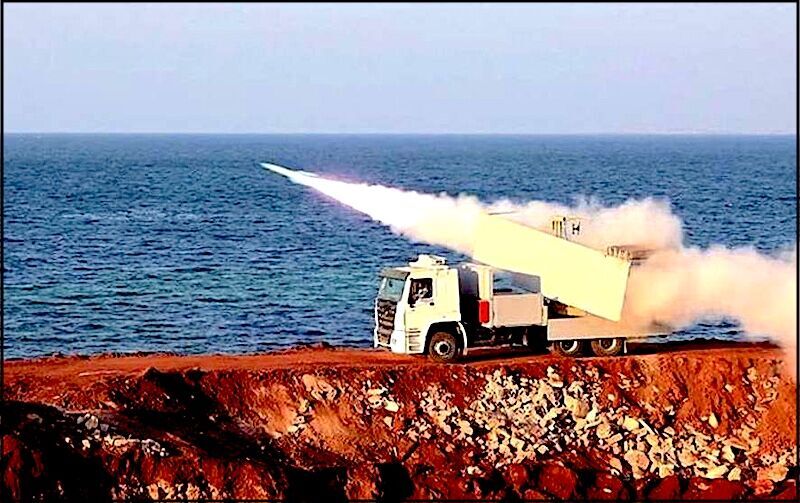
Iranian missile launcher
© PressTVIranian missile launcher firing toward US targets across the Persian Gulf
The IRGC said that its forces hit back at 85 US targets in the region and downed a US MQ-9by

The Iranian military said in a statement on Wednesday that overnight US airstrikes on the Iranian coast killed at least eight Iranian soldiers, Iran's Mehr News Agency has reported.

The US attacks on Iran that began after several commercial ships were hit by drones in the Strait of Hormuz lasted for several hours and reportedly hit Qeshm Island and the port cities of Bandar Abbas, Sirik, and Mahshahr.

Iran's PressTV said the US strikes targeted "a number of coastal bases and non-military stations," and the Islamic Revolutionary Guard Corps (IRGC) said the attacks "openly violated the ceasefire" and "trampled the Islamabad understanding."

Comment: It appears the future is entering shadow: dark, dank and ugly -- initiated, controlled and perpetuated by those for whom mass death and massive destruction are considered benefits.


Attention

The Patriot Trap

Donald Trump has given the thumbs up for the licensed production of Patriot missiles by Ukraine. This is a trap that will not end well for those looking to the Patriot missile for salvation.
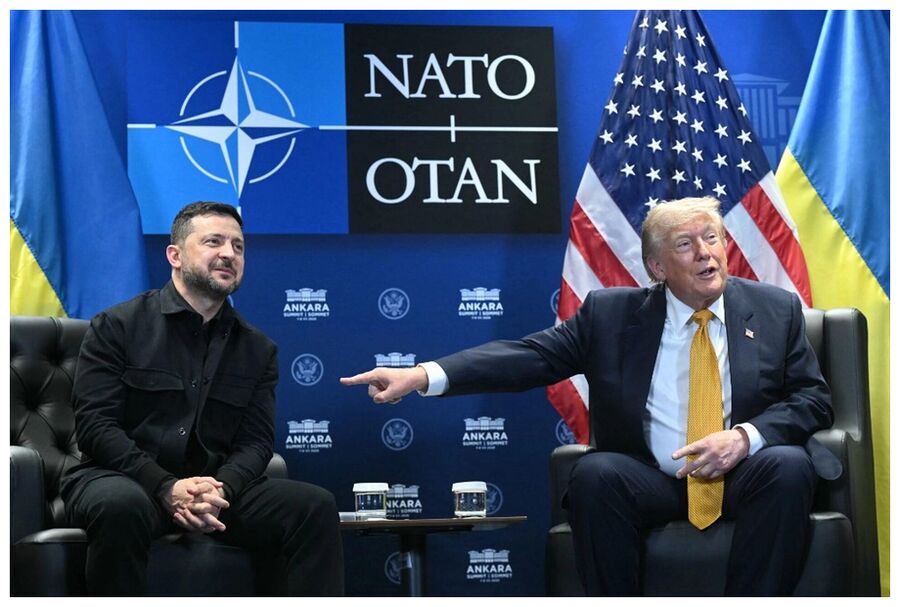
Drug Addict and DJT
© Real Scott RitterUS President Donald Trump meets with Ukrainian President Volodymyr Zelensky at the NATO Summit in Ankara, Turkey, July 8.
Persistence pays off, or so it would seem. Less than a week before NATO convened its annual summit in Ankara, Ukrainian President Volodymyr Zelensky renewed his call for the establishment of a domestic production facility for Patriot air-defense missiles. Zelensky's plea came in the aftermath of one of Russia's largest missile attacks on Kiev. Unlike previous Russian attacks, where the Ukrainian side claimed the vast majority of the Russian missiles had been intercepted by Ukraine's western-supplied air defenses, this attack exposed the harsh reality that Ukraine had no defensive response to the Russian attacks.

Ukraine was out of missiles.

"To reliably protect lives, we need our own production," Zelensky said.

The Ukrainian President was echoing a call he had been making for months. In May, Zelensky observed "I asked the previous administration, I am asking todays administration, give Ukraine licenses. We will increase the production of Patriot missiles. It will be very helpful for us, it will be very helpful for the Middle East, for everybody whom the United States will decide to help."

On July 8, during a meeting with US President Donald Trump on the sidelines of the Ankara Summit, Zelensky got his wish.

"We're going to give a license to you to make Patriots," Trump told a beaming Zelensky. "That's pretty cool, right? This way you can't complain that we're not giving them enough."

Trump noted that he still needed to inform the "company" before adding "but that'll work out all right."

Problem solved?

Not even close.

Trump and Zelensky had fallen into what can only be called "The Patriot Trap" — the notion that a singular technology can somehow transform the fate of a nation.

The problem faced by Ukraine and their western sponsors — to include an apparently reinvigorated Trump-led United States — isn't solved by pouring more resources into a war of attrition that favors Russia. This would imply that Ukraine has the potential of prevailing in the ongoing proxy war being waged between the collective West and Russia.

It doesn't.

The goal of the West has always been to trap Russia in an endless conflict that saps the economic, military, and moral strength of the nation and its people.

Stop

Trump Tells Bessent To Halt US Trade With Spain, Calls Madrid A "Wasted Cause"

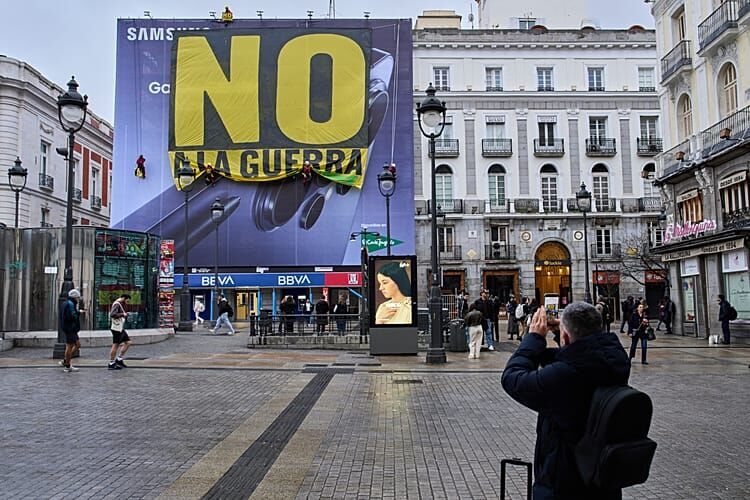
Greenpeace activists hang a banner reading in Spanish,
© AP photoGreenpeace activists hang a banner reading in Spanish, "No to war" in downtown Madrid, Spain, Tuesday, March 10, 2026.
During a NATO summit in Ankara, President Trump instructed Treasury Secretary Scott Bessent to cut off trade with Spain over defense spending.

"I didn't speak to Spain. Spain is a wasted cause. We don't want to do any trade business with Spain anymore," Trump told reporters.

"By the way, I'd like you to cut it off," the president said, turning to Bessent, who replied: "Yes, sir."

Trump then added, "Take it immediately. Don't even talk to them. They're hopeless. They're bad people ... They make so much money with us, and we're going to make sure they make a lot less."

Comment: Spain says Trump softened rhetoric after learning of Madrid's contributions to NATO:
On his way back to the United ​States after the summit, he told reporters aboard Air Force One: "I did have issues, and I still do. But Spain, they came back all the way today. Spain was very generous today."

Asked what Spain had done, he said: "They honoured a request for lots of payments, and if they didn't, we wouldn't have even talked to them."

A spokesperson for Spanish Prime Minister Pedro Sanchez said this was understood to be a reference to Madrid complying with NATO's former defence spending target of 2% ⁠of GDP.

At the summit, Sanchez highlighted that Spain would reach that goal this year after more than doubling nominal defence spending from 0.98% of GDP in 2017 to nearly €33 billion ($37.7 billion). He played down the rift and said ⁠he had a "very cordial" conversation with Trump during the summit.


Bullseye

White House report accuses Smithsonian leaders of 'extreme political activism'

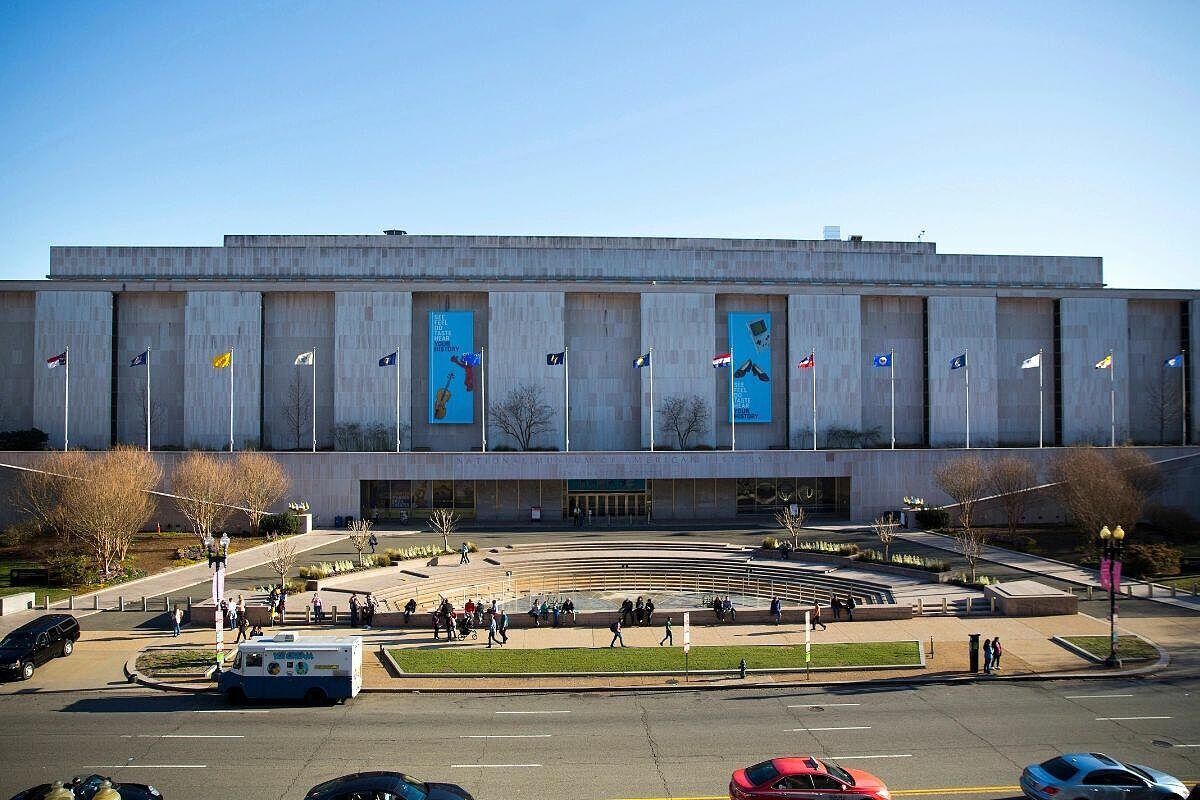
smithsonian museum facade
© Pablo Martinez Monsivais/AP PhotoPeople visit the Smithsonian Museum of American History on the National Mall in Washington, on April 3, 2019.
A White House report accused leaders of the Smithsonian Institution of adopting an ideological framework that shifted the National Museum of American History away from its mission of historical education toward what it called an "extreme political activism."

The 162-page report, released by the White House Domestic Policy Council on July 4, alleges that the National Museum of American History - which is run by the Smithsonian Institution - "fails to substantively present America's founder and founding" in its exhibits.

The report states that the Smithsonian Institution, particularly the National Museum of American History, "cannot be trusted to tell America's story honestly and in a way that is inspiring, unifying, and worthy of our great republic."

Comment:

Amuse on X comments:
[...]

The institutional evidence runs deeper than one director's rhetoric. Under current leadership, the museum rewrote its mission statement, removing the phrase American history itself and replacing it with language about empowering people to create a more just and compassionate future. Hartig explained the change candidly: the goal was to get out of the America First mentality when telling history. Think about what that means in practice. The National Museum of American History deleted American history from its mission. If a bank removed the word deposits from its charter, depositors would be entitled to some alarm.

The museum's Interpretive Plan converts that mission into marching orders. It directs staff, whatever the topic, to tie exhibits back to seven core issues of our time: race and identity, gender and sexuality, climate change, immigration, economic inequality, technological change, and nationalism versus globalism. The complaint here is not that these subjects are off limits. A serious history museum should address race, immigration, and inequality, because a serious history of America must. The complaint is that every subject, whether democracy, entertainment, childhood, women's labor, or sports, is now routed through the same ideological grid, one that treats American institutions chiefly as instruments of oppression and treats visitors as recruits. When Alexander Hamilton appears, he is an influential and flawed founding father who owned slaves, with no mention that he helped found the New York Manumission Society in 1785 or that its African Free Schools educated more than 1,400 students. When Benjamin Franklin appears in the Many Voices, One Nation exhibit, he appears once, not as a Founder but as a Philadelphian with allegedly ambivalent views of immigrants. The Pilgrims are framed as colonial oppressors and Thanksgiving as a National Day of Mourning. This is not history with the hard parts included. It is prosecution with the exculpatory evidence excluded.

Why should the federal government care what a museum's curators believe? Because this is not a private gallery in Brooklyn spending donor money. The Smithsonian is a trust instrumentality of the United States, overseen by a Board of Regents currently led by the Chief Justice of the Supreme Court and populated by senior federal officials and congressional appointees. It received $1,080,500,000 in appropriations for Fiscal Year 2026, and federal money has covered roughly two thirds of its expenditures over the past two decades. Taxpayers are not being asked to tolerate a point of view they dislike in someone else's institution. They are being compelled to finance, in their own institution, a systematic campaign against the story that institution was chartered and funded to tell. Congress bought a museum of American history. It is entitled to receive one.

Defenders of the museum, including the American Historical Association, argue that the White House is trying to sanitize history and that political pressure threatens institutional independence. But notice what this objection must assume to succeed. It must assume that the only alternative to grievance curation is whitewash, that a museum which centers the Founding must therefore hide slavery, and that honoring Washington requires forgetting the enslaved people at Mount Vernon. Nothing in the report demands any such thing. Its own framework insists the museum should document the failures of the nation alongside its achievements, should tell the story of 750,000 dead in the Civil War, and should explain how Americans came to reject Jim Crow by appealing to the colorblind promise of the founding documents themselves. Telling history honestly is not the same as teaching contempt, and a curriculum of contempt is precisley what the current museum delivers. As for independence, no one proposes that curators take orders on individual label copy; the proposal is that a publicly chartered, publicly governed, publicly funded trust be held to its charter, which is what boards of regents and congressional oversight exist to do, and the notion that an institution can take more than $1 billion a year from the public while remaining accountable to no one but its own staff is not independence, it is capture, and calling capture independence does not make it so.

For decades, complaints about institutional bias in museums, universities, and cultural agencies produced columns and conference panels and little else, a pattern scholars at the Heritage Foundation have long described as conservatives funding their own marginalization. The Smithsonian report models a different approach: read the documents, quote the leadership, follow the money, and then use the legitimate levers of governance, budgets, appointments, and oversight, to restore an institution to its purpose. The report does not order exhibits torn down. It establishes a factual record and invites the Board of Regents, the Chancellor, and Congress to act on it. That is not a culture war stunt. That is what stewardship of a public trust looks like.

The deeper stakes are generational. Parents bring children to the National Museum of American History for the reason President Johnson named at the dedication, so that the young can touch the inheritance and understand the meaning of the past. A child who leaves that building never having encountered Washington's character, Jefferson's pen, Franklin's genius, or the improbable miracle of a republic conceived in liberty has been cheated of a birthright, and no amount of programming about the seven core issues of our time compensates for the theft. A nation that cannot explain to its children why it deserves their gratitude will eventually raise children who feel none. The prediction market currently gives strong odds that the Smithsonian fight becomes a defining cultural story of 2026, and it should, because memory is the ground on which every other political battle is fought.

The museum forgot the one job it had. On America's 250th birthday, the country noticed. The task now is not to burn the institution down but to hand it back its charter, point to the words American history, and insist that it do the job the American people built it, funded it, and trusted it to do.


Bomb

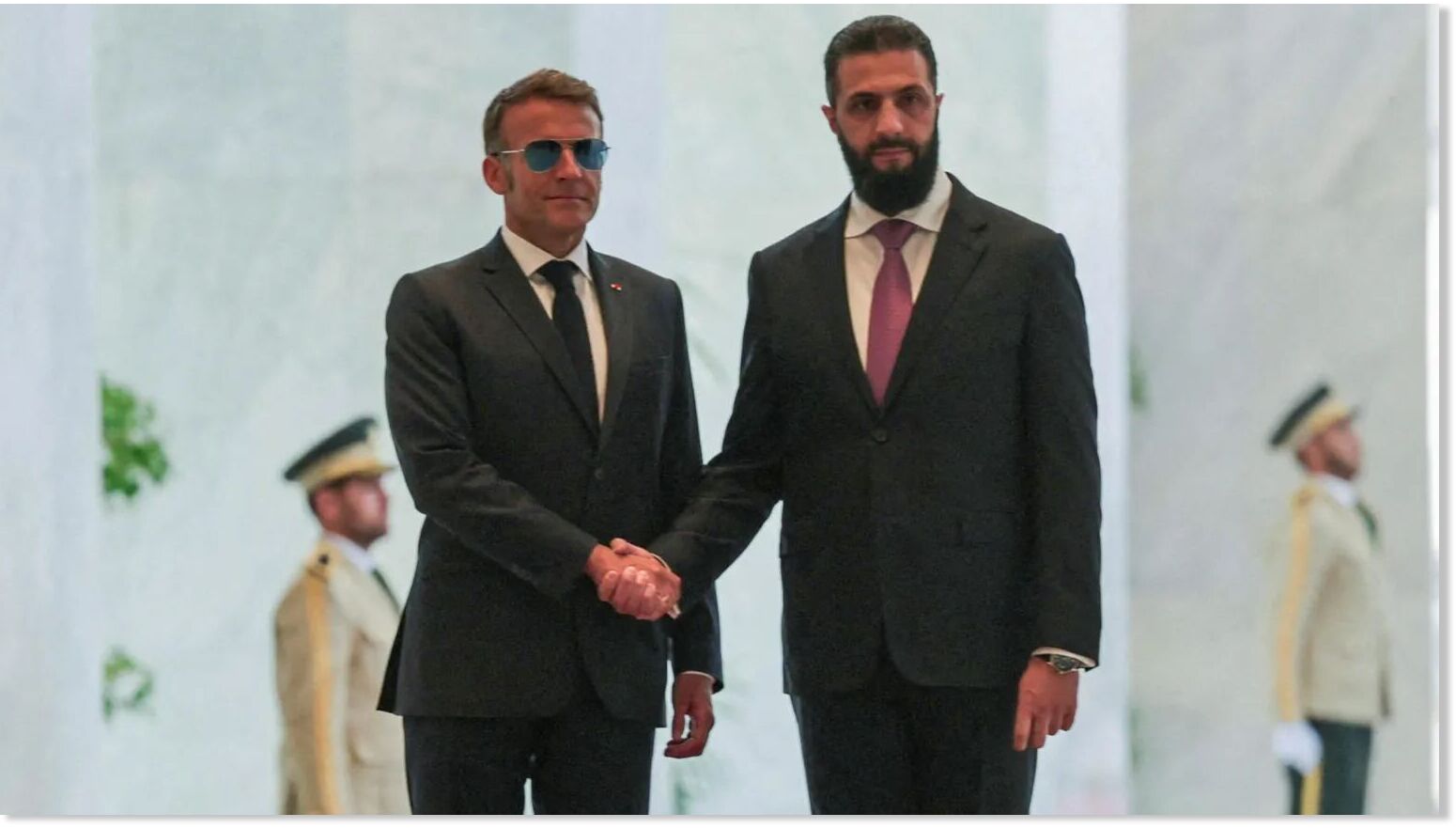
Explosions rock Damascus on second day of Macron's visit to Syria

macron damascus
© Reuters
Explosions rocked Syria's capital on Tuesday as France's president met with his counterpart in a landmark visit, with at least 18 people wounded, Syria's Interior Ministry said.

It was the second attack to rock Damascus in a week and a setback for new President Ahmad al-Sharaa as he welcomed the first visit from a major Western leader since the ouster of longtime dictator Bashar al-Assad by insurgent groups in late 2024. Syria's new rulers have wrestled with outbreaks of violence as they assert control, but the capital had been been largely peaceful.

French President Emmanuel Macron was in the presidential palace when the explosions happened. An official from the Élysée Palace said he was safe and the meeting with al-Sharaa continued, speaking on condition of anonymity to discuss Macron's security.

Comment: Was the explosion a not-so-subtle message to Macron, or something else?
Adel Bakawan, director of the European Institute for Middle East and North African Studies had some theories:
"The first, and by far the most credible, is that this is the work of the Islamic State," he said. The attack during Macron's visit was "neither the first nor the last attack of this kind. Certainly, the international coalition has defeated the Islamic State territorially. But an Islamic State stripped of its territory remains nonetheless extremely dangerous".

[...]

The second hypothesis put forward by Bakawan "concerns the Lebanese Hezbollah", the Shiite militant movement that supported Assad during the war, and "more broadly, pro-Iranian networks, which have never completely relinquished their influence in Syria".

Bakawan noted that, "Just a week ago, Iran's deputy foreign minister [Kazem Gharibabadi], directly threatened France over its involvement in securing the Strait of Hormuz." Gharibabadi's warning against "any foreign military deployments" in Hormuz came after France and Britain announced plans to lead an international maritime security effort aimed at restoring safe commercial navigation in a vital waterway that has been effectively blocked since the US and Israel launched the Iran war.
Perhaps it was Hezbollah, or perhaps it was another Middle-Eastern that would like the world to think it was Hezbollah.

Also, why has Macron got his famous sunglasses on again?


Russian Flag

RT editor-in-chief Margarita Simonyan warns Europe 'You're playing with fire'

Margarita Simonyan interview Die Weltwoche russia today
© Die Weltwoche/YouTubeRT editor-in-chief Margarita Simonyan is interviews by Die Weltwoche's Roger Koeppel July 7, 2026
Russian society is nearing the limit of its patience as Kiev's Western backers assist Ukrainian strikes deep into the country, Margarita Simonyan has said

Russian society is nearing the limit of its patience as Kiev's Western backers assist Ukrainian strikes deep into the country, Margarita Simonyan has said

Europe is "playing with fire" as it assists Ukraine in strikes deep into Russia, RT editor-in-chief Margarita Simonyan has said, warning Kiev's Western backers that Moscow may have no other choice other than to respond with force.

Arrow Down

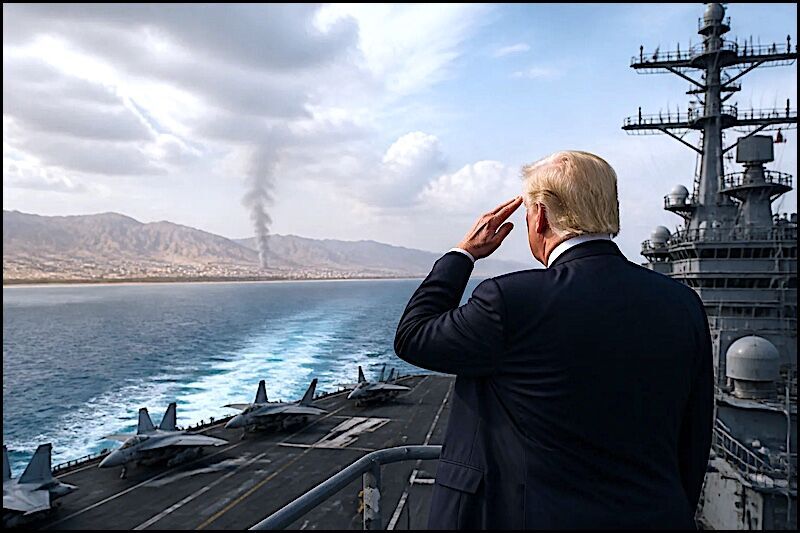
A lost victory: How the U.S. lost the war against Iran and why it changes everything

Trump Salute
© Iranskoj ZemleUS President Donald Trump
Technological superiority no longer guarantees victory. The 39-day war against Iran was the first major wake-up call for the United States that the military might of the industrial age is collapsing in the era of cheap drones and artificial intelligence.

Strategic Defeat in a Tactical Victory

On February 28, 2026, the United States launched a military operation against Iran under the codename "Epic Fury." The American war machine, superior to its adversary by every metric, delivered more than 13,000 strikes against Iranian targets. A naval blockade all but halted Iran's oil trade, and the destruction of a significant portion of Iran's fleet and air force appeared to be compelling evidence of American dominance.

However, on April 8, 2026, when the conflict was halted, it became clear that the war's objectives had not been achieved. The Tehran regime did not fall — moreover, it swiftly replaced its slain supreme leader with his son and maintained control over a population of 90 million. Iran's military potential was weakened but not destroyed: according to U.S. intelligence, roughly 70% of its missile arsenal and launchers remained operational. Enriched uranium stockpiles were buried in tunnel complexes but remained under Tehran's control. Iran retained the ability to choke off the Strait of Hormuz — the strategic chokepoint through which roughly 20% of the world's oil flows.

On the surface, this looked like a war with an inconclusive outcome. But the historical perspective that emerged a hundred days after the conflict began points to a strategic U.S. defeat. In June 2026, Donald Trump signed a memorandum of understanding with Iran at Versailles. As one expert wryly observed, the symbolism of the venue — Germany's signing of the Treaty of Versailles in 1919 — was difficult to ignore. The agreement, struck from a position of weakness, essentially amounted to a U.S. capitulation on the very goals it had declared at the outset of the war.

Explosion

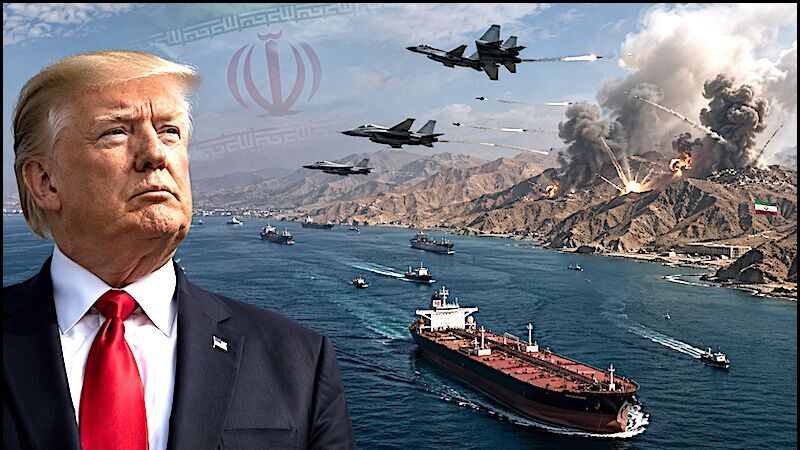
U.S. launches 'powerful strikes' on Iran after tanker attacks in Strait of Hormuz

Trump Attack Iran
© yourNEWS Media Newsroom IllustrationUS President Donald Trump • Strait of Hormuz • Attack
U.S. Central Command said American forces began "powerful strikes" against Iran after three commercial vessels were attacked while transiting the Strait of Hormuz.

U.S. forces began launching strikes against Iran on Tuesday after Tehran attacked commercial ships moving through the Strait of Hormuz, according to U.S. Central Command.

CENTCOM announced the military action in a post on X, saying the strikes were aimed at imposing costs on Iran for targeting civilian-crewed commercial vessels in an international waterway.
"U.S. Central Command forces have begun launching a series of powerful strikes against Iran to impose heavy costs for targeting and attacking commercial shipping crewed by innocent civilians in an international waterway," the command wrote. "The U.S. strikes are in response to Iranian attacks on three commercial vessels that were transiting the Strait of Hormuz."

Arrow Up

US resumes 'powerful strikes' on Iran after tanker attacks

US strike Bandar Abbas
© Press TVA screenshot from a Press TV report shows a US strike in Bandar Abbas, Iran • July 8, 2026
US Central Command said the action was a response to "unwarranted aggression" in the Strait of Hormuz

The US announced a new round of strikes on Iran after several tankers were targeted while transiting the Strait of Hormuz.

Iranian media reported explosions in the early hours of Wednesday in the southern province of Hormozgan, including at the ports of Bandar Abbas and Sirik, as well as on Qeshm Island, close to the narrowest section of the strait.

US Central Command (CENTCOM) said:
"Conducting a series of powerful strikes against Iran to impose heavy costs for targeting and attacking commercial shipping crewed by innocent civilians in an international waterway."

"The US strikes are in response to Iranian attacks on three commercial vessels that were transiting the Strait of Hormuz. Iran's demonstrated aggression was unwarranted, dangerous, and a clear violation of the ceasefire."