Puppet MastersS


Chess

Are there alternatives to Obama's Iran deal?

Netanyahu
© mwcnews.net
Benjamin Netanyahu insists that opposing Thursday's framework nuclear deal with Iran doesn't mean he wants war. "There's a third alternative," the Israeli prime minister told CNN on Sunday, "and that is standing firm, ratcheting up the pressure until you get a better deal."

There are three problems with this argument. The first is that even some of Netanyahu's own ideological allies don't buy it. Netanyahu and many Republican politicians—knowing that the American public doesn't want war—insist that there's a diplomatic alternative to the current deal. But over the years, key conservative foreign-policy experts, have said exactly the opposite. Eliot Cohen, a former Bush administration official who teaches at John Hopkins' School of Advanced International Studies, has written that, "The choices are now what they ever were: an American or an Israeli strike, which would probably cause a substantial war, or living in a world with Iranian nuclear weapons, which may also result in war, perhaps nuclear, over a longer period of time. Understandably, the U.S. government has hoped for a middle course of sanctions, negotiations and bargaining that would remove the problem without the ugly consequences. This is self-delusion." According to Max Boot of the Council on Foreign Relations, "The only credible option for significantly delaying the Iranian nuclear program would be a bombing campaign." The Weekly Standard's Bill Kristol has argued that, "It's long since been time for the United States to speak to this regime in the language it understands—force. ... We can strike at the Iranian Revolutionary Guard Corps (IRGC), and weaken them. And we can hit the regime's nuclear weapons program, and set it back." And over the last month alone, two other prominent hawks, John Bolton and Joshua Muravchik, have penned op-eds entitled, "To Stop Iran's Bomb, Bomb Iran" and "War With Iran is Probably Our Best Option." Netanyahu may sincerely believe that there's a preferable diplomatic alternative to last week's deal. But it's telling that for years now, many on his ideological side have disagreed.

Comment: Pathocrats myopically think that appealing to the baser instincts of their opponents will magically create the opposite outcomes. It is a fallacy. It is because of this banal thinking we are in the current state of the world. While the US and Israel may be experiencing a momentary unzipping at the hip, neither have been the "shining stewards of the peace" they claim to be. Just like US citizens...Iran is guilty before being charged for a crime they have not yet, nor may ever, commit. We can only hope that the Israeli hand no longer fits the US glove and the US congress will come to its senses.


Nuke

Western politicized interpretation of Iran nuclear deal is where devil lies

Image
© AFP 2015/ FABRICE COFFRINI
A closer look at the details of the so-called framework accord to emerge from Lausanne shows that Iran falls short on both counts of sanctions removal and nuclear rights.

After investing so much political capital in achieving a nuclear deal, it is understandable that all sides of the stand-off would claim the Lausanne accord arrived at this week to be an "achievement".

US President Barack Obama declared it "an historic" landmark in American-Iranian relations, while Russian Foreign Minister Sergei Lavrov hailed it as a success in which all key disputes are settled.

Iran's Foreign Minister Mohammad Javad Zarif was greeted as a hero by jubilant Iranians on his return to Tehran from Switzerland.

Zarif emphasised that the framework accord produced in Lausanne after more than a week of intense negotiations will allow Iran to continue enriching uranium and that none of its nuclear research facilities would be shut down, as Washington and its Western allies had previously demanded.

Another crucial point made by Zarif was that all economic sanctions imposed on Iran by the West and the United Nations Security Council would be lifted "immediately" on conclusion of the final Joint Plan of Action comprehensive agreement, scheduled for signing on June 30.

Phoenix

As relations with EU sour, Athens turns to Moscow for relief

Image
© AP
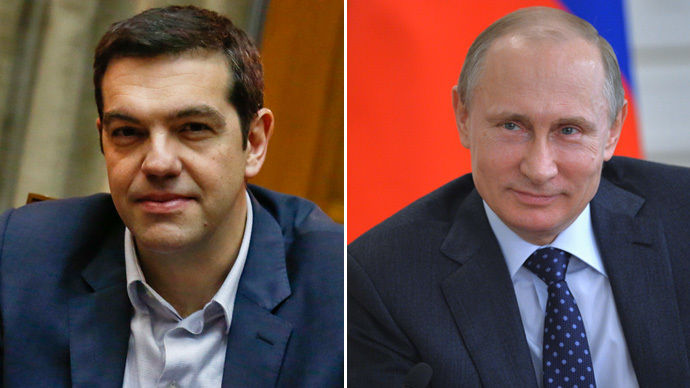
Greek Prime Minister Alexis Tsipras is set to visit Moscow this week, where it's reported Russia may offer Greece a discount on gas deliveries and new loans. The visit comes amid a huge row between Greece and Germany over a bailout deal for the Mediterranean country.

A Kremlin spokesman said that Russian President Vladimir Putin and Tsipras planned to discuss economic ties and EU sanctions during their talks, which the newspaper Kommersant said would take place on Thursday.

"We are ready to consider the issue of a gas price discount for Greece," the newspaper said, quoting an unnamed Russian government source. The source said that in exchange for the discount and some unspecified loans, Russia would want access to Greek assets.

The news comes as many say Greece has been forced to look outside the EU for state aid because of the punitive bailout deal forced on Greece largely by Germany, which has been vehement and is calling for a massive austerity-push in the Mediterranean nation to prevent it falling out of the EU.
#Putin and #Tsipras to meet on April 8 and May 9 #Russia #Greece http://t.co/HGCBLaXWxh pic.twitter.com/kZbvoAiJWg

— themanews.com (@themanews) April 3, 2015
The bailout — the latest of which involves Greece paying $494 million in loan repayments to the IMF this Thursday — was caused by the Greek economy crashing. The EU — led by Germany and the European Central Bank — forced the Greek government into a harsh austerity package, which has proved deeply damaging to Greek society and immensely unpopular.

Tsipras was swept to power in the latest election on a promise to hit back at the EU sanctions package and renegotiate the bailout terms with the EU, which Germany has strongly rejected.

Info

Here is what you need to know about Putin's meeting with Tsipras

Image
© Reuters/RIA Novosti
Greek Prime Minister Alexis Tsipras will meet Russian President Vladimir Putin on Wednesday. Greece could ask Moscow to bankroll a bailout, Gazprom could agree to a gas discount, or the two sides could talk about how to sidestep EU sanctions.

The new 40-year-old leader of one of the world's most indebted countries will meet with Putin on Wednesday, just one day before the country is due to repay €463.1 million to the International Monetary Fund. The Greek Prime Minister arrives in Moscow on Tuesday.

Comment: A grand tug-of-war in process. The results from tomorrow's meeting will be interesting to say the least.


Bad Guys

Best of the Web: Islamic State is the cancer of modern capitalism

Image
© AAIn Iraq and Syria, where IS was born, the devastation of society due to prolonged conflict cannot be underestimated.
The brutal 'Islamic State' is a symptom of a deepening crisis of civilisation premised on fossil fuel addiction, which is undermining Western hegemony and unravelling state power across the Muslim world.

Debate about the origins of the Islamic State (IS) has largely oscillated between two extreme perspectives. One blames the West. IS is nothing more than a predictable reaction to the occupation of Iraq, yet another result of Western foreign policy blowback. The other attributes IS's emergence purely to the historic or cultural barbarism of the Muslim world, whose backward medieval beliefs and values are a natural incubator for such violent extremism.

The biggest elephant in the room as this banal debate drones on is material infrastructure. Anyone can have bad, horrific, disgusting ideas. But they can only be fantasies unless we find a way to manifest them materially in the world around us.

So to understand how the ideology that animates IS has managed to garner the material resources to conquer an area bigger than the United Kingdom, we need to inspect its material context more closely.

Eye 2

Child sex abuse survivor says MPs linked to boys trafficked from Belfast to London

Image
© Reuters/Olivia HarrisWestminster Abbey in central London.
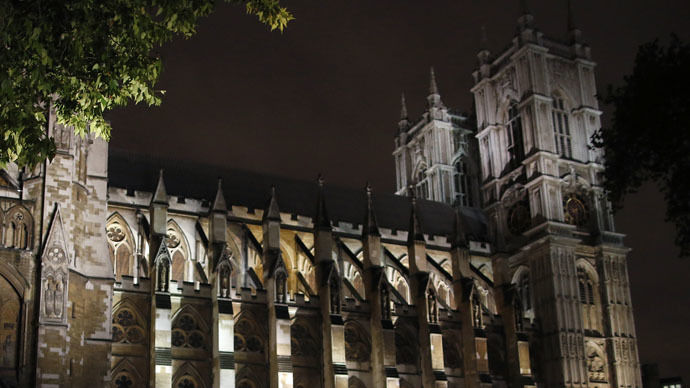
Vulnerable young boys were taken from a children's care home in Belfast in the 1970s, trafficked to London and abused by powerful figures who were part of a Westminster pedophile ring, a victim has claimed.

Richard Kerr, a victim of child sex abuse at the Kincora care home for boys, told Channel 4 News he also suffered abuse at London's Elm Guest House and Dolphin Square.

The 53-year-old's harrowing account of what he endured as a boy links the three alleged pedophile ring locations for the first time.

Comment: The surface of this pedophile ring has only barely been scratched.

Patrick Corrigan, Amnesty's Northern Ireland Program Director, told RT:
The allegations could scarcely be more serious - that MI5 used a pedophile ring at the boys' home for its own intelligence-gathering purposes and then blocked police investigations which could have ended the abuse years before it was finally stopped.

If true, that means that the UK security services used vulnerable boys as nothing more than sexual bait in a blackmail trap. Some people talk about a 'dirty war' in Northern Ireland - but these allegations are stomach-churning and must be fully investigated with an inquiry with the full-powers to do so.
Recently, UK Home Secretary, Teresa May conceded that allegations into Britain's pedophile ring "is only the tip of the iceberg" and abuse is woven "into the fabric of our society".

So, will the latest official inquiry into child sex abuse, chaired by Judge Lowell Goddard, finally expose those depraved monsters who stalk the Establishment corridors of power?

UK 'Establishment': Unmasking psychopathic faces - Pedophilia and murder in VERY high place


Question

Will Yemen become Saudi Arabia's Vietnam?

Image
© REUTERS/ Mohamed al-Sayaghi
An award-winning author and geopolitical analyst spoke to Sputnik about Saudi Arabia's involvement in Yemen and its' push to expand the war by involving troops from other Arab countries.

Mahdi Darius Nazemroaya an award-winning author and geopolitical analyst, who is also a member of the Scientific Committee of Geopolitica, spoke to Sputnik about the Saudi led coalition in Yemen.

Nazemroaya said that all military experts around the world including American ones and the ones in the Middle East agreed that airstrikes are never enough to defeat any force.

He also mentioned Libya saying that in that country airstrikes were not enough either. "You need operations on the ground".

"The Saudis would be very foolish to embark on the ground operations. It will be their Vietnam in the Middle East, in the Arabian Peninsula. I can categorically tell you that airstrikes are not enough to stop any military action on the ground."

He said that in fact Houthis have basically taken over Aden in the south and because of that he feels that Saudis are going to try and expand the war and bring in troops from Pakistan or mercenaries from other parts of the world.


Vader

Al Shabaab, terrorist group responsible for Kenya university shootings, benefited from U.S. attack on Libya in 2011

Image
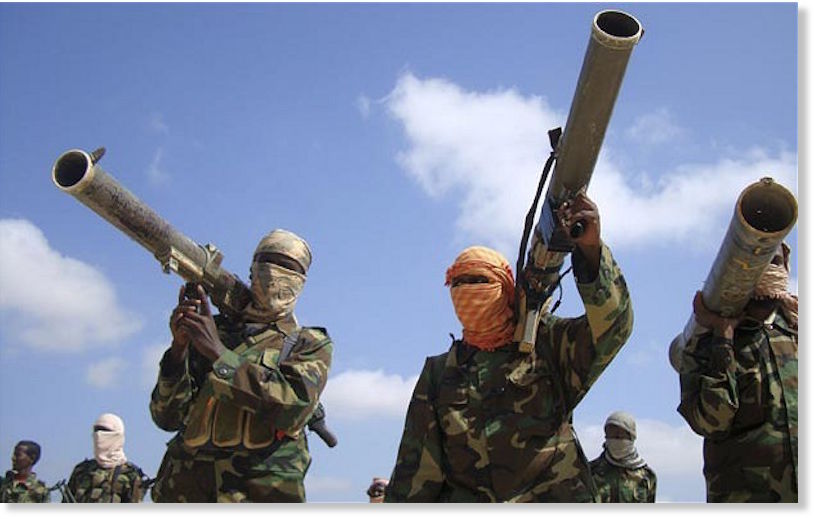
Al Shabaab, the Islamic terrorist group that has just laid siege to a Kenyan university, killing nearly 150 people, benefited from the 2011 Western aggression that backed al Qaeda and affiliated militias to destroy the state of Libya:

The Telegraph:
Libyan arms that went missing during the fighting to remove Col Muammar Gaddafi are now spreading even further afield...

The new report by a special UN security council committee suggests that they have now travelled even further, with Libyan ammunition showing up in the continuing war being waged by al-Shabab [pictured above], an al-Qaeda offshoot in Somalia.
Somalia borders Kenya, where Al Shabaab has just attacked a university.

Al Shabaab has "Wahhabi roots"; Wahhabism is the extremist version of Islam exported by missionary theocracy Saudi Arabia, which is itself currently carrying out US-coordinated terrorist attacks against people in Yemen. "Al-Wahhab's teachings are state-sponsored and are the official form of Sunni Islam in 21st century Saudi Arabia".

Eye 2

U.S.-backed Shiite militias in Tikrit engaged in mass killings and looting

Image
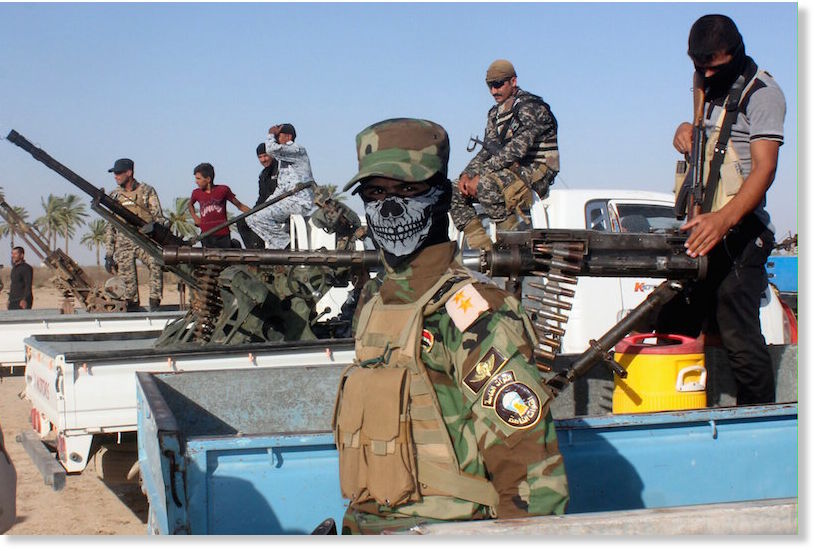
According to media reports and public denunciations by Sunni Arab officials in Iraq, Shiite militias have engaged in mass executions and widespread looting and destruction of property in the city of Tikrit since it was recaptured last week from Islamic State in Iraq and Syria (ISIS) forces.

As many as 76 people were summarily executed by militia forces, who dragged the bodies through the streets of the conquered city, a former stronghold of longtime Iraqi ruler Saddam Hussein, who was born nearby. Militiamen plundered stores and set fire to homes and businesses, in some cases claiming to be taking preventive action against the possibility of bombs having been left behind by ISIS.

Following a month-long battle, Shiite militias completed the conquest of Tikrit on March 31 after American warplanes joined the fight and obliterated the last ISIS holdouts in the center of the city.

Ahmed Al Krayam, head of the provincial council of Salahuddin province, told reporters, "Tikrit is under chaos and things are out of control. The police force and officials there are helpless to stop the militias." Both Al Krayam and the governor of Salahuddin left Tikrit, the provincial capital, on Friday night, protesting the failure of the Iraqi government to curb looting and murder.

"Houses and shops were burnt after they stole everything," Krayam told Reuters. Saying that hundreds of buildings had been burned, he added, "Our city was burnt in front of our eyes. We can't control what is going on."

Comment: The U.S. is employing a very common tactic used to destabilize regions. It is arming both sides of the conflict. They created and funded ISIS, and now they are doing the same with the Shiite militias. The innocent people who live in these regions are merely collateral damage in the warmongers' manipulations.


Key

Ukraine holds key to better Russia-EU relations

Image
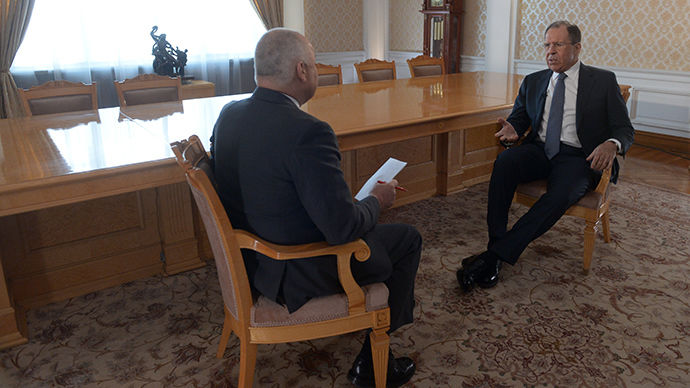
© RIA Novosti / Grigoriy SisoevRussian Foreign Minister Sergei Lavrov, right, gives an interview to Rossiya Segodnya's Director General Dmitry Kiselev at the Reception House of the Ministry of Foreign Affairs.
Relations between Russia and the EU depend on the implementation of Minsk documents, Russian FM Sergey Lavrov said on Monday. By "blocking" the agreements, Kiev prevents the "normalization" of the relations, he said.

"The Minsk agreements are being blocked by Ukraine. Thus, Ukraine now holds the key to normalization of relations between Russia and the European Union," Russia's Foreign Minister Sergey Lavrov said in an interview with the head of Rossiya Segodnya news agency, Dmitry Kiselyov.

With the EU leaders having failed to agree on automatically extending Russian sanctions or exerting more pressure on Moscow as long as the ceasefire is holding, Europe's decision to link its policy towards Russia to the implementation of the Minsk agreements is being used by Kiev, Lavrov said.

Comment: Yes Larov, it is very obvious!