Puppet MastersS


Chess

Lavrov: West should respect UN authority, learn from past mistakes

Image
© RT
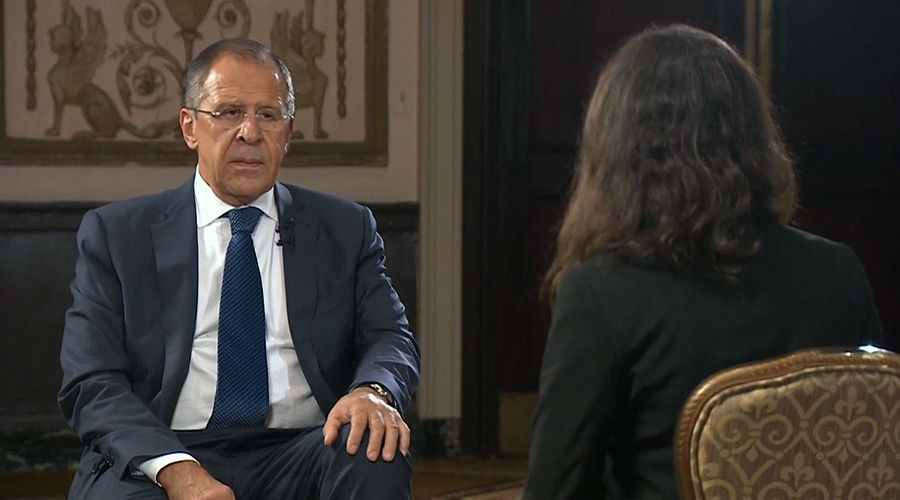
Washington and the US-led coalition have not learned the lessons of the past and keep undermining the United Nations' authority with unilateral anti-terrorist actions on Syrian soil, Russia's FM Sergey Lavrov told RT, urging the West to "harmonize" its actions with Damascus.

"Whenever people act bypassing the United Nations, whenever they try to use force, not asking the Security Council to consider a special situation and to issue a necessary mandate, people undermine the United Nations' authority," Lavrov said in an exclusive interview with RT on the sidelines of the 70th UN General Assembly in New York.

Comment: The horrific fact of the matter is that what any sane person considers a mistake, or even a tragedy, is not viewed in the same way by the psychopaths that Russia's leadership is addressing. But really, Lavrov and Putin clearly already know and understand this. They are, in reality, reaching out to anyone who'll listen; doing all that they can do to lead by example and make clear to the World of normal people what new evil is being faced.

Brings to mind what a particularly bright man once said on the subject of learning from past mistakes:

Image


Attention

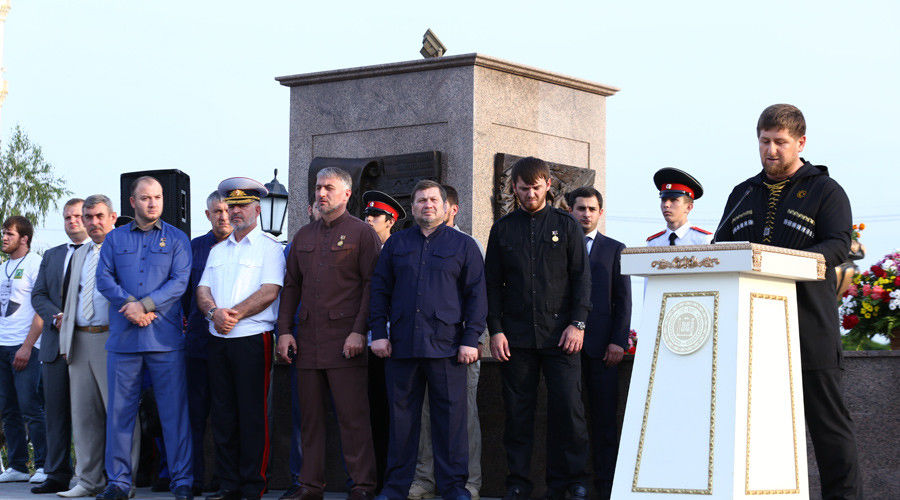
Kadyrov tells it like it is: 'West's main target in Syria is Assad, not ISIS'

Image
© Zubair Bairakov / RIA NovostiRamzan Kadyrov, Head of the Chechen Republic.
The US and the EU cannot bring peace to the Mideast because instead of real action against Islamic State terrorists they prefer to talk about their desire to displace Syrian President Assad, the head of the Chechen Republic has told reporters.

"Today there are no more doubts that the main target of the West is Assad and not the 'Iblis State' terrorist organization," Ramzan Kadyrov told reporters on Tuesday, using wording suggested by Russian Muslim scholars to describe the group that calls itself Islamic State (IS, formerly ISIS/ISIL).

"Since the start of the armed support of the Syrian opposition by the United States and Europe and the beginning of air strikes on ISIS, the peace process has not advanced even one millimeter. On the contrary, Western forces cause tens of thousands of young men from all over the world to come to Syria and Iraq," the Chechen leader added.

Comment: Kadyrov is absolutely correct and echoes Putin's solution to the Syrian crises.


Attention

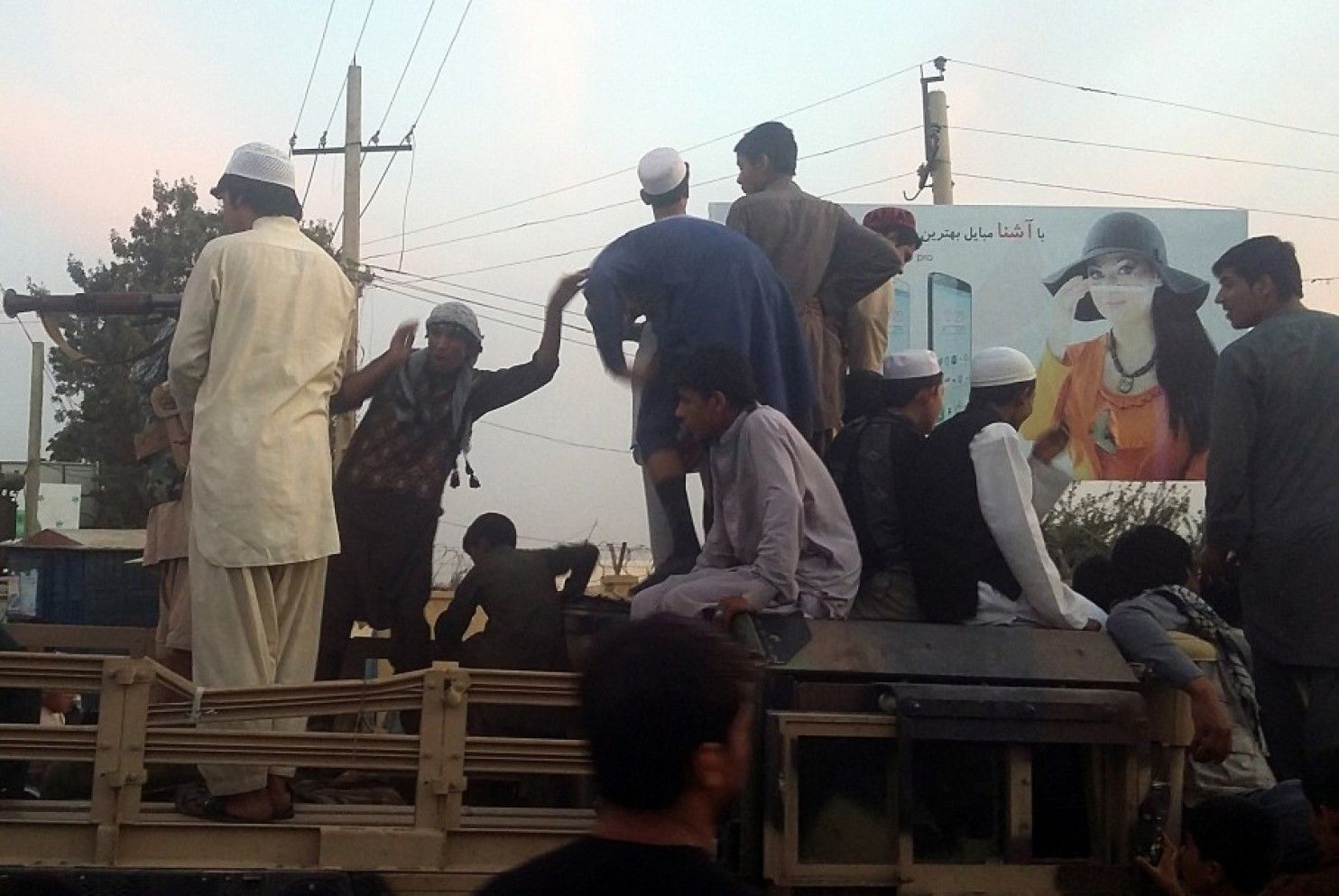
As Taliban captures Kunduz, Afghanistan, Putin asks the West 'Do you know what you have done?'

taleban kunduz
© Hekmat Aimaq/APTaliban fighters and young men take over an army truck on a street in Kunduz, north of Kabul, on Monday.
This morning, as world leaders prepared to address the United Nations General Assembly, in Afghanistan the Taliban stormed the city of Kunduz. If the Islamic State's capture of the Iraqi city of Mosul last year wasn't evidence enough of a failure of American foreign and military policy, the loss of Kunduz surely is.

Speaking to the UN, Russia's president Vladimir Putin made it clear that he believes that the Americans have only themselves to blame. The strength of the United Nations, Putin said, comes from taking different points of view into consideration. Unfortunately, following the collapse of the Soviet Union, those 'at the top of the pyramid' (i.e. the USA and its allies) felt that they knew best and did not need to bother with what others thought or with the UN. As a result, they weakened the rule of international law. Putin implied that the chaos engulfing much of the Middle East and Central Asia was entirely the Americans' fault (he carefully avoided mentioning the United States by name, but it was clear whom he was talking about).

Comment: Putin's U.N. General Assembly speech


Attention

Trouble in the Kingdom: Unhappy prince calling for Saudi Palace coup

Image
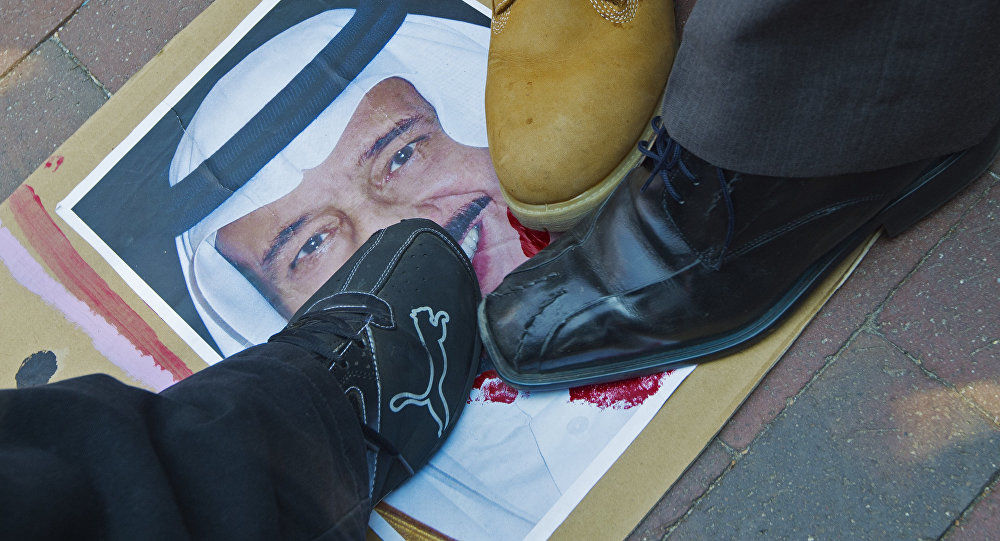
© AFP 2015/ Paul J. RchardsProtesters stepping on picture of Saudi King Salman.
A senior Saudi prince has launched an extraordinary call to overthrow the leader of Saudi Arabia, King Salman, saying that his poor management of the state, along with dropping oil prices, the war in Yemen and the recent Hajj tragedy in Mecca is leading the country down the path of ruin.

The prince, one of the grandsons of the state's founder, Abdulaziz Ibn Saud, was quoted by the Guardian saying that many within the Saudi royal family, and in turn the wider public, were unhappy with King Salman, who acceded the throne in January.

Comment: Saudi Arabia looks to be headed for quite a change in the not-to-distant future. See also: Sadistic Saudi princes and Washington warmongers Vs Russia's civilizing force


Card - VISA

Visa International to stop guaranteed service operations in Russia

Visa
© Jason Reed/Reuters
The Visa International payment system has notified Russian banks it will stop providing guaranteed service operations on their cards from October 1, Russian media reported.

"Visa announced that from October 1 it does not guarantee the processing of authorization requests for local operations [in Russia - Ed.]," the Russian daily Kommersant cited an unnamed source. In effect, Visa is avoiding the responsibility for refusing to process transactions, for which it would have to pay a new guarantee fee to Russia's Central Bank, the source added.

Visa confirmed it had notified the banks, according to Kommersant.

All Russian banks have to switch to Russia's national system of payment cards (NSPC) by October 1. As for international payment systems, those who want to work in Russia, have to transfer local processing operations to NSPC.

The system was established in 2014 to ensure smooth operation of electronic payments across Russia, after Visa and MasterCard blocked specific US-sanctioned Russian banks from using their payment systems.

MasterCard transferred the processing of Russian operations to the country's national payment system on time, thus avoiding penalties. Visa, however, failed to meet the deadline and had to pay a guarantee fee, which was later returned. The official size of the fee was not disclosed but experts estimated the sum at $50 million.

Since then, Russian banks have been working with Visa in two ways - directly and through NSPC. Nevertheless, according to the law, all card payments in the country should be made through NSPC starting next month.

The officials at NSPC along with market participants are confident that Visa's new approach won't lead to crashes in the system, according to Kommersant. A disclaimer of warranties from Visa "will not disrupt card holder's transactions", NSPC said.

Comment: See also:


Info

Russia hardly isolated: Ten facts about Russian exports

russian exports
For one thing Russia now exports more agricultural products than weapons

When Russian goods exports come to mind, people tend to think of things like oil, gas, vodka and high-tech weaponry. But as Russia's Gazeta.ru has found, the country's exports are, in fact, becoming "sweeter and more peaceful."

Here are the top-10 most interesting facts about the shifting dynamic of Russian exports, according to the newspaper.

1. Despite arms exporters continuing to enjoy a cushy position among Russia's non energy-related export earnings, the country's exports are becoming more peaceful. Over the past year, Russian agricultural producers exported $20 billion worth of food goods, growing by 15 percent compared to the previous year, and leading agricultural products to outstrip weapons as a total share of exports.

2. Russia's T-90 main battle tank is one of the best-selling tanks in the world, with India alone expected to have 2,000 units in service by 2020, roughly half of them produced locally on export license. Other operators of the $2.5 million-a-piece tank include the former Soviet republics of Azerbaijan, Turkmenistan, along with developing countries in the Middle East and Africa, including Algeria and Uganda. Sales of Russian tanks and armored vehicles abroad far outstrip their American and German competitors, with Russia continuing to serve as the second-largest conventional arms exporter in the world after the United States.

Comment: It's becoming more obvious that the silly sanctions imposed by Western nations are not having the intended consequences, and have only served Russia by improving the country's self-sufficiency and helping to forge links with more reasonable nation-states.


Vader

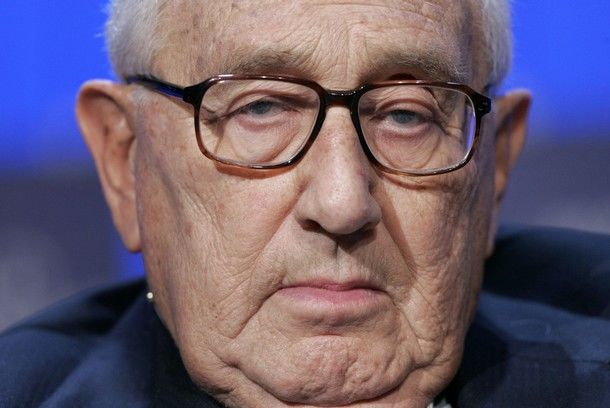
Debacle, Inc.: How Henry Kissinger helped disorder the world

Image
The only person Henry Kissinger flattered more than President Richard Nixon was Mohammad Reza Pahlavi, the Shah of Iran. In the early 1970s, the Shah, sitting atop an enormous reserve of increasingly expensive oil and a key figure in Nixon and Kissinger's move into the Middle East, wanted to be dealt with as a serious person. He expected his country to be treated with the same respect Washington showed other key Cold War allies like West Germany and Great Britain. As Nixon's national security adviser and, after 1973, secretary of state, Kissinger's job was to pump up the Shah, to make him feel like he truly was the "king of kings." Reading the diplomatic record, it's hard not to imagine his weariness as he prepared for his sessions with the Shah, considering just what gestures and words would be needed to make it clear that his majesty truly mattered to Washington, that he was valued beyond compare. "Let's see," an aide who was helping Kissinger get ready for one such meeting said, "the Shah will want to talk about Pakistan, Afghanistan, Saudi Arabia, the Gulf, the Kurds, and Brezhnev."

During another prep, Kissinger was told that "the Shah wants to ride in an F-14." Silence ensued. Then Kissinger began to think aloud about how to flatter the monarch into abandoning the idea. "We can say," he began, "that if he has his heart set on it, okay, but the President would feel easier if he didn't have that one worry in 10,000 [that the plane might crash]. The Shah will be flattered." Once, Nixon asked Kissinger to book the entertainer Danny Kaye for a private performance for the Shah and his wife.

Info

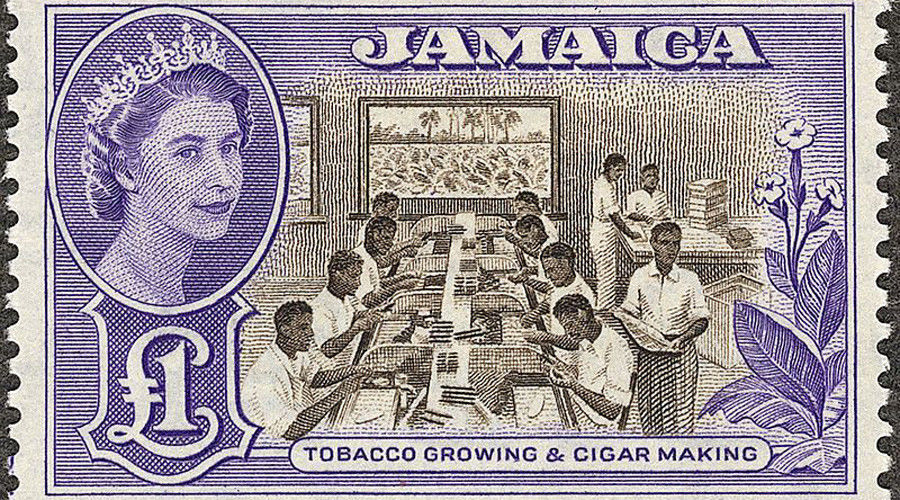
Jamaica demands slavery reparations from Britain ahead of Cameron's visit

Jamaican postage stamp
© British Government for Jamaican postal service / Wikipedia
Prime Minister David Cameron has been reminded of his family's links to slavery as he faces calls for Britain to pay Jamaica millions of pounds in reparations ahead of his first official visit to Kingston on Tuesday.

Academics and politicians in Jamaica have demanded the PM issue an apology for the hundreds of years during which Britain enslaved and "extracted wealth" from the island's people.

In an open letter to Cameron published in the Jamaica Observer, historian Sir Hilary Beckles reminded the PM that his ancestral family benefited from slavery on the island through General Sir James Duff, Cameron's cousin six times removed.

Downing Street has dismissed Jamaica's call for reparations on the grounds slavery took place under a different government, hundreds of years ago.

Airplane

Tit for tat: Russia closes sky to Ukraine in response to flight ban

Russian airplane
© Marina Lisceva / RIA Novosti
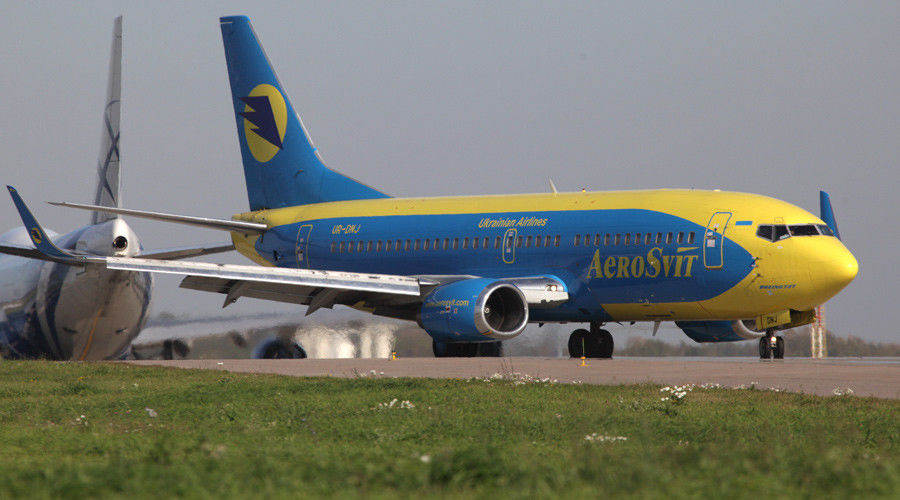
Russia is restricting its airspace to Ukraine starting on October 25 in response to Kiev banning flights by Russian airlines to the country. Russian Prime Minister Dmitry Medvedev has instructed the Ministry of Transport to inform Kiev of the measure, TASS reports.

The decision comes after Kiev's decree prohibiting flights to Ukraine by a number of Russian air carriers starting on October 25, the Ministry of Transport told the agency.

Last Friday, Kiev banned Russian airlines Aeroflot and Transaero from flying to Ukraine. A government edict also prohibited Russian planes carrying military equipment and soldiers from flying over the country.

Comment: Once again Kiev and Poroshenko show their utter foolishness by depriving their own economy while trying to punish 'evil' Russia.

Backfire: Blockade of Crimea turning into disaster for Ukrainian farmers


Dollars

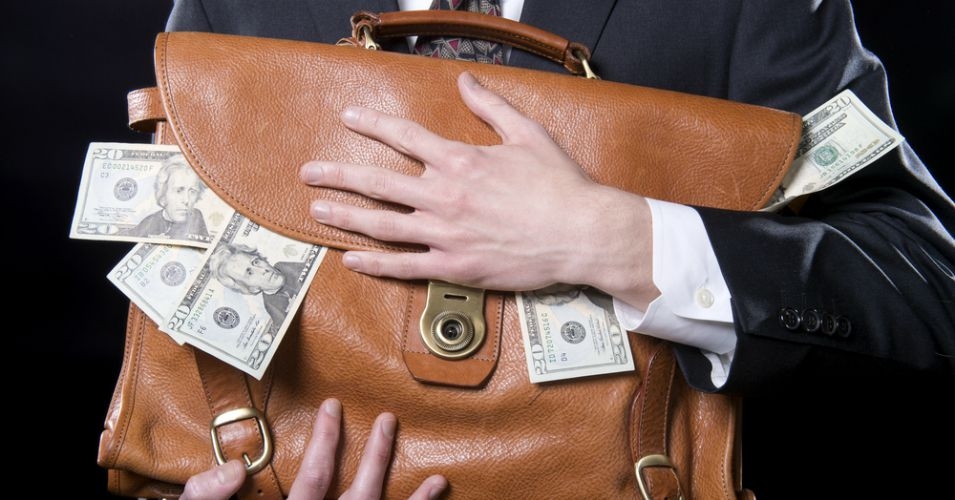
Robert Reich: Ending the upward pre-distribution to the Rich

Image
© Wasserman/Shutterstock
You often hear inequality has widened because globalization and technological change have made most people less competitive, while making the best educated more competitive.

There's some truth to this. The tasks most people used to do can now be done more cheaply by lower-paid workers abroad or by computer-driven machines.

But this common explanation overlooks a critically important phenomenon: the increasing concentration of political power in a corporate and financial elite that has been able to influence the rules by which the economy runs.

As I argue in my new book, "Saving Capitalism: For the Many, Not the Few" (out this week), this transformation has amounted to a pre-distribution upward.

Intellectual property rights—patents, trademarks, and copyrights—have been enlarged and extended, for example, creating windfalls for pharmaceutical companies.

Americans now pay the highest pharmaceutical costs of any advanced nation.

At the same time, antitrust laws have been relaxed for corporations with significant market power, such as big food companies, cable companies facing little or no broadband competition, big airlines, and the largest Wall Street banks.

As a result, Americans pay more for broadband Internet, food, airline tickets, and banking services than the citizens of any other advanced nation.

Comment: The unrestrained greed of psychopathic corporations is destroying humanity and the planet. They have a blind sense of entitlement to take whatever they want, however they want. They are not capable of seeing that they are destroying the very foundation of their obscene affluence and fortune. To quote Lobeczewski's Political Ponerology:
Goaded by their character, such people thirst for just that even though it would conflict with their own life interest. They do not understand that a catastrophe would ensue. Germs are not aware that they will be burned alive or buried deep in the ground along with the human body whose death they are causing.