
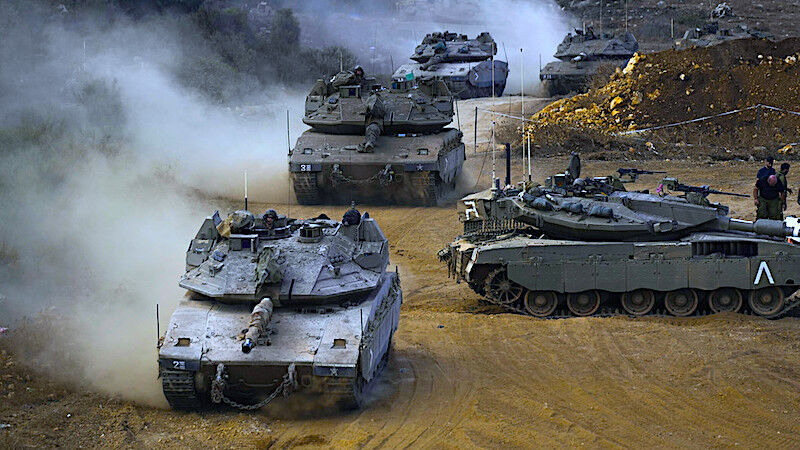
© Baz Ratner/APIsraeli tanks in a staging area in northern Israel, near the border with Lebanon • October 1, 2024
One year after Hamas' infamous attack on Israel, the Middle East seems to have returned to its eternal state: a hotbed of acute conflict, with waves of tension. Outside observers can only look on in horror, while experts shrug their shoulders. That's how it was, that's how it will be. How is the current crisis different from previous ones in the region, you might ask? Well, without pretending to have a deep understanding, let us note what is striking from the outside.
Patron-client relationships are changing, both between regional powers and major external actors. The most obvious is the status of the United States. The current White House administration does not have a clear and consistent line; it's just plugging holes and putting out new fires. The US does not need high-profile events in the Middle East right now, its priorities are different. Contacts with key players are inconsistent, and relations with the Gulf monarchies, and even more so with Iran, are volatile. But Washington's actions are based on a fundamental contradiction that cannot be resolved, and it has to do with Israel.












Comment: No one wants it? The kingpins of war are all balancing on the same trip wire. It only takes one.