Science & TechnologyS


Robot

Toyota's new robot can play the violin, help the aged


©Unknown

Toyota Motor on Thursday unveiled a robot that can play the violin as part of its efforts to develop futuristic machines capable of assisting humans in Japan's greying society.

The 1.5-metre-tall (five-foot), two-legged robot wowed onlookers with a faultless rendition of Elgar's Pomp and Circumstance.

Telescope

Roiling magnetic waves explain solar enigma


Cloud-like structures in the background above the Sun churn from the passage of magnetic ripples called Alfvén waves, which may be responsible for the extreme heat of the Sun's corona. Vertical jets called spicules dance closer to the Sun's surface (Courtesy of Science)

Better Earth

Ancient flood brought Gulf Stream to a halt

It was the biggest climate event of the last 10,000 years and caused the most dramatic change in the weather since humans began farming. And it may yet hold important lessons about climate change in the 21st century.

Just over 8000 years ago, a huge glacial lake in Canada burst, and an estimated 100,000 cubic kilometres of fresh water rushed into the North Atlantic. Researchers now say they know for sure that this catastrophic event shut down the Gulf Stream and cooled parts of the northern hemisphere by several degrees for more than a hundred years.

Pharoah

Unusual Mummies Discovered

Russian archeologists have made a unique discovery - they have found several mummies of the Greco-Roman period, which have no analogues in modern Egyptology, report head of the Egyptology Research Centre of Russian Academy of Sciences.

Well-preserved mummies of this epoch are very rare.

©Unknown
Al Fayoum oasis

Phoenix

Recent Cosmic Impacts on Earth: Do Global Myths Reflect an Ancient Disaster?


©Gustave Moreau (1826-1898)
The Fall of Phaethon

Italian geologist Luigi Piccardi and archaeologist Bruce Masse recently teamed to co-edit Myth and Geology (2007-Geological Society of London Special Publication 273), the first professional textbook on the nascent subdiscipline of geomythology. Geomythology pairs geological evidence of catastrophic events and reports of such events encoded into the mythological lexicon of ancient societies.

In the following contributed essay, archaeologist Thomas F. King discusses Masse's chapter "The archaeology and anthropology of Quaternary period cosmic impact," in the 2007 Springer Press book
Comet/Asteroid Impacts and Human Society: An Interdisciplinary Approach, edited by geologist Peter Bobrowsky and astronomer Hans Rickman. The chapter uses geomythology to investigate the possible catastrophic comet or asteroid strike which may have led to disaster legends which have come down to us today.

Bulb

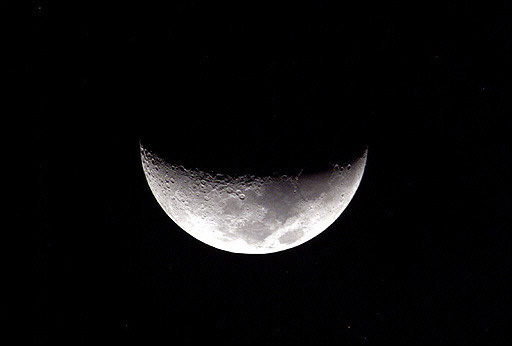
Man in the Moon is four billion years old


©Consolidated Lunar Atlas

The plains of solidified lava that give the Moon its quirky human-like face as seen from Earth were created more than four billion years ago, according to a paper appearing on Thursday in Nature, the British science weekly.

Wine

World's first floating wind turbine launched in Berlin


©Blue H Technologies

A floating wind turbine that its makers claim could significantly boost the renewable energy sector was officially launched at a trade show in the German capital on Wednesday.

Snowman

Thaw point: 'Snowball Earth' was more a slushball


©Unknown

An extraordinary episode of global cooling hundreds of millions of years ago that some experts say caused Earth to completely freeze over has been miscalculated, a new study says.

Instead of "Snowball Earth," the planet really became "Slushball Earth," its authors suggest.

Telescope

When Do Gas Giants Reach The Point Of No Return


©Unknown
Professor Steve Miller, the final contributing author to the paper, puts the discovery into context: "This gives us an insight to the evolution of giant planets, which typically form as an ice core out in the cold depths of space before migrating in towards their host star over a period of several million years. Now we know that at some point they all probably cross this point of no return and undergo a catastrophic breakdown."

London, UK - Planetary scientists at UCL have identified the point at which a star causes the atmosphere of an orbiting gas giant to become critically unstable, as reported in this week's Nature (December 6). Depending upon their proximity to a host star, giant Jupiter-like planets have atmospheres which are either stable and thin, or unstable and rapidly expanding. This new research enables us to work out whether planets in other systems are stable or unstable by using a three dimensional model to characterise their upper atmospheres.

Ark

Dwarf Hippo Fossils Found on Cyprus

AYIA NAPA, Cyprus - An abattoir used by early Cypriots, a place where animals went to die, or a shelter that ultimately proved a death trap?

©AP Photo/Petros Karadjias
The fossilized remains of dozens of dwarf hippopotamuses lying in an excavated cave outside the resort village of Ayia Napa, some 80km (40 miles) southeast of the capital Nicosia, Cyprus, Wednesday, Nov. 28, 2007. A collapsed cave believed to contain the fossilized remains of dozens of dwarf hippopotamuses that are believed to have swum to this east Mediterranean island as many as 250,000 years ago. The fossils date to 9,000-11,500 BC and could provide clues as to when the island was actually inhabited by humans.