Science & TechnologyS


Bug

Memory In Honeybees: What The Right And Left Antenna Tell The Left And Right Brain

It is widely known that the right and left hemispheres of the brain perform different tasks. Lesions to the left hemisphere typically bring impairments in language production and comprehension, while lesions to the right hemisphere give rise to deficits in the visual-spatial perception, such as the inability to recognize familiar faces.

honeybee
©iStockphoto
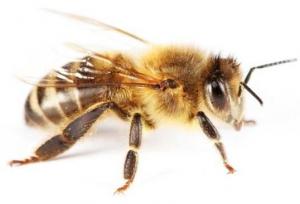
The honeybee can learn to discriminate between different odours, extending its proboscis to lemon and not to vanilla, keeping memory of the correct scent for a long period.

Display

Holodeck 1.0? Star Trek-style 3-D Displays Make Their Debut

Star Trek's holodeck is a famous science fiction concept. Crewmembers could walk through the garden of their childhood home, re-enact famous historical events or watch full, 3-D performances of famous plays. It was a rich source of story lines for the Star Trek writers because the holodeck offered so many opportunities to work, rest and play.

Image
©iStockphoto
Star Trek's holodeck is a famous science fiction concept. Crewmembers could walk through the garden of their childhood home, re-enact famous historical events or watch full, 3-D performances of famous plays.The holodeck is still science fiction, but last year researchers took the first, confident steps towards its realisation with the Coherent project.

Telescope

New Telescope Array Could Help Detect Possible Signals From Advanced Civilizations

A Johns Hopkins astronomer is a member of a team briefing fellow scientists about plans to use new technology to take advantage of recent, promising ideas on where to search for possible extraterrestrial intelligence in our galaxy.

Image
©Johns Hopkins University
A Johns Hopkins astronomer is a member of a team briefing fellow scientists about plans to use new technology to take advantage of recent, promising ideas on where to search for possible extraterrestrial intelligence in our galaxy.

Pharoah

Headless pyramid attributed to early Egyptian ruler Pharaoh Menkauhor

SAKKARA - Egypt's chief archaeologist said on Thursday he had identified a badly eroded pyramid south of Cairo as that of the Fifth Dynasty Pharaoh Menkauhor, who ruled Egypt in the 24th century BC.


Einstein

New 'Quasiparticles' Discovered; May Pave Way Toward New Quantum Computer

Weizmann Institute physicists have demonstrated, for the first time, the existence of 'quasiparticles' with one quarter the charge of an electron. This finding could be a first step toward creating exotic types of quantum computers that might be powerful, yet highly stable.

quasiparticles
©Merav Dolev, Department of Condensed Matter Physics, The Weizmann Institute of Science
The device used to demonstrate the existence of 'quasiparticles' is shaped like a flattened hourglass, with a narrow 'waist' in the middle that allows only a small number of charge-carrying particles to pass through at a time.

HAL9000

The robot that works like a 3D printer to reproduce itself

A university will display a revolutionary robot capable of replicating its own parts at a science festival today.

Adrian Bowyer, from the University of Bath, will show the prototype machine, which prints 3D objects, at Cheltenham Science Festival.

The machine, named RepRap, works like a printer, but rather than squirting ink onto paper, it puts down layers of molten plastic that solidify. These are built up to make three-dimensional objects.

HAL9000

Beware of nanny robots, warns scientist

It sounds like science fiction but could soon become science fact - parents leaving robots to look after their children.

One expert is so worried that he is warning that the metal nannies would create a 'generation of social misfits'.

nanny robot
©Mail Online
The childcare PaPeRo robot can recognise and talk to people

Telescope

Supernova hunt turns up odd solar system bodies

Astronomers searching for distant supernovae to probe dark energy in the early universe have unwittingly stumbled upon two relatively nearby objects that may shed light on the early solar system.

One lies in a nearly circular orbit between Uranus and Neptune, while the other may have been kicked out to a much more distant, tilted orbit by a marauding planet that was lost to the solar system long ago.

Rocket

Shuttle Discovery delivers Japanese laboratory to International Space Station

Astronauts have attached an enormous laboratory to the International Space Station, in a complex operation involving spacewalks and a robot arm.

Light Sabers

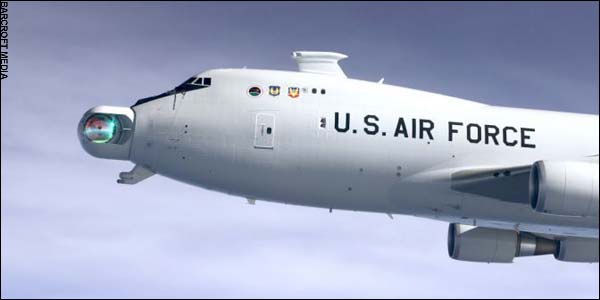
Airborne laser weapons heating up


US Army Laser Plane
©Barcroft Media
The laser is housed in a rotating glass turret, seen here on the front of the aircraft