Science & TechnologyS


Info

Diamonds travel at freeway speeds inside Earth

Earth's insides may move at a creep, but diamonds ride the fast track. Diamond-infused magma may zoom upwards from deep within the planet at a blistering 60 kilometres per hour.

Rising magma in Earth's mantle is thought to ascend at just a few centimetres per year. It was known that kimberlite, which often contains diamonds, can rise more quickly near the surface, but its speed at great depths was unclear.

Now Masayuki Nishi and colleagues at Kyushu University in Fukuoka, Japan, have used the mineral garnet as a speedometer. Garnet inclusions that form inside diamond are stable at depths of between 400 and 700 kilometres, but partially degrade at lower pressures and temperatures. Nishi's team synthesised garnet in heated, pressurised containers and measured how fast it degraded as the temperature and pressure were lowered, simulating ascent through Earth's mantle.

Laptop

Flaw Lets Hackers Delete Facebook Friends

Bug haunts site from beyond grave

Image
© Facebook
The Facebook security gaffes keep coming, with the latest being a bug that allows hackers to delete all of a users' site friends without permission, according to IDG News.

The flaw was reported Wednesday by college student Steven Abbagnaro, but some 48 hours later it could still be exploited to delete an IDG reporter's Facebook friends. Abbagnaro has written proof-of-concept code that uses publicly available data from Facebook to systematically delete all of a user's friends.

"A malicious hacker could combine an exploit for this bug with spam or even a self-copying worm code to wreak havoc on the social network," IDG said.

Sherlock

57 Ancient Tombs with Mummies Unearthed in Egypt

Image
© AP Photo/Supreme Council of AntiquitiesA painted wooden sarcophagus discovered in Lahoun, near Fayoum, some 70 miles (100 kilometers) south of Cairo, in Egypt
Archeologists have unearthed 57 ancient Egyptian tombs, most of which hold an ornately painted wooden sarcophagus with a mummy inside, Egypt's Supreme Council of Antiquities said Sunday.

The oldest tombs date back to around 2750 B.C. during the period of Egypt's first and second dynasties, the council said in a statement. Twelve of the tombs belong the 18th dynasty which ruled Egypt during the second millennium B.C.

The discovery throws new light on Egypt's ancient religions, the council said.

Egypt's archaeology chief, Zahi Hawass, said the mummies dating to the 18th dynasty are covered in linen decorated with religious texts from the Book of the Dead and scenes featuring ancient Egyptian deities.

Bulb

Another Egypt with a Marked Black African Component: Meroitic Script Deciphered

Image
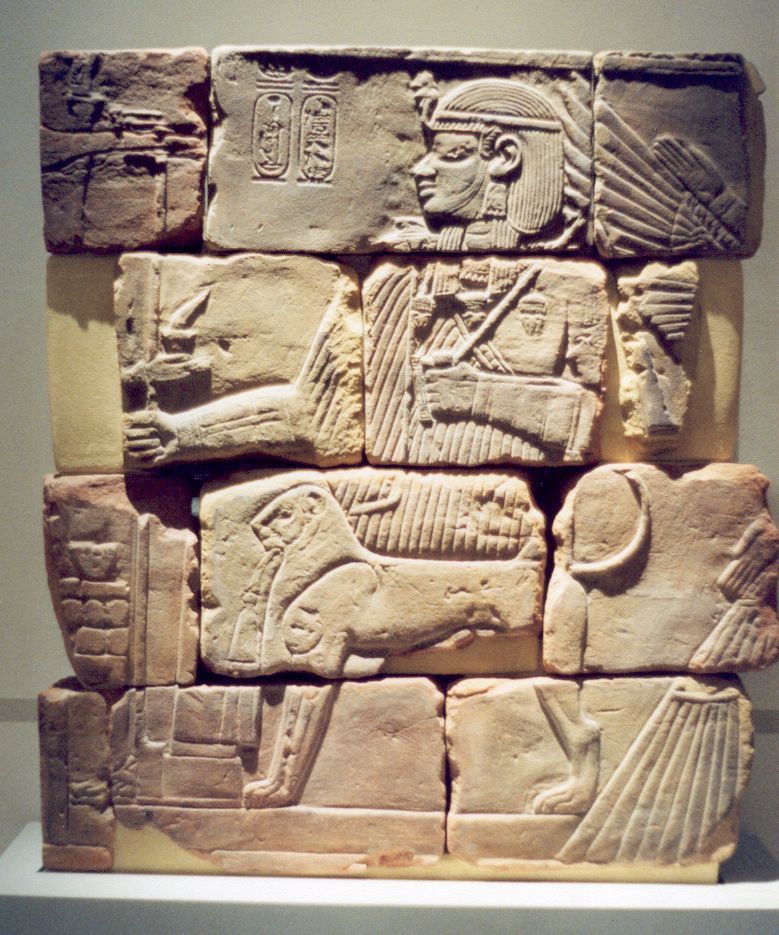
© wikipediaRelief from the chapel of king Amanitenmomide from Meroe, Berlin, Egyptian Museum, Inv. no. 2260
Paris - Agatha Christie could have invented the story. Imagine another Egypt, with a marked black African component. This is Meroe, in present-day Sudan. In art, ancient Egyptian deities appear alongside others, unknown elsewhere. The Meroitic cursive script has been deciphered, revealing that it transcribes an African language. It is related to others spoken today, like Taman in parts of Darfur and Chad, Nyima in the Sudanese Nuba mounts, or Nubian in upper Egypt and Sudan. For the moment though, it is only beginning to be partially understood.

In the last three years, archaeological discoveries have given a new face to an enigmatic culture that already intrigued Western explorers 250 years ago. In 1772, the Scotsman James Bruce caught sight of broken obelisks and barely discernible traces of pyramids as he traveled back from the source of the Blue Nile. These, he reckoned, had to be the remains of Meroe, known to Ancient Greek historians.

It was the Frenchman Frédéric Caillaud who, on the morning of April 25, 1822, first saw "a host of pyramids." He accurately drew and described these in his book A Trip to Meroe on the White River, published in 1826. The consequences were disastrous. Antique hunters rushed to loot the site.

Info

Largest Airship in the World Ready to Fly

Bullet 580 Airship
© George SchellengerThe first inflation of the E-Green Technologies Bullet 580 Airship.
The Bullet 580 vehicle, the largest inflatable airship in the world, has just finished inflating inside the Garrett Coliseum, of Montgomery, Alabama. The impressive ship, which is 72 meters (235 feet) in length, is planned to function as a high stratosphere satellite, the people managing it say. As large as a 23-floor building, the Bullet can easily catch on speeds of up to 130 kilometers per hour, or 80 miles per hour, and can stay in the air for extended periods of time without needing to lower its altitude.

The inflation process took more than six hours to complete at high gas pressure, but the behemoth is finally ready to take on wings whenever needed. It has numerous potential applications, ranging from acting like an eye-in-the-sky (monitoring and surveillance missions) to conducting science and related operations. "Our airships are radically different designs that move beyond the performance limitations of traditional blimps or zeppelins by combining advanced technology with simple construction and the ability to fuel with algae, protecting our environment," explains Michael Lawson. He is the chairman and CEO of E-Green Technologies, the company that designed the airship.

The vehicle carries its payloads inside an external envelope system. Kevlar was chosen as the building material for the enclosure, and this allowed designers to reduce weight, and also create walls that are 1/16th inch thick. In spite of having such a reduced thickness, the envelope is still 10 times stronger than it would have been if made of steel. The airship can carry up to 2,000 pounds (907 kilograms) of equipment to a height of 6,096 meters (roughly 20,000 feet), and it represents the latest in blimp/balloon technologies. Over the past few years, numerous government and military representatives have taken a renewed interest in these machines.

Info

The IBEX Ribbon: Are We in for a New Era in the Sun's Voyage Through the Galaxy?

Galactic Cloud
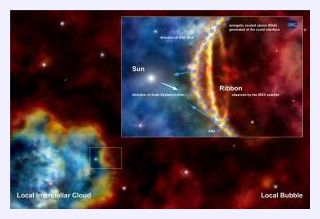
© SRC/Tentaris,ACh/Maciej FrolowThe Sun traveling through the Galaxy happens to cross at the present time a blob of gas about ten light-years across, with a temperature of 6-7 thousand degrees kelvin. This so-called Local Interstellar Cloud is immersed in a much larger expanse of a million-degree hot gas, named the Local Bubble. The energetic neutral atoms (ENA) are generated by charge exchange at the interface between the two gaseous media. ENA can be observed provided the Sun is close enough to the interface. The apparent Ribbon of ENA discovered by the IBEX satellite can be explained by a geometric effect: one observes many more ENA by looking along a line-of-sight almost tangent to the interface than by looking in the perpendicular direction.
Is the Sun going to enter soon a million-degree galactic cloud of interstellar gas?

Scientists from the Space Research Centre of the Polish Academy of Sciences, Los Alamos National Laboratory, Southwest Research Institute, and Boston University suggest that the ribbon of enhanced emissions of energetic neutral atoms, discovered last year by the NASA Small Explorer satellite IBEX, could be explained by a geometric effect coming up because of the approach of the Sun to the boundary between the Local Cloud of interstellar gas and another cloud of a very hot gas called the Local Bubble. If this hypothesis is correct, IBEX is catching matter from a hot neighboring interstellar cloud, which the Sun might enter in a hundred years.

First full-sky maps of the emissions of energetic neutral atoms (ENA), obtained last year by IBEX, showed a surprising arc-like feature called the Ribbon. This astonishing discovery was later announced by NASA as one of the most important findings in space exploration made in 2009. Shortly after the discovery six hypotheses were proposed to explain the Ribbon, all of them predicting its relation to processes going on within the heliosphere or in its neighborhood. In a paper recently published in the Astrophysical Journal Letters, a Polish-US team of scientists led by Prof. Stan Grzedzielski from the Space Research Centre of the Polish Academy of Sciences in Warsaw, Poland, offers a different explanation. "We observe the Ribbon," says Grzedzielski "because the Sun is approaching a boundary between our Local Cloud of interstellar gas and another cloud of a very hot and turbulent gas."

Einstein

Scientists 'Create Simple Life Form'

A billionaire biologist claims to have created artificial life.

And he says his designer microbe could have a revolutionary impact on healthcare, ushering in new treatments and drugs.

The £30million research programme, lasting 15 years, manufactured artificial DNA, inserted it in a bacterial cell and watched it reproduce itself.

Dr Craig Venter, who heads his selfnamed research institute in Maryland, believes the work will have applications from synthesising fuel to protecting the environment. Some scientists have hailed the research, published in the journal Science, as a defining moment in biology.

Satellite

New 'Microlens' Could Lead to Ultra-Powerful Satellite Cameras and Night-Vision Devices

Microlens
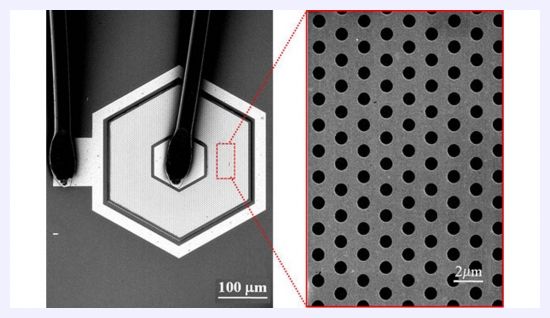
© GizmagThe new 'microlens' (left) leverages the unique properties of nanoscale gold to 'squeeze' light into the tiny holes in its surface (magnified on the right).
Anyone who likes to get their gear off for a spot of naked sunbathing in the backyard may have to think twice in the future. Researchers have developed a new nanotechnology-based "microlens" that could lead to a new generation of ultra-powerful satellite cameras and night-vision devices. Thankfully, the new lens is used for infrared imaging, so the technology is more likely to be used for security and monitoring climate change and deforestation than spying on naturists boosting their vitamin D levels.

Developed by researchers at Rensselaer Polytechnic Institute, the lens uses gold to boost the strength of infrared imaging. By leveraging the unique properties of nanoscale gold to "squeeze" light into tiny holes in the surface of the device, the researchers have doubled the detection cabability of a quantum dot-based infrared detector. With some refinements, the researchers expect this new technology should be able to enhance this by up to 20 times.

According to project leader Shawn-Yu Lin, professor of physics at Rensselaer, the breakthrough is the first in more than a decade to demonstrate success in enhancing the signal of an infrared detector without also increasing the noise.

"Infrared detection is a big priority right now, as more effective infrared satellite imaging technology holds the potential to benefit everything from homeland security to monitoring climate change and deforestation," said Lin.

Meteor

First Results on Impact of Large Celestial Body on Jupiter

Washington, DC -- Scientists have published the first results dealing with the impact of a celestial body on the planet Jupiter last July.

The results of the research, conducted by Planetary Sciences Group at the UPV/EHU-University of the Basque Country with its headquarters at the Faculty of Engineering in Bilbao and led by professor Agustín Sánchez Lavega, have appeared in Astrophysical Journal Letters.

An amateur Australian astronomer came across the presence of a large, black spot close to the polar region of the planet Jupiter, the biggest in the Solar System, on July 19, 2009.

The impact had taken place at a very high latitude close to the planet's South Pole barely 3 or 4 hours before the spot was seen on Jupiter's dark side (at night), and this prevented it from being observed directly.

The trajectory was in the opposite direction of the fragments of the Shoemaker-Levy 9 comet that crashed into Jupiter exactly 15 years previously, in July 1994.

After the world's large observatories had been alerted, the confirmation came through in a matter of hours that the spot consisted of the remains of ash left behind following the impact of a comet or asteroid.

The world's main observatories, including the Hubble space telescope among others, immediately set about analysing the phenomenon.

Take 2

World's dominant internet search company wants to deliver TV programmes ‑ and the adverts - in a marriage of technology

The company most people use to search the internet wants to be the company that delivers your TV programmes - and sells the adverts to run alongside them. That's Google, which has announced the launch of Google TV, hoping to marry the technology of television with the internet.

It wants to turn your TV set - or the set-top box above it - into a computer capable of turning web video into a TV signal so that you can range across the internet.

"We've been waiting a long, long time for this day," Eric Schmidt, the chief executive of Google, told the Google I/O conference in San Francisco, where the company was showing off its latest technology offerings. "It took a lot to make this happen."