
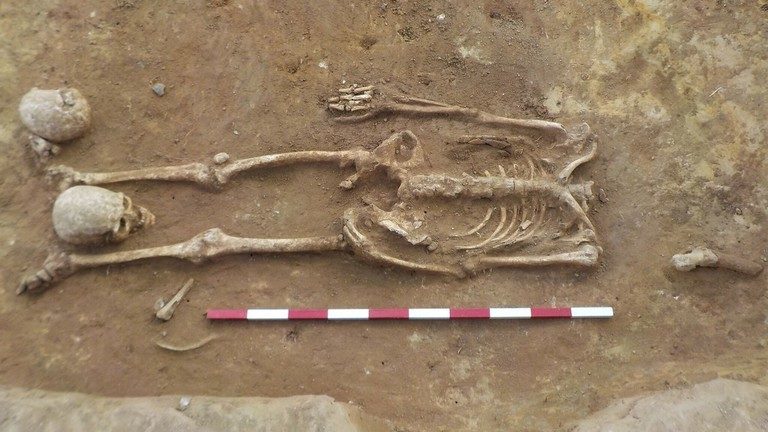
© Archaeological Solutions52 incredibly well-preserved skeletons, many of which had been decapitated, were discovered in a Roman-era cemetery
The dig at the Roman-era cemetery revealed many disembodied skeletons, buried with their heads carefully placed between their legs or feet. Some of the remains were merely skulls, buried without corresponding bodies. In all, only 17 of the 52 bodies of men, women and children were buried in the standard lying position.
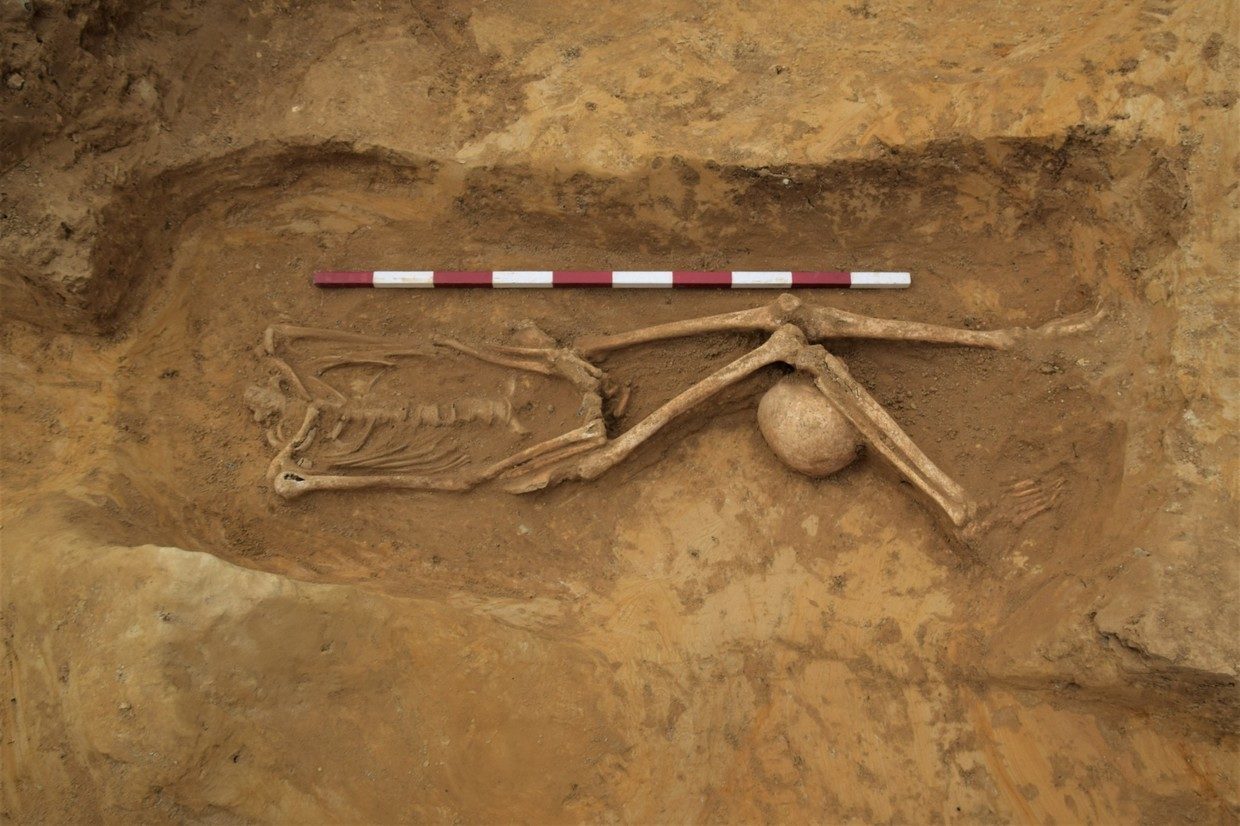
© Archaeological SolutionsIn all, only 17 of the 52 bodies of men, women and children were buried in the standard 'supine' position.
Most of the deceased lived until they were middle aged or older, although there was one small child and two other children aged about nine or 10. The majority of those buried at the site had very well-built upper bodies, suggesting they worked in agriculture and were well-nourished.
The Great Whelnetham area was a known Roman settlement, dating from the 1st century. An Archaeological dig began ahead of planned housing development and, because the ground is fine, excavators thought any remains would have long disintegrated.
"We weren't expecting to find this many or that well preserved," archaeologist Andrew Peachey of Archaeological Solutions, the company conducting the dig, told the BBC.
It's typical for Roman cemeteries across the country to have a small number of so-called "deviant" burials, sites that differ from the standard burial much like the ones we have today. However this site had an unusually high number of "deviants". So high, in fact, that for this population it should be regarded as normal practice, says Peachey.
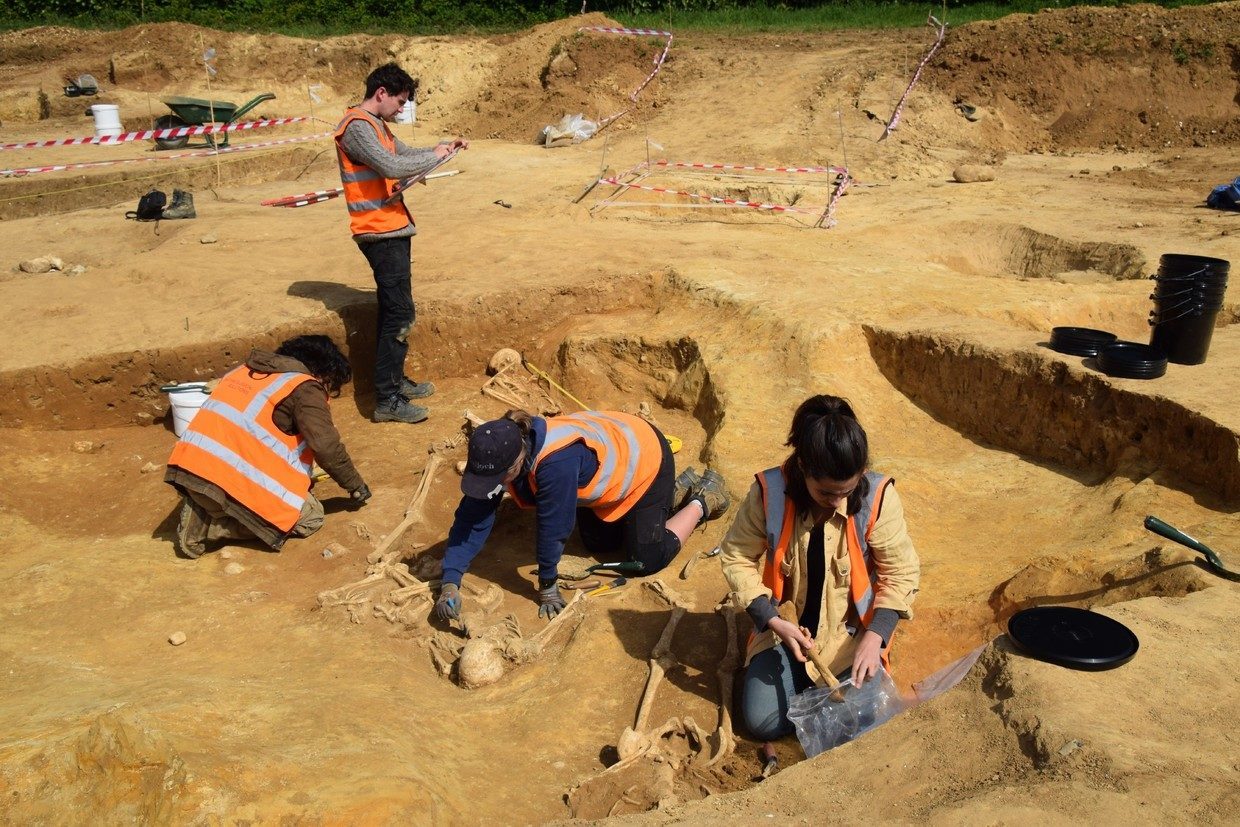
© Archaeological SolutionsThe 4th century cemetery was excavated by archaeologists in Great Whelnetham area of Suffolk, England
The skeletons have since been moved to a museum archive for further study and to gain a better understanding of their history and their village.


an early medical explorer using the sick and criminal slaves he had at hand.