Heat from a comet exploding just above the ground fused the sandy soil into patches of glass stretching 75 kilometers, a study led by Brown University researchers found.

© Shutterstock
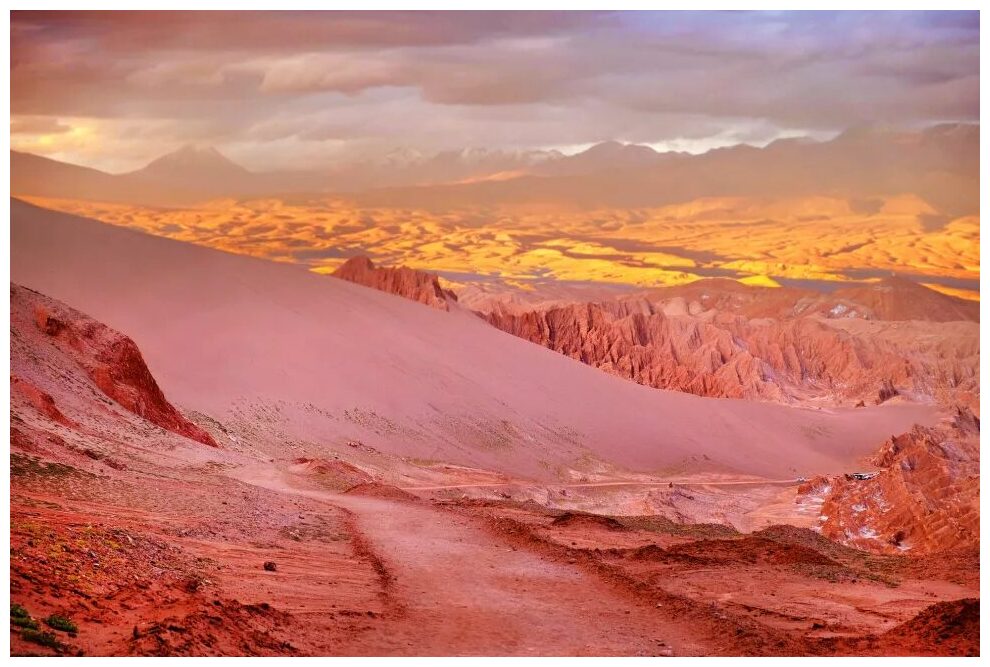
PROVIDENCE, R.I. — Around 12,000 years ago, something scorched a vast swath of the Atacama Desert in Chile with heat so intense that it turned the sandy soil into widespread slabs of silicate glass. Now, a research team studying the distribution and composition of those glasses has come to a conclusion about what caused the inferno.
In a study published in the journal
Geology, researchers show that samples of the desert glass contain tiny fragments with minerals often found in rocks of extraterrestrial origin. Those minerals closely match the composition of material returned to Earth by NASA's Stardust mission, which sampled the particles from a comet called Wild 2.
The team concludes that those mineral assemblages are likely the remains of an extraterrestrial object — most likely a comet with a composition similar to Wild 2 — that streamed down after the explosion that melted the sandy surface below. "This is the first time we have clear evidence of glasses on Earth that were created by the thermal radiation and winds from a fireball exploding just above the surface," said Pete Schultz, a professor emeritus in Brown University's Department of Earth, Environmental and Planetary Sciences. "To have such a dramatic effect on such a large area, this was a truly massive explosion. Lots of us have seen bolide fireballs streaking across the sky, but those are tiny blips compared to this."