Storms
S


Cloud Lightning

More torrential rain worsens Midwest flooding

Iowa flooding
Highway flooding near Marshalltown, Iowa on Tuesday, July 1, 2014.
More torrential rain worsened flooding in the Midwest, spawning high water that swept away an Iowa teenager, caused a traffic nightmare near one of the nation's busiest airports and threatened to swamp a Missouri town for the fifth time in less than a decade.

More than 3 inches of rain fell over much of eastern Iowa and northern Illinois Monday night and Tuesday morning, and some areas got up to 5 inches of rain, National Weather Service meteorologist Mark Fuchs said, capping a week of downpours in the region.

Six Midwest states - North and South Dakota, Minnesota, Iowa, Illinois and Missouri - were dealing with significant flooding and there were pockets in some other states. By the weekend, the Mississippi River will be at major flood stage along many Iowa, Illinois and Missouri communities, forecasters said. River flooding could close highways, potentially top levees and threaten some homes and businesses.

Cloud Precipitation

Snowmageddon comes to Australian ski resorts, more on the way

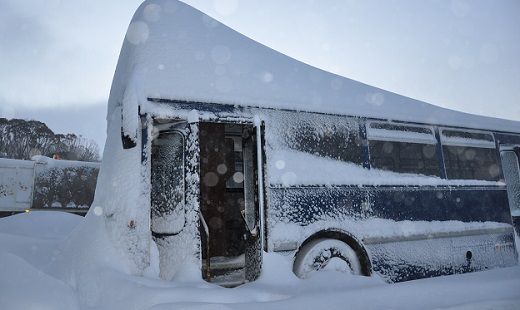
Bus in the Snow Australia
© Unknown
Australian ski areas - which started their season badly on June 7th with almost no snow following a record warm May, are celebrating snowfalls of up to almost five feet (1.4m in fact) during the last four days.

The snow has now stopped leaving resorts well-covered ahead of the weekend and the country's school holiday period.

"We expect to have over 40 lifts operating for the weekend across the four resorts areas of Perisher, Smiggin Holes, Blue Cow and Guthega," said Samantha Hales, Communications and Media Manager at Australia's biggest resort which now has a 102.1 cm base,

"There is a lot of work to do to get the resort open after a big storm as we need to get out there and groom out the wind drift, build lift tracks and ensure the resorts is safe for guests."

Meanwhile at Mt Hotham called the snowfall 'Snowmageddon 1.0' and are expecting 'Snowmageddon 2.0' to follow bon later this weekend.

Cloud Lightning

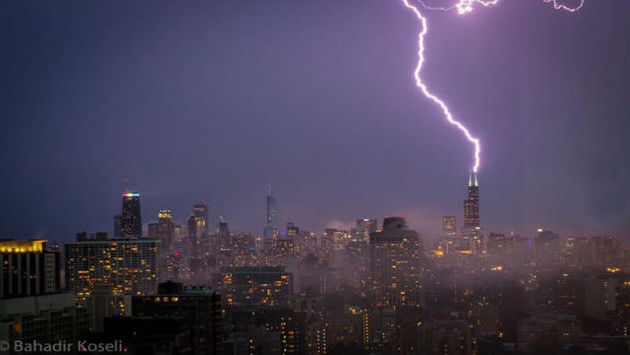
Severe lightning storms tear through Chicago area

Chicago lightning storm
© Bahadir Koseli
Damaging wind, large hail, lightning and heavy rain wreak havoc in Chicago area.


Residents are assessing the damage after tonight's severe weather passed through Park Forest, River Forest and Oak Park. NBC 5's Natalie Martinez reports.

A pair of thunderstorms lashed the Chicago area during the evening and nighttime hours Monday with a powerful punch of high winds, near-constant lightning and torrential rainfall.

National Weather Service data released Tuesday morning put Winnetka as the rainfall total winner, with 4.12 inches.

Cloud Lightning

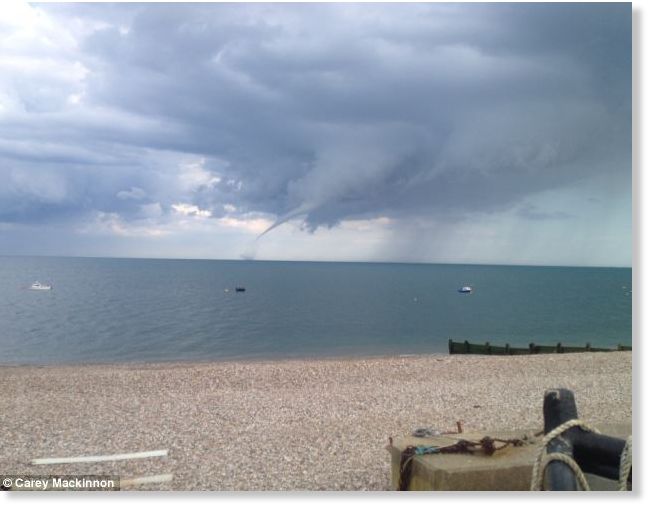
Tornado-like cloud formation spotted in the English channel

Image
Storm brewing: Father-of-two Carey Mackinnon, a Coastguard watch manager, took this picture of a tornado-like cloud formation off the coast of West Sussex
* Witnesses described seeing a funnel of cloud over the English Channel

* Coastguards launched a lifeboat, but there was no distress signal

* Seaside town of Selsey hit by tornadoes before, in 1998 and 1986

Dramatic pictures emerged today of a tornado-like cloud formation whirling in the skies off the coast of West Sussex.

Stunned witnesses described seeing the giant funnel of cloud over the English Channel near the seaside town of Selsey around 7.15pm.

Coastguards launched a lifeboat as a precaution, but there was no distress signal.

Cloud Lightning

Monster storms bring rare seabird visitors to New Zealand

Image
© Renee Henderson-VousdenOne of the giant petrels which have been rescued by New Zealand Bird Rescue over recent weeks.
Conservationists are puzzled at a freaky phenomenon blamed on this winter's monster storms.

A bird rescue centre is caring for six giant petrels after concerned members of the public found the birds in distress.

New Zealand Bird Rescue's Lyn MacDonald said in 27 years working at the shelter, she'd never had more than one giant petrel at a time. In fact, she rarely saw more than one a year. Each of the six birds now at the shelter arrived separately over the past few weeks.

The latest, found near Muriwai, arrived yesterday.

MacDonald believed the most rational explanation lay with wild storms of the last few weeks causing the birds to be blown off course. Yet there were plenty of similar storms over the last quarter-century, and no subsequent increase in wounded petrel sightings.

Cloud Lightning

Monsoon floods kill 11 in India, maroon thousands

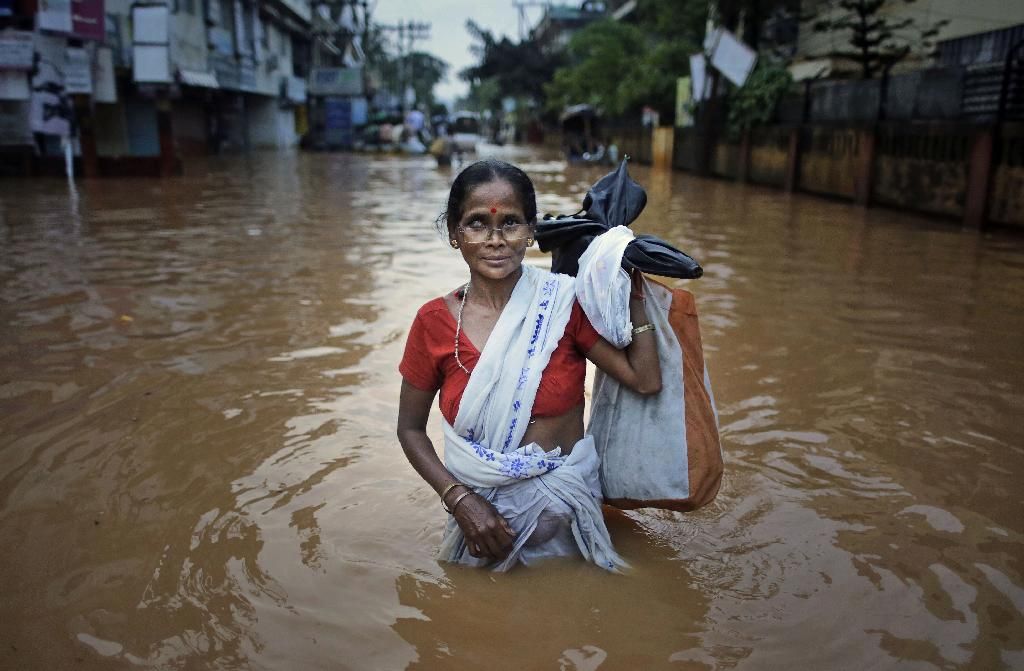
India flooding
© Anupam NathAn Indian woman wades through the floodwaters in Gauhati, India, Friday, June 27, 2014.
Indian authorities rushed food and drinking water Saturday to thousands of people marooned by monsoon rains and mudslides that left at least 11 dead in the remote northeast.

Residents waded through waist- and knee-deep water in several parts of the Assam state capital, Gauhati, which was hit by nearly 60 millimeters (2.3 inches) of pounding rain on Thursday night. The average four-month monsoon rainfall is 89 centimeters (35 inches).

"Inflatable boats and makeshift banana rafts have become a mode of transport in the heart of Gauhati. This is something I didn't imagine," said Rani Das, a researcher who could not reach her office on Saturday.

Cloud Lightning

Paraguay floods lead to evacuation of thousands

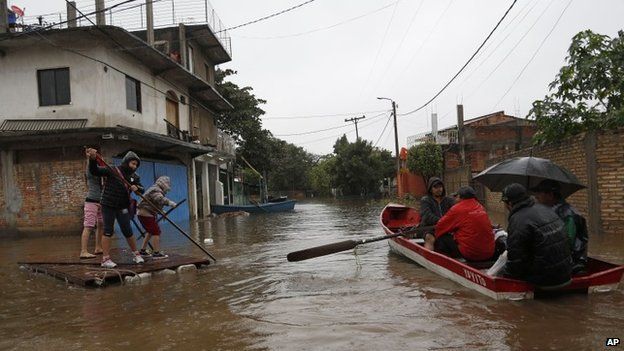
Paraguay flood
© APMore than 200,000 people have been evacuated due to the floods.
Tens of thousands of people in Paraguay have been evacuated after torrential rains caused extensive flooding.

Carlos Silva, the governor of the state of Neembucu, in the southeast, said the rains have destroyed crops, flooded homes and blocked roads.

Mr Silva also said that United Nations and Red Cross officials have evaluated the situation and he is hoping to get help from abroad.

Worst affected have been people living near the Paraguay and Parana rivers.

Cloud Lightning

Torrential rainfall in Oslo, Norway smashes all historical records

Image
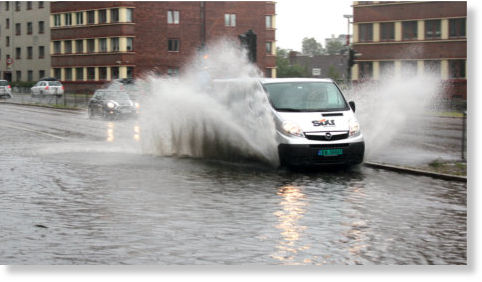
© Magnus Aabech/NTB ScanpixA van crashes through deep water on Oslo's ring road.
The torrential rainfall that descended on Oslo on Thursday smashed all historical records, with a colossal 44.5mm of rain falling in just a single hour between four and five on Thursday afternoon.

Water streamed down the city's streets on Thursday afternoon, causing gridlock in much of the city centre, while hailstorms left parts of the city covered in a layer of freak summer ice.

The previous highest rainfall rate the city has seen since records began in 1937 came came in 1980, when 41.5mm of rain fell in an hour over the summer.

"It seems as though we had nearly one month's rainfall in three hours," Marit Helene Jensen told Aftenposten after the rain subsided yesterday evening.


Ice Cube

Freak hailstorm strikes Tokyo in June

Image
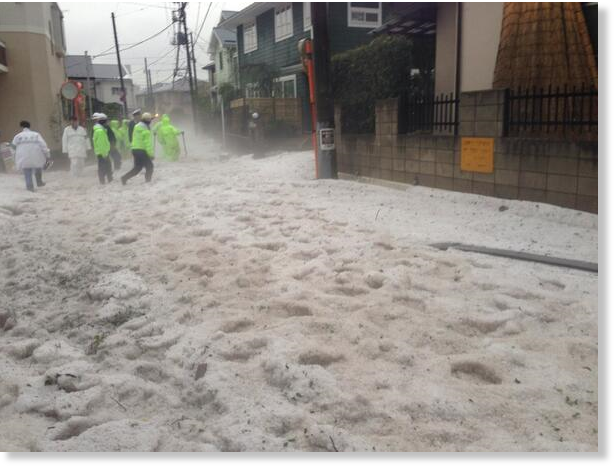
© Agence France-Presse/Getty ImagesPedestrians walk down a hail-covered street following a hailstorm in a residential area west of Tokyo on June 24.
Heavy rain and hailstones hit Tokyo and surrounding areas on Tuesday. Tokyo's Mitaka City was hit by hail in the afternoon. Some residents say that hailstones of up to 3 centimeters wide fell for about 30 minutes.

It covered residential areas, accumulating up to 10 centimeters. Residents used shovels to remove it from around their homes.

Weather officials say that warm, humid air and a cold air mass made atmospheric conditions unstable, causing cumulonimbus clouds to develop over Tokyo area. Some clouds were more than 10 kilometers high. Powerful updrafts occurred, and that lead to the hailstorm.


Source: NHK

Windsock

Series of rare mini-tornadoes stun southern Norway

Image
A succession of rare 'mini tornadoes' have drawn crowds in the city of Arendal as they circled dramatically above the Skagerrak strait between Norway and Denmark.

"It looked like the sort of thing you'd see on an American documentary or something," Espen Bierud from Norway's Institute of Marine Research, which faces onto the sea, told The Local. "Many people standing around me said they'd never seen anything like it in Norway."

He said that work at the Institute had ground to a halt as the researchers made their way outside to enjoy the spectacle.

"It didn't take too many seconds before everyone at the Institute was down at the balcony or on the dock taking pictures," he said. "It lasted for about 20 or 30 minutes, and there were at least four different tornadoes."