Animals
S


People 2

Social isolation affects DNA

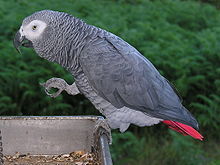
grey parrot
In captivity, grey parrots are often kept in social isolation, which can have detrimental effects on their health and well-being. So far there have not been any studies on the effects of long term social isolation from conspecifics on cellular aging.

Telomeres shorten with each cell division, and once a critical length is reached, cells are unable to divide further (a stage known as 'replicative senescence'). Although cellular senescence is a useful mechanism to eliminate worn-out cells, it appears to contribute to aging and mortality. Several studies suggest that telomere shortening is accelerated by stress, but until now, no studies have examined the effects of social isolation on telomere shortening.

Question

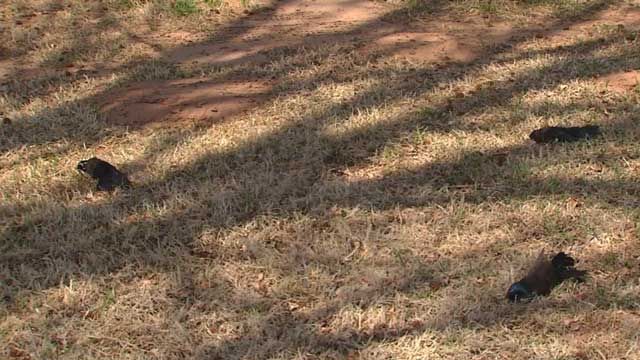
Over 30 birds fall dead from the sky in Norman, Oklahoma

Image
In the last 24 hours, Becki Miller has observed at least a dozen birds drop dead in her yard.
There's a bit of a mystery in the Norman area. Birds were seen falling dead out of the sky.

One homeowner, near highway 9 and I 35, found more than a dozen dead in her yard. Becki Miller does not consider herself a bird watcher, but she's identified a potential problem with a flock of black birds.

"I heard this thump and I noticed a bird had just fallen out of the sky," she said.

In the last 24 hours, she's observed at least a dozen birds drop dead in her yard. Becki worries the flock was poisoned, or worse, could be carrying a disease. She called on the Oklahoma Department of Wildlife to investigate.

Micah Holmes with the Department of Wildlife explains the sudden deaths of the birds could also be attributed to weather patterns or environmental stressors.

Comment: On the evening prior to this event came this report from the town of Duncan, which lies about 60 miles to the south of Norman: Mystery boom rattles homes in Duncan, Oklahoma

See also:

Radar Dopppler images confirm overhead 'turbulence' cause of 2011 mass bird death case in Beebe, Arkansas
Meteoric Deja-vu: Exactly one year later, dead blackbirds fall again in Beebe, Arkansas
A Sign for the New Year: 1,000 Birds Fall From the Sky in Beebe, Arkansas
Situation Update More than 5000 birds fall dead from Sky in Arkansas 12-31-2010 New Years Eve


Question

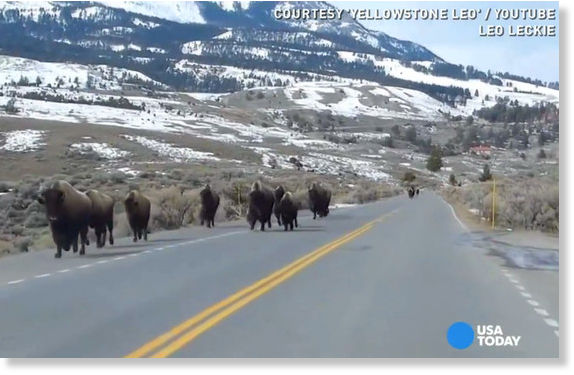
Bison seen running down road at Yellowstone spark supervolcano rumors online

Image
Videos of bison seemingly fleeing Yellowstone National Park in Wyoming have sparked concerns among some bloggers that recent seismic activity could trigger the eruption of the park's so-called supervolcano.

According to Epoch Times, multiple videos of such incidents have been posted online recently, one of which shows a herd of buffalo allegedly leaving the park and "running for their lives." Although people behind the discussion acknowledge there's no way to predict when the park's massive volcano could erupt, they believe the reaction of the Yellowstone's animals could signal some kind of alert.

On March 30, Yellowstone was struck by the most powerful earthquake it has experienced since 1980 - a 4.8 magnitude quake that did no damage, but that some believe could be connected to the various animals' movements.

"Whether I believe this, or whether I don't believe the story or not, I don't know. I can tell you this story I saw this morning about the buffaloes running the street ... whether or not it's because of any activity in Yellowstone or not, I don't know," said blogger Jay Lee, according to the Times.

"But I'll tell you this, whatever the case may be, that their running away from Yellowstone is an alert of some sort."

Bug

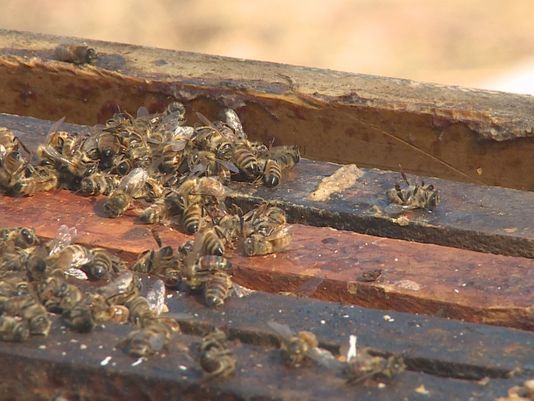
Beekeeper loses all his 500,000 honeybees due to long harsh winter in Holland, Michigan

Image
Beekeepers in West Michigan are calling it a 'crisis', which has only gotten worse from several months of extreme cold.
A local beekeeper who lost all of his honeybees this winter and he says it's happening across the state.

Anyone can look at Don Lam's beehive and see piles of dead honeybees. However, for Lam, each hive also tells the story of a struggle to survive. "They vibrate their wing muscles and that vibration is similar to shivering," says Lam, a beekeeper in Holland.

It was a fight that his nearly half a million honeybees lost to a long, harsh winter. "They had eaten there way all the way to the top, had run out of food, and they couldn't move over because it was too cold," says Lam. "In some cases they froze to death because the cluster got too small and in other cases they starved to death."

Comment: See also: The death and global extinction of honeybees


Fish

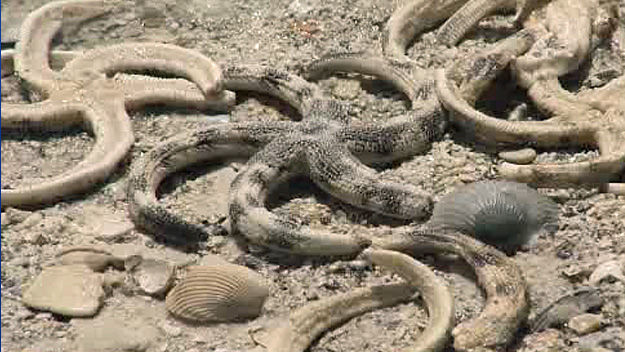
Thousands of dead, dying starfish washing ashore across the U.S. Gulf coast

Image
© CBS4Dead Brittle Stars, also called Spider Starfish, have been washing ashore beaches from Florida Panhandle to Alabama.
Beaches across the Gulf coast, including the Florida Panhandle, are getting the star treatment as thousands of starfish drift ashore.

Most of them, dead or dying, are washing up on beaches from Perdido Key, Florida in Pensacola to Alabama.

The majority are brittle stars, also called spider starfish, and they are very common in waters around the world.

"This is very rare, I have lived here all my life and I have never seen them like this," said beachgoer Charlotte Phillips.

Marine experts said rough surf caused by recent storms may have pushed the starfish over the sandbars and onto the beach.

Tidal pools hold most of what's left.

Ice Cube

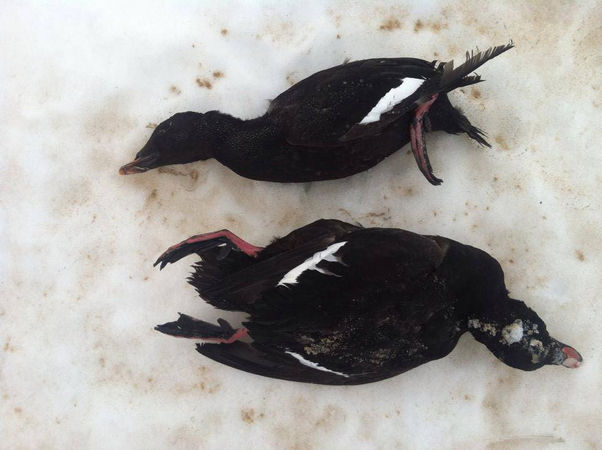
Harsh winter leads to starvation, death for waterfowl across Michigan

Image
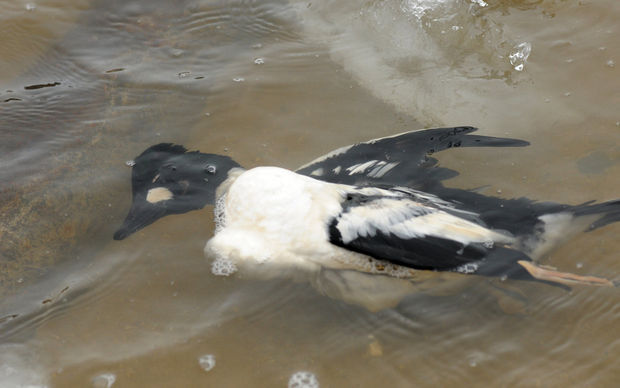
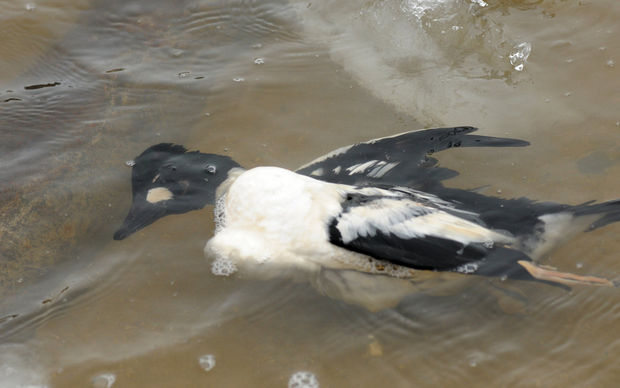
© Cory Olsen | MLive.comDead waterfowl line the shore of Lake Macatawa near the Holland State Park Tuesday.
Harsh winter conditions have led to a large number of waterfowl deaths across the state, something Greenville resident Stephen Schnautz has seen first hand.

Schnautz, 33, a waterfowl hunting and ice fishing guide, said he's seen a variety of species that just couldn't make it through the winter.

"I've seen diving ducks, loons, swans, gulls, a little bit of everything," Schnautz said. "I've been down to the Kalamazoo River and seen dead birds on the river bank. They're everywhere."

The losses aren't just around West Michigan, Schnautz said.

"I guide on Saginaw Bay and I've seen them all the way down to Lake Erie," Schnautz said. "They're in Muskegon, Traverse City, up in Ludington, too. I've mostly seen canvass backs, redheads, long-tailed ducks and some types of mergansers.

Michigan DNR wildlife outreach technician Holly Vaughn said the die-off can be attributed to the amount of ice coverage on inland lakes as well as the Great Lakes.

"Most of the birds that are washing up are diving birds like canvass backs, redheads, long-tailed ducks and some types of mergansers," Vaughn said. "It's mostly because they weren't able to get to their main food source.

Image

Fish

Harsh winter blamed for dead fish at lakes across Indiana

Image
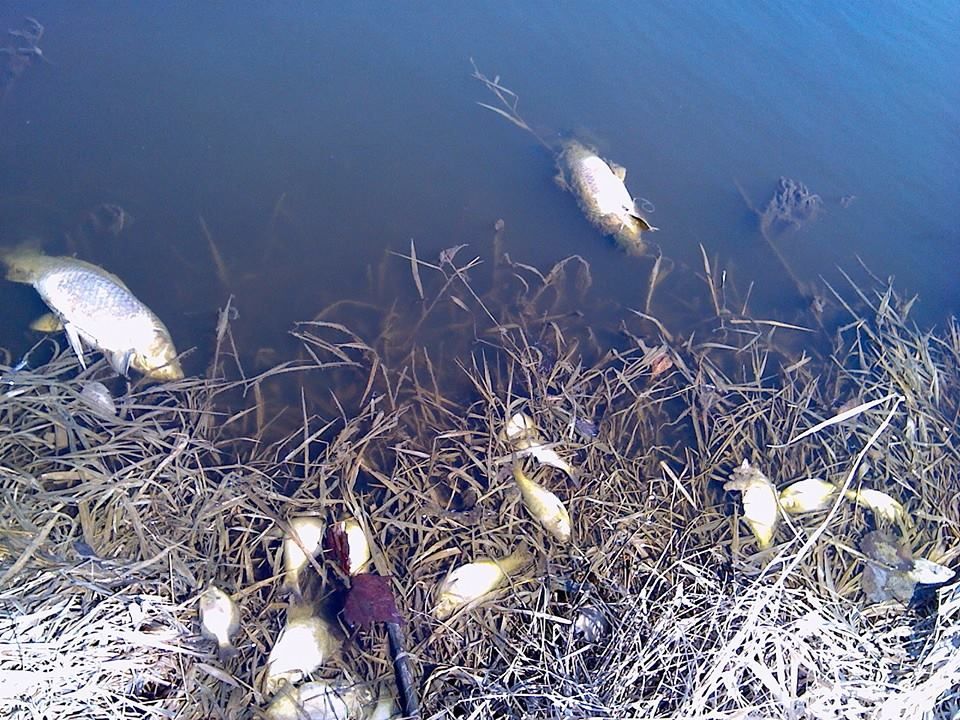
© WANE PhotoMud Lake in Chain O’ Lakes State Park

Some northern Indiana lakes are seeing large numbers of Harsh winter blamed that wildlife officials blame on this winter's severe cold.

Fisherman Robert Schultz tells WSBT-TV he found some banks of Pike Lake near Warsaw covered with hundreds of dead gizzard shad.

That's a species of fish that the Department of Natural Resources says is less tolerant of the freezing temperatures that hit the area over the last few months. The DNR has had reports of similar fish kills at other lakes, including Winona Lake on the other side of Warsaw.

While many of the dead shad have been eaten by birds or other fish, Schultz says he expects to see more.

Source: AP

Fish

Thousands of dead fish washing up on shores of Chicago area lakes

Image
By the thousands, fish are dying in the shallower man-made lakes of the Chicago area.

CBS 2's Mike Parker reports that the long, cold winter is to blame.

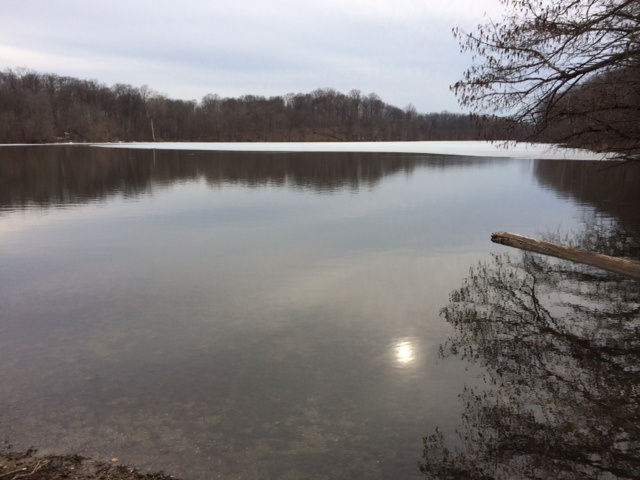
At sunset Tuesday night, two neighbors came to the edge of Lake Linden in Lindenhurst to get a first-hand look at the catfish, sunfish, pike and others that have washed up. The deaths are the result of the heavy ice cover that now persists into April.

"The sunlight's not able to penetrate through into the water and that reduces over time, the dissolved oxygen levels and that stresses the fish out and eventually if it gets low enough, the fish will die," said Mike Adam, senior biologist for the Lake County Health Department's lake management unit.


Snowflake Cold

Arctic winter brings rare birds to New York City

Image
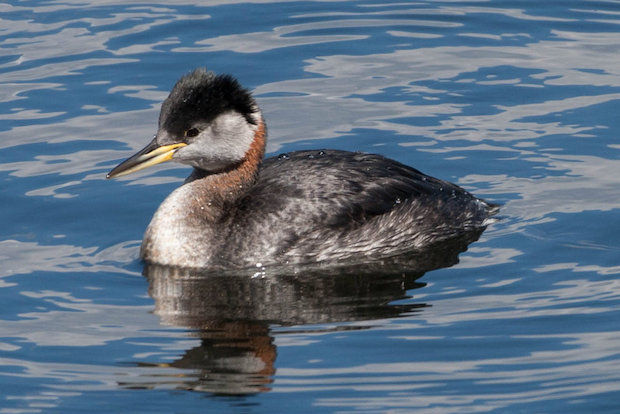
© Flickr/surfbird917A red-necked grebe was spotted in Central Park on March 15.


The bitter winter that kept many New Yorkers shivering well into March had a silver lining for birdwatchers - driving rare ducks typically spotted only in climes further north down to the city.

Red-necked grebes, which normally stay in the northwest and Canada, have set up shop in Central Park and were spotted as recently as March 30, birders said. White-winged scoters, more common upstate but rarely spotted in the city, have been seen in Inwood Hill Park, sparking enthusiastic posts by birders on blogs, YouTube and the popular mapping website eBird.

Both species seemed to have moved south because the colder-than-usual winter temperatures froze their natural habitat - making it difficult for them to feed, said Andrew Farnsworth, a researcher at Cornell's Lab of Ornithology.

"When the freeze happens, they disperse to wherever they can find something that appears to have open water," said Farnsworth, who studies bird travel patterns. "There was a huge movement of water fowl off those lakes.

"The red-necked grebe were moving tremendously this year [traveling] as far south as they needed to go," Farnsworth said of the distinctively plumaged birds.


Fish

Thousands of dead fish surfacing in Quad City Area, Illinois

Image
© Sara Anderson Fish Kill at Hennepin Canal
A walk along the peaceful bike path off the Hennepin Canal in Milan, Illinois looks like something out of a horror film.

Thousands of dead fish have washed up on shore as of Sunday, March 30, 2014.

Believe it or not, Iowa Department of Natural Resources Conservation Officer Jeff Harrison says it's normal.

"This happens after every winter. When we have so many days with cold temperatures, the snow covers the ice on these ponds and rivers. Sunlight then can't penetrate into the water. That means oxygen is lacking for fish in the water," Harrison said.