Animals
S


Attention

Jellyfish bloom reported for the first time off coast of Visakhapatnam, India

Image
Representational image
A bloom of jellyfish has been reported off the Visakhapatnam coast for the first time. MFV Matsya Shikari, a survey vessel attached to the Vizag base of the Fishery Survey of India (FSI), has reported a bloom of jellyfish around 60 nautical miles off Visakhapatnam.

The vessel was carrying out a demersal (near the seabed) fishery resource survey in the area and researchers were surprised that 500 kg of jellyfish was caught in a single haul from a single-patch area at a depth of 40m. They say this is an indication of their abundance in the area.

The jellyfish found off was identified as Crambionella stuhlmanni, which causes skin rashes if touched. There are many species of jellyfish, which are venomous and its sting considered dangerous. World over, jellyfish blooms have caused power plant outages, destroyed the fishing-industry and damaged the beaches of holiday destinations.

Info

A molecular compass for bird navigation

Image
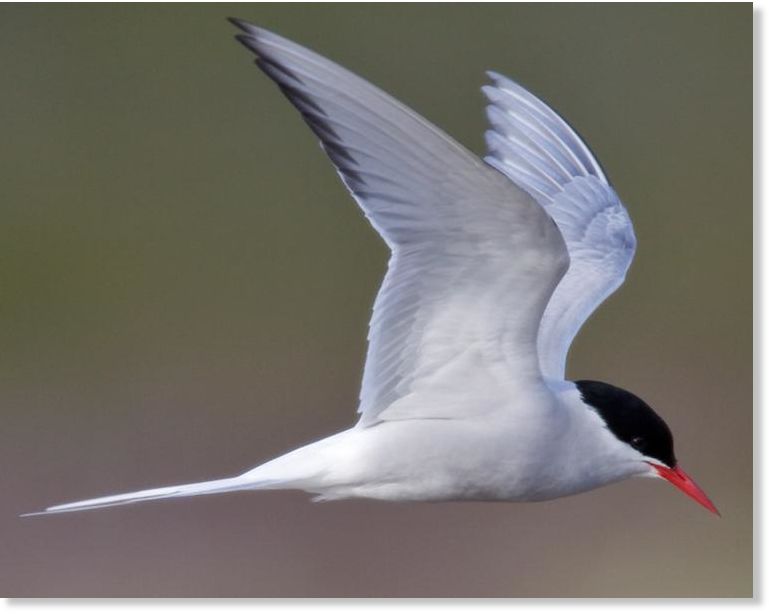
© Brian E. SmallArctic Tern
Each year, the Arctic Tern travels over 40,000 miles, migrating nearly from pole to pole and back again. Other birds make similar (though shorter) journeys in search of warmer climes. How do these birds manage to traverse such great distances when we need a map just to make our way to the next town over?

Researchers have established that birds can sense the earth's magnetic field and use it to orient themselves. How this internal compass works, though, remains poorly understood.

Physicists at the University of Oxford are exploring one possible explanation: a magnetically sensitive protein called cryptochrome that mediates circadian rhythms in plants and animals. Blue or green light triggers electrons in the protein to produce pairs of radicals whose electron spins respond to magnetic fields. "As we vary the strength of the magnetic field, we can alter the progress of these photochemical reactions inside the protein," said lead researcher Peter Hore, who will present his work during a talk at the American Physical Society's March Meeting on Wednesday, March 4 in San Antonio, Texas.

Info

Angry Norwegian lemmings: The bravest rodent and the myth of suicide

Image
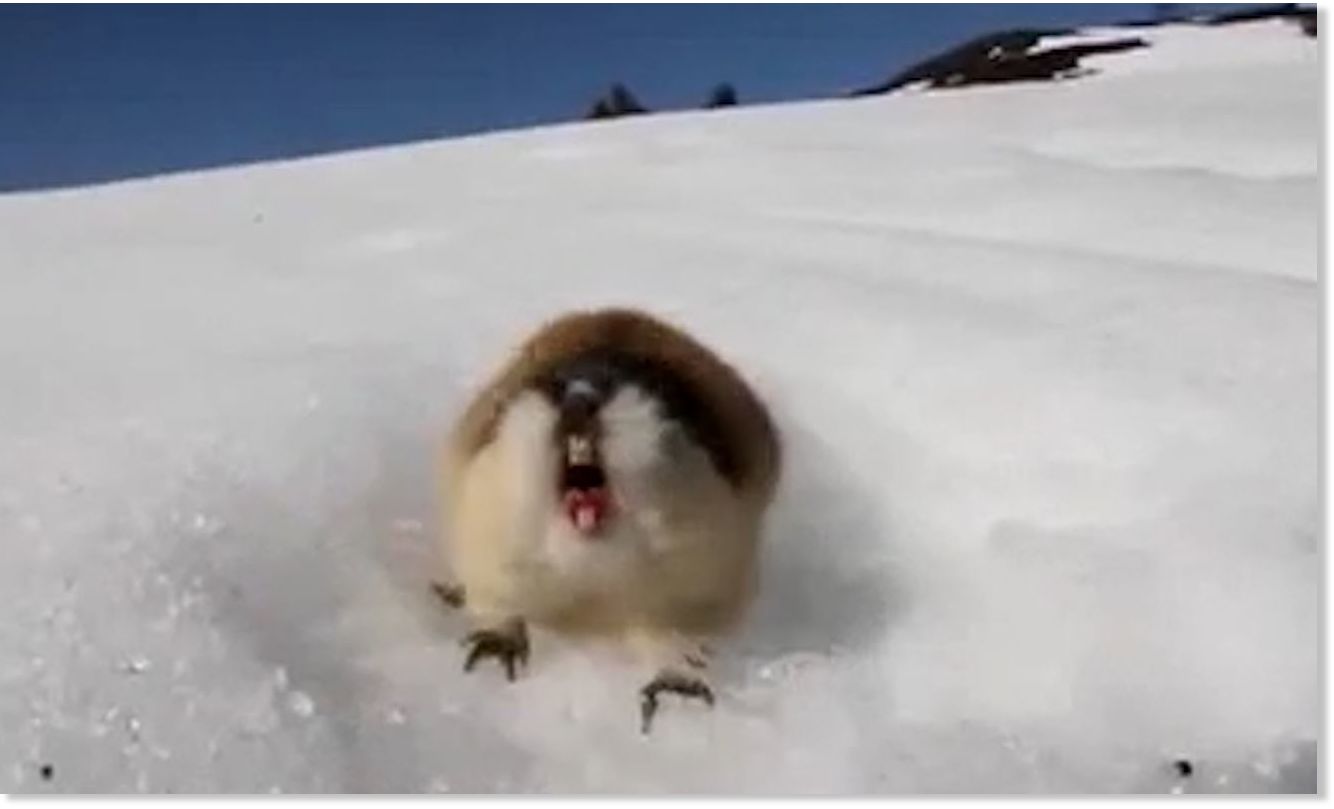
Angry Norwegian lemming
The angry Norwegian lemming is one of the bravest rodents in the world because it has evolved aposematic traits to ward off predators, a study has suggested.

Norwegian lemmings have an interesting reputation, with people often mistakenly believing they are "crazed creatures" that commit suicide by throwing themselves off cliffs, or exploding because they are so angry.

They have bold colouring - with a red-brown back, yellow flanks, a white chest, chin and cheeks, and a big black patch on its head - and so stand out from their less vibrant relatives.

While most other small rodents flee when they sense a threat and only very rarely aggressively protect themselves from predators, the Norwegian lemming laughs in the face of danger.

When predators approach, they make loud, severe barks, and fight back against attacks with lunges, bites and screams. In a BBC report about their behaviour last year, one group of researchers even reported a face off with a farm tractor, "leaving a trail of infuriated lemmings behind".


Wolf

Weimeraner survives cougar attack in Sierra National Forest, California

Image
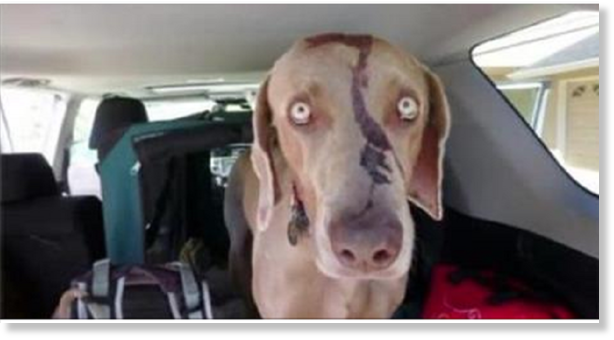
© yourcentralvalley.comWeimeraner survives cougar attack
A weekday rendezvous with Mother Nature gave a group of California hikers much more than they expected. What started out as a pleasant mountain jaunt for a four-year-old weimeraner and her owner in Oakhurst, California went south very quickly when they came face-to-face with a mountain lion. On Feb. 19, Candace Gregory was hiking with friends in the Sierra National Forest with her dog Sally. As Gregory tells it, she and her friends were about 30 feet behind her dog when she saw "a flash of something tannish".

Before it could even register, the big cat had Sally's head in it's jaws and it's paws wrapped around the pooch's body. Fellow hiker Rick Lawin said he heard a "blood curdling screaming sound of an animal in its death throes." He ran up and started hitting the mountain lion with his hiking stick, to help out Sally and protect his fellow hikers. That worked, because the hungry animal dropped the dog and jumped into the trees. They estimate that the big cat must have weighed at least 120 pounds.

Wolf

Two coyotes attack dog in Cleveland, Ohio cemetery

Image
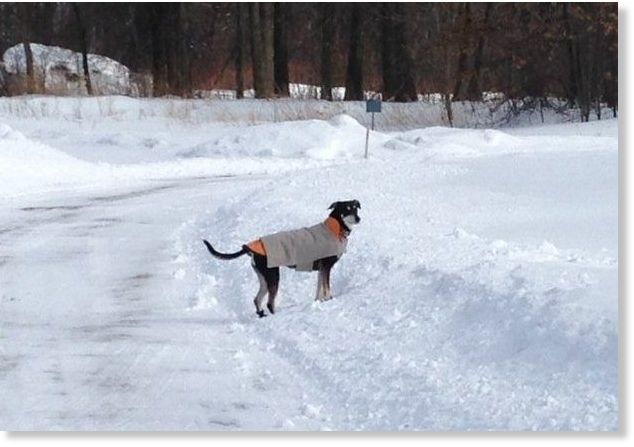
© Beverly SinghMaitri, a 70-pound greyhound-mix, was attacked by two coyotes soon after this photo was taken.
A Cleveland Heights dog is recovering from being attacked Sunday by two cold and hungry coyotes at Lake View Cemetery.

Yes, a cemetery island of grass and trees amid the busy streets at the intersection of Cleveland, Cleveland Heights and East Cleveland was the scene of a coyote encounter and more proof that Ohio's coyote population is rebounding.

Maitri, a 70-pound greyhound-mix, was lucky she had speed on her side. She escaped with a gaping flesh wound to a hind leg that required six stitches.

Eye 2

Snake makes a rare winter appearance in Stephenville, Maryland

Image
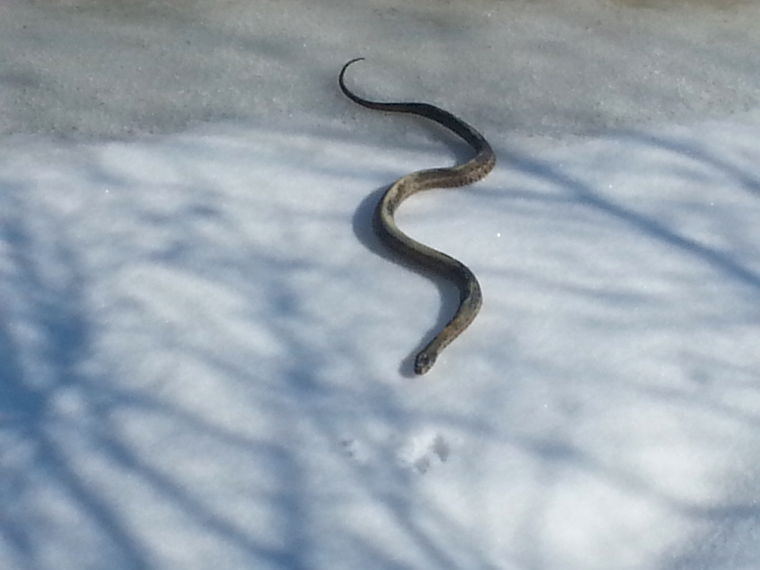
© Jake ClaypooleA Snake in Winter
Jake Claypoole of Stevenville spotted something unusual when he took his son sledding near the park and ride across from Kent Landing Shopping Center, commonly called Kmart hill, about noon Wednesday, Feb. 18. He noticed a 3-foot snake on top of the ice on the storm water management pond.

Claypoole said he thought the snake was dead at first, but then he noticed its tongue moving and it began slithering toward the snow.
He said he watched and took pictures for about 20 minutes as the snake made its way off the ice, across the snow and into some nearby brush.

He said he had never seen a snake out in the winter on snow or ice before.


Ice Cube

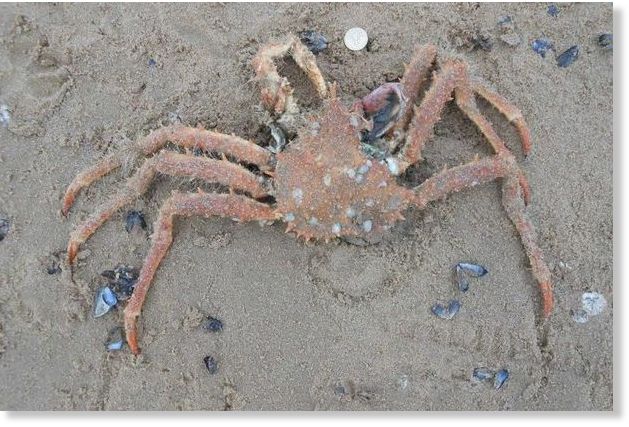
King crab from Arctic waters found on Redcar beach, UK

Image
King Crab on Redcar beach

Red king crab could be first on our shores, crustacean is usually found in icy waters like the Arctic

He's spent his working life beneath the sea but even oceanographer David McCreadie was baffled by a rare visitor to Redcar.

For the formidable-looking red crustacean found by David's fiancee Diane Weinoski looks for all the world like a king crab - and they hardly ever stray from considerably icier waters.

Members of the lithododid family, king crabs are large, tasty and usually found in seas MUCH colder than Redcar's.

And despite having worked and played in oceans across the world since the mid-1960s, David has never heard of one being found this far south.

Ice Cube

Deadly winter takes toll on waterfowl in Michigan

Image
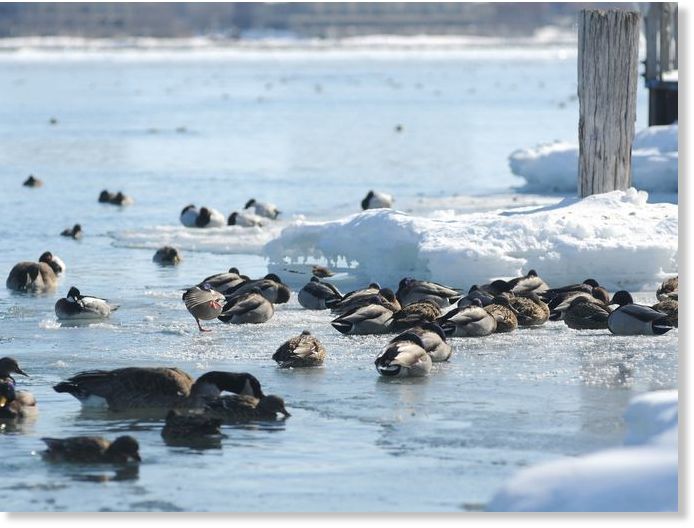
© Andrew Jowett / Times HeraldDucks sit on a shelf of ice Monday along the St. Clair River in Port Huron.
Harsh weather is taking a toll on the waterfowl concentrated in the St. Clair River.

Terry McFadden, a wildlife biologist with the Michigan Department of Natural Resources, said waterfowl across the state are dying because of the extreme cold and growing ice cover.

Below-zero temperatures have caused rapid ice formation, blocking ducks from food sources in the water and sometimes trapping the birds in the ice.

"Most likely it's going to be similar to last year, we lost quite a few last year," McFadden said. "We don't have a really good estimate, but it was in the thousands."

McFadden said waterfowl, including long-tailed and canvasback ducks, are concentrated in the St. Clair River, where some of the region's only remaining open water is located.

That large concentration of birds depletes available resources as the ice forms.


Ice Cube

Massachusetts animal shelters report large numbers of suffering wildlife due to record cold weather

Image
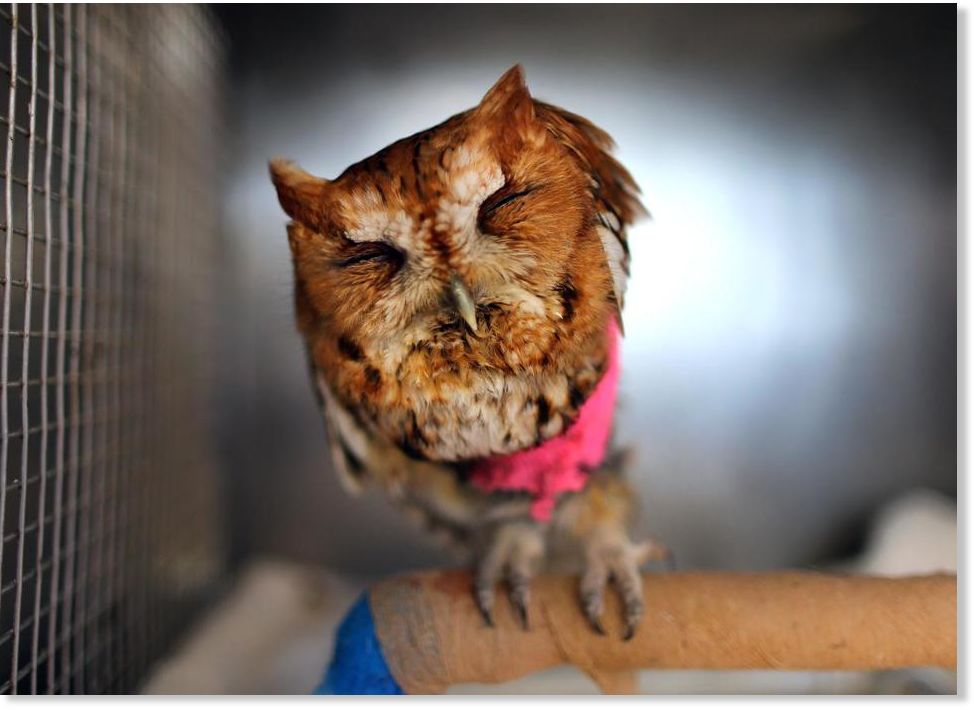
© John Tlumacki/Globe StaffA screech owl sat on a perch mending a fractured wing at the New England Wildlife Center in Weymouth.
The casualty list is wide ranging: possums with frostbite, a turtle frozen in a block of ice, a swan hit by a plow, a fox hit by a car.

If this month's record cold and snowfall have taken a toll on human residents in Massachusetts, they have also wreaked havoc on the animal population, particularly wildlife. Animal shelters are beyond capacity with weather-related injuries.

"This is the worst winter that we've seen in terms of straight-up starving animals coming in," said veterinarian Maureen Murray, who practices and teaches at the Tufts University Wildlife Clinic in North Grafton. "With this historic amount of snow and extremely low temperatures, animals need more energy to stay warm, but they're not able to find food sources for that energy, so it's a really big strain on them."

Although it's difficult to determine whether wildlife populations have suffered permanent damage, local experts say it's clear the animals are under extreme stress.

Eagle

Symbolism? Battling Bald eagles crash down onto tree in Tuckerton, New Jersey

Image
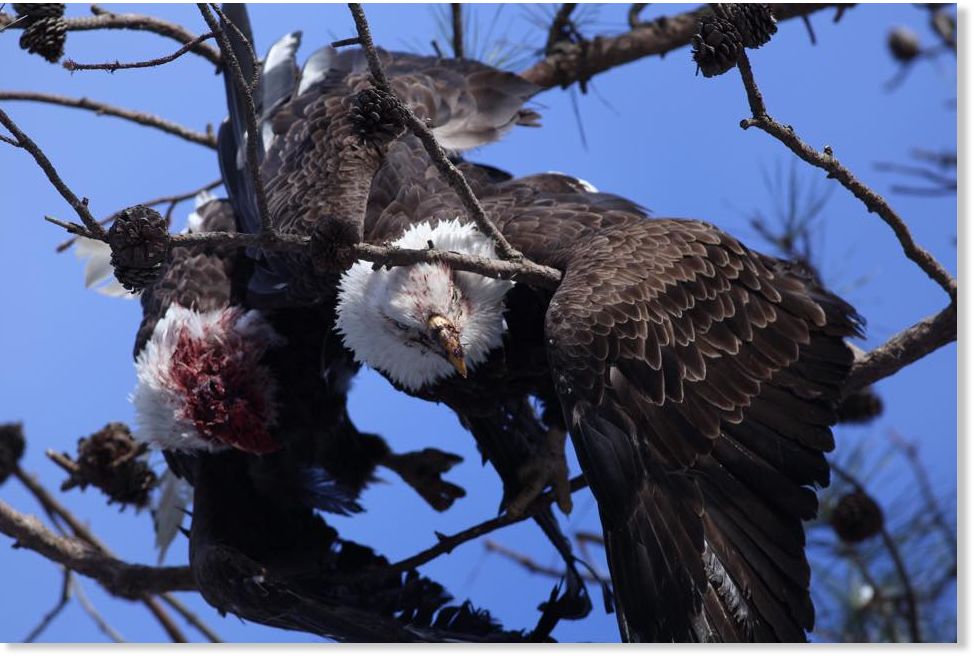
© Ben WurstTwo bald eagles interlocked, injured and hanging from a tree in Tuckerton, NJ.
On Tuesday, February 17, 2015 we got a call about a couple injured bald eagles from our colleagues with the Endangered and Nongame Species Program. They were reported hanging from a pine tree off a road in Tuckerton, NJ by some local residents. We didn't know how long they were there, but we knew that we needed to respond quickly if a bird had a chance to survive. We arrived at the scene to find two adults that were indeed, hanging from a tree. Luckily the local residents on the scene knew someone who worked for AC Electric (he also lived on the same road the birds were off of) and had a truck with a cherry picker on it. After the cherry picker arrived I went up to free the two birds.