Volcanoes
S


Attention

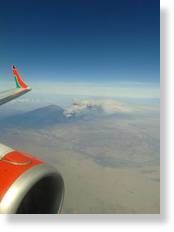
Meru volcano erupts for the first time in 105 years, Tanzania

Image
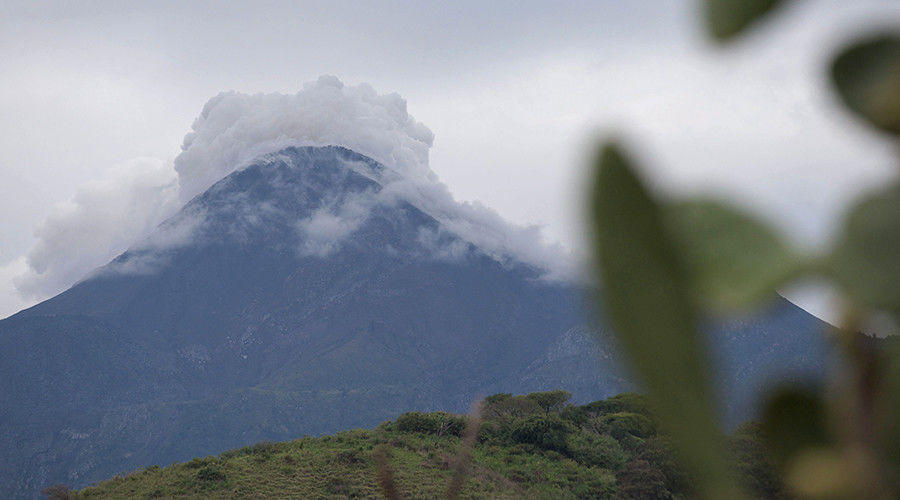
© Selle Higgins Image of Meru's eruption yesterday
A new eruption has been reported yesterday from the volcano, which has last been active 105 years ago.

An ash plume was seen rising approx. 1 km and drifting NW from what looks like a lateral vent on the northern slope of the volcano near Arusha town. The are no reports of damage or fatalities.

According to local sources, people in the area around the volcano have been experiencing an increased number of small felt earthquakes in recent months.


Attention

Mexico towns blanketed with ash Colima volcano erupts

Image
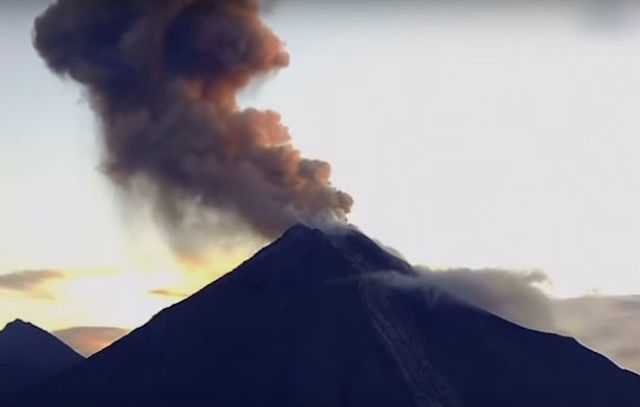
Mexico's Colima volcano has spewed ash and smoke over nearby towns, after erupting again at dawn yesterday.

Video from the scene showed thick plumes of black smoke billowing from the mountain.

"The ashes and smoke have reached two kilometres into the air... it has been showing renewed activity over the past two months, blanketing nearby villages with ash," teleSUR English reports.

Colima, also known as Fire Volcano, is located in the country's west, about 125km from Guadalajara in Jalisco.

It is the country's most active volcano and has erupted more frequently since 1994, according to Volcano Discovery.

Hundreds of people were evacuated from nearby towns in July amid fears of a major eruption.

Airline Aeromexico has not advised of any delays.


Radar

Volcano alert level for Mauna Loa, Hawaii elevated

Image
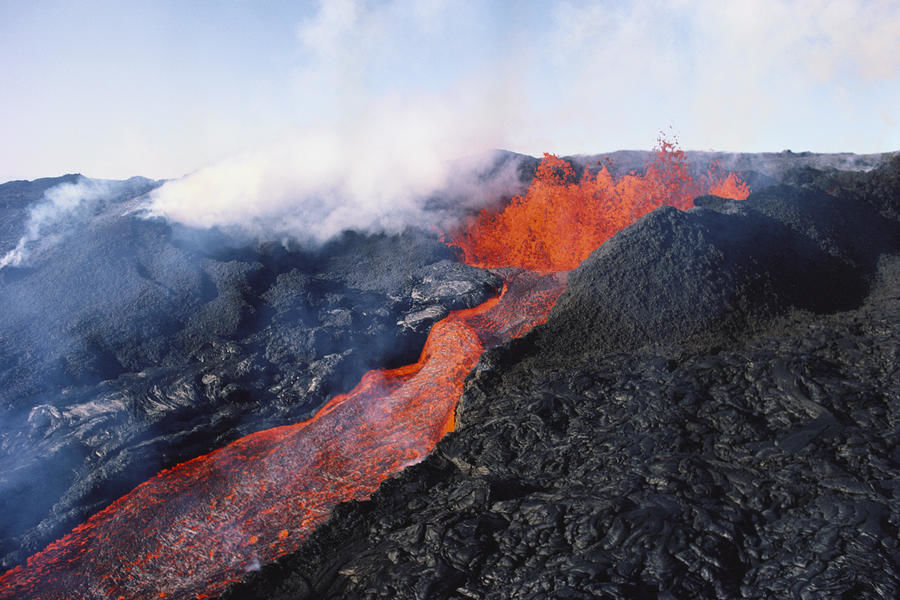
The amount of small earthquakes beneath the summit of Mauna Loa has more than tripled recently prompting the U.S. Geological Survey to increase the volcano alert level from "normal" to "advisory". On the color scale, it went from green to yellow.

"Over the past year we've been locating, on average, around 150 earthquakes per month," says Weston Thelen with the U.S.G.S. who says normally, fewer than 40 earthquakes a month are reported.

The last time Mauna Loa erupted, was in 1984. The lava flowed for 22 days. More than 30 years later, the mountain is stirring again.

"Really, we're seeing a persistence in this unrest," says Thelen, "We're not saying that an eruption is imminent, we're not even really certain that there is going to be an eruption." But the shallow earthquakes are occurring in the same areas that preceded the mountain's most recent eruptions.

Chalkboard

Volcanic eruptions and earthquakes increasing across the planet

Image
If it seems like earthquakes and erupting volcanoes are happening more frequently, that's because they are. Looking at global magnitude six (M6) or greater from 1980 to 1989 there was an average of 108.5 earthquakes per year, from 2000 to 2009 the planet averaged 160.9 earthquakes per year: that is a 38.9% increase of M6+ earthquakes in recent years. Unrest also seems to be growing among the world's super-volcanoes. Iceland (which is home to some of the most dangerous volcanoes on the planet), Santorini in Greece, Uturuncu in Bolivia, the Yellowstone and Long Valley calderas in the U.S., Laguna del Maule in Chile, Italy's Campi Flegrei - almost all of the world's active super-volcanic systems are now exhibiting some signs of inflation, an early indication that pressure is building in these volcanic systems.

When they will erupt is guess work, but in the meantime, activity is growing in Central America's volcanoes such as Costa Rica's Turrialba Volcano, Asia's volcanoes such as Kamchatka, Alaska and Indonesia are also more active. Magma chambers are growing as pressures increase, the numbers of tremors are increasing as are related 'quake-clusters'. If any one of these major volcanic systems has a large scale eruption, it would be a global event. Iceland is considered by many scientists to be the next likely place for a global level volcanic event. The last major event, actually relatively minor, was in 2010 when an Icelandic volcano (Eyjafjallajökull volcano) made headlines around the world by spewing mega-tons of ash into the atmosphere, cancelling and re-routing thousands of flights and costing airlines and passengers more than $7 billion+ in lost revenues.

Info

Hidden superchain of volcanoes discovered in Australia

Newly Discovered Volcanoes
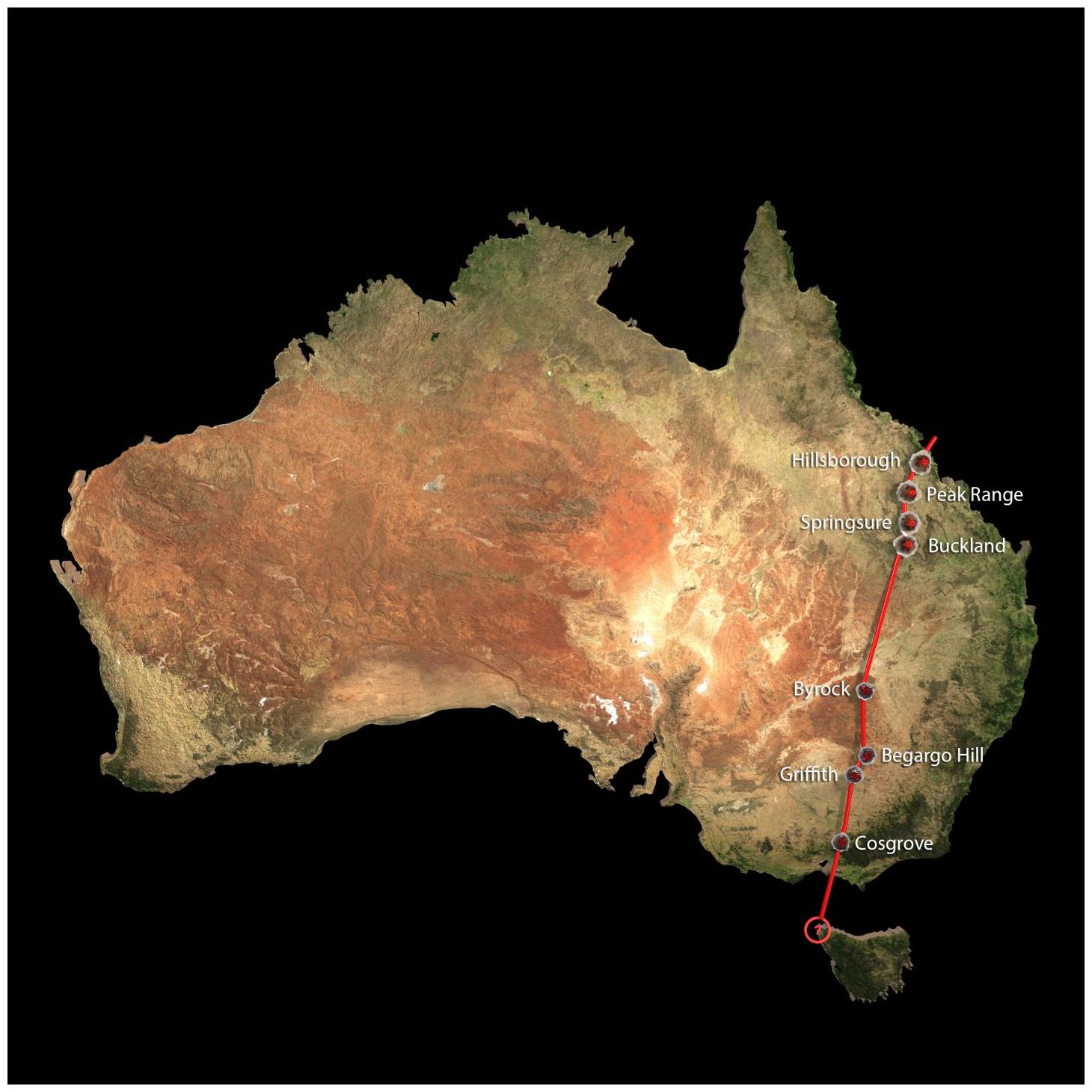
© Drew Whitehouse, NCI National Facility VizLabScientists recently realized that separate chains of volcanic activity in Australia were actually caused by a single hotsput lurking under the Earth's lithosphere. The new superchain, called the Cosgrove Volcanic Track, spans 1,240 miles (2,000 kilometers)
Scientists have just found the world's longest chain of volcanoes on a continent, hiding in plain sight.

The newly discovered Australian volcano chain isn't a complete surprise, though: Geologists have long known of small, separate chains of volcanic activity on the island continent. However, new research reveals a hidden hotspot once churned beneath regions with no signs of surface volcanism, connecting these separate strings of volcanoes into one megachain.

That 1,240-mile-long (2,000 kilometers) chain of fire spanned most of eastern Australia, from Hillsborough in the north, where rainforest meets the Great Barrier Reef, to the island of Tasmania in the south.

"The track is nearly three times the length of the famous Yellowstone hotspot track on the North American continent," Rhodri Davies, an earth scientist at Australian National University, said in a statement.

Eye 1

Disappearing freedoms: U.S. city proposing ban on wearing short shorts and mini-skirts

Image
© Flickr/ ·júbilo·haku·
Short shorts and mini-skirts may be disappearing from one Alabama city.

The Dadeville City Council is considering an ordinance to ban the attire. The proposal comes after the City Council last month passed an ordinance banning saggy pants.

The council, however, didn't think men should be singled out when it comes to provocative clothing.

"My concern is it should be for everybody," said Councilwoman Stephanie Kelley during a council meeting on Tuesday. "I think for the girls, with these shorts up so high looking like under garments and dresses so short, I don't want us to be showing favoritism."

Dadeville City attorney Robin Reynolds is expected to have the ordinance ready by the next council meeting.

"It is about respect," Goodman said. "Who is going to respect you if you don't respect yourself? The reason I brought this up is I think people deserve respect when they are in public. I think slacking is disrespectful. I think it gives our younger generation the wrong impression of what is cool."

Comment: It's ridiculous for any government, small or large, to make laws banning people from wearing specific kinds of clothing. Soon we'll all be forced to wear one specific piece of attire for all occasions.


Bizarro Earth

Japanese volcano Mount Aso on island of Kyushu erupts

Mount Aso
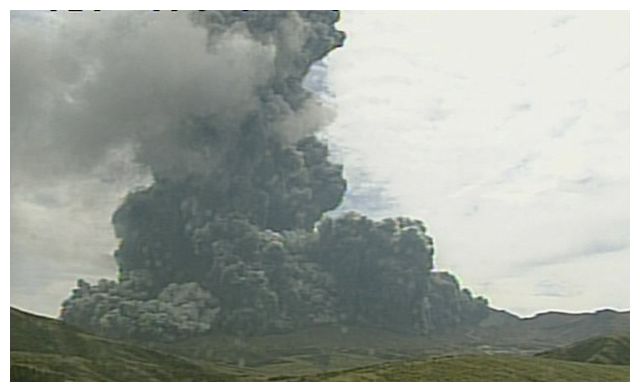
© Reuters A video grab from the Japan Meteorological Agency’s live camera image shows an eruption of Mount Aso in Aso, Kumamoto prefecture, south-western Japan, on Monday.
Mount Aso, a volcano located on Japan's southernmost main island of Kyushu, erupted on Monday, Japan's Meteorological Agency said, sending up huge plumes of grey ash and smoke.

Japan lies on the "Ring of Fire" - a horseshoe-shaped band of fault lines and volcanoes around the edges of the Pacific ocean - and is home to more than 100 active volcanoes.

Comment:


Alarm Clock

Two Mexican volcanoes erupt, shooting ash, smoke into sky

Colima Volcano
© Stringer / ReutersSmoke rises from Colima Volcano, also known as the Volcano of Fire, near the town of Comala

Two of Mexico's most active volcanoes are erupting, sending a spectacular mix of ash, smoke, and gas thousands of meters into the sky.

Comment: See also: The number of volcanoes erupting right now is greater than the 20th century's YEARLY average!

Keep informed on the increasingly chaotic events from all around the world by viewing the monthly SOTT Earth Changes Summary.

SOTT Earth Changes Summary - August 2015: Extreme Weather, Planetary Upheaval, Meteor Fireballs


Fire

This Indonesian volcano erupts electric-blue streams of molten sulfur

East Java molten sulfur
© Reuben Wu
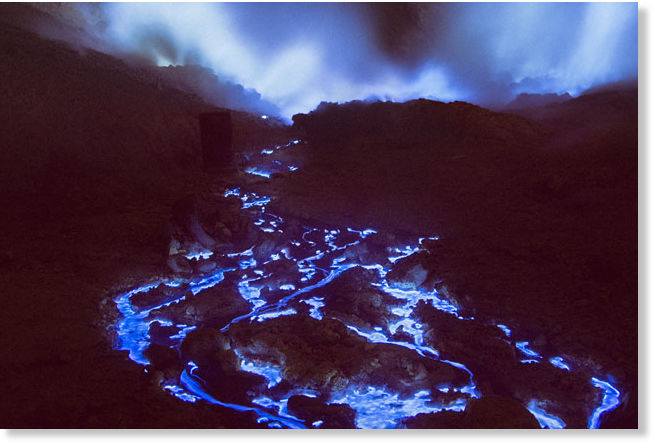
Glowing blue rivers illuminate Java's Blue Fire Crater.

Visitors looking up at Kawah Ijen, a volcano on the Indonesian island of Java, are treated to a sight not often seen in the rest of the world: electric-blue rivers streaming out from underneath the volcano. Although it looks like bright blue lava, the streams are actually molten sulfur, which gives off a neon-like light at night.

"I've never seen this much sulfur flowing at a volcano," U.S. Geological Survey research geologist Cynthia Werner tells Brian Clark Howard for National Geographic.

Bright blue sulfuric flames aren't exactly rare around volcanoes. Sulfur has a relatively low melting point of 239 degrees Fahrenheit and small trickles and blue fires are often found near hot vents and during volcanic eruptions, Howard writes. However, Kawah Ijen is the largest "blue flame" area on earth, with jets of fiery sulfuric acid burning at over 1,000 degrees Fahrenheit and shooting 16 feet into the air, Christopher Jobson reports for Colossal.

Bizarro Earth

Lava erupts from Hawaii's Kilauea volcano


One of the world's most active volcanoes began erupting again on Hawaii's Big Island Thursday morning, sending a thick ribbon of lava from its summit down into the forests nearby.

The lava lake at the summit of Kilauea Volcano, located within Hawaii Volcanoes National Park near the southern end of the island, was still active Friday, according to officials with the U.S. Geological Survey office that monitors the volcano.

The volcano's lava flow posed no threat to surrounding communities at this time, they added, "but [they] are being monitored closely," as some of the lava flows "are marked by smoke plumes where lava is creeping into the forest."

Comment: The number of volcanoes erupting right now is greater than the 20th century's YEARLY average! Other signs of increased volcanic activity recently include:
  • Huge columns of ash being spewed form the Cotopaxi volcano in Ecuador and Mexico's Colima volcano.
  • A series of avalanches on Mount Ruapehu, New Zealand, with vulcanology expert Harry Keys stating "I've been up the crater lake a lot and I don't remember ever seeing so many avalanches in the crater."
  • Reunion Island volcano in the Indian ocean erupting again.