Earthquakes
S


X

Magnitude 6.1 earthquake hits Greek Islands

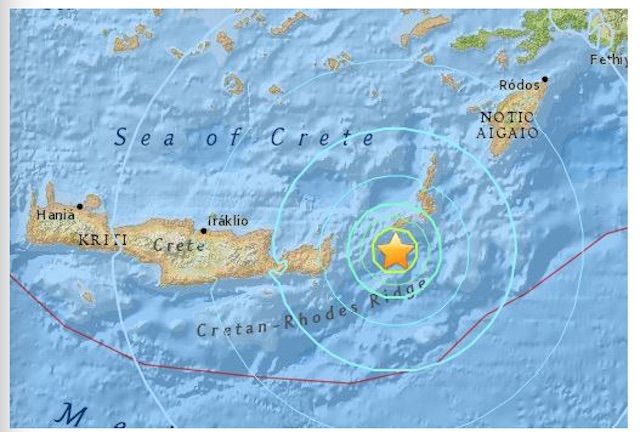
The U.S. Geological Survey says a magnitude 6.1 earthquake has struck near the Greek island Crete Thursday.

The USGS reports the quake's epicenter was located 29 miles (47 kilometers) northeast of Karpathos, Greece at a depth of 20.9 kilometers. The quake hit at 11:07 a.m. PDT, 9:07 p.m. local time.
Image
© USGS
The Athens Geodynamic Institute said the quake was felt on the islands of Crete, Karpathos and Rhodes.

The highest rates of earthquake activity in the Mediterranean region are found along the southern part Greece, along the North Anatolian Fault Zone of western Turkey and the Calabrian zone of southern Italy.

Strong earthquakes with an epicenter off the coast can trigger tsunamis, depending on the size and type of the fault movement. The Pacific Tsunami Warning Center tracks earthquake data for the West Coast.

Info

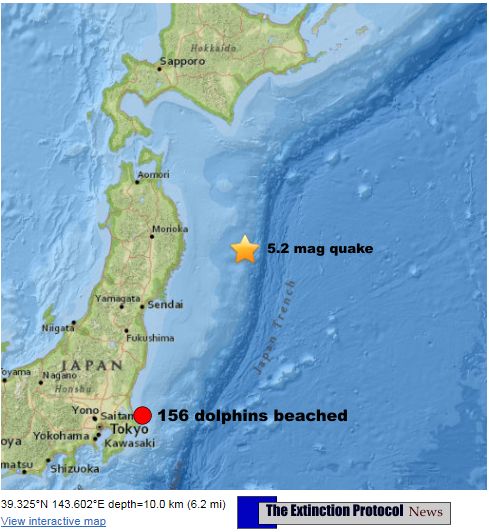
5.2 magnitude earthquake hits Japan's Northeast coast

Image
A 5.2 magnitude earthquake has struck off the Northeast coast of Japan. The shallow quake occurred at a depth of about 10 km (6.2) miles under the sea, near the Japanese Trench. Japan and the surrounding islands straddle four major tectonic plates: Pacific plate; North America plate; Eurasia plate; and Philippine Sea plate. The Pacific plate is subducted into the mantle, beneath Hokkaido and northern Honshu, along the eastern margin of the Okhotsk microplate, a proposed subdivision of the North America plate. Farther south, the Pacific plate is subducted beneath volcanic islands along the eastern margin of the Philippine Sea plate. This 2,200 km-long zone of subduction of the Pacific plate is responsible for the creation of the deep offshore Ogasawara and Japan trenches as well as parallel chains of islands and volcanoes, typical of Circumpacific island arcs. Similarly, the Philippine Sea plate is itself subducting under the Eurasia plate along a zone, extending from Taiwan to southern Honshu that comprises the Ryukyu Islands and the Nansei-Shoto trench.

Subduction zones at the Japanese island arcs are geologically complex and produce numerous earthquakes from multiple sources. Deformation of the overriding plates generates shallow crustal earthquakes, whereas slip at the interface of the plates generates interplate earthquakes that extend from near the base of the trench to depths of 40 to 60 km. At greater depths, Japanese arc earthquakes occur within the subducting Pacific and Philippine Sea plates and can reach depths of nearly 700 km. Since 1900, three great earthquakes occurred off Japan and three north of Hokkaido. They are the M8.4 1933 Sanriku-oki earthquake, the M8.3 2003 Tokachi-oki earthquake, the M9.0 2011 Tohoku earthquake, the M8.4 1958 Etorofu earthquake, the M8.5 1963 Kuril earthquake, and the M8.3 1994 Shikotan earthquake.

Comment: See also: SOTT Exclusive: Mass whale beaching in Japan is a reminder of Earth-changing events surrounding the 2011 earthquake and tsunami

The planet seems to be opening up! See below for earthquakes reported so far in the month of April:


Hardhat

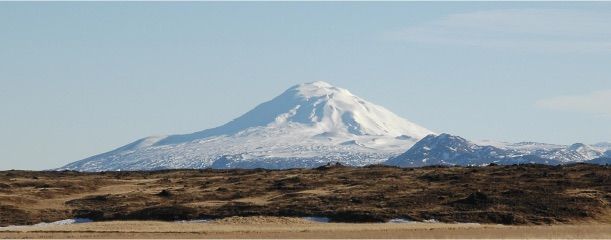
Hekla volcano in Iceland shaken by earthquake swarm

Image
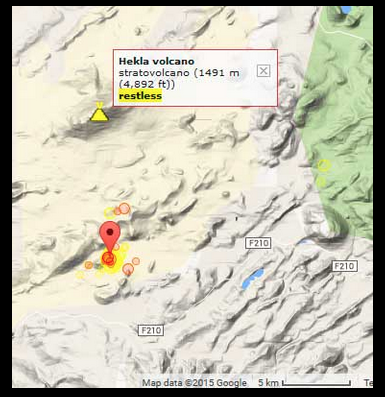
Small earthquake swarms occurred at shallow depths during the past days near the volcano. The quakes were located approx. 6-10 km south of Hekla volcano and at shallow depths around 5 km.
The largest quakes were two magnitude 2.6 events at 4 km depth on Thursday (9 April). It is impossible to say whether the earthquakes are linked to volcanic activity and thus might be precursors of a new eruption, but Hekla is probably the most likely candidate volcano for the next eruption to occur on Iceland.
Image
One of the country's most active, and the most frequently erupting volcano, Hekla has been believed to be "due" and have its magma chamber filled for several years now. Known for not giving much precursory signals (and only few earthquakes), an eruption would not be a surprise at all.

Kliuchevskoi (Kamchatka): After less than two weeks pause, the volcano started to erupt again - mild strombolian explosions at the summit crater and small ash emissions.

Attention

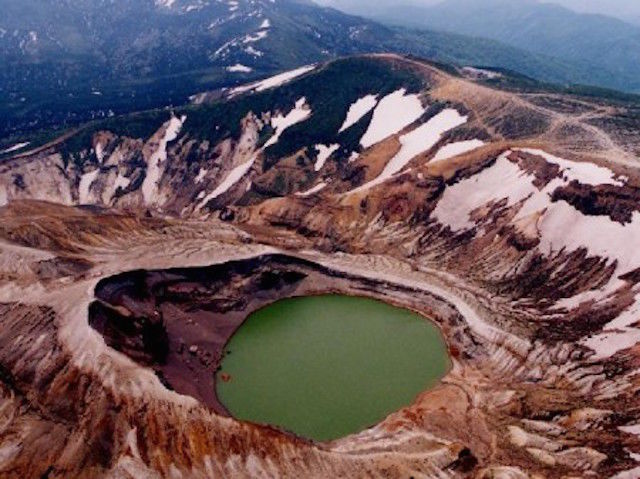
Mount Zao volcano shaken by swarm of twelve earthquakes

Image
Mt Zao
Fears of fresh eruption of Mount Zao, a volcano that sits on the border of the Yamagata and Miyagi prefectures, rattled Japan after the country's meteorological agency recorded 12 volcanic earthquakes on Tuesday.

The seismic activity prompted warnings of a volcanic eruption, with the agency asking the public to stay safe from falling rocks in a 1.2 km radius of the volcano, The Japan Times reported.

The agency said that ash from the eruption can even reach beyond the radius, causing panic after last year's deadly volcanic eruption of Mount Ontake, which erupted without warning on 27 September and killed 60 people.

The meteorological agency has advised neighbouring towns to raise alert levels in the areas close to the volcano.

The warning will affect business at a popular ski resort, as well as mountain trails and restaurants.

Bizarro Earth

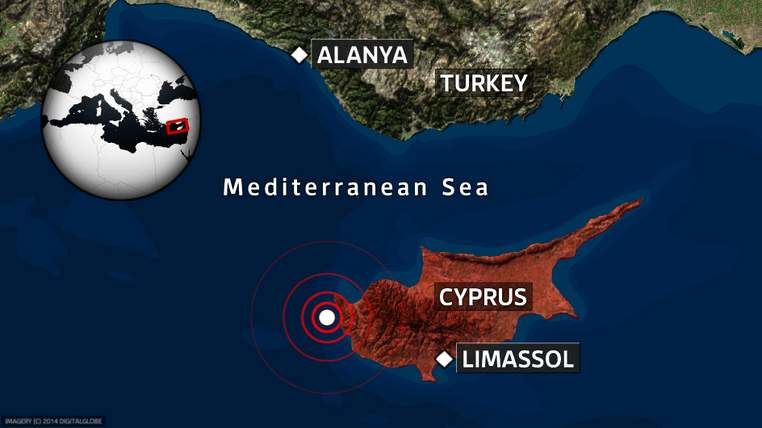
Cyprus struck by 5.6 magnitude earthquake

earthquake in Cyprus
The earthquake was mainly felt in Cyprus' west

Cyprus has been hit by a 5.6-magnitude earthquake, according to the US Geological Survey.

The earthquake struck just off the Mediterranean island's west coast, about four miles from the village of Peyia.

It was mainly felt in the western Paphos region, but also in the capital Nicosia at 11.25am local time.

Paphos district officer Yiannakis Mallourides reported no major damage to structures or injuries, but said authorities are monitoring the situation.

@michelleuk87 wrote on Twitter: "So weird feeling the #earthquake in #Cyprus this morning whilst on my sunbed. #nicosia"

Blue Planet

Los Angeles rattles with 3.5 earthquake, 2.5 foreshock

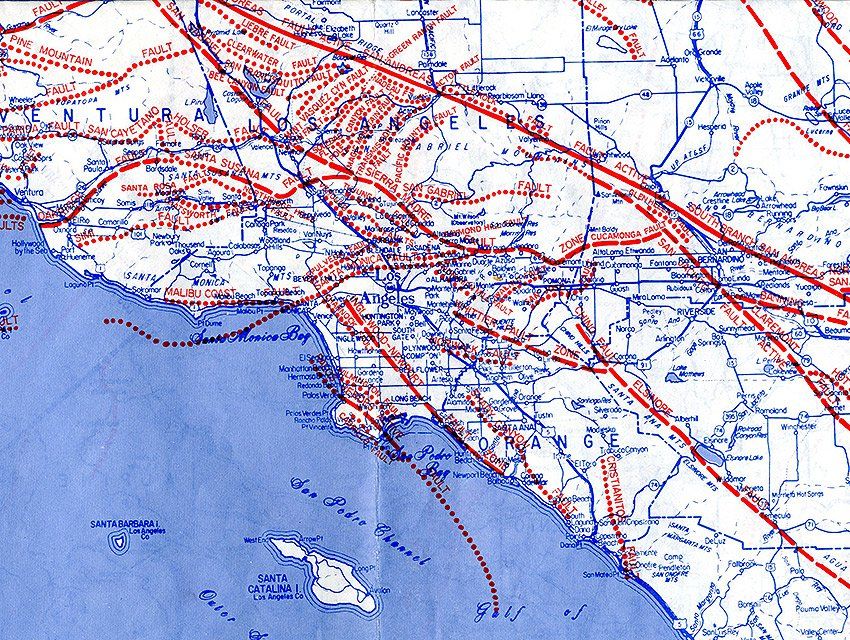
LA faults
© www.lamag.comThe Inglewood-Newport fault is a heavy red line that starts to the left of the word Los "Angeles" in the center of the map.
A magnitude 3.5 earthquake was reported Sunday night about a half mile from View-Park Windsor Hills in South Los Angeles, according to the U.S. Geological Survey. The temblor occurred at 9:17 p.m. Pacific Time and occurred at a depth of 6 miles, according to the USGS.

Although tremors were felt across large swaths of Southern California, the epicenter was located near the Baldwin Hills oil fields and the Kenneth Hahn State Recreation Area, about eight miles west of downtown Los Angeles. The proximity to the oil fields left some to speculate on social media that the earthquake owed to heavy drilling in the area.

But Dr. Lucy Jones, a USGS seismologist, wrote on Twitter that the quake occurred near the Newport-Inglewood fault and at a depth "way below the oil fields." "The focal mechanism matches the Newport Inglewood fault which was producing [earthquakes] long before we were pumping oil," Jones wrote.

The epicenter was about 2,000 feet from that of a magnitude 2.5 earthquake which was reported at 4:35 p.m. The smaller quake was a foreshock that typically precedes larger seismic activity, Jones said. A 1.3 magnitude afterschock occurred at 10:37 p.m.

Comment: Sounds like this quake was a pressure release and fortunately didn't cause casualties or damage. Los Angeles has many geologic faults, any one or more could be triggered at any time.


Moon

4.4 mag earthquake in Sarajevo, several more minor ones in Turkey

Date & time: Sun, 12 Apr 00:05:33 UTC
Magnitude: 4.4
Depth: 10.0 km
Epicenter latitude / longitude: 43.77°N / 18.54°E [Map]
Nearest volcano: Vesuvius (471 km)
Primary data source: GFZ

Comment: There were also several minor earthquakes in Turkey yesterday up to 3.7 mag.


Attention

Major Earthquake activity along the U.S. West Coast, multiple 4.0M+ events at volcanic areas

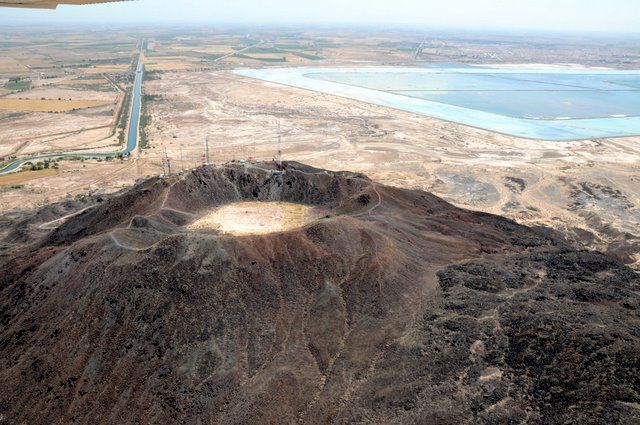
Cerro Prieto
© www.flickr.comCerro Prieto Volcano, Baja, CA
Another magnitude 4.2 earthquake has occurred off the coast of Oregon.

In the past 7 days, up to 2am CDT April 11, 2015, there have been a series of noteworthy earthquakes along the Southern, and Western portions of the North American Craton.

A series of earthquakes began off the coast of Oregon at the fresh undersea lava fields, moving South to the undersea lava fields (and actual volcano) off the coast of Northern California, moving further South to Pisgah Volcano + Red Mountain, then even further South to Cerro Prieto Volcano in Baja California/Mexico border region.

These volcanic locations are VERY old, and have been dormant for eons. To see earthquake activity at these locations means pressure is building in the region for a larger release of energy.

Information on this current 4.2M in Oregon from the USGS

Here is the 4.2M event off the coast of Oregon from April 11 2015

4.7M off the coast of California near the Gorda ridge volcanic fields

4.3M + 4.0M back to back events at Cerro Prieto volcano in Baja

Comment: Cause and effect, rock and roll. If the theories are correct, we have a ticket to ride. The involvement of volcanos and earthquakes come as an interesting pairing with cosmic circumstances and earth changes in the making. The earth's slow-down in rotation can produce devastating effects such as earthquakes and volcanic activity. The immense reservoir of energy stored in the Earth's rotation is susceptible to any change in the rotation rate. Volcanoes sense pressure changes below the lithosphere causing them to vent, which can cause or add to earthquake magnitude.
-Earth Changes and the Human-Cosmic Connection, Pierre Lescaudron


Info

Magnitude 4.5 and 4.2 earthquakes strike Baja, California

An earthquake with a preliminary magnitude of 4.5 struck in Baja California Wednesday, the USGS reported.

The temblor hit at 12:23 p.m., about 4 miles west of Guadalupe Victoria, Mexico, according to the USGS.

Guadalupe Victoria is located in Baja California, about 42 miles away from El Centro, California and 121 miles from San Diego, California.

A second quake, with a preliminary magnitude of 4.2, struck 7 miles east of Guadalupe Victoria less than 10 minutes later, according to the USGS.
Image
© USGS

Bizarro Earth

Magnitude 4.5 earthquake shakes Hawaii island

Image
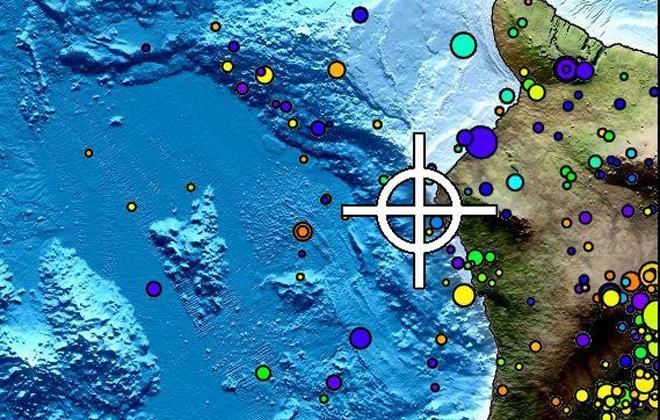
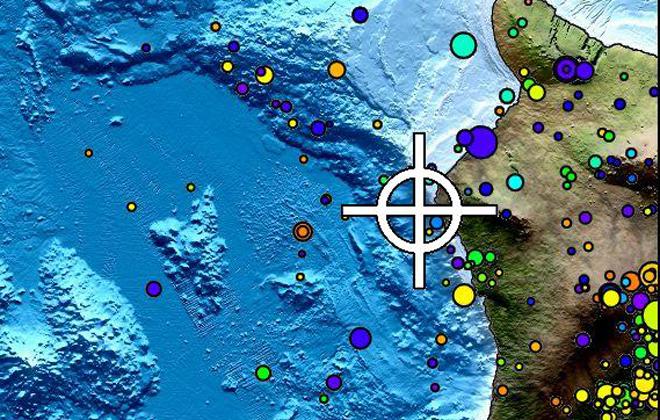
© PACIFIC TSUNAMI WARNING CENTERThis map from the Pacific Tsunami Warning Center shows the location of a magnitude 4.5 earthquake that struck early Sunday morning off Hawaii island. The earthquake did not generate a tsunami.
A magnitude 4.5 earthquake shook Hawaii island early Sunday morning, but no tsunami was generated and there were no immediate reports of serious injuries or damage.

The earthquake struck at 3:23 a.m. about 7 miles west of Kalaoa and 10 miles northwest of Kailua-Kona at a depth of 6.2 miles, the U.S. Geological Survey reported.

Only light shaking was reported and the earthquake caused no detectable changes to the volcanoes on Hawaii island, the Hawaiian Volcano Observatory reported.

The earthquake was widely felt on the Big Island. The USGS "Did You Feel It?" website received more than 150 felt reports, including 3 people who said they felt it on Oahu at Joint Base Pearl Harbor-Hickam and in Aiea.

During the past 30 years, geologists recorded 23 earthquakes, including Sunday's temblor, in the same area offshore of Keahole Point with magnitudes greater than 3.0 and depths of 3 to 9 miles.

The volcano observatory said earthquakes at this depth off the west coast of the Big Island are typically caused by abrupt motion on the boundary between the old ocean floor and the volcanic material of the island and are usually not directly related to volcanic activity.

As of 7 a.m., no aftershocks of the earthquake were reported, volcano scientists said.

Comment: Magnitude 3.3 earthquake reported near summit of Hawaii's Mauna Loa volcano