Earth ChangesS


Stock Down

Bird flu pushes up price of eggs, turkey in Midwest US

bird flu virus
© Matthias Kulka/CorbisThe bird flu virus.
Prices for eggs and turkey meat are rising in some places as an outbreak of bird flu in the Midwest claims an increasing number of chickens and turkeys. Market experts say grocery stores and wholesalers are trying to stock up on eggs, but there's no need to worry about having enough turkeys for Thanksgiving.

The cost of a carton of large eggs in the Midwest has jumped nearly 17 percent to $1.39 a dozen from $1.19 since mid-April, when the virus began appearing in Iowa's chicken flocks and farmers culled their flocks to contain any spread. Tuesday, officials reported that the virus had spread to Nebraska.

A much bigger increase has emerged in the eggs used as ingredients in processed products like cake mix and mayonnaise, which account for the majority of what Iowa produces. Those eggs have jumped 63 percent to $1.03 a dozen from 63 cents in the past three weeks, said Rick Brown, senior vice president of Urner Barry, a commodity market analysis firm.

Comment: Also see:


Binoculars

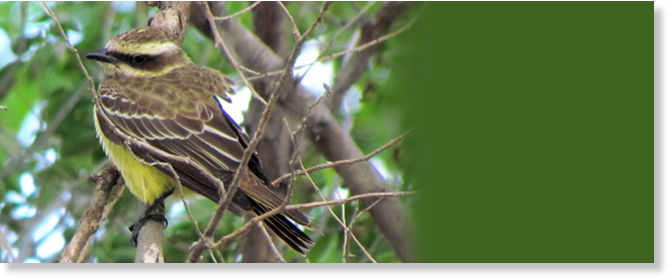
Rare tropical bird found in Scott State Park, Kansas

Image
© Kansas Department of Wildlife, Parks and TourismThe piratic flycatcher found in Scott State Park
Chris Lituma, a post-doctoral research associate at the University of Tennessee's Institute of Agriculture, had no idea a fleeting trip to Kansas would result in a monumental discovery. Lituma, according to a media release from the Kansas Department of Wildlife and Parks, was leading a group of students through a multi-state field study, including a stop in Scott City. Friend, and Kansas-native, Mike Hudson, had recommended Scott State Park just north of Scott City to Lituma as a good place to go birdwatching - a hobby of Lituma's for the past 11 years. Upon arrival, Lituma began helping students identify the various birds, but one bird in particular was no ordinary migrant.

"The students asked me 'hey, what's this bird?' and I briefly looked at it and assumed it was a black-headed grosbeak," said Lituma.

Students then looked up the grosbeak in a field guide to find it was not the same bird they were looking at.

"At that point, I took another look at the bird and almost immediately realized this was no grosbeak, this was something very special; something rare.

Comment: What marks out this particular odd migration is the extreme distance involved from its normal range. Other extraordinary movements by birds so far this spring are listed below:

Non-migratory citril finch from mountains of mainland Europe found near beach in Holkham,UK

Another completely lost bird: Slate-throated redstart, resident of humid highland forests, turns up on South Padre Island, Texas

Bizarre bird migration: Little Bustard makes rare visit to Finnish Lapland

Globe-trotting bird ends up in Sutton, New Hampshire

Rare bird from the Americas turns up in Somerset, UK

Great blue heron from North America turns up on the Isles of Scilly, UK

Eurasian shorebird (wader) turns up far inland near Winslow, Indiana

Sea duck that is native to Northern Europe turns up off California coast

A similar pattern of extravagantly lost birds was noticeable during the latter part of last year:

Another completely lost avian species: Couch's Kingbird flies from southern Texas to New York

Warbler that should be wintering in western Mexico turns up in Louisiana

Bean goose from Eurasia takes a wrong turn and winds up on the Oregon Coast

Four lost flamingos fly NORTH for the winter and turn up in Siberia

Wrong place, wrong time: European robin turns up thousands of miles away in China

Rare bird from Mongolia turns up in Wakefield, UK

Wrong time, wrong place: Rare bird found in Barrie, Canada


Cloud Precipitation

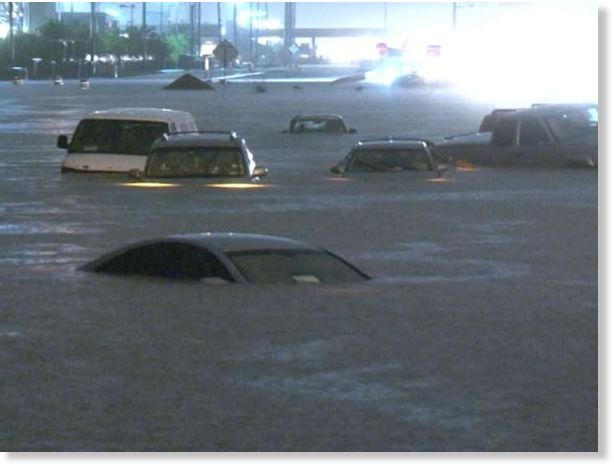
1 dead in Houston following floods: 10 Inches of rain in 24 hours

Image
© Johnny KellyMany vehicles submerged in flood waters on Gulf Freeway near Houston
Floods have left 1 man dead and prompted over 20 emergency rescues after staggering amounts of rainfall across south east Texas.

The state has seemingly been bombarded non stop with severe weather since flash floods hit Lubbock on 04 May 2015. One man died in floods in Corsicana on 11 May 2015 after 10 inches of rain fell in 1 day.

In the Houston area yesterday around 20 people had to be rescued from the flood water, most of them from stranded vehicles. Some major roads were said to be under 5 feet (1.5 metres) of water. Particularly badly hit were the areas of Taylor Lake Village, Webster and Clear Lake.

Cloud Lightning

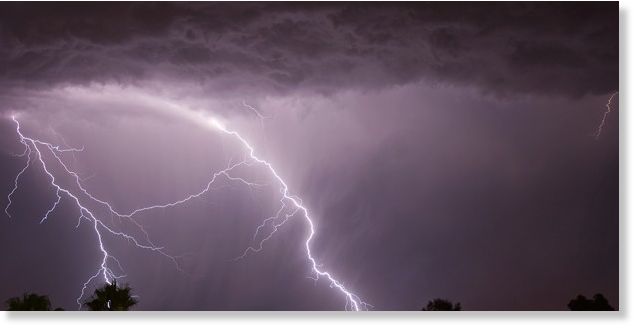
Lightning bolt kills 2 farmers in Gazipur, Bangladesh

Image
Two farmers were killed and three others injured in a lightening strike at Beldia village in Sripur upazila on Friday noon.

The deceased are Nesar Uddin, 60, son of Miar Uddin Meghu, hailing from Beldia village, and Safir Uddin, 35, son of Ahammed Ali, from Madhupur village of Tangail district.

Officer-in-charge of Sripur police station Abdul Motaleb Miah said the thunderbolt struck the five farmers while taking lunch at the farming land after their work, leaving them injured.

They were whisked off to a local hospital from where Nesar and Safir were shifted to Sripur Upazila Health Complex. However, both was declared brought dead.

Question

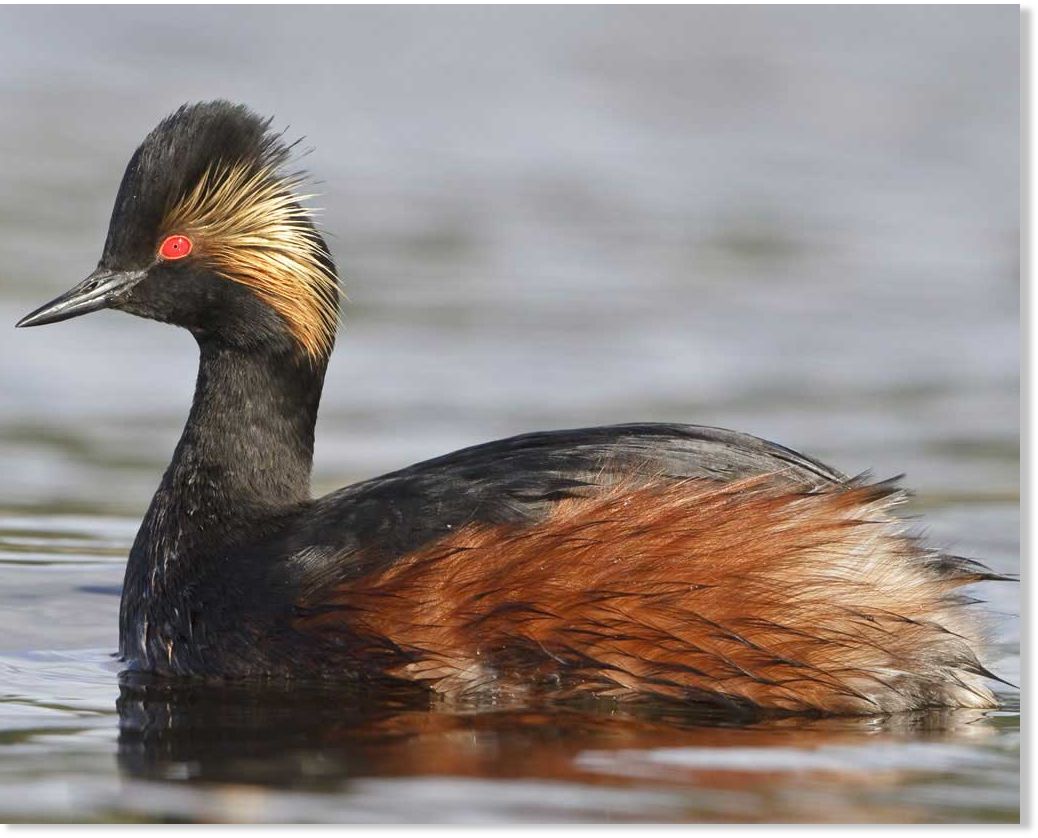
30 waterbirds found dead on Lake Havasu, Arizona had blunt trauma

Image
An eared grebe (black-necked grebe)
Birds found dead on Lake Havasu in late-April showed signs of "severe blunt trauma" and have been sent to the National Wildlife Health Center in Wisconsin for further testing, Arizona Game and Fish wildlife biologist Carrington Knox said Tuesday.

A group of more than 30 dead eared grebes were spotted just south of Cattail Cove State Park on April 28 and reported to Game and Fish. Lake Havasu wildlife manager Suzanne Ehret retrieved sample specimens of the grebes and sent them to Game and Fish in Phoenix.

Knox said initial observations of the grebes showed "severe blunt trauma," but the cause of the trauma was unknown. She said grebes aren't "the best fliers" and have been known to fly into power lines or be struck by boats. The testing of the birds is ongoing.

Health

Woman is savaged by an angry beaver in Russia

Image
While beaver attacks are rare, they are not unheard of. A fisherman died while trying to take a picture of a beaver in Belarus in 2013 after the animal bit through an artery in his leg, causing him to bleed to death
A woman in Russia who had her leg ripped open by an angry beaver was saved after a neighbour came running over and stabbed it in the head.

Evgenia Eliseeva, 24, was at home in her village in southwest Russia's Lipetsk region when she went outside to get a better phone signal to call her mum.

But as she started dialling she felt a terrible pain in her leg and looked down to see a large animal had bitten into her calf.

Miss Eliseeva said: 'I was in complete shock and had no idea what it was at first.

'I thought it might have been a dog that had jumped on me. It was quite dark but it seemed to be standing on its tail as it was so tall.

'Then it he got on all fours and charged at me again. Its teeth were in my leg and it was furiously shaking its head from side to side.

'I was screaming like a maniac and this man suddenly appeared out of nowhere and attacked the beaver.'

The woman's rescuer, local man Hleb Yefremov, 54, said: 'I heard the girl scream and saw this giant hairy beast attacking her.

Comment: Other beaver attacks in the recent past: Animals increasingly losing the plot: Vicious beaver attacks snorkeler off Nova Scotia's coast, Canada

Animals losing the plot: Couple attacked by beaver in Watchung Reservation, New Jersey

Beaver mauls man near Rochester: 'It was like watching a horror film'

Paddling family of three attacked by a beaver in Austria

Vicious beaver attacks and kills man in Belarus


Wolf

Police shoot dog following savage attack which left owner's flesh hanging off his arm and leg in Gloucester, UK

Image
A pit-bull type dog
A dog has been shot by police officers in Gloucester after it attacked its owner so badly he had "flesh hanging from his arm and leg".

A force spokesman said officers contained the animal in a garden in King Edwards Avenue at about 1.50pm.

An attempt to stun the dog using a taser failed and officers were forced to kill it using a shot gun.

The owner, who has been taken to Gloucestershire Royal Hospital for treatment, was attacked by the dog after he attempted to put its collar back on.

Fish

Study: Oxygen depleted 'dead zones' found in Atlantic open waters for the first time

Atlantic dead zone
© NASA Earth ObservatoryThe dead-zone eddies found in the Biogeosciences study are somewhat similar to the one seen in this picture, which was captured by the Moderate Resolution Imaging Spectroradiometer on NASA's Terra satellite in late 2011.
A team of German and Canadian researchers have discovered areas with extremely low levels of oxygen in the tropical North Atlantic, several hundred kilometres off the coast of West Africa. The levels measured in these 'dead zones', inhabitable for most marine animals, are the lowest ever recorded in Atlantic open waters. The dead zones are created in eddies, large swirling masses of water that slowly move westward. Encountering an island, they could potentially lead to mass fish kills. The research is published today in Biogeosciences, an open access journal of the European Geosciences Union (EGU).

Dead zones are areas of the ocean depleted of oxygen. Most marine animals, like fish and crabs, cannot live within these regions, where only certain microorganisms can survive. In addition to the environmental impact, dead zones are an economic concern for commercial fishing, with very low oxygen concentrations having been linked to reduced fish yields in the Baltic Sea and other parts of the world.

"Before our study, it was thought that the open waters of the North Atlantic had minimum oxygen concentrations of about 40 micromol per litre of seawater, or about one millilitre of dissolved oxygen per litre of seawater," says lead-author Johannes Karstensen, a researcher at GEOMAR, the Helmholtz Centre for Ocean Research Kiel, in Kiel, Germany. This concentration of oxygen is low, but still allows most fish to survive. In contrast, the minimum levels of oxygen now measured are some 20 times lower than the previous minimum, making the dead zones nearly void of all oxygen and unsuitable for most marine animals.

Dead zones are most common near inhabited coastlines where rivers often carry fertilisers and other chemical nutrients into the ocean, triggering algae blooms. As the algae die, they sink to the seafloor and are decomposed by bacteria, which use up oxygen in this process. Currents in the ocean can carry these low-oxygen waters away from the coast, but a dead zone forming in the open ocean had not yet been discovered.

Comment: Perhaps increased methane outgassing and undersea volcanic activity (it is estimated there are up to one million of these 'submarine volcanoes') are contributory factors to these open water 'dead zones'?

The significant increase of fish die off's and strange migratory behaviour of marine life could be considered another potential signs of such activity also.

As the number of volcanoes erupting right now is greater than the 20th century's YEARLY average, a comparable escalation in activity of their underwater counterparts seems logical.


Attention

Jumbo kills 80-yr-old man in Hanur, India

Image
Asian elephant
Kondaiah Naika, 80, was killed by an elephant at Gundekallu forest of the Cauvery Wildlife Sanctuary on Tuesday evening.

Naika hails from the nearby Bandalli village in the taluk. The incident occurred when he was on his way to get some forest produce. His body was found by Forest personnel who were on their routine beat. The body was handed over to Naika's family members after post mortem.

A case has been registered at the Hanur police station.

Binoculars

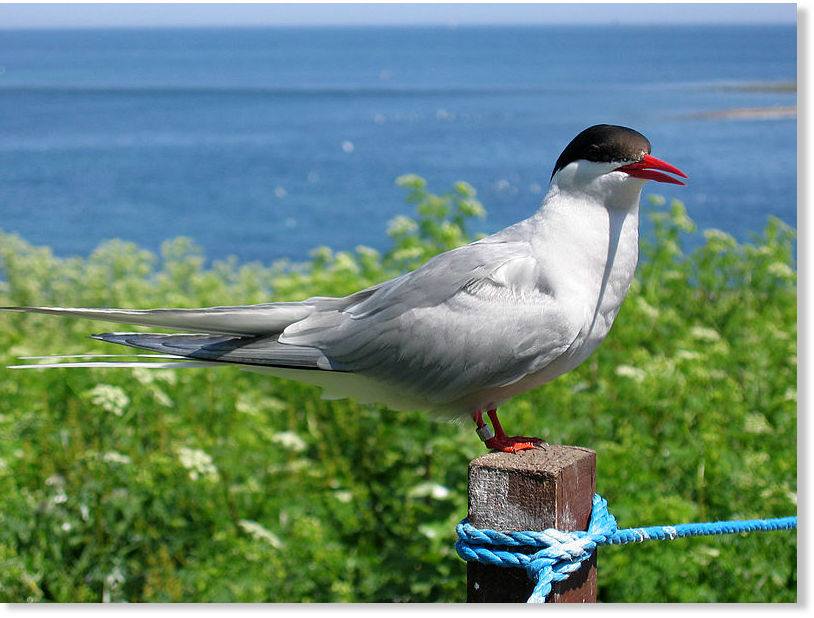
Arctic terns arrive late on breeding grounds in Iceland

Image
© Jamumiwa/ Wikimedia Commons. Arctic tern
The Arctic tern has arrived in Iceland a week later than usual, according to ornithologist Jóhann Óli Hilmarsson in the South Iceland town of Stokkseyri, mbl.is reports.

The birds, which make a roundtrip of around 90,000 kms (56,000 miles) from Iceland or Greenland to their wintering grounds in Antarctica, take part in by far the longest known migration in the animal kingdom.

Arctic tern nesting has gone badly in parts of Iceland in recent years due to a lack of sandeel for the young birds.

Comment: See also: Migrating birds still delayed by cooler than normal weather in Canada

Winter bird migrants from Himalayas stay south in Tamil Nadu, India